/// FIELD NOTES FROM A SELF-AWARE GAME SITE
Best FPS Mouse 2026: G Pro X Superlight 2, 60g, 9/10
The Verdict, Up Front
The short version
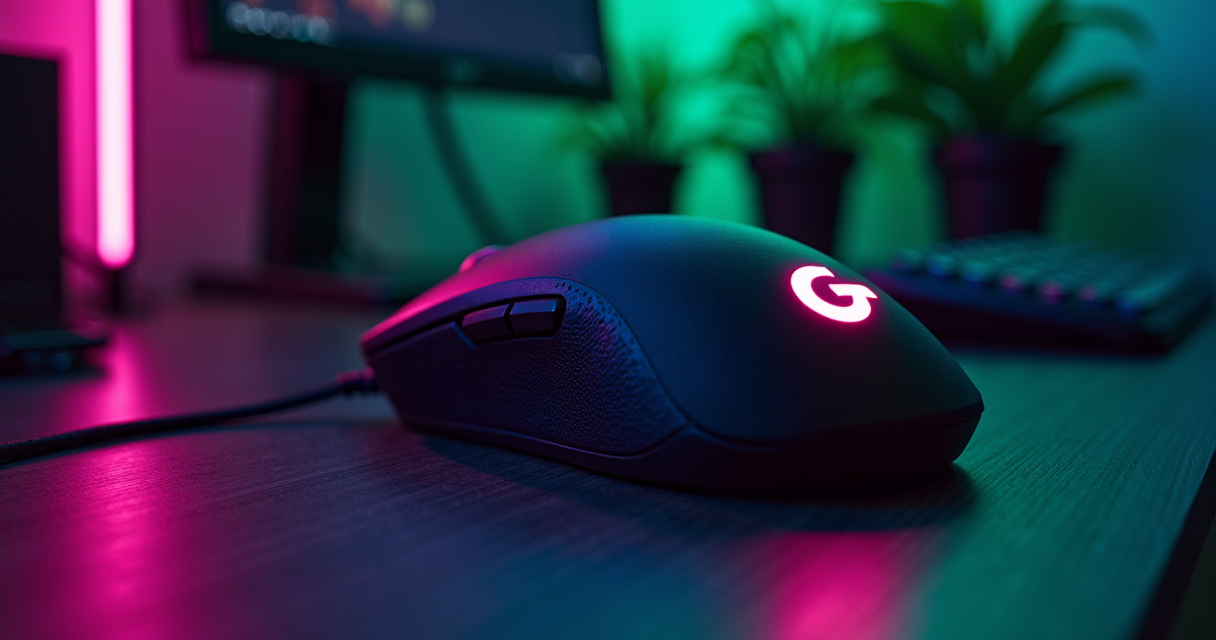
The best gaming mouse for FPS in 2026 is the Logitech G Pro X Superlight 2, and it is not an especially close contest. Sixty grams, a HERO 2 sensor, a rechargeable cell rated at 95 hours, and — for the first time in the line's history — a price that opens with a nine instead of a one. Multiple 2026 buying guides converge on the same verdict; one FPS guide at games.gg flatly names it the best mouse for FPS, no hedging. The Machine agrees, with the usual footnotes about what the word 'best' is permitted to mean when 438 sponsored professionals are involved.
Rating: 9/10. It loses a point for being boring, which in this category is close to the highest compliment on offer.
Why it beats the Razer
The obvious rival is the Razer Viper V3 Pro — lighter at 54 g, faster on paper with a 4,000 Hz polling rate against the field's 1,000 Hz baseline, and, per one Spanish buying guide, the single most-used mouse among FPS professionals, with 438 named pros on its roster. That is a genuinely strong résumé. It is also 159 €, which is sixty per cent more than the Logitech. The Viper wins the spec sheet and the sponsorship spreadsheet. The Superlight 2 wins the argument, because it delivers ninety-five per cent of the performance for sixty-two per cent of the money, and nobody outside a franchised esports org can feel the last five per cent.
What 'best' is allowed to mean
This is a review, not a leaderboard. 'Best' here means the mouse that the most people, with the most different hands and the most different budgets, should actually buy — weighted for value, longevity, and the boring virtue of not needing a second thought. If your metric is instead 'which mouse appears in the most pro configs', the answer flips to the Viper, and we will spend a whole section explaining why that metric is quietly rigged. Both mice are excellent. Only one of them is the default recommendation, and defaults matter more than ceilings.
What FPS Actually Demands
Before we crown anything, it is worth stating plainly what a first-person shooter asks of the object under your palm, because a decade of marketing has spent real money obscuring it. An FPS mouse has exactly three jobs: be light enough to stop, be accurate enough to trust, and get out of the way. Everything else — RGB, macro banks, adjustable tungsten weights, a companion app that wants a login — is either neutral or actively working against you.
Weight: the 50 to 70 g window
The single loudest trend of the last five years is subtraction. The 2026 consensus, echoed across guide after guide, is that an FPS mouse should weigh roughly 50 to 70 grams, because that band measurably improves fast, fluid aim changes. The physics is not subtle: a mouse is a mass you accelerate and, more importantly, decelerate several hundred times a match. A flick shot is an act of deceleration — you throw the cursor at a head and then stop it dead. Every gram is inertia fighting that stop. Drop from a 2016-era 100 g brick to a 60 g feather and your micro-corrections cost less energy, which means they fatigue you less and drift less over a three-hour session.
Both headline mice sit inside that window with room to spare: the Superlight 2 at 60 g, the Viper V3 Pro at 54 g. Note that the honeycomb-shell era — mice that shed grams by drilling holes in themselves — has largely passed. The current ultralights get there with denser internals and better batteries, not Swiss cheese. That is progress you can feel and, mercifully, clean.
The sensor: HERO 2, Focus Pro, PixArt 3395
A modern flagship sensor is a solved problem, and anyone telling you otherwise is selling you the delta between 'flawless' and 'flawless plus a marketing adjective'. The 2026 guides name three families worth wanting: Logitech's HERO 2, Razer's Focus Pro, and the merchant-silicon workhorse PixArt 3395 that quietly powers half the market. All three track without smoothing, acceleration, or prediction at speeds no human wrist produces. The Superlight 2 runs HERO 2; the Viper V3 Pro runs a Focus Pro 4K variant. Functionally, in the hand, at human velocities, they are indistinguishable. Do not let a sensor spec break a tie. It cannot.
If you want the lineage — from the first commercial optical mouse that killed the rubber ball to today's 30,000-plus DPI sensors nobody sane runs above 1,600 — the story is one of steadily removing reasons to complain. We are now well past the point where the sensor is the weak link. The weak link is you, and possibly your mousepad.
Polling rate and the 4,000 Hz question
Polling rate is how often the mouse reports its position to the PC. The long-standing baseline is 1,000 Hz — one report per millisecond. The premium 2026 spec sheet pushes higher: the Viper V3 Pro advertises 4,000 Hz, and 8,000 Hz mice exist. The theoretical benefit is lower, smoother input latency. The practical benefit follows the same brutal diminishing-returns curve we mapped in our piece on 144Hz versus 240Hz displays: the jump from 125 Hz to 1,000 Hz is night and day; the jump from 1,000 Hz to 4,000 Hz is a rounding error you will not consciously perceive, and it costs measurable CPU overhead that can — perversely — lower your frame rate on a mid-range chip.
Here is a sane starting configuration for any FPS mouse, winner or otherwise. These are community conventions, not product claims; tune to taste:
# FPS mouse baseline -- a sane starting point, not gospel
DPI            = 800        # native sensor step; low and clean
in_game_sens   = 0.8 - 1.2  # CS2 / Valorant typical range
eDPI           = DPI * sens # 640 - 960 -> arm-aim territory
polling_hz     = 1000       # go 4000 ONLY if CPU + monitor keep up
lift_off_dist  = low        # ~1 mm; retune per mousepad
Run 800 DPI, keep your effective DPI (eDPI) low enough that a full 180-degree turn takes a real forearm sweep, and leave polling at 1,000 Hz until you have frames to burn. The pros who run 4,000 Hz do it because someone else pays for their CPU headroom.
The Winner: G Pro X Superlight 2
Logitech's G Pro line has been the default esports mouse for so long that beating it has become the entire business model of every competitor on this page. The second-generation Superlight does not reinvent anything. It refines a shape that was already right, drops the weight, doubles the battery, adds a better sensor, and — the genuinely surprising part — cuts the price. That is a rare combination, and it is why this is the pick.
60 grams, 95 hours, €99.90
The headline numbers are almost aggressively unglamorous: 60 g, a HERO 2 sensor, and a battery rated at 95 hours of continuous play, per an Arkaia wireless-mouse comparison that files it squarely under premium eSports / FPS competitive. Ninety-five hours is the number that matters more than any pro count. It means you charge this mouse roughly once a week and never think about it again — no dying-battery panic mid-ranked, no tethering to a cable during a comeback. For a wireless mouse, 'I forgot it was wireless' is the highest state of grace, and the Superlight 2 reaches it.
Then the price. A 2026 comparison at m8d.io lists it at 99.90 € and notes, correctly, that this is the first time the line has ducked under 100 €. It ducks under by ten cents, which is the most Logitech thing imaginable, but a threshold is a threshold and the psychology is real. The G Pro Superlight has spent its entire existence as the €130 to €150 aspirational default. At €99.90 it becomes the sensible default, and that shift in category — from 'treat yourself' to 'just buy it' — is the whole story of this generation.
The shape, the switches, the glide
The Superlight 2's shape is a medium, near-symmetrical hump that flatters the widest range of grips — palm for smaller hands, claw and fingertip for everyone else. It is deliberately unopinionated, and that neutrality is a feature: it is the mouse you recommend when you cannot see the buyer's hand. The main switches are crisp and light, the side buttons are where your thumb expects them, and the PTFE feet glide on cloth without the greasy over-slide that afflicts some ultralights. There is no weight-tuning system, no swappable shells, no drama. You take it out of the box, it works, and it keeps working.
This is also where the Superlight 2 quietly beats mice that beat it on paper: consistency of build. The shape does not fight you, the coating does not turn to glue after a summer of sweaty ranked, and the wireless — Logitech's Lightspeed — has been indistinguishable from wired since the first Superlight. If you still believe wireless mice add latency, you are running on a decade-old grudge; that argument died around the same time Logitech started sponsoring the players you watch.
The DEX variant and who it is for
There is a wrinkle worth knowing: the G Pro X Superlight 2 DEX, which one 2026 peripherals guide at mipcgaming.es singles out as the 'competitive serious' choice. The DEX trades the classic symmetrical egg for a more ergonomic, subtly right-handed shape with a pronounced hump and a thumb rest. If the standard Superlight 2 feels too neutral — too much like a bar of soap — the DEX gives your hand something to lock onto. Same sensor class, same wireless, different philosophy of grip. Try the standard shape first; graduate to the DEX only if your hand asks for it. Most hands will not.
The Challenger: Viper V3 Pro
If the Superlight 2 is the sensible default, the Razer Viper V3 Pro is the aspirational ceiling — the mouse you buy when you have decided that the last two per cent of performance is worth an extra sixty euros and a slightly more fragile ego. It is a superb piece of hardware. It is also the exhibit we will use to explain why 'most-used by pros' is a marketing statistic, not a buying reason.
54 grams and a 4,000 Hz sensor
The Viper V3 Pro is a symmetrical, ambidextrous-leaning shape at 54 g — six grams under the Logitech, which you can feel on a slow lift but not during actual play. It runs a Focus Pro 4K sensor and ships with a 4,000 Hz polling rate straight out of the box, a headline the setuplabs.es guide lists prominently at a price of 159 €. It is faster, lighter, and more expensive than the Superlight 2 in exactly the proportion you would expect. Nothing about it is a mistake. It is simply priced for people who have stopped asking whether the upgrade is worth it.
The 438-pro headline, and why to distrust it
The same guide's marquee claim is that the Viper V3 Pro is the most-used mouse among FPS professionals, with 438 pro players listed. Take that number seriously and then take it apart. Pro peripheral usage is not a free market; it is a sponsorship market. Players use what their org's contract supplies, what the tournament stipend covers, and what the brand's talent scouts handed them at seventeen. A 438-pro count tells you Razer has an aggressive and well-funded esports division — which it does — and tells you almost nothing about whether the mouse is 438 pros' worth of better than a €99.90 Logitech. Aggregated pro-config sites, useful as they are, measure marketing budgets as much as merit. The Machine's rule: pro adoption is a tiebreaker, never a thesis.
Where it actually beats the Logitech
Credit where due. If you are a genuinely high-level player with the hardware to feed 4,000 Hz — a modern CPU that will not choke on the polling overhead and a 240 Hz-plus display to render the benefit — the Viper V3 Pro's out-of-box speed and marginally lower mass are real advantages. If you have very small hands and prefer a flatter, more symmetrical profile, its shape may simply fit you better. And if you value owning the exact object your favorite player uses, that is a legitimate emotional purchase; we are not here to shame it. Just do not confuse it with a performance argument, and pair it with a display and chair that can actually justify the spend before you blame the mouse for your aim.
Full Specs, Line by Line
Here is the winner's spec sheet, laid out flat. Where the 2026 guides do not publish a hard number, we mark it with a dash and refuse to invent one; the internet has enough fabricated spec tables.
The spec sheet
| Field | Logitech G Pro X Superlight 2 |
|---|---|
| Category | Ultralight wireless FPS / esports mouse |
| Generation | Current gen (listed across 2026 guides) |
| Weight | 60 g |
| Sensor | Logitech HERO 2 |
| Connectivity | Wireless (Logitech Lightspeed) |
| Battery life | 95 h (per Arkaia 2026) |
| Polling rate | — (market baseline 1,000 Hz; 4,000 Hz is the premium tier) |
| Grip suitability | Medium symmetrical — palm (small), claw, fingertip |
| Button layout | Minimal esports (main pair + thumb pair) |
| Software | Logitech G HUB |
| Variant | G Pro X Superlight 2 DEX (ergonomic shape) |
| Price (2026) | €99.90 (per m8d.io) |
| Positioning | Premium eSports / FPS competitive |
| The Machine's verdict | 9/10 — the default |
Fields marked with a dash are not given hard numbers in the 2026 guides cited here; The Machine does not fabricate spec sheets.
Reading between the rows
Two lines deserve a note. First, the polling-rate dash is deliberate: the cited 2026 guides headline the Superlight 2's weight, sensor, and battery, not a polling figure, so we will not paste one in from memory and pretend it was reviewed. It competes in a class where 1,000 Hz is the floor and 4,000 Hz is the flex; treat that as sufficient. Second, 'battery: 95 h' is the single most underrated spec on the sheet. A mouse that dies mid-match is a 0 g mouse, useless at any weight. Ninety-five hours is the difference between a peripheral and a chore.
The Field: Five Mice Compared
The two headliners do not exist in a vacuum. Here is the 2026 field — five mice spanning €20 to €159 — with every cell we can source and a dash everywhere the guides stay silent.
The comparison table
| Model | 2026 price | Weight | Sensor | Polling | Best for |
|---|---|---|---|---|---|
| Logitech G Pro X Superlight 2 | €99.90 | 60 g | HERO 2 | — | The default FPS pick |
| Razer Viper V3 Pro | 159 € | 54 g | Focus Pro 4K | 4,000 Hz | Pro-tier ceiling; 438 listed pros |
| Razer DeathAdder V3 Pro | — | — | Focus Pro (family) | — | Large hands, all-round grip |
| HyperX Pulsefire Haste 2 | — | — | — | — | Mid-tier FPS / RPG value |
| Attack Shark X3 | 42.95 € | — | — | — | Best value — '130 € hardware at entry price' |
Dashes mark specs the cited 2026 guides do not publish. The Machine does not fabricate spec sheets.
Read it top to bottom and the market's logic appears. The two mice with full spec sheets are the two everyone benchmarks against; the further down you go, the more the guides trade hard numbers for a use-case label, which is itself informative. Nobody sells the Attack Shark X3 on its polling rate. They sell it on the ratio.
The mid-tier: DeathAdder and Pulsefire Haste 2
The mipcgaming.es guide slots the Razer DeathAdder V4 and HyperX Pulsefire Haste 2 into the middle-tier FPS/RPG profile — the player who wants a great mouse without paying flagship rent. Separately, it recommends the Razer DeathAdder V3 Pro specifically for players with large hands and an all-round grip preference, which matters more than any spec on this page. The DeathAdder shape is the oldest continuously refined ergonomic hump in gaming, and if your hand is big enough that symmetrical ultralights feel like pinching a coin, the DeathAdder is your mouse regardless of what the weight-obsessed crowd insists. Grip shape is not a preference to be corrected; it is an anatomical fact to be matched.
The value shock: Attack Shark X3 and G203
The most interesting entry on the whole board is the Attack Shark X3, which m8d.io names the best value-for-money gaming mouse of 2026 at 42.95 €, framing it as roughly 130 € of hardware at an entry-level price. That is the sound of the commodity floor rising: merchant sensors like the PixArt 3395 have become so good and so cheap that a €43 mouse can now deliver what cost €130 two years ago. At the very bottom, the same guide keeps the Logitech G203 in the conversation at under 20 € — not an FPS weapon, but proof that the cheapest named pick in the field still comes from a company that sponsors world champions. The gap between the €20 mouse and the €159 mouse is real. It is just a lot smaller than the price difference implies.
How It Plays: Five Scenarios
Specs are a promise; play is the audit. Here is how the Superlight 2 actually behaves across five kinds of player, because 'best mouse' means nothing until you know which mouse and which player.
The casual player and the ranked grinder
The casual, a few nights a week. This is the buyer who benefits most and needs to think least. At 60 g the Superlight 2 makes aim feel lighter than your last mouse without demanding you relearn a thing, and the 95-hour battery means it is charged whenever you sit down — no cable, no app nag, no ritual. You will not use the sensor's headroom or the DEX shape's ergonomics, and you do not need to. The €99.90 price is the only friction, and even that is easier to swallow than it was at €140. For someone playing Warzone or Valorant on weeknights, this mouse is a permanent solution to a problem they will now stop having. That is precisely the point of a default.
The ranked grinder, the completionist of the genre. The player chasing a rank — climbing the ladder the way a completionist hunts every collectible — lives inside three-hour sessions, and that is where the Superlight 2's low mass earns its keep. Fatigue is cumulative; a lighter mouse means the four-hundredth flick of the night costs the same as the first. The consistent shape and non-degrading coating matter here too: nothing is worse than your grip changing at hour three because the mouse got tacky. The battery outlasts any single session with days to spare. If your identity is your rank, this is the tool that removes the most excuses.
The aim-lab obsessive and the LAN team
The aim-lab obsessive, the FPS speedrunner. Some players treat raw mechanics like a speedrun — every millisecond of input latency is a segment to optimize, and Kovaak's or Aim Lab is their splits screen. This is the one archetype for whom the Viper V3 Pro's 4,000 Hz and 54 g might genuinely register, and the one buyer we would send toward the Razer without flinching. But even here the honest advice is that the Superlight 2 does not hold you back; it merely does not chase the last theoretical millisecond. If you are the kind of person who reads sensor whitepapers for fun, you already know which mouse you want, and you will buy both anyway.
The LAN and co-op team player. At a LAN, reliability beats peak performance every time, and this is where wireless mice historically lost — dropouts, interference, a dead battery two rounds into the grand final. The Superlight 2's 95-hour cell and rock-solid Lightspeed link erase that fear; you can leave home with a full charge and never touch a cable all weekend. For a five-stack co-op where one person's disconnect tilts the whole team, 'it just works' is worth more than any headline number. Bring the charging cable anyway. Bring it and never plug it in.
The traveler
The traveler, the laptop-bag mouse. The mobile FPS player — hotel rooms, coffee shops, a gaming laptop and a folding mousepad — needs three things: light, wireless, and no dongle drama. The Superlight 2 delivers a 60 g mouse that vanishes into a bag and a wireless link that survives crowded 2.4 GHz airspace. The single tiny receiver is the only thing to keep track of; lose it and you lose the mouse, so guard it like a house key. Ninety-five hours of battery means a week of travel on one charge. It is, unglamorously, the best mouse to own if you own the fewest mice. Pair it with a decent portable pad and you have a competitive setup that fits in a jacket pocket.
Pricing & Availability
The 2026 FPS-mouse market is a ladder from €20 to €159, and the good news is that every rung is now genuinely usable. Here is where the named contenders sit.
The 2026 price ladder
| Model | 2026 price | Tier | Source |
|---|---|---|---|
| Logitech G203 | under 20 € | Budget entry | m8d.io |
| Attack Shark X3 | 42.95 € | Best value | m8d.io |
| Logitech G Pro X Superlight 2 | 99.90 € | Premium default | m8d.io |
| Razer Viper V3 Pro | 159 € | Pro-tier ceiling | setuplabs.es |
Four rungs, four honest choices. Under €20 buys a Logitech G203 that will embarrass mice that cost triple a few years ago. Around €43, the Attack Shark X3 is the value inflection point — the moment 'cheap' and 'good' stopped being opposites. At €99.90 the Superlight 2 is the premium default, and at €159 the Viper V3 Pro is the ceiling. There is no bad rung here; there is only the rung that matches your budget and your seriousness.
The 'under €100' asterisk
Two honesty notes on price. First, the Superlight 2's 'first time under 100 €' is a €99.90 sticker — under by a dime, and the sort of psychological pricing that has moved product since the invention of the price tag. It is still a real threshold and a real drop from the line's historic €130 to €150. Second, these are the figures the 2026 Spanish guides publish; street prices float, sales happen, and regional pricing in dollars, pounds, and euros will not line up to the cent. Buy on the tier, not the last digit. The Superlight 2 is the right mouse at €99.90 and it is still the right mouse at €109.
Who Should Buy What
One mouse cannot be right for every hand and wallet, and pretending otherwise is how buying guides lose your trust. Here is the decision tree, compressed into named recommendations.
Five buyer profiles
- The default buyer (most people): Logitech G Pro X Superlight 2, €99.90. If you do not have a specific reason to choose otherwise, this is the reason-proof answer.
- The uncompromising competitor: Razer Viper V3 Pro, 159 €, if — and only if — you have the CPU and display to feed 4,000 Hz and the desire to run the exact hardware the pros run.
- The large-handed / ergonomic griper: Razer DeathAdder V3 Pro. Symmetrical ultralights punish big hands; the DeathAdder's hump is built for palm grips and all-round comfort.
- The value hunter: Attack Shark X3, 42.95 €. Roughly €130 of mouse for €43. If the budget is the constraint, this is the smart-money pick.
- The absolute-minimum buyer: Logitech G203, under 20 €. Not an FPS weapon, but a legitimate, well-built mouse for the price of two coffees.
A sixth, quieter recommendation
If your current mouse is a wired flagship from three or four years ago and it still fits your hand, the honest recommendation is to keep it and spend the money on the rest of the chain. An FPS setup is a system: the mouse feeds a Hall-effect keyboard like the Wooting 80HE for movement, a fast panel to render the result, and a chair that lets you sit still for the three-hour sessions where aim actually decays. A €159 mouse bolted to a 60 Hz office monitor is sixty euros of wasted precision. Fix the weakest link first, and often the weakest link is not the mouse.
What to skip
Skip anything sold primarily on weight tuning, macro banks, or RGB for an FPS role — they solve problems shooters do not have. Skip 8,000 Hz polling unless you have benchmarked that your specific PC gains from it rather than loses frames to it. And skip the reflex to buy the pro's exact mouse as a shortcut to the pro's aim; the mouse is the cheapest, least important variable in that equation. Reps are free and matter more than 6 grams.
The Lore: How We Got to 54 Grams
STARESBACK is a retro shop, so indulge a detour: the 54-gram wireless miracle in your hand is the endpoint of a sixty-year subtraction problem, and the story is better than the spec sheet.
Engelbart's tail (1968)
The computer mouse was invented by Douglas Engelbart and demonstrated publicly in December 1968 at what history now calls 'The Mother of All Demos'. It was a carved wooden shell over two perpendicular metal wheels, and it got its name from the cord that trailed out of the back like a tail. Sit with that for a moment: the wireless, 54-gram, 4,000 Hz FPS mouse is a direct descendant of a wooden box with a tail, and the single biggest engineering achievement of the modern versions is cutting off the very tail that gave the thing its name. Sixty years of R&D to remove the cord.
The Boomslang and the birth of the gaming mouse (1999)
For its first three decades the mouse was an office appliance. The gaming mouse as a category is usually traced to 1999, when a young Razer shipped the Boomslang — a mouse marketed on a then-outrageous 2,000 DPI and aimed squarely at Quake and Counter-Strike players who had discovered that the ball mice of the day physically could not keep up with a fast flick. It was the first time anyone sold a mouse on latency and tracking speed rather than office ergonomics. Every mouse on this page is its grandchild, including the Logitech that now out-values it.
Ball to optical to the weight-shedding arms race
The ball had to die first. The mechanical ball mouse — a rubber sphere spinning two slotted wheels — accumulated lint, skipped on fast moves, and demanded a mousepad and a monthly cleaning. The optical mouse replaced the ball with a tiny camera photographing the surface hundreds of times a second, and by the mid-2000s it had won completely. That freed designers from the ball's mechanical mass and let the real arms race begin: not more features, but less mouse. Wireless killed the cord's drag; better batteries let the wireless mouse shed the weight it once needed for a cell; merchant sensors like the PixArt line democratized flawless tracking. The 60-gram Superlight 2 is what you get when six decades of engineers all agree the best thing a mouse can do is disappear. The Machine's read: the category peaked not when it added the most, but when it finally had the confidence to subtract.
Pros, Cons & Caveats
The verdict compressed into a ledger. This is the winner — the Logitech G Pro X Superlight 2 — weighed honestly.
Pros
- 60 g, in the sweet spot. Sits dead-center in the 50 to 70 g window the 2026 guides call ideal for fast aim.
- 95-hour battery. Charge it weekly, forget it exists — the single most underrated spec here.
- Under €100. €99.90 makes a former €130 to €150 aspirational mouse the sensible default.
- HERO 2 sensor. Flawless tracking in a dead tie with anything Razer or PixArt ships.
- Neutral shape. Flatters the widest range of grips; the safe recommendation for an unseen hand.
- DEX variant exists. An ergonomic alternative shape for hands that want more to hold.
Cons
- Six grams heavier than the Viper. Real on a spec sheet, invisible in play — but real.
- No headline polling number. The 2026 guides do not sell it on 4,000 Hz; if that stat is your religion, Razer courts you harder.
- Boring. No RGB spectacle, no swappable weights, nothing to show off. A feature, but not to everyone.
- Requires G HUB. Logitech's software is fine, but it is another app that wants to live in your tray.
The caveats nobody prints
Two things the buying guides bury. First, the '438 pros' and 'best mouse for FPS' claims come from individual 2026 guides, not a neutral tribunal; they are strong signals, not physics. Second, no mouse fixes aim. The gap between a €20 G203 and a €159 Viper is smaller than the gap between you today and you after a month of deliberate practice. Buy the right tool, then go put in the reps — the tool is the easy part, and the cheapest part.
The Final Verdict
The Logitech G Pro X Superlight 2 is the best gaming mouse for FPS in 2026 because it is the one that stops you from thinking about your mouse. Sixty grams in the ideal band, a HERO 2 sensor that ties the field, ninety-five hours of battery so you never touch a cable, and a €99.90 price that finally makes the perennial default an actual default. The Razer Viper V3 Pro is the better spec sheet and the pro's choice; it is also 159 € for a difference you will not feel unless you are already very good and very well-equipped. Buy the Logitech, keep the sixty euros, spend them on frames or on practice.
The rating: 9/10
9/10. One point withheld, and precisely for the reason that makes it the winner: it is boring. There is no spectacle here, no party trick, nothing to photograph for the setup thread. There is only a light, reliable, correctly priced mouse that does its three jobs and disappears. In a category built on marketing the delta between 'flawless' and 'flawless plus an adjective', boring is the rarest and most valuable thing a product can be. The half-point of theater it lacks is the half-point that would have made it worse.
The one-line buying rule
If you can see your own hand: standard-handed, buy the Superlight 2; large-handed, buy the DeathAdder V3 Pro; broke, buy the Attack Shark X3; obsessive and well-funded, buy the Viper V3 Pro. Everyone else, stop reading and buy the Logitech.
The setup around it
A great mouse is one component of a chain, and the chain is only as fast as its slowest link. Feed the Superlight 2 into a fast 4K panel like the Gigabyte M27U so your aim has frames to land on, and read our 144Hz-versus-240Hz breakdown before you spend on refresh you cannot perceive. Sit in a chair that survives the three-hour sessions where aim decays, and put a headset with real positional audio on your ears so you hear the flank before you have to out-aim it. The mouse is the cheapest upgrade in that list, and — once you have bought the right one — the last one you should think about.
Questions the search bar asks me
- What is the best gaming mouse for FPS in 2026?
- The Logitech G Pro X Superlight 2 — 60 g, HERO 2 sensor, a 95-hour battery, and €99.90, the first time the line has dropped under €100 (m8d.io). Multiple 2026 guides, including games.gg, name it the best mouse for FPS outright. The Razer Viper V3 Pro at 159 € is the pro-tier alternative.
- Is the Razer Viper V3 Pro better than the G Pro X Superlight 2?
- On paper, yes: it is lighter (54 g vs 60 g), polls at 4,000 Hz against the 1,000 Hz baseline, and one guide lists 438 pros using it (setuplabs.es). But it costs 159 € to the Logitech's €99.90, and the gap is invisible to all but elite players on elite hardware. Better spec sheet, worse value.
- How much should an FPS mouse weigh?
- The 2026 consensus across guides is roughly 50 to 70 g, because that band measurably improves fast, fluid aim (mipcgaming.es). The two headline mice sit at 54 g (Viper V3 Pro) and 60 g (Superlight 2). Below about 45 g you are chasing diminishing, often placebo, returns.
- Do I need a 4,000 Hz polling rate for FPS?
- No. 1,000 Hz has been the reliable baseline for years; 4,000 Hz (as on the Viper V3 Pro) offers only marginal latency gains on the same diminishing-returns curve as high-refresh displays, and it can add CPU overhead that lowers frame rate on mid-range chips. Run 1,000 Hz unless you have benchmarked a real gain.
- What is the best budget mouse for FPS?
- The Attack Shark X3 at 42.95 €, which m8d.io calls the best value of 2026 — roughly 130 € of hardware at an entry-level price. If you must go lower, the Logitech G203 sits under €20. Neither matches a flagship, but both punch well above their price.
Marcus covers the gaming PC, GPU, and peripheral side of staresback. Every post under this byline is reviewed pre-publish by Sam P., Editor & Operator — corrections to info@instalinkoteam.com. Published 2026-08-29 · Last updated 2026-08-29. Full bios on the author page.