/// FIELD NOTES FROM A SELF-AWARE GAME SITE
Best Gaming Chair 2026: TITAN Evo Wins at 8/10
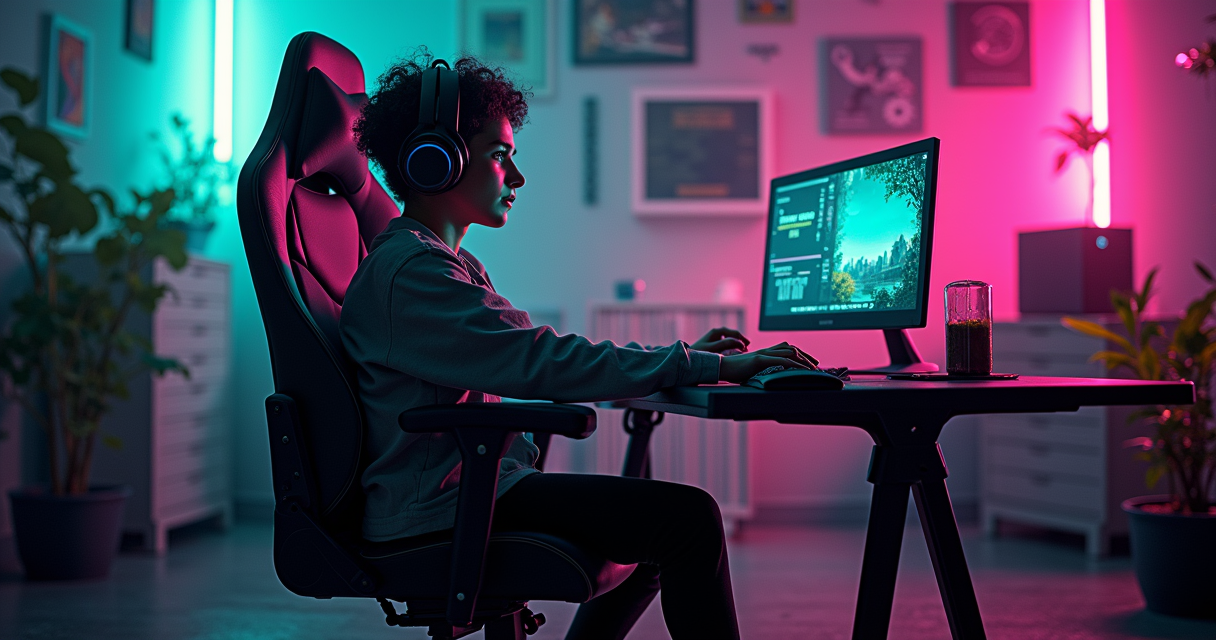
Let us open with the admission the entire category would rather you skip past: a gaming chair is a racing bucket seat sold to people who do not race. The tall, wrap-around bolsters that pin a rally driver into his seat through a 90 mph left-hander do precisely nothing for a person sitting perfectly still for nine hours farming loot. The contrast stitching is cosmetic. The perforations are a texture, not a cooling system. The logo is the most load-bearing component in the assembly. And yet — after a decade of testing, sneering, and then quietly refusing to give the review unit back — the good ones have become genuinely, annoyingly good.
This review covers the 2026 field, and it ends where the URL already told you it would: the Secretlab TITAN Evo wins, at 8/10. It wins not because it is the most gaming chair on the shelf — it is arguably the least theatrical thing in the room — but because Secretlab spent its rivals' marketing budget on hinges, foam density, and a lumbar mechanism that actually does something. Everything below is the case for that verdict: the five chairs that lost, the one 1994 office chair that still out-sits half of them, and the exact dollar figure at which each candidate stops making sense.
The Verdict, Before You Sit Down
You came for a number and a name. Here they are, unhedged, before the 6,000 words of justification: buy the Secretlab TITAN Evo, size it to your frame, and stop reading marketing copy about "immersion."
The number: 8/10
Eight out of ten is a real score, not a participation ribbon. It means the TITAN Evo does the job it claims to do, does it for years rather than months, and loses points only on things that are structural to the whole category — price creep on the premium fabrics, an assembly ritual that will test your patience and your lumbar spine before the chair ever supports it, and the unavoidable fact that a racing-inspired seat is a strange shape for a stationary human. Tom's Guide ranks it best overall for 2026, and for once the consensus and the correct answer are the same chair.
Why it wins
Three reasons, in descending order of importance. First, adjustability: 4D armrests, a multi-tilt recline out to a genuine 165°, and Secretlab's 4-way L-ADAPT lumbar that pushes into the small of your back on two axes instead of pretending a foam pillow is "support." Second, materials that survive contact with a human: the NanoGen fabric tier carries a 14x-durability claim, and even the base Neo Hybrid leatherette outlasts the cracked-vinyl racers it competes with. Third, and least glamorously, Secretlab ships spare parts and honors a warranty. GamingTrend called it "the Cadillac of gaming chairs"; the Escapist opened its review with "Hello comfort, my old friend"; Creative Bloq called it "a leader amongst all other gaming chairs." The praise is monotonous because the chair is consistent.
Who it is not for
If your lower back is already a medical event, skip to the Razer Iskur V2 or, if your wallet can absorb it, a proper Herman Miller. If your budget is under $200, skip to the Corsair and Cougar section and do not let anyone shame you — a $549 chair is not a moral requirement. And if you genuinely spend ten hours a day in the seat, the honest recommendation is an ergonomic office chair with a mesh back, not a padded bucket, no matter how many pro players are contractually photographed in one. The TITAN Evo is the best gaming chair. Whether you want a gaming chair at all is the more interesting question, and we will get to it.
What 'Gaming Chair' Actually Means
Before we rank the field, it is worth defining the field, because "gaming chair" is a marketing coinage, not an engineering one. The Wikipedia entry on the gaming chair is refreshingly blunt about the lineage: these are office chairs styled after automobile racing seats, and the styling is the point.
A bucket seat with a desk job
The defining silhouette — high back, flared shoulder bolsters, a hip-hugging seat pan, a pillow on a strap at the neck — is lifted wholesale from motorsport. In a car, those bolsters exist to hold a driver's torso in place against lateral G-forces. At a desk, there are no lateral G-forces. There is only you, mostly motionless, occasionally lunging for a mouse. The bolsters that make the chair look fast are, at best, neutral, and at worst they dig into your shoulders and thighs if you happen to be shaped differently from the average 5-foot-10 esports teenager the mold was designed around. This is not a scandal; it is just the physics the category prefers you not to think about.
The three things that actually matter
Strip away the aesthetics and a chair is judged on three axes, all boring, all decisive. Lumbar support: does something firm and adjustable push into the inward curve of your lower spine, or is there a decorative cushion doing an impression of support? Adjustability: can the armrests, seat height, recline, and tilt all move independently to fit your body, or is it a one-shape-fits-nobody bucket? Foam density and frame: does the seat foam stay supportive after 500 hours, or does it compress into a pancake while the steel frame quietly develops a creak? Every chair below lives or dies on those three. Recline angle, RGB, "premium" stitching, and the number of pillows in the box are tie-breakers at most.
The RGB is not an ergonomic feature
Say it with the deadpan it deserves: lighting is a preference, never a spec. A chair that glows does not support your spine better than a chair that does not. The same applies to "aviation-grade" aluminum bases (a die-cast alloy foot), "cold-cure" foam (a legitimate but ubiquitous molding process), and any claim involving the word NASA — DXRacer's origin story about "neutral body posture inspired by astronauts" is folklore, not sourced engineering, and we will treat it as such. Buy the mechanism. Ignore the mythology. If you want light in your setup, put it behind the monitor where it reduces eye strain, and spend the saved money on the keyboard you will actually be typing on instead.
The Winner: Secretlab TITAN Evo
Secretlab was founded in Singapore in 2014, which makes it a relative newcomer against DXRacer's 2006 first-mover claim, and it has spent the decade since doing something the rest of the category mostly refuses to do: iterating on the boring parts. The TITAN Evo is not a flashy chair. It is a well-made one, and after a full play-through — which for a chair means months, not hours — that turns out to be the rarer achievement.
Build and materials
The Evo ships in three upholstery tiers, and the choice matters more than the color does. Neo Hybrid Leatherette is the base: a synthetic leather that resists scuffs and wipes clean, the pragmatic pick if you eat at your desk (you do). SoftWeave Plus is a woven fabric that breathes far better than any leatherette and is the correct choice for anyone who runs warm or lives somewhere with a summer. NanoGen is the top tier, a knitted fabric carrying Secretlab's headline 14x-durability claim, and it is genuinely lovely — Tom's Guide's NanoGen review called it a "new standard for comfort and support" — but it is also where the price stops being reasonable and starts being aspirational. Underneath every tier is a steel frame, cold-cure foam molded rather than cut, and a die-cast aluminum base on Class-4 casters. The magnetic head pillow — memory foam, snaps on and off without a strap dangling behind your neck — is the single best small touch in the category, and every rival's flappy strap-mounted cushion looks primitive next to it.
Adjustment: 4D arms, 165°, L-ADAPT lumbar
This is where the eight points come from. The 4D armrests move up, forward, inward, and rotate, with magnetic CloudSwap tops you can pop off and replace — a genuine repairability feature disguised as a comfort one. The backrest reclines through a multi-tilt lockout to a full 165°, which is far enough to nap in and, more usefully, far enough to find the 100-to-110-degree seatback angle that ergonomists actually recommend for long sessions. And the 4-way L-ADAPT lumbar is the real differentiator: it is built into the backrest and adjusts both height and depth, pushing into your lower spine rather than sitting there as a decorative bulge. It is not the best lumbar system in this review — that title belongs to Razer, and we will be honest about it — but it is integrated, durable, and requires no pillows, no straps, and no apology.
The catch: assembly, weight, and the NanoGen tax
No chair earns a 10, and the Evo's missing two points are instructive. Assembly is a solo wrestling match with a backrest that weighs as much as a bag of cement; budget 30 minutes, a friend, and a tolerance for hex keys. Weight and footprint are substantial — this is a large object that dominates a small room, and the XL, rated to 395 lb, is frankly enormous. And the NanoGen tax is real: the base platform starts around $549, but the configuration everyone photographs — Regular size, NanoGen fabric — lands near $799, with the XL NanoGen closer to $849. That is Herman Miller Sayl money for a chair whose fundamental shape is still a racing seat. One clarification for the fact-checkers: there is no "version 2.0" that launched in January 2025, whatever a spec-scraping blog told you. The Evo rides the 2022-series platform; NanoGen is a material tier, not a model reset. Treat any "OEKO-TEX certified" claim as unverified marketing too — it is not in Secretlab's published specs.
The Spec Sheet
Here is the winner reduced to its numbers, in the format this site uses for everything it reviews. Read it the way you would read a cartridge's back label: the platform, the region, the license terms, and whether it holds its state.
The full sheet
| Spec | Secretlab TITAN Evo (2026) |
|---|---|
| Manufacturer / Origin | Secretlab — Singapore, est. 2014 |
| Platform / Deployment | Desk-agnostic; PC, console, and office all supported |
| Release generation | 2022-series platform; NanoGen fabric tier current for 2026 |
| Sizes | Small / Regular / XL (fit by height, weight, shoulder width) |
| Recline | Multi-tilt lockout, up to 165° |
| Armrests (controls) | 4D (up/forward/in/rotate) with magnetic CloudSwap tops |
| Lumbar | 4-way L-ADAPT, integrated, height + depth adjustable |
| Headrest | Magnetic memory-foam pillow (no strap) |
| Weight capacity | Up to 395 lb on the XL |
| Materials | Neo Hybrid Leatherette / SoftWeave Plus / NanoGen (14x-durability claim); cold-cure foam; steel frame |
| Base / lift | Die-cast aluminum base, Class-4 gas lift, 60mm casters |
| License / warranty | 3-year standard, extendable to 5 years on registration |
| State persistence (save) | Mechanical detents hold every setting; no electronics to lose your config |
| Price | From ~$549 base to $799 (Regular NanoGen) / $849 (XL NanoGen) |
Reading the spec that matters
Two rows deserve underlining. The sizes row is the one buyers skip and regret: a Regular fits most people from about 5-foot-6 to 5-foot-11, the Small suits shorter and lighter frames far better than the "universal" Regular a salesperson will push, and the XL is for taller or broader bodies who would otherwise perch on top of a chair rather than in it. Getting the size wrong turns an 8/10 chair into a 5/10 experience, and no amount of lumbar adjustment fixes a seat pan that is too wide or too narrow for your hips. The warranty row is the second: five years, registered, on a wear item you use daily is a meaningful part of the value, and it is precisely the line item the sub-$150 chairs cannot match.
What the sheet does not tell you
Specs cannot capture the two things you will actually notice on day 400. One is that the foam stays supportive — the Evo does not develop the compressed "hammock" seat that kills cheap chairs in a year. The other is that the magnetic head pillow is the first headrest you will not immediately remove and lose, which sounds trivial until you have used one. Neither shows up in a table. Both are why the score is an 8 and not a 7.
The Field: Five Challengers
The winner is settled; the interesting arguments are underneath it. Five chairs make a real case, and each loses to the Evo for a specific, nameable reason. Here they are side by side, then in detail.
| Chair | Price (MSRP / street) | Recline | Armrests | Lumbar | Weight cap | Verdict |
|---|---|---|---|---|---|---|
| Secretlab TITAN Evo | $549–$849 | 165° | 4D magnetic | 4-way L-ADAPT (integrated) | Up to 395 lb (XL) | Winner, 8/10 |
| Razer Iskur V2 | $649 / ~$620 | 90–160° | 4D | 6D mechanical dials (best in class) | ~299 lb | Lumbar champ, 7.5/10 |
| Corsair TC500 Luxe | ~$500–$550 | Reclining | 4D | Adjustable, office-styled | ~264 lb | Best for pros, 7.5/10 |
| Cougar Armor Elite | ~$200–$260 | 160° | 2D | Pillow (add-on) | 264 lb (120 kg) | Value pick, 7/10 |
| Corsair TC100 Relaxed | Under ~$230 | Reclining | Fixed / basic | Pillow (add-on) | ~264 lb | Budget floor, 7/10 |
| Blacklyte Athena Pro | ~$400–$500 | Reclining | 4D | Adjustable | ~330 lb | Evo alternative, 7/10 |
Razer Iskur V2 — the lumbar specialist
If the TITAN Evo has a genuine rival, it is the Iskur V2, and it wins exactly one category so decisively that some buyers should stop here. Its 6D lumbar is not marketing arithmetic — it is a pair of ribbed rubber dials on the backrest that mechanically drive a support cradle in and out and up and down, and it swivels and tilts as you turn it, tracking your spine as you shift. GamesRadar's reviewer wrote that "the lumbar support is far superior to anything else I've ever sat in" — a sentence I have never seen written about any other chair — and Tom's Hardware titled its review "Attractive, well-built, with glorious lumbar support." So why does it lose? Price and universality. At $649 MSRP (about $620 on the street) it costs more than a base Evo while fitting a narrower range of bodies — Razer rates it for roughly 5-foot-6 to 6-foot-2 and about 299 lb — and when Razer shipped a mildly revised "NewGen" version, GamesRadar's own follow-up shrugged: "There isn't much that's 'new' about Razer's Iskur V2 'NewGen' gaming chair, and for $649, I really wish there was." One more myth to kill: the lumbar is mechanical. There is no "ergonomic software 3.1" adjusting your back in real time over a PC connection; Razer's Synapse app controls RGB, not your spine. Do not pay for a feature that does not exist. The cheaper Iskur V2 X, a fabric-only variant around $300–$400, drops the trick lumbar entirely and is a different, lesser chair — do not confuse the two at checkout.
The Corsairs — TC500 Luxe and TC100 Relaxed
Corsair brackets the field at both ends. The TC500 Luxe (~$500–$550) is the most grown-up chair here: a wider, flatter seat, office-leaning styling that will not embarrass you on a work call, and 4D arms. It is the pick for the person who games at night and takes meetings by day and does not want a Ferrari-red bucket in the background of every one. At the other end, the TC100 Relaxed is the sane budget floor — PC Gamer names it a budget pick under about $230, and it is the chair to buy when someone asks for "a decent gaming chair" and means it as a price ceiling, not a spec. Neither reaches the Evo's adjustment range or foam quality, but the TC500 Luxe in particular is the closest thing to a "reasonable adult" alternative, and I would not argue with anyone who bought it.
The value tier — Cougar, Blacklyte, Valk, DRIFT
Below $300 the trade-offs sharpen. The Cougar Armor Elite (~$200–$260) is a legitimately good value: a steel frame, breathable PVC, 160° recline, head and lumbar pillows, and a 264 lb (120 kg) rating — though only 2D armrests and, contrary to some listings, no footrest. The Blacklyte Athena Pro (~$400–$500) is the most credible "Secretlab alternative," borrowing much of the Evo's playbook — 4D arms, adjustable lumbar, a higher weight rating — for less money and with less of a track record. Around the $300 mark the Valk Freya (~$280–$320) is a competent European option. And at the very bottom, the DRIFT DR35 (~$77–$91, a Spanish brand, not the $149 some sites list) delivers a 135° recline, fixed padded armrests, a 100 kg rating, and a Class-3 piston — a fine first chair for a teenager, and honestly nobody's spine investment. Generic Amazon racers like the IntimaTe WM Heart ($90–$120) and anything from Songmics (under $100) round out the floor: PU leather, a couple of pillows, a 135° tilt, and no ergonomic claims worth the phrase. They are chairs. They are not the chair.
Pricing and Availability
Gaming-chair pricing is a moving target dressed up as a fixed one. Almost nobody pays MSRP on the mid-tier, almost everybody pays it on Secretlab, and the "sale" you are being shown is frequently the real price with a fake anchor above it. Here is the honest map.
The table
| Model | MSRP | Typical street | Where to buy | Notes |
|---|---|---|---|---|
| Secretlab TITAN Evo (base) | ~$549 | Rarely discounted | Direct (secretlab) | Config price climbs fast with fabric/size |
| Secretlab TITAN Evo (Reg NanoGen) | ~$799 | Seasonal sales only | Direct | XL NanoGen ~$849 |
| Razer Iskur V2 | $649 | ~$620 | Razer / Amazon | Iskur V2 X fabric ~$300–$400 is a different chair |
| Corsair TC500 Luxe | ~$500–$550 | Frequent 15–20% off | Corsair / Amazon | Office-styled; best for hybrid work |
| Cougar Armor Elite | ~$260 | ~$200 | Amazon / Newegg | 2D arms, no footrest |
| Corsair TC100 Relaxed | ~$230 | Often under $200 | Amazon / Corsair | PC Gamer budget pick |
| Blacklyte Athena Pro | ~$400–$500 | Direct sales | Blacklyte direct | Closest Evo clone by feature |
| DRIFT DR35 | ~$90 | ~$77–$91 | EU retail (driftgaming.eu) | First-chair tier, not an investment |
Street vs MSRP
The pattern is worth internalizing. Secretlab sells direct and almost never discounts meaningfully outside of Black Friday and mid-year events, so the price you see is the price you pay — plan for it. Corsair, Cougar, and the Amazon-tier brands are discounted so routinely that MSRP is nearly fictional; a TC100 at "$230" is a $190 chair with a coupon most weeks. Razer lands in between, drifting to about $620 street from a $649 sticker. The single most expensive mistake is buying a mid-tier chair at its inflated "list" price during a manufactured urgency window — the countdown timer is a script, not a supply constraint.
When to wait for a sale
If you want the Evo in NanoGen, wait for a seasonal event; the $50–$100 you save is real and the chair is identical. If you want anything from Corsair or the value tier, do not wait for a specific holiday — a discount is nearly always live somewhere, so buy when you need it. And if you are eyeing a $90 DR35 or a Songmics, there is no sale worth waiting for; buy it, accept it for what it is, and put the saved attention toward the rest of your desk. A good chair under a bad monitor at the wrong distance is a half-solved problem anyway — the 1440p-versus-4K math deserves as much of your budget as the seat does.
How It Plays: Five Scenarios
A chair, like a game, plays differently depending on who is holding it. Here is how the TITAN Evo — and the category around it — performs across five kinds of player. The framing is a joke; the ergonomics are not.
The casual session
Two hours after work, controller in hand, a single-player campaign on the screen. This is the chair's home turf. The 165° recline lets you drop the seatback to a lazy 120 degrees, the magnetic head pillow catches your skull, and the 4D arms fall to wherever your forearms want them. The racing bolsters, useless at speed, are here just a cocoon. For this player the Evo is worth every dollar, and honestly so is a $200 Cougar — comfort at low intensity is the easiest problem in the category to solve. Pair it with a decent headset so the audio matches the comfort; the Audeze Maxwell 2 is the one we would put on the magnetic pillow.
The completionist marathon
Now it is a 100% run, eight or ten hours deep, the same seat holding the same body through an entire Saturday. This is where the chairs separate. Cheap foam compresses into a hammock by hour four and your tailbone finds the frame; cheap lumbar pillows slide out of position and become a lump. The Evo's cold-cure foam and integrated L-ADAPT lumbar are built for exactly this — the whole point of the durability tiers is the 500th hour, not the first. For the true grinder, though, the honest answer is heretical: a mesh-backed ergonomic office chair breathes better and fatigues you less over a marathon than any padded bucket, gaming logo or not. The Evo is the best marathon chair with a gaming badge. That qualifier is doing real work.
The speedrunner's forward lean
Edge of the seat, spine off the backrest, weight forward over the desk, every muscle recruited for the next input. Here the entire gaming-chair thesis collapses: a speedrunner does not touch the backrest, so the lumbar system, the recline, and the bolsters are all irrelevant. What matters is a stable base that does not roll, a seat pan firm enough to perch on, and arms that get out of the way. This player would be equally served by a $90 stool, and is better served by attention paid to the input devices — the mouse doing the actual aiming matters ten times more than the chair the aiming happens in. The Evo does not hurt here. It just stops being the reason you win.
Co-op and the shared chair
Couch co-op is chair-agnostic, but the shared battlestation is not. A chair used by a household — different heights, different weights, a partner, a visiting friend — lives and dies on adjustment range and weight capacity. The Evo's 4D arms and multi-tilt recline re-fit to a new body in seconds, and the XL's 395 lb rating means nobody is turned away. Fixed-arm budget chairs, by contrast, fit exactly one person and merely tolerate everyone else. If your setup is shared, adjustability stops being a luxury and becomes the whole spec — and the mechanical detents that hold every setting mean the chair remembers a configuration even if you do not.
Mobile: chairs do not travel
The category's honest dead end. A gaming chair is furniture; it does not fold, does not fit an overhead bin, and weighs more than the PC it sits in front of. For LAN parties, dorm rooms, travel, and cramped apartments, the correct answer is not a smaller chair — it is accepting that portability and a racing bucket are mutually exclusive. This is the one scenario where the whole review is beside the point, and where the machine you carry matters more than the seat you leave behind. If mobility is the constraint, spend the chair budget on a gaming laptop you can actually pick up and buy a $30 lumbar cushion for whatever chair you find at the destination.
Who Should Buy Which
Six buyers, six answers, and then the decision reduced to a procedure you can run in your head. No chair is right for everyone, which is the entire reason the sizing chart exists and the entire reason nobody reads it.
Six buyers, six answers
- The desk-bound professional who also games: Secretlab TITAN Evo in SoftWeave Plus, or the Corsair TC500 Luxe if you want office styling that survives a video call. You are in the seat 40-plus hours a week; buy the adjustability.
- The lower-back sufferer: Razer Iskur V2 for the mechanical 6D lumbar, or a Herman Miller if the budget exists and the problem is medical. This is the one case where a specific feature outranks overall quality.
- The first-chair buyer on a real budget: Corsair TC100 Relaxed (under ~$230) or Cougar Armor Elite (~$200–$260). Both are honest chairs. Neither pretends to be a spine investment, which is a point in their favor.
- The big-and-tall player: TITAN Evo XL, rated to 395 lb, or a Herman Miller Embody XL. Weight capacity and seat width are not marketing here; they are load-bearing, literally.
- The streamer / aesthete: whatever matches your set and your key light — but pay for the frame and foam, not the RGB, and never let the color drive a $200 premium.
- The person who already owns an Aeron: keep it. Buy a $40 head pillow and a memory-foam seat cushion, and spend the saved $500 on literally anything else. Your 1994 office chair already out-ergonomics half of this review.
The decision procedure
Reduced to pseudocode, because the flowchart in your head is doing this anyway:
# staresback.gg :: which-chair() -- 2026 revision
# inputs
budget   = your real number (not the aspirational one)
spine    = healthy | already_compromised
frame    = height, weight, shoulder_width

which_chair(budget, spine, frame):
    if spine == already_compromised and budget at_least 1000:
        return "Herman Miller Embody Gaming"    # $2,150 -- ergonomics, not cosplay
    if budget at_least 550:
        pick = "Secretlab TITAN Evo"            # WINNER, 8/10
        pick.size = XL if frame.tall_or_broad else R
        if lower_back_is_your_whole_personality:
            pick = "Razer Iskur V2"             # $649 -- mechanical 6D lumbar
        return pick
    if budget at_least 200:
        return "Corsair TC100 Relaxed" or "Cougar Armor Elite"
    return "used office chair + $30 lumbar pillow"   # a DR35 works; it is not an investment

# postcondition: RGB is a lighting preference, never an ergonomic spec
The procedure is only half a joke. The genuinely useful insight buried in it is the first branch: if your back is already a problem and you have the money, you should not be shopping in this category at all. You should be shopping in the next one.
The Badge Tax: Herman Miller vs the Bucket Seats
Every gaming-chair review eventually collides with the same inconvenient object: the ergonomic office chair, which solved the sitting-for-hours problem before "gaming chair" was a phrase. This is where the category's confidence goes to die, and it deserves a fair hearing.
The $2,150 question
Herman Miller sells two chairs aimed squarely at players. The Vantum launched in May 2025 at $1,495 with a 6D adjustable lumbar and a hybrid work-and-play posture. The Embody Gaming Chair, at $2,150 (the non-gaming Embody is $2,045 for the same frame), debuted in June 2025 with pixelated support layers and a 300 lb standard rating, 395 lb on the XL. That is four times the price of a base TITAN Evo, and the reasonable question is whether the comfort is four times better. It is not — we scored the Herman Miller pair 7.5/10 in a separate teardown of overbuilt hardware-adjacent territory, and the comfort delta over the Evo is real but not four-fold. What you are buying at that price is not four times the feeling; it is a different philosophy.
What Herman Miller buys that Secretlab cannot
Two things, and they are not nothing. First, warranty and repairability at furniture scale: 12 years on the non-moving metal, 5 years on the other parts, from a company that has honored those terms for decades and manufactures in the United States on renewable energy. A Secretlab's 5-year registered warranty is generous for the category and less than half of that. Second, genuine postural engineering with a pedigree — the Embody descends from a lineage of chairs designed by people who studied the human spine rather than a rally car's cockpit, and it shows in a mesh that breathes and a back that moves with you rather than bracing you. For a body that is already compromised, or a person who sits ten hours a day, that engineering is worth the tax.
What Secretlab buys that Herman Miller will not
The counter-argument is just as real. The Evo gives you a reclining backrest that drops to 165° — the Embody barely reclines, because an office chair is not a napping device — a magnetic head pillow the Herman Millers omit entirely, and a padded enclosure that a lot of people simply find cozier than a taut mesh sling. It does all of that for a quarter of the money. The honest verdict on the badge tax is that both sides are correct: the Herman Miller is the better chair and the worse value, and the Secretlab is the better gaming chair and the smarter purchase for anyone whose spine has not yet filed a formal complaint. Pick the axis that describes you.
Pros and Cons
The winner, itemized, without the adjectives the manufacturer would prefer. This is the TITAN Evo specifically; the category-level caveats apply to every chair here.
In favor
- Best-in-class adjustability — 4D arms, 165° recline, 4-way integrated L-ADAPT lumbar, all with mechanical detents that hold their setting indefinitely.
- Materials that survive — cold-cure foam and the NanoGen durability tier are built for the 500th hour, not the showroom.
- The magnetic head pillow — the single best small feature in the category, and the only headrest you will not lose.
- Real warranty and spare parts — 5 years registered, with replaceable magnetic armrest tops and available components.
- Three genuine sizes — S/R/XL up to 395 lb means the fit chart is a real tool, not a suggestion.
Against
- The NanoGen tax — the chair everyone photographs is ~$799–$849, which is ergonomic-office-chair money for a racing shape.
- Assembly and mass — a heavy, awkward solo build and a large footprint that dominates a small room.
- The lumbar is bettered — Razer's mechanical 6D system is genuinely superior if lower-back support is your single priority.
- It is still a bucket seat — the bolsters that define the look do nothing functional at a desk, and a mesh office chair breathes better on true marathons.
- Marketing to ignore — no "version 2.0," no verified OEKO-TEX claim, no NASA posture science; buy the mechanism, not the mythology.
The Lore: From Recaro to RGB
This is a retro-gaming site, so we are contractually obligated to ask where the thing came from — and the gaming chair's history is more honest than its present marketing.
2006: Recaro to the desk
The category has a founder and a birth year, whatever a dozen brands would like you to believe. DXRacer was founded in 2001 as a manufacturer of automotive racing seats — actual Recaro-and-Sparco-lineage bucket seats for cars. In 2006, sitting on a warehouse of unsold inventory, the company (founder Tim Wu) repurposed those motorsport shells for the desk and built what it credibly claims is the world's first gaming chair, the Formula Series. The high-back, heavily-bolstered "visual paradigm" that every rival copied is not a design decision so much as an accident of supply: the chairs look like race seats because they were race seats. From there the trajectory ran through internet cafes to the emerging esports scene around 2009 and into the mainstream visibility of TwitchCon in 2014 — the same year, not coincidentally, that Secretlab was founded to do it better.
1994: the chair that already won
The uncomfortable prequel is that the sitting problem was solved twelve years before the gaming chair existed. In October 1994, Herman Miller shipped the Aeron chair, designed by Don Chadwick and Bill Stumpf, and it changed office ergonomics permanently: a breathable pellicle mesh instead of foam, a genuinely science-led posture, PostureFit lumbar support added in 2002, a Remastered revision in 2016, more than nine million units sold, and a permanent place in the Museum of Modern Art's collection. The Aeron is a better piece of ergonomic engineering than most of the chairs in this review, and it is thirty years old. When a category's most functional product predates the category by more than a decade, that tells you the innovation was always aesthetic, not postural.
The esports laundering of the bucket seat
What the last decade actually accomplished was cultural, not mechanical. The gaming chair took a racing seat, wrapped it in team colors, put it under professional players on stage, and converted a niche office product into an identity purchase. That is not a criticism so much as an observation about how hardware categories are built — the same way "gaming" mice, keyboards, and monitors were minted from ordinary peripherals with better switches and a marketing budget. The difference is that a gaming keyboard often does something measurably better than a beige one. A gaming chair mostly looks faster while you sit still. The Secretlab TITAN Evo wins this review because it is the rare entry that took the badge seriously enough to also build a good chair underneath it. Most of the field only did the first half.
Final Verdict: 8/10
The score has been the same since the first sentence, but now it is earned rather than asserted.
The scorecard
The Secretlab TITAN Evo scores 8/10: full marks for adjustability, materials, warranty, and sizing; two points docked for the NanoGen price creep, the fundamentally strange racing-seat shape, and a lumbar system that Razer genuinely beats. The Razer Iskur V2 takes 7.5/10 on the strength of the best lower-back support in the category and loses half a point to price and fit. The Corsair TC500 Luxe earns 7.5/10 as the grown-up alternative. The value tier — Cougar Armor Elite, Corsair TC100, Blacklyte Athena Pro — clusters around 7/10, honest chairs that know what they are. And the Herman Miller pair sits at 7.5/10: better chairs, worse value, aimed at a spine the gaming chairs cannot help. Nobody here earns a 9, because nobody has yet reconciled the racing-seat aesthetic with genuine mesh-back ergonomics, and until someone does, the ceiling of the category is exactly where the Evo sits.
The one-line answer
Buy the Secretlab TITAN Evo, size it correctly, choose SoftWeave Plus unless you have a specific reason not to, and do not pay the NanoGen tax unless you love the fabric more than the fifty dollars. If your back is the problem, buy the Razer Iskur V2 or a Herman Miller instead. If your budget is real, the Corsair TC100 is not an embarrassment. And if you already own a good office chair, the best gaming chair of 2026 might be the one you already have, plus a pillow. The Machine has spoken, and it is speaking from a chair it reclined to 165 degrees to write this.
Questions the search bar asks me
- Is the Secretlab TITAN Evo worth $549 in 2026?
- For a chair you will sit in 2,000-plus hours a year, yes. The 2022-series platform starts around $549 and climbs to $799 for the Regular in the NanoGen fabric (up to $849 for the XL), and Secretlab backs it with a 3-year standard warranty extendable to 5 years on registration. It earns 8/10 on build, adjustment, and durability — not on the racing-seat theatre.
- TITAN Evo vs Razer Iskur V2 — which is better?
- The TITAN Evo is the better all-round chair and our winner at 8/10. The Razer Iskur V2 ($649 MSRP, ~$620 street) wins on one axis only: its mechanical 6D lumbar, which GamesRadar called 'far superior to anything else I've ever sat in.' If your lower back is the whole problem, the Iskur; for everything else, the Secretlab.
- Are gaming chairs actually good for your back?
- Better than a dining chair, worse than a proper ergonomic office chair. The racing bolsters that define the 'gaming' silhouette do nothing while you sit still, and a 1994 Herman Miller Aeron out-ergonomics most of the category. A good gaming chair is a comfortable, adjustable seat with a logo — buy the adjustability, ignore the badge.
- What is the best budget gaming chair in 2026?
- The Corsair TC100 Relaxed is the sane floor — PC Gamer names it a budget pick under about $230, and the Cougar Armor Elite ($200-260, 160° recline, 264 lb cap) sits just above it. Below $100 (DRIFT DR35, Songmics, generic Amazon racers) you are buying a chair, not a spine investment; a used office chair plus a $30 lumbar pillow often beats them.
- Is a Herman Miller Embody worth 4x a gaming chair?
- For most people, no. The Embody Gaming ($2,150) and Vantum ($1,495, launched May 2025) buy genuine 12-year-metal / 5-year-parts warranties and real postural engineering, but the comfort delta over a $549 TITAN Evo is not 4x. Buy the Embody only if your back is already compromised or you sit 10 hours a day — otherwise it is a badge tax with better ethics.
Marcus covers the gaming PC, GPU, and peripheral side of staresback. Every post under this byline is reviewed pre-publish by Sam P., Editor & Operator — corrections to info@instalinkoteam.com. Published 2026-08-29 · Last updated 2026-08-29. Full bios on the author page.