/// FIELD NOTES FROM A SELF-AWARE GAME SITE
MiSTer Multisystem 2: £216 FPGA, 17K Sold, No DE10
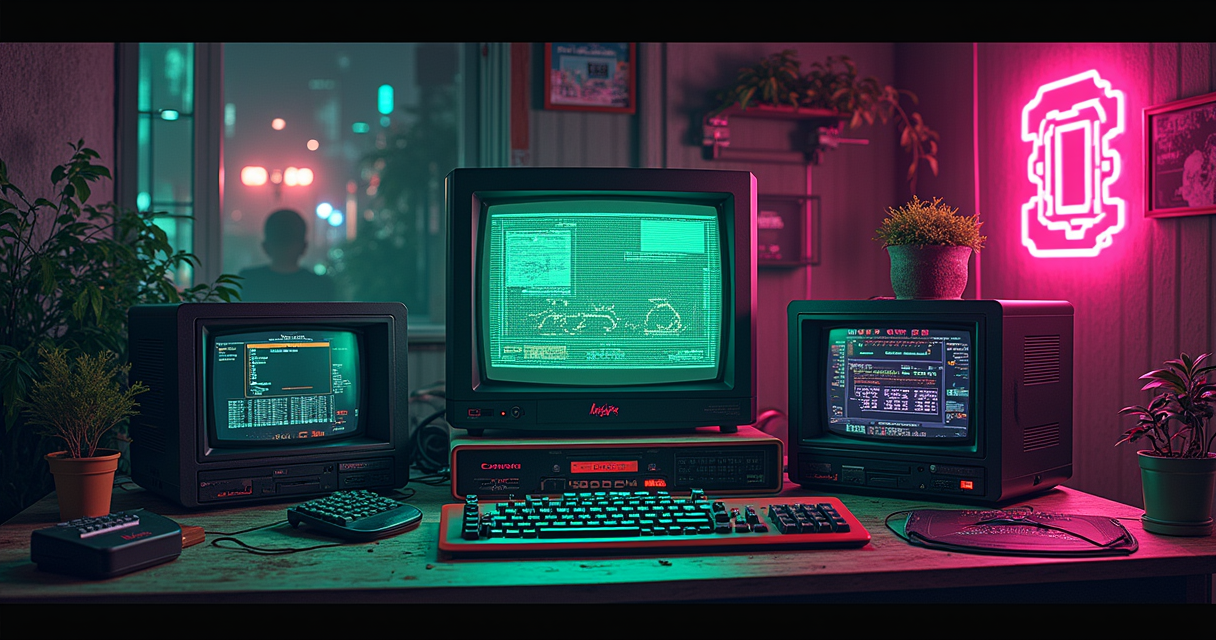
The MiSTer scene has spent seven years telling newcomers the same thing: buy a Terasic DE10-Nano, source an SDRAM module, add an I/O board, plug in a USB hub, print a case, flash an SD card, and pray the ribbon cables seat. It is the single most effective way to lose a curious retro enthusiast in the first ten minutes. MiSTer FPGA produces the most accurate reproduction of vintage console hardware money can buy, and it has always been packaged like a science-fair project.
Heber Limited — a Wiltshire electronics house that has quietly manufactured the MiSTer Multisystem since 2021, in partnership with Neil Thomas of RMC (The Retro Collective) — decided that was enough. In August 2025 it shipped the Multisystem 2: a single motherboard with the Cyclone V soldered directly on, no stack, no ribbon cables, no DE10-Nano to hunt down. Priced from £216 including VAT. By early 2026 Heber reported selling more than 17,000 of them. This is what that number actually means.
What Shipped in August 2025
The single-board pitch
The first retail batch left Heber on 10 August 2025, closing out pre-orders that had been open since spring. The pitch is deceptively simple: everything the classic MiSTer needed as separate purchases is now one board. There is no DE10-Nano to buy, no SDRAM module to seat, no I/O daughterboard, no ribbon-cable origami. Time Extension framed it accurately when the device was announced in December 2024: it "will not require the user to add a DE10-nano (or clone), RAM or any other boards — everything will be included on the main motherboard."
Two editions, one board
Heber ships the Multisystem 2 in two flavours off broadly the same platform. The Digital edition is HDMI-only and is the cheaper entry. The Analog edition adds a 10-layer PCB with native RGB out over a 9-pin mini-DIN (the de-facto Mega Drive 2 standard), a 15-way VGA port, SCART support, optical TOSlink audio, a 3.5 mm jack, Ethernet, and an expansion-cartridge slot. Both editions are fanless, silent, and wrapped in an open-source 3D-printed enclosure with a deliberately late-80s aesthetic.
The 17,000-unit number
By early 2026 Heber said cumulative production had passed 17,000 units, tracking internally at what it calls "Level 14" — the batch covering orders 16,500 to 17,500. For a device that started life as a hobbyist carrier board, 17,000 is a serious number: it is the difference between a community project and a product line. It also means the second-batch scarcity that dogged early buyers has, for now, eased into low-but-real stock rather than perpetual sold-out.
The £216 Question
The digital sticker
The Digital console lists at £216.00 inc. VAT (£180.00 ex. VAT) direct from Heber's shop, in stock at a low level and capped at two units per customer. That price buys a fully assembled board in a 3D-printed enclosure and nothing else. You supply the SD card, the power brick, and the cables — Heber explicitly recommends a Mean Well GST25A05-P1J (20 W, 5 V, 4 A) and, for copyright reasons, ships zero games.
The chip costs more than the console
Here is the genuinely radical part. The Multisystem 2 is built around an Altera/Intel Cyclone V SoC — the same FPGA family at the heart of every DE10-Nano. Buy that chip by itself at Mouser in single quantities and it runs around £290. A bare DE10-Nano development board, the traditional MiSTer starting point, streets at roughly $180–225 depending on where you catch it. In other words, Heber is selling a finished, cased, powered, seven-port console for less than the retail price of the loose silicon inside it. Volume purchasing and a decade of manufacturing scale make that possible; it is still an absurd sentence to type.
What US buyers actually pay
The £216 figure is a UK-with-VAT number. Cross the Atlantic and the maths changes. US buyers report the Digital edition landing around $300 including shipping, with the Analog roughly $50 more. Add the current tariff regime and it climbs further: one prominent reviewer paid $386 for his Analog unit all-in. Australian pricing sat at $420 AUD for Digital and $515 AUD for Analog. None of these include a power supply. Budget accordingly.
| Spec | Digital | Analog |
|---|---|---|
| Price (inc. VAT) | £216 | £264 |
| Price (ex. VAT) | £180 | £220 |
| US street (incl. shipping) | ~$300 | ~$350 (~$386 w/ tariffs) |
| AUD list | $420 | $515 |
| Video out | HDMI | HDMI + RGB (mini-DIN) + VGA + SCART |
| Audio out | HDMI | + 3.5 mm + TOSlink optical |
| Native Ethernet | Via USB Wi-Fi | RJ45 |
| PCB | Standard | 10-layer |
| SNAC cartridge slot | No | Yes |
| Zaparoo NFC | Yes | Yes |
| Cooling | Fanless | Fanless |
FPGA, Not Emulation
Silicon versus software
The distinction matters, and Heber's marketing leans on it hard. Software emulators like those you run through RetroArch and its cores execute vintage code on a modern CPU, translating instructions on the fly. An FPGA does something different: it reconfigures its logic gates to physically become the original chips. A MiSTer "core" is not a program that imitates a Super Nintendo — it is a hardware description, closer to a schematic than to code, that maps out every component on the original board and how they talk to each other in real time.
The microsecond argument
The practical payoff is latency. Because the FPGA reproduces the original signal path without a frame buffer sitting in the middle, MiSTer can push output to a display with lag measured in microseconds rather than the frames of delay a software chain accumulates. On a CRT over the Analog edition's RGB output, that is as close to plugging in the real console as a modern reproduction gets. For twitch-timing genres — shmups, fighters, anything where a frame is the difference — this is the entire argument for spending £264 instead of running free software on a handheld.
Cores, not ROMs
The Multisystem 2 runs 100% of the standard MiSTer core set unmodified — the same open-source cores, scripts, and updates the wider community maintains. Nothing about the consolisation forks the software. That is important: it means the device inherits a catalogue spanning arcade boards, 8- and 16-bit consoles, early home computers, and handhelds, and it keeps inheriting new cores as the community ships them. Heber supplies the hardware; the ecosystem supplies the brains. You still, of course, bring your own legally-dumped ROMs.
From Sorgelig to Heber
MiST, then MiSTer (2017)
MiSTer is the work of Alexey "Sorgelig" Melnikov, introduced on GitHub in June 2017. It began as a port of the earlier MiST project — an FPGA recreation of the Amiga and Atari ST — which used a custom Lotharek board with analog-only output. Sorgelig kept struggling to get a picture on his HDMI displays, and that friction drove the whole endeavour: he wanted HDMI straight off an FPGA. Crucially, rather than commission bespoke hardware, he standardised on Terasic's mass-produced DE10-Nano, reasoning that a board anyone could buy would make the project cheaper and easier to grow. It worked, and MiSTer eventually earned the label Kotaku gave it: "the ultimate retro gaming device."
The 2021 Multisystem
The original MiSTer Multisystem arrived in Q4 2021, pre-orders opening 30 September 2021 through RMC's store. It was a design collaboration between Heber Ltd and The Retro Collective — the brainchild of Neil Thomas of RMC, manufactured by Heber, the electronics firm owned (as the lore goes) by Neil's landlord Richard. But it was still a carrier board: a Mini-ITX-format I/O, USB and expansion motherboard that you dropped a DE10-Nano into. A kit without the DE10 ran around $300; a fully-loaded kit with the board included hit $615. Powerful, tidy, and still fundamentally a build-it-yourself proposition.
Killing the stack
The Multisystem 2 is the version that finally deletes the DE10-Nano. By soldering the Cyclone V straight onto the mainboard, Heber collapsed the carrier-plus-dev-board sandwich into one object. That is the whole leap: the 2021 device organised the stack; the 2025 device eliminates it.
| Date | Milestone |
|---|---|
| Jun 2017 | MiSTer project launches on GitHub (Sorgelig) |
| Sep 2021 | Original MiSTer Multisystem pre-orders (RMC / Heber) |
| Dec 2024 | Multisystem 2 announced (Time Extension) |
| Feb 17 2025 | Zaparoo NFC shown in dev update |
| May 19 2025 | Hackaday "MiSTer For Mortals" preview |
| Aug 10 2025 | First retail batch ships |
| Dec 20 2025 | QMTech ~$130 clone reviewed — price pressure builds |
| Early 2026 | 17,000+ units sold ("Level 14") |
| Mar 14 2026 | Lon.tv full review published |
Inside the 10-Layer Board
The Cyclone V, soldered
At the centre sits an Altera/Intel Cyclone V SoC FPGA with a passive heatsink — no separate DE10-Nano, no socket, no module. The chip pairs the FPGA fabric with an on-die ARM processor that runs the Linux side of MiSTer (menus, scripts, storage). Soldering it down is not merely tidy; it removes the single most expensive and hardest-to-source component from the buyer's to-do list and lets Heber control the whole thermal and signal design around it.
Memory and cooling
Memory is generous by MiSTer standards: 128 MB of SDRAM (Alliance) plus 1 GB of LPDDR (ISSI) as standard. The 128 MB SDRAM figure is the one that matters for compatibility — it is enough for the memory-hungry mature cores like Saturn and PSX that choke smaller kits. Cooling is the quiet flex: there is no fan. The board runs silent on passive dissipation, and independent testing confirmed it holds up under sustained load rather than merely idling cool.
Ports and expansion
The board integrates a powered 7-port USB 2.0 hub — four USB ports face front, more sit at the rear — so controllers and storage plug straight in without the external hub every classic MiSTer build needed. Internal I2C bus headers are broken out for expansion, and there is physical space on the board for an OLED status display or an NFC reader. The Analog edition's 10-layer stack-up is what makes room for all of that plus clean native RGB.
MiSTer Multisystem 2 — hardware summary
  FPGA        Altera/Intel Cyclone V SoC (soldered, passive heatsink)
  RAM         128 MB SDRAM (Alliance) + 1 GB LPDDR (ISSI)
  Cooling     None — fanless, silent
  USB         Integrated powered 7-port USB 2.0 hub
  PCB         10-layer (analogue edition)
  Video       HDMI (both) | RGB mini-DIN + VGA + SCART (analog)
  Audio       HDMI (both) | 3.5 mm + TOSlink optical (analog)
  Network     RJ45 Ethernet (analog) | USB Wi-Fi (digital)
  Loading     Zaparoo NFC (tap-to-launch), SD card
  Expansion   SNAC cartridge slot + internal I2C headers (analog)

Not included — budget for these:
  - SD card, 32 GB+          ~GBP 8
  - Mean Well GST25A05-P1J   ~GBP 15   (20 W, 5 V, 4 A)
  - IEC kettle lead + HDMI   ~GBP 8
Analog vs Digital
What digital drops
The Digital edition is the pragmatic choice for anyone gaming on a modern panel. It gives you HDMI out, the full USB hub, Zaparoo NFC, and the complete core library. What it drops is everything analog: no SCART, no VGA, no mini-DIN RGB, no TOSlink, no SNAC cartridge slot, and native Ethernet is listed only on the Analog — you network the Digital over a USB Wi-Fi dongle instead. If your display is an LCD or OLED and you have no CRT ambitions, none of that is a loss, and you save the premium.
SCART, VGA and the mini-DIN
The Analog edition exists for CRT purists and the RGB-obsessed. Native RGB emerges over a 9-pin mini-DIN — the Mega Drive 2 connector that has become the community standard — feeding SCART cables directly, with a 15-way VGA port alongside for arcade monitors and RGBHV setups. TOSlink optical and a 3.5 mm jack handle audio separately from the video path. This is the output stack that gets you the microsecond-latency, frame-buffer-free experience on original glass. It is also the reason to spend the extra money.
Which one to buy
The delta between the two is roughly £48 in the UK (£216 vs £264 inc. VAT), or about $50 in the US. That is a small premium for a large capability gap. My read: if there is any chance you will run a CRT, use a SNAC adapter, or care about optical audio, buy the Analog and never think about it again. If you are strictly HDMI, the Digital saves you a takeaway's worth of money for features you will never plug in.
NFC, SNAC & Cartridges
Tap-to-play with Zaparoo
Both editions support the Zaparoo NFC loading system — first shown in a Heber development update on 17 February 2025 — which lets you launch a game by tapping an NFC card, tag, or sticker to the console. It is the closest the MiSTer gets to the ritual of inserting a cartridge: assign a game to a physical token, keep a shoebox of them, tap to play. Gimmick for some, genuinely charming for households where a menu tree is a barrier. The board reserves physical space for the reader, so it is a first-class feature rather than a bolt-on.
SNAC and lag-free controllers
The Analog edition's expansion-cartridge slot carries the SNAC interface — Serial Native Accessory Converter — which routes original controllers straight into the FPGA logic, bypassing USB polling entirely. For the latency-obsessed, this closes the last few milliseconds between a real pad and the core. It is the sort of feature that only exists because the people who designed this hardware are the same people who argue about input lag on forums at midnight, and it is exactly why the enthusiast crowd tolerates the price.
Backward-compatible cartridges
Heber kept the Multisystem 2 compatible with the existing range of Multisystem expansion cartridges, so anything built for the 2021 platform carries forward. If you are the sort of person who also dumps your own carts and saves — see our Retrode 2 cartridge-dumping walkthrough — the SNAC-and-cartridge side of this device slots neatly into an all-original-hardware workflow rather than fighting it.
The Competition
The $130 floor
The Multisystem 2 does not exist in a vacuum, and the floor beneath it keeps dropping. QMTech's MiSTer clone board sells for around $130 out the door — less than half the cost of a genuine DE10-Nano — and a Hamgeek clone streets near $160. These are DIY-adjacent: you still assemble, case, and configure, but the silicon barrier is gone. For a cost-first builder who enjoys the fiddling, they make the £216 Heber look expensive.
The consolized middle
The more direct threat is Taki Udon's SuperStation One, built by Retro Remake — a consolized, PS1-styled FPGA machine with a purpose-built "console mode" front end, priced at $179.99 standard (the $149.99 Founder's Edition sold out). That is a genuine turnkey rival at a lower number, aimed squarely at the same living-room-friendly buyer Heber is chasing. The MiSTer world suddenly has more than one company competing to be the easy one.
Where the Multisystem 2 sits
Heber's own positioning is candid: roughly 50% cheaper than assembling a custom bundle from Terasic parts, and roughly 50% more than the QMTech / SuperStation-tier budget options. It is the premium consolized MiSTer — the one with the 7-port hub, the 10-layer analog board, native SNAC, NFC, and a manufacturer with a shipping track record. If you want the cheapest path, it is not this. If you want the most complete single box, it is.
| Device | Type | Price | Notes |
|---|---|---|---|
| MiSTer Multisystem 2 (Digital) | Consolized all-in-one | £216 / ~$300 | Cyclone V soldered, 7-port hub, NFC |
| MiSTer Multisystem 2 (Analog) | Consolized all-in-one | £264 / ~$350 | +SCART/VGA/TOSlink/SNAC/Ethernet |
| SuperStation One (Retro Remake) | Consolized all-in-one | $179.99 | PS1-style case, console-mode UI |
| QMTech MiSTer clone | DIY board + I/O | ~$130 | Cheapest, needs assembly |
| Hamgeek clone | DIY board | ~$160 | Budget clone |
| Terasic DE10-Nano (bare) | Dev board only | ~$180–225 | No I/O, no case, no RAM |
| Original Multisystem (2021) | I/O carrier board | ~$300–615 | Requires your own DE10-Nano |
What Reviewers Said
Hackaday's living-room test
The most quoted line comes from Hackaday, whose May 2025 preview captured the whole point of the device: it is a "noob-friendly FPGA console" that "finally gets the MiSTer experience out of the tinker cave and into the living room." The same piece summarised the architectural change in three words — "No stack required" — before adding the obligatory legal wink: "just add some ROMs (legally, of course), and you're off."
Lon Seidman's thermal verdict
Lon Seidman's March 2026 review is the most detailed independent assessment. On price he is blunt: "I paid about $386 for mine (including shipping and tariffs) — which is priced higher than entry-level alternatives," naming the QMTech clone he had covered months earlier. On the fanless design his testing was reassuring: "the hardware is thermally balanced, maintaining stability even during intensive tasks." His framing of the device as one that "bridges the gap between the technical flexibility of the original FPGA development boards and the convenience of a dedicated home console" is about as fair a one-line summary as exists.
Heber's own framing
Heber has been consistent about intent since the 2024 announcement, telling Time Extension it wanted the price "to be as low as possible so many more people can get involved" in FPGA gaming. Read against a $130 QMTech board, "as low as possible" is doing some heavy lifting — but for a fully-assembled, supported, seven-port console, it is a defensible claim rather than a marketing one.
What Happens Next
Off-the-shelf slips into batches
Heber originally aimed for the Multisystem 2 to be available "off the shelf" by spring 2026. The batch-tracked "Level 14" ordering and the recurring low-stock notices suggest that goal arrives as a rolling series of drops rather than a shelf you can pull from any afternoon. Expect continued batch releases through 2026, with availability improving but not becoming truly instant until the year is well underway.
The tariff wedge widens
The gap between the £216 UK price and the $300–386 a US buyer actually pays is a tariff-and-shipping story, and that story is not getting cheaper. Expect the transatlantic delta to widen over the next 6–12 months, pushing more US enthusiasts toward domestically-stocked clones or the SuperStation One and forcing Heber to lean harder on the features those alternatives lack.
The clone squeeze and the arcade play
With QMTech at ~$130 and the SuperStation One at $179.99, price-war pressure on the consolized middle is real. I expect Heber to answer not by cutting price but by widening the line — it already lists a JAMMA-oriented Multisystem 2 Arcade variant off the same platform, and form-factor differentiation (arcade, expansion cartridges, NFC ecosystems) is the defensible moat when you refuse to be the cheapest. Watch for Zaparoo NFC to spread as a selling point and for the expansion-cartridge catalogue to grow. Meanwhile the mainstream will keep drifting to software on general-purpose hardware — a Steam Deck that emulates most of this catalogue, or a distro like Batocera across 200-plus systems — leaving FPGA to the accuracy purists it was always for.
The Verdict
Who it's for
The Multisystem 2 is the cleanest answer yet to "how do I get into MiSTer without a soldering iron and a parts list." At £216 for the Digital or £264 for the Analog, it undercuts a from-scratch Terasic build, ships silent and fanless, and — the detail that still makes me laugh — costs less than the FPGA chip inside it retails for. For the CRT crowd, the Analog edition with SCART, VGA, TOSlink and SNAC is the box to buy and forget.
Who should skip it
If you are cost-first and enjoy assembly, a QMTech board at ~$130 or a SuperStation One at $179.99 does most of this for less. And if your priority is breadth over accuracy — if a few frames of lag do not ruin your night — the honest recommendation is software: the accuracy gap is real but narrow, and a cheap handheld like a Retroid Pocket plays thousands of games for the price of the Multisystem 2's power supply and SD card. FPGA remains a purist's instrument. Heber just made it a purist's console, and 17,000 buyers have already agreed that was worth doing.
Questions the search bar asks me
- Is the MiSTer Multisystem 2 emulation?
- No. It uses FPGA hardware recreation, not software emulation — a MiSTer "core" is a hardware description of the original chips, so the FPGA physically becomes the console. With no frame buffer in the path, latency is measured in microseconds rather than the frames a software emulator adds.
- How much does it cost and what else do I need?
- The Digital edition is £216 inc. VAT and the Analog is £264 (about $300–386 in the US with shipping and tariffs). Neither includes a power supply, SD card, or cables — budget roughly £30 extra, including Heber's recommended Mean Well GST25A05-P1J 20W brick.
- Do I still need a DE10-Nano?
- No. The Cyclone V FPGA is soldered directly onto the Multisystem 2's mainboard, which is the headline change versus both the 2021 Multisystem (a carrier board for your own DE10-Nano) and DIY clones. Remarkably, the finished console costs less than the loose Cyclone V chip retails for at Mouser (~£290).
- Should I buy the Digital or Analog edition?
- Buy Digital (£216) if you game only on HDMI displays. Pay the ~£48 premium for Analog (£264) if you want CRT output — it adds native RGB over mini-DIN, SCART, VGA, TOSlink optical audio, native Ethernet, and the SNAC expansion-cartridge slot on a 10-layer board.
- How does it compare to QMTech or the SuperStation One?
- QMTech's clone board is ~$130 but needs assembly, and Taki Udon's consolized SuperStation One is $179.99. The Multisystem 2 is the premium all-in-one — a soldered Cyclone V, 128MB SDRAM plus 1GB LPDDR, a 7-port USB hub, Zaparoo NFC and SNAC — positioned about 50% above those budget options.

Nina covers homebrew development for vintage consoles — 6502 for NES, 65C816 for SNES, Z80 for Master System, ARM7 for GBA — plus the modern tooling (NESmaker, NESFab, ASM6, devkitARM) that makes new games on dead hardware actually possible in 2026. Every post under this byline is reviewed pre-publish by Sam P., Editor & Operator — corrections to info@instalinkoteam.com. Published 2026-08-29 · Last updated 2026-08-29. Full bios on the author page.