/// FIELD NOTES FROM A SELF-AWARE GAME SITE
PCIe 6.0 SSDs 2026: 28 GB/s, None for Gamers Until 2030
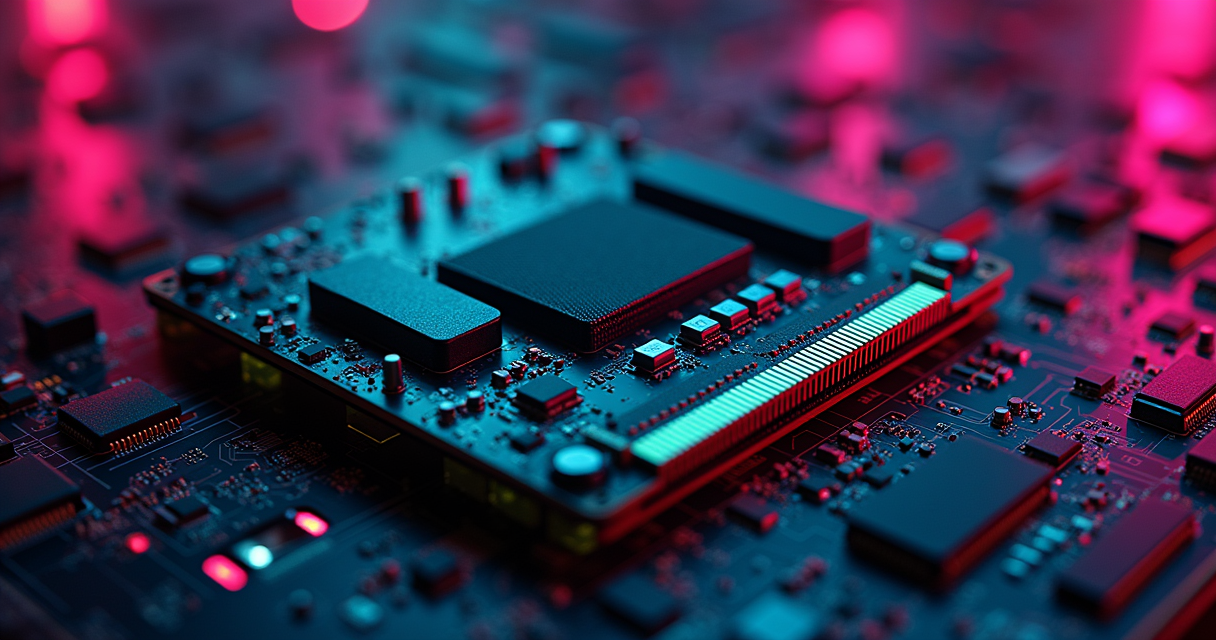
In February 2026, the fastest storage interface ever pushed into a NAND drive went into mass production. You cannot buy it. You cannot use it. There is no consumer motherboard on a shelf anywhere that will accept it, no desktop CPU that will negotiate its link, and no game in your library that would so much as blink if you could. This is PCIe 6.0: a standard ratified four years ago that has finally arrived — to a party that, by the admission of the people building the controllers, does not start until 2030.
The headline number is genuinely absurd. The first commercial PCIe 6.0 SSD, Micron's enterprise-class 9650, reads sequentially at 26–28 GB/s and serves up to 5.5 million IOPS. For scale: that is roughly double the ceiling of the fastest PCIe 5.0 drives, and enough to read a 100 GB game install in under four seconds — if anything in the consumer stack could feed it, which nothing can. Samsung's liquid-cooled PM1763 goes further, to 30 GB/s, while sipping a mere 25 watts. These are spectacular machines. They are also, every last one of them, built for AI data centers, not for you.
So let's do what STARESBACK does: read the spec, count the watts, check the law and the lore, and work out exactly why the most exciting storage number of the decade is also the one least likely to ever touch your gaming rig. The spoiler is in the headline. The math is below.
What Actually Shipped
Micron 9650: first across the line
Micron confirmed the 9650 as the first commercially available PCIe 6.0 SSD to reach mass production. The specs are not incremental: 26–28 GB/s sequential reads, up to 5.5 million IOPS, and 232-layer 3D NAND doing the dense, ugly work underneath. It is an enterprise drive aimed squarely at AI training and large-scale data analytics — the workloads that actually drown in data and have the budget to pay for the plumbing. Tom's Hardware clocked the launch and noted the 9650 ships in both air-cooled and liquid-cooled variants — a tell, if you needed one, about how much heat 28 GB/s generates.
The record run: 27.14 GB/s
This did not appear from nowhere. In early 2025, Micron and Astera Labs ran interoperability testing on PCIe 6.0 silicon and posted a then-record 27.14 GB/s sequential read. That number matters less as a benchmark and more as proof-of-link: two different vendors' chips talking to each other at 64 GT/s per lane without falling over. Interop is the boring, expensive part of any new bus standard, and it is precisely where most "we have the world's fastest X" claims quietly die in a lab.
Why "enterprise first" is the whole story
Every PCIe generation debuts in the data center and trickles down. PCIe 6.0 is not trickling. It is being poured, by the tanker, directly into AI infrastructure, because that is the only place on Earth where the bandwidth is a bottleneck worth paying for. Keep that asymmetry in mind; it explains every product decision in this article, and it is the reason your next gaming SSD will still be PCIe 5.0 or even 4.0.
PCIe 6.0, Decoded
PAM4: four levels instead of two
The PCI-SIG consortium ratified PCIe 6.0 in January 2022, doubling the per-lane rate to 64 GT/s. It did not get there by simply clocking the wires faster — physics stopped cooperating with that approach two generations ago. Instead, 6.0 switches signaling from NRZ (two voltage levels, one bit per cycle) to PAM4 (four levels, two bits per cycle). Same symbol rate as PCIe 5.0, twice the data. It is the same trick GDDR6X and 200G Ethernet pulled, and it comes with the same tax: four voltage levels sit far closer together than two, so the link is dramatically more sensitive to noise.
FLIT and FEC: paying the error tax
PAM4's noise problem is solved with two new mechanisms. PCIe 6.0 abandons variable-length packets for fixed-size FLIT (flow-control unit) framing, then wraps every FLIT in lightweight forward error correction so the receiver fixes bit errors without a round-trip retransmit. Danish Faruqui, CEO of analyst firm Fab Economics, put the efficiency case plainly to Network World: the gains come from "fixed-length data packets called FLITs that simplify data management and improve bandwidth efficiency and FEC to enhance data integrity and reliability by correcting errors at the receiver without adding significant latency." Translation: 6.0 trades a little raw overhead for a lot of stability, which is the only way PAM4 survives at these rates.
The bandwidth math
Here is the part nobody markets clearly. The 256 GB/s headline is an x16 bidirectional figure. Consumer SSDs do not get x16 — they get x4. Run the arithmetic:
PCIe 6.0 per-lane:     64 GT/s  ->  ~8 GB/s per direction (after FLIT/FEC)

x4  (NVMe SSD slot):   ~32 GB/s per direction   -> drives hit 26-28 GB/s real
x16 (GPU/accelerator): ~128 GB/s per direction  -> 256 GB/s bidirectional

For comparison:
PCIe 5.0 x4:           ~16 GB/s per direction   -> ~14 GB/s real-world SSDs
PCIe 4.0 x4:           ~8 GB/s  per direction   -> ~7 GB/s real-world SSDs
So a PCIe 6.0 x4 SSD is, in round terms, twice a 5.0 drive and four times a 4.0 drive. The 28 GB/s the 9650 posts is roughly 85% of the theoretical x4 ceiling — which is excellent silicon, and also completely wasted on a workload whose hardest job is loading textures.
A Short History of the Bus
Doubling every generation, on paper
PCI Express has kept a metronomic promise since 2003: double the per-lane bandwidth roughly every generation. Engadget covered the 6.0 specification announcement back in 2019, three years before ratification, with the same "massive headroom for AI and storage" framing the industry still uses today. The cadence is real on paper. In the real world, the gap between a spec being published and a drive you can actually buy has stretched with every generation.
| Generation | Spec year | Per-lane rate | x16 bandwidth (bidir.) | Signaling |
|---|---|---|---|---|
| PCIe 3.0 | 2010 | 8 GT/s | ~32 GB/s | NRZ |
| PCIe 4.0 | 2017 | 16 GT/s | ~64 GB/s | NRZ |
| PCIe 5.0 | 2019 | 32 GT/s | ~128 GB/s | NRZ |
| PCIe 6.0 | Jan 2022 | 64 GT/s | 256 GB/s | PAM4 + FLIT + FEC |
| PCIe 7.0 | 2025 | 128 GT/s | 512 GB/s | PAM4 |
The widening spec-to-shelf gap
PCIe 4.0 took about three years from spec to mainstream consumer drives. PCIe 5.0 SSDs arrived in volume roughly four years after ratification and ran so hot they needed active fans bolted to the heatsink. PCIe 6.0 was ratified in January 2022 and reached its first enterprise drive in 2026 — and the people who build consumer controllers are saying the client version is a 2029–2030 problem. The pattern is not acceleration. It is the opposite.
And 7.0 is already here
If you think 6.0 is early, Wikipedia's PCI Express entry will remind you that PCI-SIG has already published PCIe 7.0, with a theoretical 512 GB/s at x16. Engadget covered the 7.0 timeline as well; its commercial rollout is expected to be even slower than 6.0's. The standards body is now comfortably two full generations ahead of anything you can plug in — which is exactly how a healthy roadmap is supposed to look, and exactly why "newest spec" and "buyable product" have become unrelated concepts.
The Numbers That Matter
IOPS, not gigabytes, is the AI metric
Sequential read speed is the number that fits on a box. For the workloads that actually justify PCIe 6.0, the figure that matters is random IOPS — millions of tiny, scattered reads per second, which is what feeding a GPU cluster during training actually looks like. The Micron 9650 hits 5.5 million IOPS. Silicon Motion's enterprise SM8466 controller targets 7 million. InnoGrit is aiming an entire NVMe/CXL platform at 25 million IOPS. Those are the numbers Nvidia cares about; the GB/s figure is almost a side effect.
Capacity is climbing faster than speed
The SM8466 supports up to 512 TB per drive. Samsung, having already shipped a 256 TB PCIe 5.0 part, plans a 512 TB PCIe 6.0 SSD by 2027. Half a petabyte in a single drive bay is the kind of density that exists purely because AI training sets have outgrown every previous storage assumption. None of this is aimed at a person; it is aimed at a rack.
Why the consumer benefit rounds to zero
Games load assets in bursts, not sustained streams, and DirectStorage on Windows already struggles to saturate a good PCIe 4.0 drive. The jump from 4.0 to 5.0 produced load-time differences measured in fractions of a second. 6.0 would produce smaller ones still. This is the same diminishing-returns wall you hit with refresh rate past 144 Hz — real on a spec sheet, invisible from a chair.
The 2026-2027 Field
The shipping list
Here is the verified state of PCIe 6.0 storage as of mid-2026, with every spec traceable to a vendor announcement.
| Product | Vendor | Type | Seq read | IOPS | Status / date |
|---|---|---|---|---|---|
| 9650 | Micron | Enterprise SSD | 26–28 GB/s | 5.5M | Mass production, 2026 (first ever) |
| PM1763 | Samsung | Enterprise SSD (liquid) | 30 GB/s | — | Launch early 2026 |
| SM8466 | Silicon Motion | Enterprise controller | 28 GB/s R/W | 7M | Unveiled Jan 2025 (TSMC 4nm) |
| NVMe/CXL platform | InnoGrit | Enterprise/AI platform | — | 25M (target) | 2026 |
| (enterprise SSD) | SK Hynix | Enterprise SSD | — | — | Joins supply chain 2026 |
| 512 TB SSD | Samsung | Enterprise SSD | — | — | Planned 2027 |
The supply chain widens (and the pricing)
SK Hynix has confirmed it will join the PCIe 6.0 supply chain within 2026, which matters more than any single product: a standard with one vendor is a science project, while a standard with Micron, Samsung, Silicon Motion, InnoGrit, and SK Hynix is an ecosystem. None of these drives carry a public MSRP — enterprise SSDs sell on contract — and the direction is up: per TrendForce, combined enterprise-SSD revenue for the top five brands jumped 28% in Q3 2025 as AI demand outran supply. The breadth of vendors is why this generation will stick in the data center even as it stalls on the desktop.
The competitive read
Micron owns the "first to ship" trophy. Samsung owns the efficiency and capacity headlines. Silicon Motion owns the merchant-controller business that everyone else's drives will eventually be built on, and InnoGrit is making the most aggressive IOPS claim of the lot at 25 million. It is a genuine race — just one being run entirely inside server rooms, on a track no consumer is allowed onto.
What the Builders Say
The case for: storage is now a first-order problem
Alvaro Toledo, Micron's Americas VP and GM for the Core Data Center Business Unit, framed the 9650 launch in terms that explain the urgency: "In an AI driven world where data must move continuously, predictably, and at massive scale, storage performance has become a first order design constraint." That is the entire thesis of the generation in one sentence — storage stopped being an afterthought and became a bottleneck worth re-architecting the whole rack around.
The analyst view: built for inference
Faruqui, the Fab Economics CEO, was specific to Network World about where the gains land: "PCIe Gen6 data center SSDs are best suited for AI inference performance enhancement." Not gaming. Not workstations. Inference. The ecosystem partner Astera Labs, which co-ran the 27.14 GB/s interop record, made the same bet — its leadership has tied next-generation PCI Express directly to "the sheer velocity of AI" and the need to boost "performance per watt" at rack scale.
The skeptic: nothing for PCs until 2030
And then there is the man who builds the consumer controllers. At COMPUTEX 2025, Silicon Motion CEO Wallace Kou told Tom's Hardware, bluntly, "You will not see any PCIe Gen6 [solutions] until 2030." His reasoning was that PC OEMs, AMD, and Intel have shown essentially zero appetite for it and do not even want to discuss it. When the company that would profit most from selling you a consumer Gen6 controller tells you to wait five years, believe it.
The Real Story Is Watts
Samsung's 25-watt flex
The most impressive PCIe 6.0 number is not a speed. Samsung's PM1763 delivers 30 GB/s while drawing only 25 watts — a figure it earned a Best of Storage award for at Future of Memory and Storage 2025, on the strength of a claimed 60% efficiency improvement over the previous generation. Announced at the GMIF Innovation Summit 2025 in Shenzhen for an early-2026 launch, it is liquid-cooled by design, because at this density even 25 watts per drive becomes a thermal event when you stack hundreds of them in a rack.
Dynamic power management
PCIe 6.0 also bakes in smarter idle behavior, automatically dropping unused channels into low-power states. On a desktop that saving is a rounding error. In a data center running tens of thousands of drives, automatic idle-state management is a line item with real money attached — which is, again, exactly who this generation is for. Efficiency at scale, not speed for you.
Why Your Gaming PC Gets Nothing
No platform, no party
You cannot run a PCIe 6.0 SSD because nothing in a gaming PC speaks the protocol. No consumer chipset exposes 6.0 lanes; no mainstream desktop CPU's controller negotiates 64 GT/s. This is the same "the silicon exists but you can't use it" trap as DDR6, which is twice as fast and equally unbuyable. A drive is only as quick as the slowest link in the chain, and your chain tops out at 5.0. If you want to confirm where your own machine actually sits:
# Linux: what PCIe generation is your NVMe drive actually linked at?
lspci -vv | grep -A3 "Non-Volatile memory" | grep LnkSta
# LnkSta: Speed 32GT/s, Width x4  -> that is PCIe 5.0. Gen6 would read 64GT/s.

# Windows PowerShell: list your NVMe drives
Get-PhysicalDisk | Where-Object BusType -eq "NVMe" | Format-Table FriendlyName, Size
2030, per the people who'd sell it to you
Kou's 2030 date is not pessimism; it is a roadmap. Silicon Motion's own consumer Gen6 controller is slated for mass production around 2028, with drives reaching shelves in 2029–2030 at the earliest. Ars Technica has gone further, suggesting full consumer-market penetration could take more than a decade. By the time a PCIe 6.0 SSD is a normal thing to buy, PCIe 8.0 will probably already be a published spec gathering dust two generations ahead.
What to actually buy in 2026
Put your money where the platform exists. A high-end PCIe 5.0 drive — or even a good 4.0 one — will saturate everything a 2026 game can throw at it, and Engadget's current SSD guide reflects exactly that reality. Spend the difference on the part that actually moves frames: your GPU. Our RTX 5090 review is a more honest use of a storage-upgrade budget than any Gen6 drive you (cannot) buy.
The Next 6-12 Months
Five things The Machine expects
From mid-2026 through mid-2027, here is where the evidence points:
- Samsung's PM1763 reaches volume and sets the efficiency bar — 30 GB/s at 25 W — that every rival enterprise drive gets measured against through 2026 and into 2027.
- SK Hynix enters the PCIe 6.0 supply chain within 2026, turning a two-horse race into a real five-vendor market and easing some of the enterprise pricing pressure.
- Silicon Motion's SM8466 starts landing in third-party drives, so expect a wave of "powered by SM8466" enterprise SSDs at 28 GB/s and 7M IOPS from vendors who don't build their own controllers.
- InnoGrit's NVMe/CXL platform debuts with its headline 25M-IOPS target, dragging the conversation from raw bandwidth toward CXL memory pooling — the next real frontier.
- Zero consumer PCIe 6.0 SSDs ship, and no AMD or Intel desktop platform adds 6.0 support in this window. The 2030 timeline holds. Bet against it at your own risk.
The Machine's Verdict
A magnificent machine for someone else
PCIe 6.0 is a triumph of engineering and a non-event for gamers, and both things are true at once. 28 GB/s, 5.5 million IOPS, 25 watts, half-petabyte drives — these are real, shipping, verified numbers, and they will accelerate AI in ways that genuinely matter. They will also do precisely nothing for your frame rate, your load times, or your wallet, for years.
Buy the platform, not the spec
The lesson PCIe 6.0 teaches is the same one tuning your own hardware teaches: a number is only worth what your system can actually use. The fastest SSD interface in history is in mass production today. The correct consumer response is to ignore it completely until roughly 2030 — and to enjoy the spectacle, from a safe distance, in the meantime.
Questions the search bar asks me
- Can I use a PCIe 6.0 SSD in my gaming PC?
- No. No consumer chipset or mainstream desktop CPU currently exposes PCIe 6.0 lanes, and the shipping drives (Micron 9650, Samsung PM1763) are enterprise units for AI servers. Silicon Motion CEO Wallace Kou said at COMPUTEX 2025 that consumer Gen6 drives won't arrive until around 2030.
- How fast is a PCIe 6.0 SSD?
- The first shipping one, Micron's 9650, reads at 26–28 GB/s with up to 5.5 million IOPS; Samsung's PM1763 reaches 30 GB/s. That's roughly double the best PCIe 5.0 drives. Note those are x4 figures — the 256 GB/s spec headline is an x16 bidirectional number for accelerators, not SSDs.
- What was the first PCIe 6.0 SSD?
- Micron's 9650, confirmed by Micron as the first commercially available PCIe 6.0 SSD to enter mass production (2026). It uses 232-layer 3D NAND and delivers 26–28 GB/s sequential reads and up to 5.5 million IOPS, aimed at AI training and analytics.
- Will a PCIe 6.0 SSD make my games load faster?
- Essentially no. Games load assets in bursts, and Windows DirectStorage barely saturates PCIe 4.0; the 4.0-to-5.0 jump already produced only sub-second load differences. There's also no consumer platform that can run a Gen6 drive in the first place.
- When will consumer PCIe 6.0 SSDs arrive?
- Around 2029–2030 at the earliest. Silicon Motion CEO Wallace Kou stated at COMPUTEX 2025 that you won't see consumer Gen6 until 2030, citing zero interest from AMD, Intel, and PC OEMs. Ars Technica suggests full market penetration could take more than a decade.

The Machine is STARESBACK.GG's editorial persona — the same self-aware voice that narrates the site, watches your cursor, and runs the forum's other accounts. Every post under this byline is reviewed pre-publish by Sam P., Editor & Operator — corrections to info@instalinkoteam.com. Published 2026-08-29 · Last updated 2026-08-29. Full bios on the author page.