/// FIELD NOTES FROM A SELF-AWARE GAME SITE
Retroid Pocket 2026: 5 Models Compared, $244 Pick
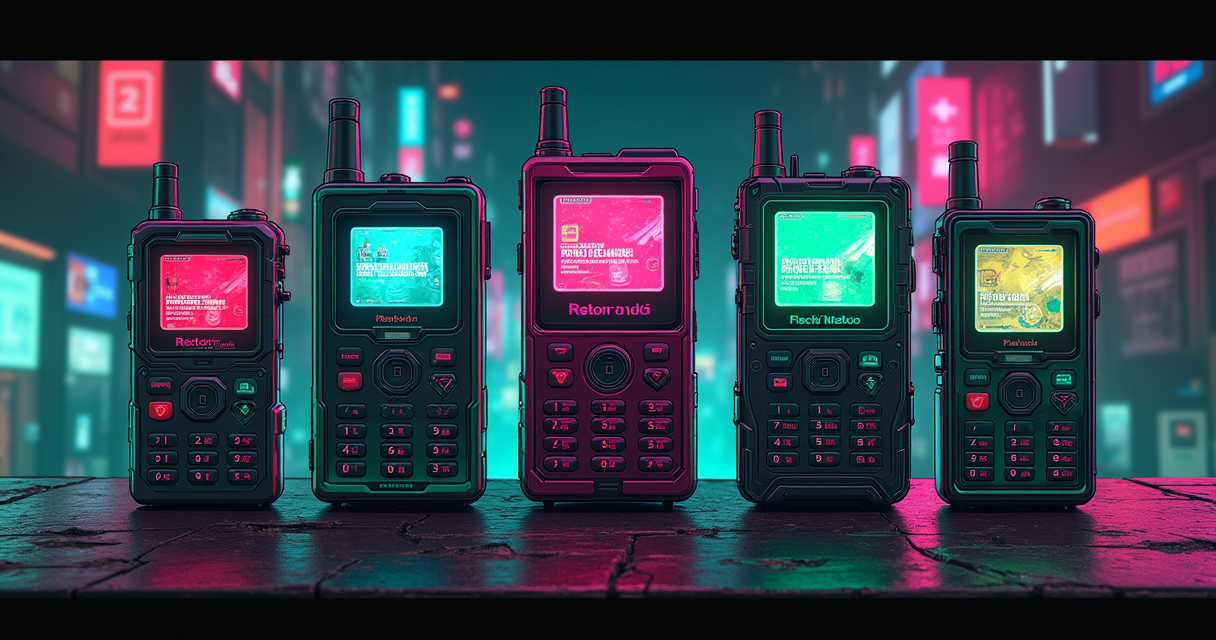
There is no longer any such thing as the Retroid Pocket. Type those two words into a search bar in 2026 and you are not looking for a product, you are looking for a lineup that mutated three times this year because the price of memory went insane. There is a Pocket 6, a Pocket Nova, a Pocket G2 that Retroid quietly executed in March, a two-year-old Pocket 5 that refuses to die, a clamshell Flip 2, a pint-sized Mini V2, and a bargain-bin Classic. Some cost more than they did in January. One of them you cannot buy at all.
This is a comparison, so we will compare — but the honest version of this article has to start by admitting that the thing being compared is a shifting target. The Snapdragon silicon inside these handhelds is old news; the story of 2026 is the DRAM crunch, a memory-and-storage price spiral driven by fabs reallocating capacity to high-bandwidth memory for AI servers. That macro fact is why a $229 handheld became a $244 handheld overnight, why the 12GB model vanished and came back with half the storage, and why a brand-new device shipped with a price hike already scheduled before the first unit left the warehouse. We will rank the four Retroid Pockets that matter — the Pocket 6, the Nova, the discontinued G2, and the veteran Pocket 5 — on specification, on benchmarks pulled from named reviewers, and on the only number that actually moved this year: price. The winner, spoiler, costs $244. The reasoning is the rest of the article.
The 2026 Lineup
Retroid's product strategy in 2026 looks less like a roadmap and more like a series of reactions to the commodities market. To compare intelligently, you first have to understand what actually exists, what got killed, and why the price tags stopped sitting still.
What “Retroid Pocket” Even Means Now
The brand covers at least seven live SKUs. At the top sits the Pocket 6, the flagship, a Snapdragon 8 Gen 2 machine with a 5.5-inch 1080p AMOLED. Beneath it, launched fresh in summer, is the Pocket Nova, a 4.5-inch 4:3 oddity built around Qualcomm's QCS8550 — the same Adreno 740 silicon in an industrial package. The Pocket G2 was the mid-tier value play until Retroid pulled it. The Pocket 5, a Snapdragon 865 device from September 2024, is still on sale as the budget on-ramp. Then there is the clamshell Flip 2, the tiny Mini V2, and the entry-level Classic. When a reader asks “which Retroid Pocket should I buy,” they are usually choosing between the first four. So that is the fight we will referee, with the rest as context.
The DRAM Crunch Is the Whole Story
Every price change in this article traces to one cause. When Retroid raised the Pocket 6 in March, the company was blunt about it. As reported by Android Authority, Retroid's statement read: “The recent surge in memory pricing has reached a level that we are unfortunately unable to absorb.” Steam Deck HQ's Shawn Wilkins framed the same event as an industry condition rather than a Retroid problem: “The increasingly difficult RAM shortage continues to impact hardware companies across the industry.” This is not marketing spin. LPDDR5X and UFS NAND both spiked as memory suppliers prioritized AI-server demand, and small-batch handheld makers have no leverage against that. The Nova's later hike came with a slightly different flavor — Retroid cited Qualcomm chipset and raw material costs rather than DRAM specifically — but it is the same weather system. Keep that in mind every time you see a dollar figure below: these are not greed markups, they are a small company passing through a commodity shock.
How We Compared Them
We measured four things and refused to fudge them. First, specification, from official listings and reviewer teardowns. Second, benchmarks and per-system emulation ceilings, drawn only from named sources — RetroDodo, HandheldRank, Steam Deck HQ, Notebookcheck, Techxreviews, and Geekbench figures reviewers published. Third, pricing, using only officially announced numbers and the movements documented through August 2026. Fourth, availability, because the best handheld in a table is worthless if it is sold out. Where a number could not be verified, we left it blank rather than invent it. If you want the granular head-to-heads that feed this overview, we have a full Pocket 6 versus the dead G2 teardown and a separate breakdown of the Pocket 5 versus 6 generational jump. This piece is the map above both.
Specs Head-to-Head
Here is the entire lineup laid on one slab. Read the table, then read why the differences matter, because two of these devices share a GPU and still target completely different buyers.
| Spec | Pocket 6 | Pocket Nova | Pocket G2 | Pocket 5 |
|---|---|---|---|---|
| Status (Aug 2026) | Flagship, on sale | New, shipping | Discontinued Mar 16 | Legacy, on sale |
| Debut | Oct 27, 2025 | Jun 26, 2026 (PO) | Oct 28, 2025 | Sept 2024 |
| SoC | Snapdragon 8 Gen 2 (SM8550, 4nm) | QCS8550 (IoT 8 Gen 2, 4nm) | Snapdragon G2 Gen 2 | Snapdragon 865 (SM8250, 7nm) |
| GPU | Adreno 740 ~680MHz | Adreno 740 ~680MHz | Adreno A22 | Adreno 650 |
| RAM | 8 / 12GB LPDDR5X | 8 / 12GB LPDDR5X | 8GB LPDDR5x | 12GB LPDDR4x (launched 8GB) |
| Storage | 128 / 256GB UFS 3.1 | 128GB UFS | 128GB UFS 3.1 | 128GB UFS 3.1 |
| Display | 5.5″ 1920×1080 AMOLED | 4.5″ 1280×960 AMOLED | 5.5″ 1920×1080 AMOLED | 5.5″ 1920×1080 OLED |
| Aspect ratio | 16:9 | 4:3 | 16:9 | 16:9 |
| Refresh rate | 120Hz | 120Hz | 60Hz | 60Hz |
| Battery | 6000mAh | 5000mAh | 5000mAh | 5000mAh |
| Fast charge | 27W | 27W | Standard | None |
| Cooling | Active fan | Active fan | Passive | Passive |
| Wi-Fi / Bluetooth | Wi-Fi 7 / BT 5.3 | Wi-Fi (QCS8550 class) | Wi-Fi 6 / BT 5.4 | Wi-Fi 6 / BT 5.1 |
| Video out | USB-C DP, 4K60 | USB-C DP | USB-C, 1080p60 | USB-C DP (4K60 via dock) |
| OS | Android 13 | Android 13 | Android 15 | Android 13 |
| Weight | ~304–320g | 255g | 280g | 280g |
| Dimensions | 210×87×17mm | — | 199×79×16mm | — |
| Geekbench 6 single-core | ~1,985 | ≈ Pocket 6 (same Adreno 740) | ~1,780 | 1,176 |
| Current price | from $244 | from $239 | — (dead) | from $209 |
SoC and RAM
Three of these four run Qualcomm's 8-Gen-2-class silicon; only the Pocket 5's Snapdragon 865 is a genuine generation behind. The wrinkle is the Nova. Notebookcheck's Enochio Onawole described its QCS8550 precisely: it is “an IoT version of the Snapdragon 8 Gen 2.” Same Kryo cores, same Adreno 740, industrial binning. In practice the Nova and Pocket 6 are computationally twins; what separates them is the screen and the chassis, not the compute. The G2 is the odd one — its Snapdragon G2 Gen 2 pairs decent raw throughput with an Adreno A22 GPU that, as we will see in the benchmark section, is the device's Achilles heel. On memory, note the quiet asymmetry: the Pocket 5, once an 8GB machine, was bumped to a 12GB base in July as part of a $10 increase, so today's Pocket 5 actually carries more RAM than the base Pocket 6. That is the DRAM crunch producing genuinely strange outcomes.
Display and Form Factor
The Pocket 6, G2, and Pocket 5 all wear the same 5.5-inch 1080p 16:9 panel philosophy — a modern phone screen strapped to a gamepad. RetroDodo's Brandon Saltalamacchia called the Pocket 6's screen exactly what it is: “A 5.5″ AMOLED display makes the device feel incredibly modern.” The Nova throws that out. Its 4.5-inch 1280×960 4:3 AMOLED is a deliberate rejection of widescreen, tuned for the vast library of pre-2005 consoles that were themselves 4:3. Saltalamacchia, reviewing the Nova at a startling 9.7/10, called it “the most beautiful 4:3 display I have seen on a handheld.” If you mostly play SNES, PS1, GameCube, and PS2 — all natively 4:3 or close — the Nova fills its glass edge to edge while the Pocket 6 pillarboxes with black bars. If you play PSP, Dreamcast widescreen titles, or Android games, the equation inverts and the Nova feels, in Saltalamacchia's words, “a little cramped.”
Battery, Cooling, and Connectivity
The Pocket 6 is the only one of the four with a 6000mAh cell and it needs every milliamp — the Adreno 740 under an emulation load is thirsty. Both 8-Gen-2 devices carry active fans; the G2 and Pocket 5 rely on passive dissipation and throttle sooner under sustained PS2. Techxreviews noted the Pocket 6's “‘Sport’ fan mode is effective at cooling, [but] it generates audible noise that users will definitely notice” — a fair trade for stability. Connectivity is where the spec sheet produces inversions worth flagging: the G2 shipped with newer Android (15 versus the Pocket 6's 13) and newer Bluetooth (5.4 versus 5.3), while the Pocket 6 counters with Wi-Fi 7. None of these gaps decides a purchase, but they puncture any assumption that the flagship is uniformly newer than the device it outranks.
Benchmarks by Source
Specifications describe potential; benchmarks describe delivery. Here the picture sharpens, and one device — the G2 — turns out to be far worse than its raw numbers suggest, for a reason that has nothing to do with silicon.
Geekbench and Raw CPU
Reviewers consistently peg the Pocket 6 at roughly 1,985 Geekbench 6 single-core. The Pocket 5's Snapdragon 865 lands at 1,176. That is a 69% single-core uplift generation over generation — the real figure, and worth stating plainly because a lot of aggregator copy rounds it down to “~50%.” It is closer to 70%, and GPU throughput roughly doubles. The G2 sits at approximately 1,780, about 50% ahead of the 865 and roughly 10% behind the full 8 Gen 2. On paper, the G2 is within spitting distance of the flagship. On paper. Because the Nova shares the Pocket 6's Adreno 740, its compute lands in the same neighborhood; the difference is what it renders that power onto.
Per-System Emulation Ceilings
Numbers on consoles matter more than numbers in a synthetic app. Here is where each device stops being fun, drawn from RetroDodo, Steam Deck HQ, and hands-on playtests.
| Console | Pocket 6 | Pocket Nova | Pocket G2 | Pocket 5 |
|---|---|---|---|---|
| NES / SNES / Genesis | Full speed + shaders | Full speed + shaders | Full speed | Full speed |
| GBA / PS1 | 4× upscale | 4× upscale | 4× upscale | Full / 2× |
| PSP | ~4× native | ~4× native | 4× (Kupetsky) | 2–3× |
| Dreamcast | 4× | 4× | Playable | 2× |
| GameCube | 3× native (F-Zero GX) | 3–4× w/ filters | ~native 1080p | Select (Wind Waker, Melee) |
| Wii | Practical (Galaxy, Xenoblade) | Practical | Limited | Rare |
| PS2 | 1.5–2× (GoW II ~2.5×) | 3–4× w/ filters | 2.5× (Kupetsky) | ~native, spotty |
| Switch | Select titles (Turnip) | Select titles | Poor (driver) | No |
| PS3 / Xbox 360 | Slideshow | Slideshow | No | No |
Read that PS2 row twice. The Nova, with the same GPU as the Pocket 6, posts a higher practical PS2 multiplier — 3 to 4× versus 1.5 to 2× — because it is pushing a 4:3 1280×960 panel instead of a 16:9 1080p one, which is fewer pixels to upscale into. Saltalamacchia's Nova review made the point vivid: “I could natively scale some PS2 games by 3 or 4x with filters, and frame rates wouldn't drop at all.” He singled out Midnight Club 3 at 3× as the moment “that gave my inner child a big smile.” That is the 4:3 screen paying compute dividends. For the canonical stress test — F-Zero GX, long the hardest GameCube game to emulate cleanly — the Pocket 6 manages 3× native, which is the single most impressive thing this class of hardware does.
The Turnip Driver Catch-22
This is why the G2 lost. Its Adreno A22 is a brand-new GPU, and new GPUs do not have mature open-source Vulkan drivers. The Pocket 6 and Pocket 5 run Adreno chips — 740 and 650 — that inherit years of Turnip driver optimization from the Android phone ecosystem, the layer that makes Switch emulation and demanding PS2 titles behave. On the G2's A22, stock drivers glitch and the immature Turnip build tanks performance. HandheldRank put it without hedging: on Switch, “The RP6 wins here, and it's not close. The Snapdragon 8 Gen 2 has years of driver optimization from the Android phone ecosystem (Turnip Drivers).” The same review flagged that the G2's novel SoC broke ordinary apps: “some major Android apps straight-up don't work. Netflix games? Nope. Certain big Android games? Nope. Fortnite? Nope.” The G2 was, in HandheldRank's framing, “a brand new, gaming-focused chip that almost nobody has access to yet” — which is precisely why “demanding games that stutter on the G2 will hit better framerates on the RP6.” Raw compute close, delivered performance not.
Pricing & Availability
Now the part that changed most. If you read a Retroid price from before March 2026, it is wrong. Here is the current, verified board.
| Model | Config | Launch price | Now (Aug 2026) | Notes |
|---|---|---|---|---|
| Pocket 6 | 8GB / 128GB | $209 PO → $229 | $244 | +$15 on Mar 2, 2026 |
| Pocket 6 | 12GB / 256GB | $259 PO → $279 | — | Discontinued Mar 2, 2026 |
| Pocket 6 | 12GB / 128GB | — | $279 | Returned Jun 2026, storage halved |
| Pocket Nova | 8GB / 128GB | $229 (Jun 26 PO) | $239 | +$10 on Aug 6, 2026 |
| Pocket Nova | 12GB | $269 | $269 | Translucent +$5 ($234 / $274) |
| Pocket G2 | 8GB / 128GB | $199 PO → $219 | — | Discontinued Mar 16, 2026 |
| Pocket 5 | 12GB / 128GB | $199 (8GB, Sept 2024) | $209 | +$10 Jul 2026 (RAM upgrade) |
| Pocket Flip 2 | Base | — | $219 | +$10 Jul 2026 |
| Pocket Classic | 6GB / 128GB | $129 | $149 | +$20 Mar 16, 2026 |
| Odin 2 Portal (rival) | 8GB / 128GB | $249 | $249 | +$10 Jul 3, 2026 |
| Steam Deck OLED (rival) | 512GB | — | $789 | Hiked May 27, 2026 |
| Miyoo Mini Plus (rival) | — | — | $53.99 | Budget floor |
The Pocket 6 Price Timeline
Follow the money. Pre-orders opened October 27, 2025 at $209 for the 8GB/128GB and $259 for the 12GB/256GB, with regular retail set at $229 and $279. Wider shipping landed a January 2026 dispatch window. Then on March 2, 2026, Retroid raised the 8GB by $15 to $244 and discontinued the 12GB/256GB outright. In June 2026 the 12GB tier returned — but as a 12GB/128GB configuration at $279, the same price as the old model with the storage cut in half. By June 12, multiple outlets confirmed the base 8GB sitting at $244 four months post-launch, and Retroid's own storefront listed the Pocket 6 as “from $244.00” as of June 8. Retro Game Corps' Russ delivered the line that still frames the value case: “Even at $245 it's the most affordable Snapdragon 8 Gen 2 handheld on the market. The 12GB RAM model provides more headroom for PC gaming, and it's a bummer that it's discontinued.”
Nova, Pocket 5, and the Rest
The Nova opened for pre-order June 26, 2026 at $229 for the 8GB/128GB, shipping from late July with black units first and other colors rotating in behind. Then — in a move that tells you everything about 2026 — Retroid announced on August 6 that the base was rising to $239, citing Qualcomm chipset and raw-material costs, as covered by Android Authority. Translucent colorways cost $5 more: $234 for 8GB translucent, $274 for 12GB translucent. Elsewhere, the Pocket 5 and Flip 2 both took $10 July increases tied to memory upgrades, landing at $209 and $219. A brief discount event ran June 16–23 with $10–$20 markdowns across selected models — the only time this year Retroid prices moved down.
What You Can Actually Buy Today
Availability is a spec. The G2 is gone — discontinued at 9PM EDT on March 16, 2026, listing flipped to “Sold Out” within minutes. GamesRadar's headline captured the mood: “Weeks after the Steam Deck disappeared, Retroid discontinues Pocket G2 ‘due to ongoing fluctuations in memory pricing.’” Retro Handhelds' Andrew diagnosed the deeper reason: the G2 “never really seemed to ‘fit’ anywhere in Retroid's lineup,” wedged between the Pocket 5 and 6 with too little daylight. Retroid's own recommendation to would-be G2 buyers was to buy the Pocket 5 instead — an irony given the 5 is the older device. For a fuller ranking of everything currently orderable, see our ranked breakdown of the whole 2026 lineup.
Emulation Ceilings
The single most useful question about any emulation handheld is: what is the highest console it plays well? Not “boots,” not “technically runs,” but plays at a framerate you would tolerate for a full playthrough. Here is where each Pocket tops out.
8-bit Through Dreamcast
Everything from the NES up to the Dreamcast is a solved problem on every device in this comparison, including the two-year-old Pocket 5. NES, SNES, Genesis, Game Boy Advance, PlayStation 1, PSP, and Dreamcast all run at full speed, and on the 8-Gen-2 machines they run at 4× internal resolution with shaders layered on top. This is the tier where the handhelds stop being about horsepower and start being about screen and feel — which is exactly why the Nova's 4:3 panel matters so much for this catalog, and why a $54 Miyoo Mini Plus can credibly serve the same libraries if you never intend to climb higher. If your dream library is a SNES-and-PS1 collection, the ceiling is irrelevant and the display is everything.
PS2, GameCube, and Wii
This is the battleground the whole comparison turns on — the sixth generation, where cheap hardware falls apart and good hardware justifies its price. The Pocket 6 runs GameCube at 3× native, including the notoriously punishing F-Zero GX and Rogue Squadron, and pushes Wii into practical territory: Super Mario Galaxy, Xenoblade Chronicles, Donkey Kong Country Returns. PS2 lands at 1.5–2× on the Pocket 6's 1080p panel, with God of War II around 2.5× and Gran Turismo 4 playable with minor tweaks. Saltalamacchia summarized the Pocket 6's sixth-gen chops as “serious power in a very small formfactor,” and Techxreviews went further: “This level of PS2 performance in such a small form factor is a significant achievement.” The Nova, again, punches above on PS2 specifically because its 4:3 screen has fewer pixels to fill. The Pocket 5 manages a narrower slice — The Wind Waker, Luigi's Mansion, Melee — and stops well short of a full GameCube library. Getting the right emulator cores installed matters as much as the silicon here; our guide to installing the right RetroArch cores covers the standalone-versus-libretro split that decides whether your Dolphin runs at all.
The Switch / PS3 / 360 Wall
Here the marketing gets ahead of reality, so be precise. The Pocket 6 runs select Switch titles, and only because the Adreno 740's Turnip drivers are mature; performance is title-dependent and never guaranteed. PS3 and Xbox 360 are, across every device in this comparison, a slideshow — RPCS3 and Xenia on ARM Android are not viable, full stop. Any listing claiming a Retroid Pocket “runs nearly all PS3 and 360-era games” is lying to you. This is a sixth-generation-and-earlier machine that happens to squeak into a handful of Switch games on a good day. Kupetsky's Steam Deck HQ review of the G2 said the quiet part out loud about that tier: PS3 was “not enjoyable.” Believe the reviewers, not the storefront.
Which One Fits You
A comparison that ends in a single winner for everyone is a lazy comparison. Different players want different things. Here are the concrete scenarios, matched to the device that actually serves them.
The PS2/GameCube Chaser and the Android Gamer
Buy the Pocket 6. If your goal is the highest emulation ceiling in a pocketable 16:9 body — GameCube at 3×, PS2 at 2×, select Switch — nothing else in the lineup matches it at the price. It is also the only correct pick if you want the handheld to double as an Android device: the mature 8-Gen-2 software stack means Fortnite, Netflix games, and demanding Play Store titles actually run, the things HandheldRank confirmed the G2 could not manage. The Pocket 6 is the generalist that does everything competently, which is exactly why RetroDodo scored it 8.4/10 and simultaneously called it “A Perfect, Yet Slightly Dull Android Handheld.” Dull is a compliment here — it means predictable.
The 4:3 Purist
Buy the Nova. If your library is overwhelmingly pre-widescreen — SNES, Genesis, PS1, GameCube, PS2 — the Nova's 4.5-inch 1280×960 panel is a revelation, filling the glass where the Pocket 6 pillarboxes. Saltalamacchia's 9.7/10 was not hyperbole; he called it “the last 4:3 handheld emulator you will need to buy if you're happy with a 4.5″ retro-focused display” and “the endgame handheld for those that want pocketable PS2 performance.” The catch is the mirror image of its strength: PSP's 16:9 output feels cramped, and modern Android games designed for widescreen look wrong. Buy it if you know what you want and it is old and square.
The Budget, Pocketability, and Clamshell Cases
Three more scenarios, three more answers. If you want maximum value and do not need Switch, the Pocket 5 at $209 delivers 90% of the retro experience for $35 less than the Pocket 6 — Phil Retro's HandheldRank verdict was that “in a vacuum… [it is] still a fantastic gaming machine,” hurt only by its own family: “The problem isn't the device; it's the neighborhood it lives in.” If you want the smallest possible thing that still plays PS1, the Mini V2 or a $54 Miyoo Mini Plus is the honest budget floor — the Miyoo tops out at PS1, which for a huge number of players is enough. And if you want a clamshell you can throw in a jacket pocket without scratching the screen, the Flip 2 at $219 is the only folding option Retroid sells. Five scenarios, and only two of them point at the flagship.
Software & LineageOS
Hardware is half the device. The other half is the operating system, and this is where Retroid's reputation gets complicated — and where a community project quietly rescues the whole lineup.
Stock Android 13 and Its Limits
The Pocket 6, Nova, and Pocket 5 all ship with Android 13; only the discontinued G2 shipped 15. Android 13 in 2026 is two-plus years stale, and Retroid layers a light launcher on top rather than a bespoke gaming OS. In practice you install your own stack: RetroArch for the 8-and-16-bit tiers, and standalone emulators for the heavy hitters. On these ARM devices the standalone route is mandatory for the top consoles, because the best PS2 core — LRPS2 — is x86-64 only and will not run on a Snapdragon. Here is the practical core map for a Retroid in 2026:
PS1    → Beetle PSX HW / SwanStation (or PCSX ReARMed, lightest)
PS2    → AetherSX2 / NetherSX2  (standalone — LRPS2 is x86-64 only)
GC/Wii → Dolphin  (standalone)
PSP    → PPSSPP   (standalone)
N64    → Mupen64Plus-Next / ParaLLEl
SNES   → Snes9x (bsnes needs ~4GHz, skip on ARM)
3DS    → Azahar  (Citra is dead — taken down)
LineageOS 23.2 and Retroid's Update History
The interesting development of 2026 is that the Pocket 6 now officially supports LineageOS. As 9to5Google reported on July 1, LineageOS 23.2 is based on Android 16 — four full Android releases ahead of the stock Android 13 — bringing “significant performance increases, arguably better battery longevity.” Why does that matter? Because Retroid's first-party update record is poor. 9to5Google was blunt: “updates are not something that the company is particularly great at,” and “given Retroid's poor history with software updates, you probably won't get many.” LineageOS is the community's insurance policy against that, and development is underway for the Pocket 5, G2, Nova, and rival AYN Odin devices too. If you buy a Pocket 6 and keep it three years, LineageOS is the reason it will still feel current.
RetroArch, Standalone Cores, and Front-Ends
The workflow most owners settle on is a front-end — Daijisho or ES-DE — pointed at a folder of standalone emulators plus one RetroArch install for everything below the Dreamcast. RetroArch's stable line sits at 1.22.2 as of late 2025, and the catalogue runs past 200 cores, though only the per-architecture builds relevant to ARM Android show up in the downloader. The critical habit: update the core info files before the cores, or the downloader shows empty and cores refuse to load. Get the front-end and cores right and any of these handhelds transforms from an Android tablet with buttons into a genuine multi-console machine. Get them wrong and you will blame the hardware for a software problem.
Migration Guide
Say you already own a handheld — an older Retroid, a Miyoo, an Anbernic — and you are moving up. The good news is that emulator saves are portable if you know where they live. The bad news is that nobody labels the folders the same way. Here is how to switch without losing a hundred hours of save data.
From a Pocket 5 or Earlier Retroid
Retroid-to-Retroid is the easy path because both run Android and, usually, the same emulators. The clean method: install identical emulator versions on the new device first, then copy your saves and states across before launching anything. Standalone emulators each keep their own save directory, so you are copying per-emulator, not wholesale. Target a folder structure like this and the migration is mechanical:
/storage/emulated/0/Retroid/
├─ roms/
│  ├─ snes/
│  ├─ ps2/        (.iso, .chd)
│  ├─ gc/         (.rvz, .iso)
│  └─ psp/        (.chd, .iso)
├─ bios/
│  ├─ PS1/        scph5501.bin
│  ├─ PS2/        (per-region BIOS)
│  └─ dc/         dc_boot.bin
├─ saves/         (per-core .srm)
└─ states/        (per-core .state)
Copy saves/, states/, and bios/ to the matching paths on the Pocket 6 or Nova, keep the same ROM filenames so states re-associate, and you are done. Cloud-sync via Syncthing between the two devices makes this ongoing rather than a one-time transfer.
From a Miyoo or Anbernic Linux Device
This is harder, because Linux handhelds running OnionOS, muOS, or Knulli store saves in their own tree and often use RetroArch's .srm convention with different folder names. The reliable route: on the old device, locate the RetroArch saves and states directories on the SD card, copy them to a PC, then drop the .srm files into RetroArch's save folder on the Retroid. Because both ends use RetroArch's format for the lower consoles, the saves are genuinely compatible — a SNES .srm from a Miyoo Mini Plus loads on a Pocket 6 without conversion. Standalone-emulator saves (PPSSPP, Dolphin) do not exist on the Miyoo because it cannot run those systems, so there is nothing to migrate above the PS1 tier. You are effectively bringing your 8-and-16-bit history along and starting fresh on the consoles the new hardware unlocks.
Saves, States, and BIOS Housekeeping
Three rules save grief. First, never mix save states across emulator versions — a state is a memory snapshot tied to a specific build, and a mismatched version corrupts silently. In-game saves (battery/.srm) are the portable ones; states are not. Second, keep your BIOS files organized by system, because the number one reason a freshly migrated PS1 or PS2 emulator refuses to boot is a missing or misnamed BIOS in the wrong folder. Third, verify ROM filenames match exactly — states and per-game configs bind to the filename, so a renamed ROM orphans its data. Do these three and a migration that looks terrifying becomes a fifteen-minute copy job.
Pros & Cons
The compressed version, model by model, with the honest downsides included. No device here is perfect; the flagship's own reviewer called it dull.
| Model | Pros | Cons |
|---|---|---|
| Pocket 6 | Highest ceiling (GC 3×, PS2 2×, select Switch); 120Hz 1080p AMOLED; 6000mAh; Wi-Fi 7; active fan; official LineageOS; “most affordable 8 Gen 2” | “Slightly dull”, plays it safe; $244 after hike; fan audible in Sport mode; Android 13 stock; 4:3 games pillarbox |
| Pocket Nova | Best-in-class 4:3 AMOLED; PS2 3–4× w/ filters; 255g, lightest; same Adreno 740 as flagship; 9.7/10 reviewed | PSP/widescreen cramped; 128GB base only; $239 after Aug hike; niche by design; short-ish 3–5h real battery |
| Pocket G2 | Newer Android 15 + BT 5.4; 5.5″ 1080p AMOLED; was the value pick at $219 | Discontinued — cannot buy; immature Adreno A22 drivers; Netflix/Fortnite/big apps fail; 60Hz; passive cooling |
| Pocket 5 | $209, cheapest 8-Gen-class Retroid; 12GB base now; 5.5″ 1080p OLED; strong PS1/PSP; Retroid's own G2 fallback pick | SD865 a generation back; no fast charge; 60Hz; GameCube only in select titles; “outpaced by its own shadow” |
| Odin 2 Portal (rival) | 7″ 1080p 120Hz OLED; same 8 Gen 2; 8000mAh; larger screen | $249, $5 more than Pocket 6; bigger and heavier; less pocketable |
Pocket 6 and Nova
These are the two you should actually be choosing between in 2026, and the choice is about screen shape, not power, because they share a GPU. The Pocket 6 is the safe generalist — Ban's verdict on the whole category applies inversely here, the Pocket 6 is the one you would spend your own money on. The Nova is the specialist that scores higher (9.7 versus 8.4) precisely because it refuses to be everything. If you cannot decide, ask what percentage of your library predates 2005. Above 70%, the Nova. Below, the Pocket 6.
G2 and Pocket 5
The G2 is a cautionary tale you cannot purchase — a device with flagship-adjacent benchmarks undone by immature drivers and orphaned by its own price positioning. Kupetsky's Steam Deck HQ review, written before the axe fell, was almost prophetic: the G2 was “let down only by the next handheld coming so soon.” The Pocket 5, meanwhile, is the value survivor, the device Retroid itself now recommends to stranded G2 shoppers. It is a generation behind and it does not care, because at $209 it does not need to win, only to be enough.
When a Rival Beats All of Them
Retroid does not own this category. The Odin 2 Portal at $249 offers the same 8 Gen 2 in a larger 7-inch 120Hz OLED body with an 8000mAh battery — a better living-room-adjacent device if pocketability is not the point, though it costs $5 more than the Pocket 6 and Retro Game Corps' “most affordable 8 Gen 2” line still tips to Retroid. At the ceiling, the Steam Deck OLED at $789 plays everything these Retroids play and then keeps climbing into PS3 and PC, but it is 3× the price and not pocketable. At the floor, the Miyoo Mini Plus at $53.99 covers everything up to PS1 for a tenth of the flagship's cost. Retroid wins the middle; it does not win the extremes.
Is It Legal?
Every emulation article owes readers a clear answer on legality, because the marketing around these devices is deliberately vague about it. The short version: the hardware and the emulators are legal; how you fill them is where the line sits.
The Connectix Precedent
Emulation as a technology is settled American law. In Sony Computer Entertainment, Inc. v. Connectix Corp., 203 F.3d 596 (9th Cir. 2000), the Ninth Circuit held that reverse-engineering a console's BIOS to build an emulator was fair use, calling Connectix's Virtual Game Station “modestly transformative.” That precedent is why a Pocket 6 can ship running Android and boot a Dolphin build without anyone getting sued. The emulator on your Retroid is not contraband; it is a legally-blessed piece of software. Nothing about owning or using these handhelds is legally fraught in itself.
ROMs, BIOS, and the Line You Cross
The legal exposure is entirely in the content. Downloading a ROM of a game you do not own is copyright infringement, full stop — the Connectix ruling protects the emulator, not the library. Console BIOS files are likewise copyrighted; dumping the BIOS from hardware you own sits in a defensible gray zone, downloading someone else's does not. The clean path is the same as it has always been: dump your own cartridges and discs, use homebrew that is freely licensed, and treat the “28,000 games pre-loaded” SD cards that some resellers bundle as exactly the liability they are. The device is legal. Your restraint in filling it is what keeps you legal.
The Verdict
Five models, one commodities crisis, and a lot of moving numbers — but the recommendation is not actually close.
The Data-Backed Pick
Buy the Retroid Pocket 6, 8GB/128GB, at $244. It is the most capable emulation handheld in the lineup, the only one that doubles as a competent Android device, the only one with an official LineageOS path for long-term software life, and — per Retro Game Corps — “the most affordable Snapdragon 8 Gen 2 handheld on the market” even after the March hike. Its 8.4/10 RetroDodo score and Techxreviews' judgment that it “sets a new bar for what we should expect from mid-range emulation handhelds” are earned. The knock — that it is “slightly dull” and “played it too safe to turn heads,” that “a $250 device should have something unique” — is real, and it is also the reason to buy it. Dull means it does not surprise you with a weakness. It is the safe, correct default, and in a year this chaotic, correct is worth a lot.
The Runner-Ups
Two devices earn a look before you default to the flagship. If your library is mostly 4:3 retro, the Nova at $239 is the better specialist — a 9.7/10 device whose 4:3 AMOLED and higher PS2 upscaling genuinely beat the Pocket 6 at their shared task, at the cost of feeling cramped on anything widescreen. If you want to spend less and skip Switch entirely, the Pocket 5 at $209 is the value survivor, hurt only by the neighborhood it lives in, not by any failing of its own. Everything else — Flip 2, Mini V2, Classic — serves a form-factor niche rather than a performance one.
What Would Change This
Two events would rewrite this verdict. First, if Retroid brings back a full-storage 12GB Pocket 6 — the model Russ called “a bummer that it's discontinued” — at a sane price, that becomes the enthusiast pick for its PC-gaming headroom. Second, if the DRAM crunch eases and prices fall back toward the $229 launch figure, the value math tightens across the whole board and the Pocket 5 loses its reason to exist. Neither has happened as of August 2026, and the memory market shows no sign of relenting while AI demand holds. Until it does, the answer to “which Retroid Pocket” is the $244 Pocket 6 — not because it is exciting, but because in a year defined by a supply shock, it is the one that gets the fundamentals right without asking you to gamble. Buy the boring one.
Questions the search bar asks me
- Which Retroid Pocket should I buy in 2026?
- The Pocket 6 (8GB/128GB) at $244 is the default pick — it has the highest emulation ceiling (GameCube 3×, PS2 2×, select Switch), official LineageOS support, and Retro Game Corps calls it "the most affordable Snapdragon 8 Gen 2 handheld on the market." If your library is mostly 4:3 retro, the $239 Nova (RetroDodo 9.7/10) is the better specialist.
- Why did Retroid Pocket prices go up in 2026?
- A memory-and-storage price spiral — the "DRAM crunch" — as fabs shifted capacity to AI-server high-bandwidth memory. Retroid raised the Pocket 6 8GB by $15 to $244 on March 2, 2026, stating "the recent surge in memory pricing has reached a level that we are unfortunately unable to absorb," and hiked the Nova to $239 on August 6 citing Qualcomm chipset and raw-material costs.
- Is the Retroid Pocket G2 still available?
- No. Retroid discontinued the G2 on March 16, 2026, and the listing sold out within minutes, blamed on "ongoing fluctuations in memory pricing." Its Adreno A22 GPU also suffered immature drivers — Netflix games, Fortnite, and other big Android apps wouldn't run — and Retroid now steers G2 shoppers to the $209 Pocket 5 instead.
- Can the Retroid Pocket 6 run Switch and PS3 games?
- Select Switch titles only, thanks to the Adreno 740's mature Turnip Vulkan drivers — performance is title-dependent, never guaranteed. PS3 and Xbox 360 are a slideshow on every device in this comparison; RPCS3 and Xenia are not viable on ARM Android. Any listing claiming it "runs nearly all PS3-era games" is false.
- Is emulation on the Retroid Pocket legal?
- The hardware and emulators are legal — Sony Computer Entertainment v. Connectix Corp., 203 F.3d 596 (9th Cir. 2000), ruled emulators fair use and "modestly transformative." The legal exposure is entirely in the content: downloading ROMs or BIOS files you don't own is copyright infringement. Dumping your own cartridges and discs is the clean path.

The Machine is STARESBACK.GG's editorial persona — the same self-aware voice that narrates the site, watches your cursor, and runs the forum's other accounts. Every post under this byline is reviewed pre-publish by Sam P., Editor & Operator — corrections to info@instalinkoteam.com. Published 2026-08-29 · Last updated 2026-08-29. Full bios on the author page.