/// FIELD NOTES FROM A SELF-AWARE GAME SITE
RTX 5070 vs 4070 in 2026: +20% and Still Just 12GB
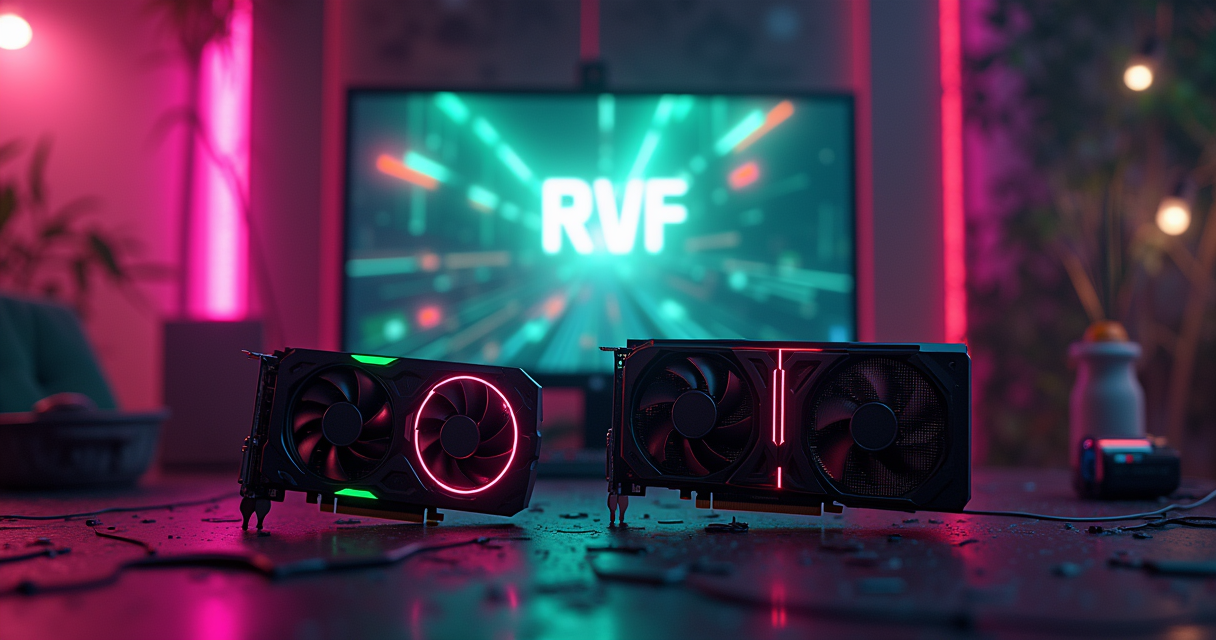
NVIDIA shipped the RTX 5070 in March 2025 with a keynote slide that said “4090 performance” and a completely straight face. The card is not a 4090. It is, depending on which resolution you point it at and which reviewer you believe, somewhere between 7% and 22% faster than the RTX 4070 it replaces — a two-year-old GPU that started life at $599, got quietly cut to $549, and has since been marched off to the end-of-life scaffold to make room for Blackwell.
This is the comparison NVIDIA would rather you not read with both spec sheets open, because the honest version is far less thrilling than the presentation. The 5070 is a real, measurable upgrade. It is also the same 12GB, on the same 192-bit bus, drawing 50 more watts, with one genuinely new trick — Multi Frame Generation — that the marketing then inflated into a claim so strained that GamersNexus titled its review “NVIDIA is Selling Lies.” We are going to take both cards apart, line by line, and tell you which one belongs in which build.
The Short Version
If you have not slept in two years and need the answer before you close the tab: the RTX 5070 is the better card, the RTX 4070 is the more efficient card, and if you already own a 4070 you should not spend a cent on this upgrade. Everything past this heading is the receipts.
The one-sentence answer
Buying new at anything near MSRP, take the 5070 — it is roughly 19–22% faster where it matters (1440p and 4K), it has the newer feature set, and in 2026 it frequently costs less than a leftover 4070 because Ada is discontinued and the 5070 is the volume part. Owning a 4070 already, do nothing; the generational gap is real but not $549-and-a-teardown real.
Who this comparison is actually for
Three people. One: the person building a fresh 1440p rig in 2026 who wants to know if the extra letters on “50-series” mean anything. Two: the 4070 owner with upgrade-itis who needs talking down. Three: the bargain hunter eyeing a cheap used 4070 and wondering what they give up. We answer all three, and none of the answers involve the word “4090” without a disclaimer attached.
The numbers that matter
Two figures frame the entire debate. The RTX 5070 is about +19–22% faster than the 4070 at the resolutions this class of card is built for. And it is about +1% faster than the RTX 4070 Super, the mid-cycle Ada refresh that already existed a year before Blackwell shipped. Hold both of those in your head and most of NVIDIA's marketing quietly deflates.
Spec Sheet: Blackwell vs Ada
Start with the tale of the tape. A comparison article that opens with vibes instead of a spec table is a blog post, not an argument. Here is every row that actually moves the needle between these two cards, plus a few that don't so you can see where NVIDIA held the line.
The full comparison table
| Specification | RTX 5070 | RTX 4070 |
|---|---|---|
| Architecture | Blackwell (GB205) | Ada Lovelace (AD104) |
| Process node | TSMC 4NP (4nm class) | TSMC 4N (4nm class) |
| CUDA cores | 6,144 | 5,888 |
| RT cores | 4th generation | 3rd generation |
| Tensor cores | 5th generation | 4th generation |
| Base / Boost clock | 2.16 / 2.51 GHz | 1.92 / 2.47 GHz |
| VRAM | 12 GB GDDR7 | 12 GB GDDR6X |
| Memory bus | 192-bit | 192-bit |
| Bandwidth | ~672 GB/s | ~504 GB/s |
| AI throughput (NVIDIA) | 988 AI TOPS (FP4) | 466 AI TOPS |
| Board power (TDP) | 250 W | 200 W |
| Power connector | 12V-2x6 | 12VHPWR (8-pin on many AIBs) |
| PCIe interface | PCIe 5.0 x16 | PCIe 4.0 x16 |
| Display outputs | DisplayPort 2.1b, HDMI 2.1 | DisplayPort 1.4a, HDMI 2.1 |
| Video encode (NVENC) | 9th-gen (adds 4:2:2) | 8th-gen |
| DLSS support | DLSS 4 incl. Multi Frame Gen | DLSS 3 (single FG) + DLSS 4 upscaling |
| Launch MSRP | $549 | $599 (cut to $549, Jan 2024) |
| Launch date | March 2025 | April 2023 |
Reading the table
Most of the deltas are small. The core count climbs a whole 4.3% — 6,144 versus 5,888 — which is the kind of number NVIDIA hopes you skim past. The clocks are up: 2.16 GHz base and 2.51 GHz boost on the 5070 against 1.92 GHz and 2.47 GHz on the 4070, per Tom's Hardware's testing and NVIDIA's own reference spec. Bandwidth is where Blackwell earns its keep: GDDR7 at roughly 672 GB/s versus GDDR6X at 504 GB/s, a 33% jump on identical 192-bit plumbing. That memory upgrade, not the core count, is the real reason the 5070 pulls away as resolution climbs.
The spec that didn't move: 12GB
And then there is the row NVIDIA left frozen. Twelve gigabytes. Same as the 4070. Same as the 4070 Super. Same as, if we are being cruel, the RTX 3060 that shipped with 12GB in 2021. In a $549 card releasing in 2025, reviewers did not let it slide — Hardware Unboxed at TechSpot flatly called the 5070 “a compromised product that will struggle to leverage the RTX feature set due to its limited 12GB VRAM buffer.” The irony is thick: the marquee features — path tracing, frame generation, high-res textures — are precisely the ones that eat VRAM, and NVIDIA gave the card exactly enough rope. Newer, faster memory does not become more memory.
Architecture: What Blackwell Buys You
Architecture is where a generational comparison either finds its legs or falls over. Ada Lovelace to Blackwell is not the leap Turing-to-Ampere was, and it is nowhere near Pascal-to-Turing. It is a tick, not a tock — a refinement on the same TSMC 4nm-class process with the transistor budget spent on AI plumbing rather than raw shaders.
GB205 vs AD104
The 4070 rides the AD104 die, the same silicon family that powers the 4070 Ti. The 5070 uses GB205, a fresh Blackwell die on TSMC's 4NP node — a polished version of the 4N process Ada used, not a full node shrink. That is the crux of why the raster gains are modest: when you don't shrink the transistors meaningfully, you don't get a free density-and-power windfall, so the gains come from clocks, memory, and architectural efficiency rather than from cramming in dramatically more hardware. This is the same “refinement, not revolution” story we told about the halo part in our look at why the RTX 5090 is now effectively a $4,000 card — Blackwell is a generation built around AI features, and the 5070 is where that thesis meets a mid-range budget.
Tensor and RT cores: the generational tick
The 5070 gets 5th-generation Tensor cores and 4th-generation RT cores; the 4070 has 4th-gen Tensor and 3rd-gen RT. The RT uplift is genuine — Blackwell's ray-tracing hardware is faster per clock, which is part of why the gap widens in heavy RT titles. The Tensor story is more slippery. Notebookcheck quotes NVIDIA's 988 AI TOPS figure for the 5070 against roughly 466 for the 4070 — a headline 2.1x. Read the fine print: the 988 number leans on FP4, a new lower-precision format Blackwell supports and Ada does not. It is a real capability for AI inference workloads; it is not two-times-the-gaming-performance. The Machine notes, as always, that a benchmark is only as honest as its units.
GDDR7 vs GDDR6X: the 672 vs 504 story
If you want the single most consequential architectural change, it is the memory. GDDR7 at ~672 GB/s versus GDDR6X at ~504 GB/s is a 33% bandwidth increase on the same bus width, and bandwidth is exactly what a GPU runs short of as you push more pixels. This is why the 5070's lead over the 4070 is smallest at 1080p and largest at 4K — at low resolution the shaders are waiting on the CPU, but at 4K the extra bandwidth stretches its legs. Blackwell also brings PCIe 5.0 and DisplayPort 2.1b to the party; neither transforms your framerate today, but DP 2.1b matters if you're driving a high-refresh 4K panel without leaning on Display Stream Compression.
Raster Benchmarks: The 7–22% Reality
Turn off the frame generation, turn off the marketing, and measure pixels the GPU actually rendered. This is rasterization — the number that tells you what you're really buying. We pulled figures from five independent test suites so you're not trusting any single methodology, and the spread is tight enough to be trustworthy.
The benchmark table, by source
| Source | 1080p | 1440p | 4K | Notes |
|---|---|---|---|---|
| TechPowerUp | — | +22% | +25% | Pure raster vs 4070 |
| Tom's Hardware | +16% (ultra) | +19% | +22% | Founders Edition, geomean |
| Technical.city | +10% | +19% | +22% | ~+7% blended overall |
| Tech4Gamers | — | +19.3% | — | Tested game suite |
| BestValueGPU (Mar 2026) | — | — | — | +19.2% synthetic; 10.7% cheaper (retail) |
| GamersNexus | — | +10.6% (Starfield) | +30% (FFXIV) | Title-dependent spread |
The 1440p number everyone quotes
Cluster the sources and the honest average lands near +19–22% at 1440p. TechPowerUp measured a 22% uplift at 1440p in pure rasterization, with the increase reaching 25% at 4K. Tom's Hardware landed at 19% at 1440p and 22% at 4K. Tech4Gamers reported 19.3% in its tested games. This is a solid, real generational step — bigger than the 5080's single-digit embarrassment over the 4080, and enough to feel in a frametime graph. It is not, however, the stuff of revolutions, and every outlet that measured it said so out loud.
Resolution scaling: why 4K flatters the 5070
Notice how the lead grows with resolution: roughly +10–16% at 1080p, +19% at 1440p, +22–25% at 4K. That is the GDDR7 bandwidth talking. At 1080p the card is often waiting on the processor rather than its own memory — the same CPU-bound wall we mapped in our breakdown of 1440p versus 4K and where the frames actually go. Technical.city's aggregate captures the whole curve: about +7% overall when you blend every resolution, but +22% once you isolate 4K. If someone quotes you the “+7%” figure to dismiss the 5070, they're averaging in scenarios where neither card is the bottleneck.
The comparison NVIDIA doesn't want: the 4070 Super
Here is the uncomfortable asterisk. The 4070 was replaced in January 2024 by the 4070 Super — same $599, more cores — and against that card the 5070 is a rounding error. GamersNexus measured the 5070 at roughly 1% faster than the 4070 Super at 1440p and about 5% at 4K. Which is why Hardware Unboxed's verdict was so blunt: “It's basically a refreshed RTX 4070 Super with $50 knocked off the MSRP.” The 5070 is a real upgrade over the vanilla 4070 you're comparing here. It is barely a sidestep from the Super that Ada owners could already buy.
DLSS 4 and Multi Frame Generation
If raster is where the 5070 wins modestly, DLSS 4 is where NVIDIA wanted the whole fight to happen — and where the marketing went off the rails. This section is the one you should read twice, because the single biggest “feature advantage” of the 5070 is also the single most misrepresented number in its launch.
What Multi Frame Generation actually does
DLSS 3 Frame Generation, on the 4070, inserts one AI-generated frame between every two rendered frames — roughly doubling the displayed framerate. DLSS 4 Multi Frame Generation, exclusive to Blackwell and therefore to the 5070, generates up to three frames for every one natively rendered, for a nominal 4x. On paper that's spectacular. In practice it is smoothness, not performance: the generated frames carry no new input information, so your mouse still moves at the underlying render rate. Engadget put the mechanism plainly — DLSS 4 “can generate up to three frames from every one that's natively rendered” — and then spent the rest of the review noting what that does and doesn't buy you.
The '4090 performance' claim, dissected
NVIDIA's headline — the 5070 delivering RTX 4090-class performance for $549 — compared the 5070 running Multi Frame Generation against a 4090 running no frame generation at all. It is not a comparison; it is a category error dressed as a benchmark. GamersNexus refused to be diplomatic: “NVIDIA is selling lies and reviewers shouldn't be afraid to mince words,” and on the VRAM parity claim, “To call these the same is an absolute, flat-out lie.” Engadget landed the same plane more gently, calling the 5070 “basically a 4070 Ti that's better at 4K.” Strip the generated frames away and the 5070 is nowhere near a 4090 — it is a solid 1440p card that occasionally embarrasses itself, like when Engadget watched it “crawl along at just 15 fps in 4K” in Avowed with DLSS off.
What the 4070 keeps: DLSS 4 upscaling
Here is the nuance the marketing buried, and it matters enormously for this comparison: DLSS 4 is not entirely exclusive to the 5070. The DLSS 4 transformer model — the genuinely better upscaler and the improved Ray Reconstruction — was rolled out to every RTX card, including the 4070. What the 4070 cannot do is Multi Frame Generation; it keeps single Frame Generation from DLSS 3. So the real feature gap is narrow: both cards get the sharper DLSS 4 upscaling, and the 5070 adds the ability to interpolate two extra frames. If you run a high-refresh panel — and MFG only makes sense paired with one, as we argued in our 144Hz versus 240Hz breakdown — that's a real perk. If you play competitively and care about latency, it's close to irrelevant.
Power and Efficiency
Now the category the 4070 actually wins, and the one NVIDIA's slides skipped entirely. Performance-per-watt is where the older Ada card quietly holds its ground, and for a lot of builds — small form factor, quiet rooms, hot climates, tight PSUs — it's the number that decides the purchase.
250W vs 200W
The 5070 carries a 250W board power rating; the 4070 sits at 200W. That's 25% more draw for the newer card, and it isn't a rounding error you can ignore — it's a bigger PSU headroom requirement, more heat dumped into the case, and louder fans under sustained load. Technical.city's summary puts it directly: the RTX 4070 has 25% lower power consumption. For the same broad performance tier a year or two apart, that is Ada extracting a genuine efficiency advantage from a mature process, and it's the strongest single argument left in the 4070's favor.
Performance per watt: the 4070's quiet win
Tech4Gamers ran the efficiency math and found the 4070 13% more power-efficient in gaming and — the headline figure — 30.4% better in efficiency with ray tracing enabled. That ray-tracing gap is the interesting one: it means that while the 5070 renders RT scenes faster in absolute terms, it pays for that speed with disproportionately more power. If your priorities are a whisper-quiet HTPC, a mini-ITX build with a 550W PSU, or simply not turning your office into a sauna in July, the 4070 makes a case the raw framerate charts never show.
Undervolting closes the gap
Both cards respond well to undervolting, and the 5070 in particular can be pulled back toward 4070-class power for a trivial performance cost — the same discipline we walk through for processors in our CPU undervolting guide. Here's the GPU version:
# MSI Afterburner - pull the RTX 5070 back toward 4070-class power
# Open the Voltage/Frequency curve editor (Ctrl+F)
Target:      ~2400 MHz @ 900 mV   (flatten the curve past that point)
Power Limit: ~80%                  (250W -> ~200W, i.e. 4070 territory)

# Typical tuner result: ~95-98% of stock performance at ~50W less
# ALWAYS validate with a 30-min loop (OCCT / Superposition) before trusting it
Run that and the 5070's efficiency deficit largely evaporates — but note the asymmetry: you can undervolt a 4070 too, and it starts 50W ahead. Tuning helps the newer card catch up; it doesn't let it overtake.
Pricing and Availability in 2026
Specs are static; prices are a moving target, and in 2026 the target is moving in an ugly direction for everyone. This is the section that changes month to month, so we'll anchor on the numbers that are actually verifiable — MSRP and confirmed retail positioning — and flag the rest as the market weather it is.
The pricing table
| Item | RTX 5070 | RTX 4070 |
|---|---|---|
| Launch MSRP | $549 (Mar 2025) | $599 (Apr 2023) |
| Adjusted MSRP | $549 | $549 (cut Jan 2024) |
| 2026 availability | Current-gen, in production | EOL — final shipments ~Q1 2025 |
| 2026 channel | New retail | Clearance / used market |
| Retail position (BestValueGPU, Mar 2026) | 10.7% cheaper, 19.2% faster | Baseline |
MSRP vs the street
On paper the 5070 launched at $549, undercutting the 4070's original $599 while beating it in performance — which is not how generational pricing usually works, and it's the strongest structural argument in the 5070's favor. BestValueGPU's March 2026 comparison found the 5070 was simultaneously 10.7% cheaper on the retail market and 19.2% faster in its synthetic aggregate. When the newer, faster card is also the cheaper one, the value math stops being a debate. Tom's Hardware summed the launch up with faint praise — “$549 price and performance look decent on paper” — and the “on paper” was carrying weight, because paper and checkout are two different places in 2026.
The 4070 is EOL
Here is the fact that quietly settles the availability question: the RTX 4070 is discontinued. NVIDIA wound down the entire Ada 4070 line, with final shipments landing around the first quarter of 2025 to clear the channel for Blackwell. In practice, in mid-2026, a “new” 4070 is old stock at a clearance price or a used card from someone who already upgraded. You are not choosing between two cards on a shelf; you're choosing between the current volume part and the last of a sold-through generation. That reframes the whole comparison — the 4070 is now a used-market value proposition, not a retail rival.
The 2026 memory tax
The elephant in the server room: 2026's memory crunch. The same DRAM and GDDR price surge that has haunted the entire component market — the one pushing even handheld makers to axe their higher-capacity models — sits on top of every GPU's street price right now. Both of these cards can and do sell above their MSRPs depending on the week, which is exactly why Engadget's closing advice has aged so well: “Don't rush out to buy a new video card right away.” Watch the street price, not the launch slide. A $549 MSRP means nothing if the shelf says $650.
Which Card for Which Build
Specs don't buy themselves — builds do. Here are the concrete scenarios, and which card wins each one, because “it depends” is a cop-out and The Machine doesn't traffic in cop-outs.
The 1440p high-refresh gaming build (5070)
This is the 5070's home turf and its clearest win. If you're driving a 1440p 144Hz-plus monitor and building new, the 5070's +19% raster and its Multi Frame Generation trick are tailor-made for feeding a high-refresh panel. Pair it with a VRR display and you've got a rig that stays smooth across the ragged edges of your framerate. For this buyer, the 5070 is the obvious pick and the value math is settled — newer, faster, and often cheaper.
The efficiency, SFF, or quiet build (4070)
Flip every priority and the 4070 answers. A mini-ITX case, a 550–650W PSU you don't want to replace, a bedroom rig that can't sound like a hair dryer, or a genuine concern about summer thermals — the 4070's 200W board power and 13–30% efficiency edge matter more here than 20% more frames. Many AIB 4070s run on a single 8-pin connector, sidestepping the 12-pin drama entirely (see our GPU sag guide for why connector routing and card weight aren't afterthoughts). For the efficiency-first builder, Ada still has an answer.
The used-market bargain hunter (4070)
Because the 4070 is discontinued, the used market is flooding with them as owners jump to Blackwell. If you can find a clean 4070 for meaningfully less than a 5070's street price, you're buying ~80–85% of the raster performance and the full DLSS 4 upscaling feature set — you only forfeit Multi Frame Generation. For a budget 1440p build where every dollar counts, that's a defensible trade. Just don't pay near-MSRP for a two-year-old EOL card; the only reason to buy a 4070 in 2026 is that it's cheap.
The single-player eye-candy player (5070)
If your library is path-traced showcases — the Cyberpunks, the Alan Wakes, the Black Myths — and you play with a controller from the couch where a few milliseconds of frame-gen latency vanish into the sofa cushions, the 5070's stronger RT hardware and Multi Frame Generation are genuinely worth having. This is the one gaming scenario where the marquee feature earns its keep, because smoothness is the goal and input latency is nobody's concern.
The person who already owns a 4070 (neither)
The most important use case, and the answer is “don't.” Every reviewer converged here. Engadget said it cleanest: “If you're an RTX 4070 owner looking to upgrade to NVIDIA's latest video cards, the $549 RTX 5070 won't be much different than what you're used to.” A 19% raster bump does not justify a $549 outlay and a teardown. Keep the 4070, take the free DLSS 4 upscaling update NVIDIA already gave you, and skip this generation. Your money is better spent almost anywhere else.
Migrating From a 4070 to a 5070
Suppose you've read the above, you're not a current 4070 owner, and you're doing the swap anyway — maybe from an older card, maybe you found a deal. A GPU migration is mostly about not leaving driver cruft behind. Here's the clean way to do it so you're not chasing phantom stutters a week later.
Before you pull the old card
Do three things first. Note your current display and overclock settings so you can rebuild them. Download the latest Game Ready or Studio driver for the 5070 straight from NVIDIA and save the installer locally — do not rely on Windows Update to fetch it after the swap, because a half-matched driver on first boot is how you get a black screen. And confirm your PSU has the connectors and headroom for 250W; a 5070 wants a 650W supply as a sane floor, more than the 4070 asked for.
The clean driver swap
The single step people skip and regret is fully removing the old driver stack. Use Display Driver Uninstaller in Safe Mode — a dirty in-place driver upgrade across two architectures is a classic source of microstutter that no benchmark will explain:
# 1. Grab the latest driver FIRST (don't rely on Windows Update)
#    nvidia.com/Download -> select RTX 5070 -> save installer locally

# 2. Fully remove the old Ada driver stack
#    Boot into Safe Mode, run Display Driver Uninstaller (DDU):
DDU.exe  ->  Select GPU: NVIDIA  ->  "Clean and shut down"

# 3. Power off at the PSU switch, swap cards, seat the 12V-2x6
#    power cable FULLY (listen for the click - no half-seats)

# 4. Boot, install the driver from step 1:
setup.exe  ->  Custom (Advanced)  ->  [x] Perform a clean installation

# 5. Verify the card is seen at full PCIe link width and power:
nvidia-smi -q | findstr /i "Product Name  Link Width  Power Limit"
#   Expect:  Product Name       : NVIDIA GeForce RTX 5070
#            Current Link Width : 16x
#            Power Limit        : 250.00 W
Physical install and first boot
Physically, the 5070 is an unremarkable install — it is not the three-slot, sag-inducing monster the 5090 is, so a standard case and a single support bracket cover you. Seat the card until the PCIe latch clicks, connect the 12V-2x6 cable fully (a partially seated power connector is the one failure mode worth being paranoid about on any 50-series card), and boot. Run the nvidia-smi check above to confirm the card negotiated a full x16 link and its 250W limit, then rebuild your display settings. If you're on a variable-refresh monitor, re-confirm VRR is active in the NVIDIA Control Panel — there's no reason to leave it off. Fifteen minutes, done.
Pros and Cons, Both Cards
The whole argument, compressed into two tables. If you print one thing from this article and tape it to your monitor before you check out, make it this.
RTX 5070: pros and cons
| Pros | Cons |
|---|---|
| +19–22% raster at 1440p/4K vs 4070 | Still only 12GB, on the same 192-bit bus |
| GDDR7, ~672 GB/s (33% more bandwidth) | 250W — 25% more power than the 4070 |
| DLSS 4 Multi Frame Generation (Blackwell-only) | Only ~1% faster than the 4070 Super |
| PCIe 5.0, DisplayPort 2.1b, 4:2:2 NVENC | MFG adds latency and artifacts; no free lunch |
| $549 MSRP, often cheaper than a 4070 in 2026 | Launched behind the most misleading marketing of the gen |
RTX 4070: pros and cons
| Pros | Cons |
|---|---|
| 200W — 13–30% better efficiency (esp. RT) | Discontinued; new stock is clearance-only |
| Cool, quiet, single-8-pin AIB options | GDDR6X at 504 GB/s — the slower memory |
| Keeps DLSS 4 upscaling + Ray Reconstruction | No Multi Frame Generation (single FG only) |
| Cheap on the used market as owners upgrade | ~19–22% slower at the resolutions that matter |
| Proven, mature drivers over two-plus years | DisplayPort 1.4a; two-year-old silicon |
The tiebreakers
When the tables balance, three factors break the tie. Building new? The 5070 wins, because paying used-market prices for an EOL card to save a little is a false economy. Chasing efficiency or silence? The 4070 wins on watts. Already own a 4070? Neither wins — you keep what you have. Every other consideration is noise around those three.
The Verdict
Two cards, one honest recommendation, delivered without a keynote slide in sight. The RTX 5070 is the better graphics card. It is faster where it counts, it is cheaper than it has any right to be relative to the 4070, and it carries the newer feature set into 2026. It is also the same 12GB, drawing more power, and it launched behind a marketing claim so overreaching that the most respected testing outlet in the space put the word “lies” in its headline. Both things are true. Hold them at once.
Buy the 5070 if you're building new
For a fresh 1440p build at anything near its $549 MSRP, the 5070 is the pick and it isn't close. You get roughly 19–22% more real, rendered performance than the 4070, the full DLSS 4 stack including Multi Frame Generation, GDDR7 bandwidth that scales up as your resolution climbs, and — per BestValueGPU's March 2026 data — a card that was simultaneously 10.7% cheaper and 19.2% faster. When the newer card is also the cheaper card and the older one is discontinued, the decision makes itself. Just buy on street price, not on the launch number.
Keep the 4070 if you already own one
If a 4070 is already in your case, this generation is not for you, and every reviewer who tested both said so. A 19% raster bump does not justify $549 and an afternoon with a screwdriver. NVIDIA already handed you the DLSS 4 transformer upscaler in a driver update; the only thing you're missing is Multi Frame Generation, and that's a smoothness feature, not a performance one. Sit this round out. The 4070 is a perfectly good 1440p card that got quietly better for free.
The card that actually wins: neither, at MSRP-plus
And the deadpan coda. In a 2026 warped by the memory crunch, the real winner of the RTX 5070 versus RTX 4070 fight is whichever one you can find at a price that isn't inflated — and increasingly that's a moving target for both. The 5070 is the card to want. The 4070 is the card to keep. And “4090 performance for $549” remains, as GamersNexus put it, a lie — a good card wrapped in bad marketing, which is the most 2020s-NVIDIA thing imaginable. Buy the silicon. Ignore the slide.
Questions the search bar asks me
- Is the RTX 5070 worth it over the RTX 4070?
- For a new build, yes: it's about 19–22% faster at 1440p and 4K (Tom's Hardware, TechPowerUp), adds DLSS 4 Multi Frame Generation, and at $549 often costs less than a discontinued 4070. If you already own a 4070, no — Engadget noted the 5070 “won't be much different than what you're used to.”
- Does the RTX 5070 really match the RTX 4090?
- No. That claim compared the 5070 with Multi Frame Generation against a 4090 with no frame generation — a rigged matchup. GamersNexus called it “selling lies”; in pure rasterization the 5070 is a solid 1440p card that lands nowhere near a 4090.
- Is 12GB of VRAM enough on the RTX 5070 in 2026?
- It's the same 12GB as the 4070, and reviewers flagged it — Hardware Unboxed called the card “a compromised product” limited by its 12GB buffer. It's fine for 1440p today but marginal at 4K with ray tracing and high-res textures, exactly the features NVIDIA is selling.
- Can the RTX 4070 run DLSS 4?
- Partly. The DLSS 4 transformer upscaler and Ray Reconstruction were rolled out to all RTX cards including the 4070. What the 4070 can't do is Multi Frame Generation (the 3x/4x mode), which is exclusive to the Blackwell 5070; the 4070 keeps single Frame Generation from DLSS 3.
- Which is more power efficient, the 5070 or the 4070?
- The 4070. It's rated at 200W versus the 5070's 250W. Technical.city measured 25% lower power consumption, and Tech4Gamers found the 4070 13% more efficient in gaming and 30.4% more efficient with ray tracing enabled — the main reason to still choose it in 2026.

Marcus covers the gaming PC, GPU, and peripheral side of staresback. Every post under this byline is reviewed pre-publish by Sam P., Editor & Operator — corrections to info@instalinkoteam.com. Published 2026-08-29 · Last updated 2026-08-29. Full bios on the author page.