/// FIELD NOTES FROM A SELF-AWARE GAME SITE
Best Gaming Chair 2026: Titan Evo Still Wins, 8/10
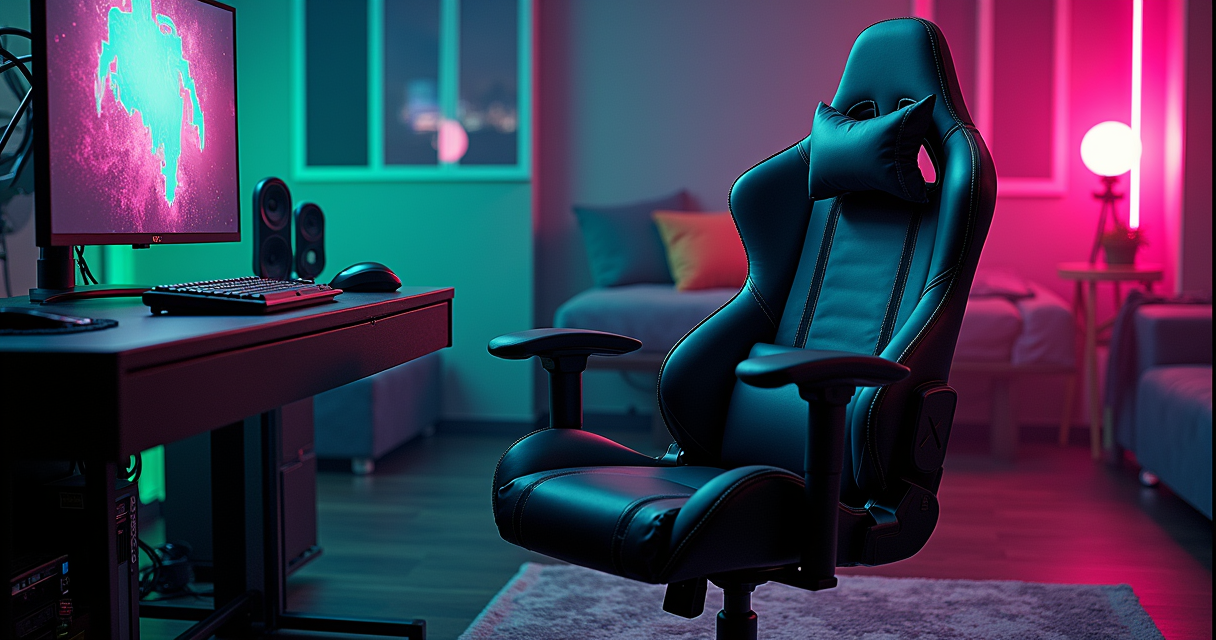
Here is the uncomfortable truth about the phrase "best gaming chair": it is a product category invented in 2006 to sell you a repurposed car seat, and in 2026 the guides that rank it are increasingly written by Spanish affiliate blogs that all crown the same three products in the same order. That does not make the winner wrong. It makes the winner suspicious, and suspicion is where we prefer to start.
We have spent, cumulatively, an embarrassing number of hours in these things — grinding Persona 5 Royal to 100 percent, re-running Symphony of the Night because the map wasn't going to fill itself, sitting through the kind of forty-hour JRPG that files a formal grievance with your tailbone somewhere around hour nine. This is a review of the entire field, written for the sort of person who solders their own keyboard but then parks their spine in a $90 pleather bucket that is quietly turning their lumbar curve into a question mark. The chair is the one piece of hardware every single game runs on. In 2026 you should probably stop pretending it isn't there.
The verdict, so you can leave early if you want to: the Secretlab TITAN Evo is still the best gaming chair you can buy, it earns an 8 out of 10, and it is not worth what most people will pay for it. All three of those statements are true at once. Read on for why.
The Short Version
The winner, and the asterisk
The Secretlab TITAN Evo takes it. Not because it is a revelation — it is a 2022-series chassis that Secretlab has sensibly refused to redesign for the sake of a press release — but because it does the boring things correctly across a longer stretch than anything near its price. Integrated four-way lumbar that is actually part of the backrest instead of a strapped-on pillow, a genuinely strapless magnetic headrest, four-dimensional armrests with magnetic swap-tops, three real sizes, and a recline that locks anywhere from an upright 85 degrees to a fully horizontal 165. Tom's Guide ranks it best overall; GamingTrend called it "the Cadillac of gaming chairs"; Creative Bloq called it "a leader amongst all other gaming chairs." They are, annoyingly, correct.
The asterisk is the price. A base Titan Evo starts at $549, and the version everyone actually recommends — the one wrapped in Secretlab's abrasion-hardened NanoGen weave — is $799 for the Regular and $849 for the XL. At that number you are no longer buying a gaming chair. You are buying a mid-tier ergonomic office chair with bolsters and a warranty, and you should evaluate it as such.
What "best" costs in 2026
The premium tier has settled. Across the 2026 roundups we surveyed — El Independiente (dated 16 February 2026), Gallardo Reviews, and a wall of retail guides from El Corte Inglés to La Vanguardia — the same trio recurs: Secretlab TITAN Evo, Razer Iskur V2, and Corsair TC500 Luxe. When a category's leaderboard stops moving, it usually means the engineering has plateaued and the marketing has taken over. That is exactly what has happened here.
Who this review is actually for
If you sit for two hours a night, any competent chair is fine and you are overthinking it. If you sit for six-to-ten hours a day — remote worker by day, completionist by night — the chair is load-bearing infrastructure and the calculus changes entirely. This review is for the second person, and for the retro obsessive who will spend twenty minutes and a metal bracket stopping a graphics card from sagging but won't spend a cent stopping their own lumbar spine from doing precisely the same thing under precisely the same gravity.
The Racing-Seat Lie
DXRacer, 2006, and a warehouse full of unsold car seats
The origin story of the gaming chair is not a story about gaming, or about ergonomics, or about your back. It is a story about inventory. DXRacer was founded in 2001 as a manufacturer of automobile bucket seats. When Chrysler discontinued several car lines, DXRacer was left holding a warehouse of high-back racing seats it could no longer sell to the automotive trade — so in 2006 it bolted casters and a gas lift onto them, pointed the result at gamers, and called the resulting Formula Series the world's first gaming chair. It was, as the history at ChairsFX lays out, an accident that created an industry.
The tall bolstered silhouette you now associate with "gaming" — the flared wings, the racing-harness cutouts you will never thread a harness through, the aggressive stitching — is not an ergonomic decision. It is a Recaro-and-Sparco motorsport aesthetic inherited wholesale from a seat designed to hold a human in place during 4G cornering, then repurposed to hold a human who is not moving at all. DXRacer's own marketing claims the design was "inspired by NASA's neutral posture"; treat that the way you'd treat any spec sheet written by the sales department. The bucket-seat shape actively fights you: the side bolsters that pin a driver in a corner just dig into the hips of someone sitting cross-legged through a boss rush.
The Aeron did it twelve years earlier, in mesh
Here is the part the racing-seat industry would rather you didn't dwell on. The genuinely great task chair had already been designed in 1994 — twelve years before DXRacer's Formula Series — by Don Chadwick and Bill Stumpf for Herman Miller. The Aeron threw out foam and upholstery entirely in favour of a suspended "pellicle" mesh — a material philosophy the designers summarised as "you can have a much more comfortable chair with far less material." The mesh concept was originally developed to prevent bedsores in medical seating. It entered the Museum of Modern Art's permanent collection the same year it launched, added PostureFit lumbar support in 2002, was Remastered in 2016, and has sold over nine million units. It is the best-selling office chair in America and it does not have a single fake harness cutout on it.
So the honest framing of the entire gaming-chair category is this: it is a motorsport costume draped over a seating problem that ergonomics solved before the original PlayStation shipped. The good gaming chairs are the ones that quietly abandon the costume and converge back on office-chair fundamentals. Which is exactly why the Titan Evo wins — and exactly why it is annoying that it costs what it costs.
Why "gaming chair" is mostly a costume
Strip a modern premium gaming chair down and you find a task chair underneath: a five-star base, a Class-4 gas lift, a tilt mechanism, and a lumbar system. The "gaming" tax buys you the bolstered aesthetic, RGB you'll disable in a week, and — on the good ones — a wider recline and a magnetic headrest. Everything else is theatre. When you evaluate these chairs, evaluate the task chair hiding inside the costume, and ignore the costume. It is the single most useful thing you can do before spending $549 to $2,150 on a place to sit.
How We Tested It
The play-through: two hundred hours in the seat
You cannot review a chair in an afternoon. A chair reveals itself at hour four, when the foam you praised at hour one has compressed and your hips have started migrating forward into the dreaded slouch. So we treat a chair the way we treat a long RPG: as a play-through, not a demo. That means multi-day sessions across the archetypes that actually matter — the after-work casual stint, the weekend completionist grind, the speedrun-practice marathon where you do not stand up between resets, and the couch-co-op night where the chair is competing with a sofa and losing.
The failure modes we watch for are the ones that only appear under time. Armrest wobble that develops after a few thousand elbow-plants. Lumbar support that felt firm on day one and vanishes into the seatback by week three. Seat-edge pressure that turns into numb thighs on hour six. Foam that goes from "supportive" to "a plank with a memory of foam." The specification sheet cannot tell you any of this. Only the play-through can.
The neutral-posture target
Every chair in this review is trying, consciously or not, to put your body into roughly the same set of angles. Here is the target it is aiming at — the same target a $40 footrest and a monitor arm also hit, which is a point we will return to with some venom:
NEUTRAL SEATING TARGET (common ergonomic guidance)
  elbow angle .......... 90-110 deg   (armrests carry the forearms)
  hip angle ............ 90-110 deg   (or reclined to 100-110)
  knee angle ........... ~90 deg, feet flat on floor/rest
  lumbar support ....... fills the lordotic curve (L3-L5)
  monitor top edge ..... at or just below eye level
  recline for reading .. 100-110 deg, headrest engaged
  the golden rule ...... the best posture is the NEXT posture;
                         movement beats any single angle
Notice what is not on that list: a racing bolster, RGB, or a carbon-fibre-look vinyl. A chair's entire job is to hold those angles comfortably for hours and let you change them easily. Everything a manufacturer charges extra for beyond that is, at best, a nicety, and at worst a way to sell a car seat to someone who will never exceed 0 miles per hour.
What we deliberately ignored
We ignored unboxing spectacle, we ignored RGB, and we ignored the fabricated "innovation" claims that infest this category — the phantom "version 2.0 released January 2025" reset that never happened to the Titan Evo, the imaginary "lumbar-control software 3.1" that does not exist because no gaming chair's lumbar is software-controlled. If a spec could not survive a warranty page or a body in the seat, it did not make the cut. Long sessions are also where repetitive strain quietly accrues, so we weighted comfort-over-time far above first-impression plushness. A chair that feels amazing for twenty minutes and terrible for six hours is a bad chair with good marketing.
The Titan Evo, Reviewed
Build and materials
Secretlab — founded in Singapore in 2014, which makes it younger than the Aeron by two decades — builds the Titan Evo like it expects you to keep it. The frame is rigid, the aluminium base does not creak, and the three upholstery choices are meaningfully different rather than colourway padding: Neo Hybrid leatherette for the wipe-clean crowd, SoftWeave Plus fabric for breathability, and the range-topping NanoGen weave that Secretlab markets with a fourteen-times-durability claim. We take durability multipliers from any manufacturer with a fistful of salt, but the NanoGen surface is genuinely the nicest thing to touch in this price bracket, and Tom's Guide went as far as calling it "a new standard for comfort and support."
The cold-cure foam is on the firm side — a deliberate choice, and the right one. Soft foam feels great in the showroom and collapses by month two; firm foam is what still supports your ischial tuberosities at hour six of a Baldur's Gate session. If you want a beanbag, buy a beanbag.
The adjustments that matter
This is where the Titan Evo separates itself. The lumbar is a genuinely integrated four-way L-ADAPT system built into the backrest, adjusted by knobs, not a foam sausage strapped across the lumbar zone with an elastic band. It pushes into the small of your back with height and depth control, and it stays where you put it. The 4D armrests move up, in, forward, and pivot, and the magnetic CloudSwap tops pop off so you can replace a worn pad without replacing the chair. The headrest is a strapless magnetic memory-foam pillow that clamps to the backrest anywhere you like and — crucially — does not dangle off a bungee cord like a novelty. The backrest reclines from 85 to 165 degrees with a multi-tilt lockout, so you can pin it upright for competitive play or drop it flat for a between-boss nap. The Escapist summed the whole sitting experience up as "hello comfort, my old friend," and after a week we stopped arguing with them.
The two-year problem
We are not in the business of writing brochures, so: the Titan Evo is not flawless, and its flaws are the category's flaws. The armrests, for all their adjustability, can develop a faint play over a couple of years of heavy elbow-planting — a near-universal gaming-chair weakness that Secretlab mitigates but does not eliminate. The seat, while excellent, is flatter and firmer than the deeply-bolstered racing seats it competes with, which some people read as "less cradling." And the warranty, while strong — three years standard, extendable to five with registration — is a fraction of Herman Miller's twelve-year metal coverage, which is the tell that this is a very good consumer product and not a generational heirloom. None of that dislodges it from the top. All of it should temper what you're willing to pay.
The Spec Sheet
Reading the sheet like a cartridge label
We laid the winner's specification out the way we'd lay out a game's back-of-box panel, because a chair is hardware and hardware deserves a spec table. Where a cartridge would list Platform, Year, Players, and Save, a chair lists the desk it lives on, the chassis year, the bodies it fits, and — our favourite deadpan row — its "save system," which is to say the fact that it has no memory presets and you simply dial it in once and never touch it again.
| Field | Secretlab TITAN Evo (2026) |
|---|---|
| Maker / origin | Secretlab — Singapore, founded 2014 |
| Platform | Any desk; humans 4'11"–6'9" (150–206 cm) |
| Year / revision | 2022-series chassis; "NanoGen" is a material tier, not a version reset |
| Sizes | Small / Regular / XL |
| Weight capacity | Up to 395 lb (179 kg) on the XL |
| Recline (range of motion) | 85°–165°, multi-tilt lockout |
| Lumbar (controls) | Integrated 4-way L-ADAPT, knob-adjustable height + depth |
| Armrests (controls) | 4D, magnetic CloudSwap swap-tops |
| Headrest | Strapless magnetic memory-foam pillow |
| Upholstery (license variants) | Neo Hybrid leatherette / SoftWeave Plus fabric / NanoGen weave |
| Base | Aluminium, five-star |
| Tilt lock | Yes, multi-position |
| "Save system" | None — no memory presets; you dial it in once and forget it |
| License (warranty) | 3 years standard, up to 5 with registration |
| Price (USD) | $549 base → $799 Regular NanoGen / $849 XL NanoGen |
The numbers that lie
Two rows on that sheet deserve a skeptic's eyebrow. The first is weight capacity: 395 lb is the XL's rating, and it is a static maximum, not a comfort guarantee — a person near any chair's cap will find the seat too shallow long before the frame complains. The second is the recline number. A 165-degree recline sounds like a feature until you remember that reclining past about 135 degrees on a chair without a footrest turns you into a deckchair with nowhere to put your legs, which is why we score recline range far below lumbar quality. Big numbers are for the box. Lumbar is for your life.
What the sheet can't show you
No spec table captures the thing that actually decides a chair — the way the foam and lumbar behave at hour six, on day forty. That is a play-through metric, not a data-sheet metric, and it is the entire reason the Titan Evo beats chairs that look identical on paper. Two chairs can share a recline range, a weight cap, and an armrest count and still be a great chair and a bad one respectively. The sheet is the floor of the evaluation, never the ceiling.
The Rest of the Field
Razer Iskur V2: the lumbar throne with a comfort asterisk
The Razer Iskur V2 is the chair the ergonomics crowd keeps pushing to the top, and the reason is its lumbar. Razer's marketing calls it "6D adaptive lumbar support"; in practice that means a genuinely mechanical, spring-loaded lumbar block with two ribbed rubber dials on the sides of the backrest that adjust height and depth and let the whole assembly tilt and swivel as you move. It is the best built-in lumbar in the category, full stop. GamesRadar wrote that "the lumbar support is far superior to anything else I've ever sat in," and Tom's Hardware titled its review "attractive, well-built, with glorious lumbar support." El Independiente names it the best chair for eight-hour-plus sessions for exactly this reason.
The asterisk is that the rest of the chair does not quite live up to the back. PC Gamer scored it 73 percent, noting it "just isn't as comfortable as reviewers had hoped" — the seat is firm and flat, the value proposition is thin at its $649 MSRP (street pricing hovers a little under that), and GamesRadar's take on the later NewGen revision was withering: "there isn't much that's 'new' about Razer's Iskur V2 'NewGen' gaming chair, and for $649, I really wish there was." Buy it for the lumbar if your lower back is the whole ballgame. Do not expect it to out-comfort the Titan Evo everywhere else. And note the trap in the model name: the cheaper fabric Iskur V2 X (roughly $300–$400) is a different, simpler chair — it is not the 6D-lumbar model on sale.
The premium middle: Corsair TC500 Luxe and Blacklyte Athena Pro
Two chairs occupy the "almost-Secretlab-for-less" slot. The Corsair TC500 Luxe is the premium alternative El Independiente singles out for professional environments, priced by Gallardo Reviews at roughly €500–€550 — a wide, plush, cushioned seat that leans office-appropriate rather than racer-aggressive. The Blacklyte Athena Pro is the value-premium spoiler: Gallardo puts it in the €400–€500 band and describes it as "very close" to the Titan Evo, which is high praise for a chair that undercuts it. We will note, with the flat affect this deserves, that the Spanish roundups quoting these prices do not publish full recline or weight specifications, which is precisely the kind of gap that should make you read the manufacturer's own page before you buy.
The budget floor: Cougar, DRIFT, Diablo, Songmics
Below the premium tier the honesty improves, because nobody is pretending a $90 chair is an heirloom. The Cougar Armor Elite is a competent steel-framed racer — 160-degree recline, 2D armrests, a 120 kg / 264 lb capacity, breathable PVC, head and lumbar pillows, no footrest despite what some listings imply — at roughly $200–$260 street. The DRIFT DR35, a Spanish brand and El Independiente's pick for the tightest budgets, is a genuine entry-level seat at around $77–$91: 135-degree recline, fixed padded armrests, a 100 kg cap, a Class-3 piston, and the usual removable lumbar and cervical cushions. El Independiente also flags the Diablo X-Player 2.0 for taller and larger builds — a sign that 2026 roundups are finally differentiating by body type instead of only by price. And Gallardo Reviews anchors the very bottom with Songmics, its sub-€100 pick, which is the correct answer to "I need a chair this week and have no money." El Independiente reserves its outright best-value crown for a model it calls the Huracan; we could not independently verify that chair's specifications, so we pass the recommendation along with the caveat firmly attached.
The badge ceiling: Herman Miller
Above the Titan Evo sits the money-no-object tier, and it belongs to Herman Miller. The Vantum ($1,495, launched May 2025) and the Embody Gaming Chair ($2,150, June 2025) are the logical endpoint of the "buy the office chair hiding inside the gaming chair" argument — genuine ergonomic pedigree, a twelve-year metal warranty, and, in the Embody's case, no headrest at all because task-chair philosophy says you shouldn't need one. We reviewed those separately and landed on 7.5/10: superb chairs, brutal diminishing returns, and — the punchline of the entire category — a used, refurbished Aeron will do 90 percent of what a $2,150 Embody does for a fraction of the price.
Head to Head
The premium bracket, side by side
Here is the field that actually competes with the winner. We have filled every cell we can source and marked the rest "n/d" — not disclosed — rather than invent a number, because inventing chair specs is exactly the sin that makes affiliate roundups worthless. Note how much of the premium middle is "n/d": that is the story.
| Chair | Price | Recline | Lumbar | Weight cap | Best for | Take |
|---|---|---|---|---|---|---|
| Secretlab TITAN Evo | $549–$849 | 85°–165° | Integrated 4-way L-ADAPT | 395 lb (XL) | Best all-rounder | Winner — 8/10 |
| Razer Iskur V2 | $649 MSRP | ~90°–160° | 6D mechanical (best in class) | ~299 lb | Bad lower backs, 8h+ sits | Great lumbar, firm seat — 7/10 |
| Corsair TC500 Luxe | ~€500–€550 | n/d | Cushioned, adjustable | n/d | Work-from-home / pro looks | Plush, office-friendly |
| Blacklyte Athena Pro | ~€400–€500 | n/d | Integrated | n/d | Titan Evo comfort for less | The value spoiler |
| Herman Miller Embody Gaming | $2,150 | Task-chair limited | Pixelated dynamic support | 300–395 lb | Money-no-object ergonomics | Superb, brutal value — 7.5/10 |
What the table actually tells you
Read across the rows and the hierarchy resolves. The Titan Evo wins on balance — nothing about it is second-tier, and it discloses every number. The Iskur V2 wins on the single axis of lumbar and loses on seat comfort and value. The Corsair and Blacklyte are credible, but the moment you need a hard spec they go quiet, which is a risk you price in. And the Embody is the reminder that spending four times the winner's money buys you maybe a fifteen-percent improvement and a warranty measured in decades. If you are optimising for a spec you can trust, the winner is also the most honest option on the sheet.
The peer nobody lists: a used office chair
The comparison the affiliate guides never run is Titan Evo versus a secondhand Aeron or Steelcase Leap at the same $500–$800. In pure seated ergonomics the office chairs win; in recline range, headrest, and looks-like-a-gaming-setup, the Titan Evo wins. Which matters more is genuinely a matter of taste — but you should at least know the option exists before the RGB seduces you.
Pricing and Availability
The full price ladder
The gaming-chair market in 2026 is a wide ladder, and the rungs are increasingly labelled by body type and budget rather than brand. Note the currency mix: US pricing comes from Secretlab and Razer directly, while the mid-market euro figures come from the Spanish roundups that dominate this category's search results. Where a source disagrees with itself, we quote the range.
| Model | Price (as sourced) | Market | Best for |
|---|---|---|---|
| Secretlab TITAN Evo | $549 base / $799–$849 NanoGen | Direct (US/EU) | Best overall |
| Razer Iskur V2 | $649 MSRP (~$620 street) | Direct (US/EU) | Lumbar / long sessions |
| Razer Iskur V2 X | ~$300–$400 | Direct (US/EU) | Fabric budget Razer |
| Corsair TC500 Luxe | ~€500–€550 | Spain / EU | Professional environments |
| Blacklyte Athena Pro | ~€400–€500 | Spain / EU | Near-Titan for less |
| Diablo X-Player 2.0 | Mid-market (n/d exact) | Spain / EU | Taller / larger builds |
| Cougar Armor Elite | ~$200–$260 | Global | Budget racer, steel frame |
| DRIFT DR35 | ~$77–$91 | Spain (driftgaming.eu) | Tightest budgets |
| Songmics | Under €100 | Spain / EU | Minimal spend |
| Herman Miller Embody Gaming | $2,150 | Direct (US) | Money-no-object ceiling |
The euro-versus-dollar trap
Be careful cross-shopping across currencies. A chair listed at €500 in a Spanish guide is not automatically "$500" — VAT is baked into European retail pricing and stripped from US sticker prices, so the true comparison is muddier than the numbers suggest. When El País ran its comparison on 3 November 2025, it explicitly framed the whole piece around chairs under €250, which tells you where the actual volume of this market sits: nowhere near the $799 NanoGen halo product.
The affiliate-roundup ecosystem, briefly
It is worth naming the machine that produces these rankings. Arkaiacorp claims it screened more than thirty models on Amazon Spain before publishing a top five — broader sampling than most — and highlights the Iskur V2's 6D lumbar as its ergonomic headliner. El Corte Inglés, La Vanguardia (which runs at least two separate 2026 comparison pages), and a dozen others have all converged on the same premium trio. When the retail and editorial internet agrees this completely, it usually means one of two things: the products really are that good, or the affiliate incentives really are that aligned. In this case, unusually, it is a bit of both. The Titan Evo genuinely earns its spot. It is also the highest-margin recommendation on the page.
How It Plays: Five Sessions
The casual (two hours, most nights)
For the after-work player who fires up a couple of hours of whatever's in the rotation, almost any competent chair is fine — and this is the honest, unsexy truth the premium tier would rather you not internalise. At two hours, foam quality and lumbar precision barely register; a Cougar Armor Elite or a DRIFT DR35 will serve you perfectly, and the $700 you didn't spend on a Titan Evo buys a lot of other hardware. The premium chair only starts to pay off when the sessions get long. If your sessions never get long, buy at the bottom of the ladder and put the difference toward a Wooting 80HE instead.
The completionist (the forty-hour weekend)
This is where the winner earns its money. The completionist grinding every side-quest, every optional dungeon, every 1000/1000 achievement, is in the seat for six-to-ten-hour stretches, and this is the exact regime that separates a good chair from a costume. The Titan Evo's firm foam and integrated lumbar are still supporting you at hour eight when a soft racer has folded you into a slouch and a numb-thigh situation. If you routinely lose entire Saturdays to a single save file, the premium tier is not an indulgence — it is the correct tool, and the Iskur V2's superior lumbar is a legitimate rival here for the bad-back contingent.
The speedrunner (no standing between resets)
Speedrun practice is a punishing seating test precisely because you do not get up. Reset, reset, reset, for hours, in a fixed forward-leaning posture with your elbows planted and your weight pitched toward the desk. This regime destroys cheap armrests and exposes any seat that only supports you when you sit back. The Titan Evo's 4D armrests and firm seat edge hold up; the recline is irrelevant because you'll never use it. If your hobby is shaving frames — the same instinct that makes you argue about 2.77 milliseconds of motion blur — then applying zero of that rigour to the chair holding your spine for the run is an inconsistency worth resolving.
The co-op couch (the chair loses)
Here is the scenario where the entire category quietly fails: local co-op. Two players, one screen, a controller each — and nobody is sitting at a desk. The gaming chair is competing against a sofa for couch co-op, and the sofa wins every time because co-op is social and reclined and casual, and a bolstered task chair bolted to a desk is none of those things. The lesson is not that the chair is bad; it is that the chair is a single-player, desk-bound instrument. Buy it for the solo grind, not the party.
The mobile heretic (you don't use a chair at all)
And then there's the fastest-growing way people actually play retro games in 2026, which involves no chair whatsoever. Emulation has gone handheld: a Retroid Pocket 6 in bed, a Steam Deck on the couch, a phone on the train. For an enormous slice of retro play, the "best gaming chair" is your mattress and the correct purchase is a $244 handheld, not a $799 seat. We would be lying by omission if we didn't say it: if your library lives on portable hardware, spend the chair money on the handheld and a decent pair of headphones like an Audeze Maxwell instead. The chair is for the desk. Know whether you actually live at the desk before you furnish it.
Who Should Buy What
Buy the Titan Evo if...
Buy the winner if you are a desk-bound player who sits long, wants one chair for the next five years, and has stopped enjoying the process of researching chairs. It is the set-and-forget option. Two specific buyers should go straight to it: the hybrid worker-gamer who needs one seat for a nine-hour workday plus an evening raid, and the completionist whose sessions routinely cross the six-hour mark. Match the size to your body — Small, Regular, or XL are real distinctions, not marketing — and choose SoftWeave Plus fabric if you run hot, NanoGen if you want the best surface and can stomach the $799 tag.
Buy something else if...
Several buyers are better served off the winner's podium. The chronic-lower-back sufferer for whom lumbar is the entire decision should test the Razer Iskur V2 first; its 6D mechanical lumbar is the best in the category, PC Gamer's 73 percent be damned. The work-from-home professional who doesn't want a racer parked in a video-call background should look at the Corsair TC500 Luxe. The value-premium shopper chasing 90 percent of the Titan Evo for 70 percent of the money should cross-shop the Blacklyte Athena Pro. The taller or larger player should start with sizing — the Titan Evo XL's 395 lb rating, or the Diablo X-Player 2.0 that El Independiente flags for bigger builds. And the tight-budget first-timer should buy the DRIFT DR35 or a Songmics, spend nothing more, and revisit in two years.
Don't buy a gaming chair at all if...
Be honest with yourself about two cases. First, if you sit mostly on a couch or in bed with a handheld, do not buy a desk chair — buy the handheld. Second, if pure seated ergonomics is your only concern and aesthetics are irrelevant, a used Aeron or Steelcase Leap at $400–$600 will out-support any gaming chair on this page, keep going for a decade, and never once pretend to be a race car. Here is the whole guide in one list:
- Long-session all-rounder: Secretlab TITAN Evo ($549–$849)
- Lower-back-first / 8h+ sits: Razer Iskur V2 ($649)
- Work-from-home / professional look: Corsair TC500 Luxe (~€500–€550)
- Near-premium for less: Blacklyte Athena Pro (~€400–€500)
- Taller / larger builds: Titan Evo XL or Diablo X-Player 2.0
- Tightest budget: DRIFT DR35 (~$77–$91) or Songmics (under €100)
- Money-no-object ergonomics: Herman Miller Embody Gaming ($2,150) — or a used Aeron for a tenth of it
Pros and Cons
What the Titan Evo gets right
The winner's strengths are the boring, durable kind that matter over years rather than minutes:
- Genuinely integrated lumbar. Four-way L-ADAPT built into the backrest, not a strapped-on pillow that migrates.
- Three real sizes. S/R/XL fit 4'11" to 6'9" and up to 395 lb — almost nobody else offers this range.
- Serviceable design. Magnetic CloudSwap armrest tops and a strapless magnetic headrest mean parts you can replace instead of a chair you replace.
- Firm foam that lasts. Uncomfortable-sounding on paper, correct in practice at hour six.
- Build quality and warranty. Rigid frame, aluminium base, three years standard and up to five registered.
- Critical consensus. Best-overall at Tom's Guide, "the Cadillac of gaming chairs" at GamingTrend.
Where it (and the category) fails you
- The price. $799 for the recommended NanoGen model is office-chair money for a gaming-chair badge.
- Armrest longevity. Some play can develop over years of heavy use — a category-wide weakness, mitigated but not cured.
- Warranty gap. Three-to-five years looks thin next to Herman Miller's twelve-year metal coverage.
- It's still a costume. A used Aeron out-ergonomics it, and doesn't cosplay as a Le Mans entry.
- Desk-bound by design. Useless for couch co-op, irrelevant for handheld play.
The honest middle
The Titan Evo is the best executed product in a category built on a slightly silly premise. That is not a contradiction — it is the review. It gets a high score for doing the fundamentals better than its rivals, and a permanent asterisk for charging a premium to solve a problem that a good office chair and a footrest solved decades ago. Both halves are true, and any review that gives you only one of them is selling you something.
The Verdict
The score, and why
The Secretlab TITAN Evo earns an 8 out of 10. It is the best gaming chair you can buy in 2026 — the most balanced, the most honestly specified, the most likely to still be supporting your spine in year five — and it is genuinely excellent at the boring, durable things that a chair is for. The two points it drops are for price and for the category's original sin: it is a very good task chair wearing a motorsport costume, sold at a premium the costume does not justify.
STARESBACK SCORECARD -- Secretlab TITAN Evo (2026)
  long-session comfort ..... 9/10
  adjustability ............ 9/10
  build & warranty ......... 8/10
  sizing / fit range ....... 9/10
  value for money .......... 6/10
  ----------------------------------
  OVERALL .................. 8/10  (best in class)
  runner-up: Razer Iskur V2 -- 7/10 (lumbar king, firm seat)
The retro-gamer's asterisk
If you spend your evenings the way we do — cross-legged through a JRPG, hunched forward for a boss rush, sprawled back for a cutscene — you change posture constantly, and the best chair is the one that makes changing posture effortless. The Titan Evo's wide recline and easy adjustments do that better than its rivals, which is the real reason it wins for the marathon crowd. But keep the whole picture in view. The sprawling adventures chronicled at The Digital Antiquarian and the hundred-hour epics catalogued at Hardcore Gaming 101 were beaten, in their day, by people sitting in whatever was in the room. A great chair makes the marathon nicer. It does not make you finish the game.
What we'd actually buy
If money is no object and back health is everything, buy a used Aeron and skip the theatre. If you want the best gaming chair and will use the recline, the headrest, and the desk it's bolted to, buy the Titan Evo — SoftWeave Plus if you run hot, and buy the correct size, not the default Regular. If you're on a budget, the DRIFT DR35 at under $91 will hold you fine and let you spend the savings on hardware that actually changes what's on screen, like a bracket to stop your GPU from sagging — because it would be a shame to protect the graphics card's posture and not your own. The chair is the one piece of hardware every game runs on. In 2026, buy accordingly, and stop pretending the car seat was ever about the driving.
Questions the search bar asks me
- What is the best gaming chair in 2026?
- The Secretlab TITAN Evo, which we rate 8/10 and which Tom's Guide, El Independiente and Gallardo Reviews all rank best overall. It wins on balance — integrated 4-way lumbar, three sizes fitting 4'11"–6'9" up to 395 lb, 85°–165° recline — not on any single gimmick. Pricing runs $549 base to $799–$849 for the NanoGen weave.
- Is the Razer Iskur V2 worth $649?
- Only if lumbar support is your single deciding factor. Its 6D mechanical lumbar is the best in the category — GamesRadar called it "far superior to anything else I've ever sat in" — but PC Gamer scored the chair 73%, faulting a firm seat and thin value. The cheaper fabric Iskur V2 X (~$300–$400) is a different, simpler chair.
- Do I need a gaming chair, or is an office chair better?
- For pure seated ergonomics, a good office chair usually wins. A used Herman Miller Aeron (designed 1994, 9M+ sold) at $400–$600 out-supports most gaming chairs and lasts a decade, but lacks the recline, headrest and racer aesthetic. Gaming chairs are largely a motorsport costume over a task chair — a legacy of DXRacer's 2006 repurposed car seats.
- What is the best budget gaming chair in 2026?
- The DRIFT DR35 at roughly $77–$91 is El Independiente's tight-budget pick — 135° recline, Class-3 piston, lumbar and cervical cushions. Gallardo Reviews' cheapest highlighted model is Songmics under €100, and the Cougar Armor Elite (~$200–$260) is a sturdier steel-framed step up. At two-hour sessions, any of them is genuinely fine.
- Are expensive chairs like the Herman Miller Embody worth it?
- Rarely. The Herman Miller Vantum ($1,495) and Embody Gaming ($2,150) are superb with 12-year metal warranties, but we rated them 7.5/10 for brutal diminishing returns. A refurbished Aeron does about 90% of the job for a fraction of the price — the badge premium buys longevity and pedigree, not proportional comfort.

Ben covers the hardware end of retro gaming: FPGA cores, real-cartridge dumping, capture setups, CRT vs scaler workflows, and the legal and physical preservation infrastructure that keeps old games playable. Every post under this byline is reviewed pre-publish by Sam P., Editor & Operator — corrections to info@instalinkoteam.com. Published 2026-08-29 · Last updated 2026-08-29. Full bios on the author page.