/// FIELD NOTES FROM A SELF-AWARE GAME SITE
RTX 5080 vs 4080 (2026): 15% Faster, Same 16GB
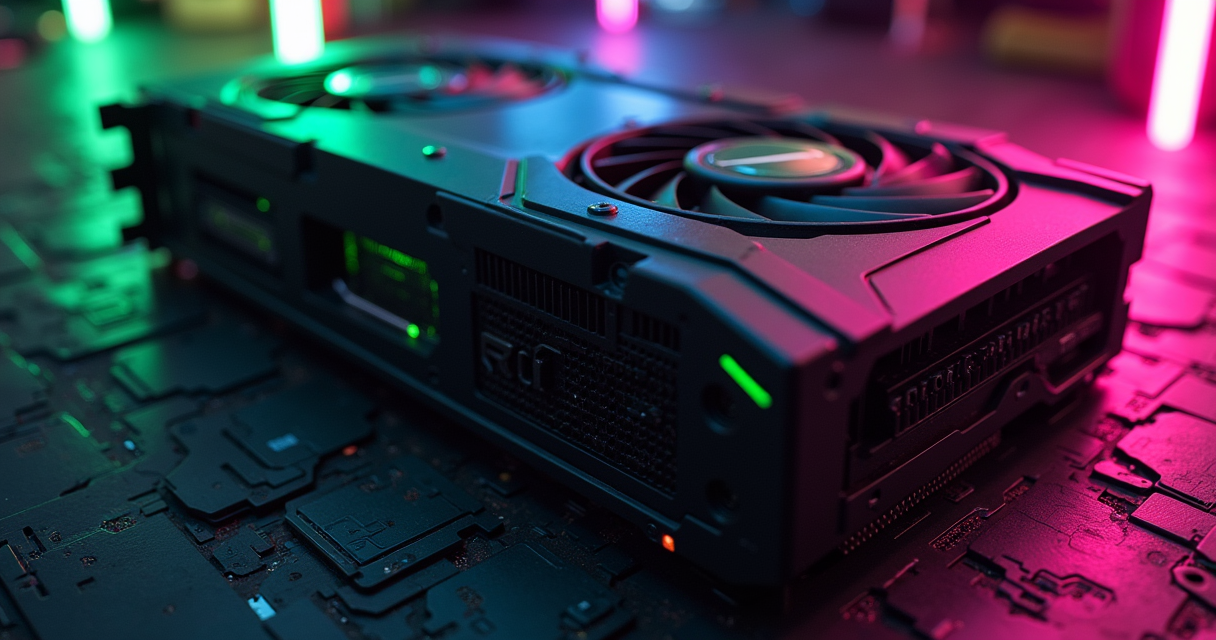
Two years and one architecture separate the GeForce RTX 4080 from the RTX 5080, and NVIDIA would like you to believe that is a long time in silicon. It is not. The RTX 5080 launched on January 30, 2025 at a $999 Founders Edition MSRP; the RTX 4080 arrived on November 16, 2022 at $1,199. In between, the die barely moved, the memory capacity did not move at all, and the raster performance moved about as much as a sloth on a slow morning. What changed is the marketing, the memory technology, and exactly one feature that genuinely matters. This is a comparison about how little a new generation can mean, told with the receipts.
The Bottom Line, Up Front
We are going to spend several thousand words on nuance, so here is the conclusion before you have to earn it. The RTX 5080 is the better card in almost every measurable way, and it is also the least exciting flagship-adjacent GPU NVIDIA has shipped in years. Both of those things are true at once, and the tension between them is the whole story.
The one-sentence answer
At 4K, the RTX 5080 is roughly 10 to 15 percent faster than the RTX 4080 in traditional rasterized rendering, costs $200 less at launch MSRP, ships with much faster GDDR7 memory, and adds DLSS 4 Multi Frame Generation. That is the pitch in full. If you already own a 4080 or a 4080 Super, you should not buy this card. If you are buying a high-end GPU today and can find a 5080 at something close to its MSRP, it is the correct choice over a used 4080 for most people, with one retro-shaped asterisk we will return to at length.
The catch nobody puts on the box
Both cards carry 16GB of VRAM on a 256-bit bus. That figure has not budged since 2022, which is why TechRadar's reviewers openly asked whether it is time to admit that 16GB isn't enough for 4K. The 5080 is also built on the same TSMC 4N process node as the 4080. This is not a die shrink; it is a re-tune of the same manufacturing recipe. And Blackwell quietly dropped 32-bit CUDA support, which breaks a shelf full of classic PhysX games in a way the 4080 simply does not. For an audience that cares about old games, that last point is not a footnote, it is a purchasing decision.
Who should stop reading here
If you own any card at the 4080 tier, close the tab and spend the money on a bracket to stop your existing card from sagging instead. The generational uplift does not justify the transaction. If you are on a 20-series or 30-series card, or building fresh, keep reading, because the 5080 is a sensible 4K purchase and the DLSS 4 argument is real. Everyone else who wants to understand exactly how a company sells you the same silicon twice: this one is for you.
The Spec Sheet: Same Die, Same 16GB
Put the two cards on paper and the plot resolves before you reach a single benchmark. The RTX 5080 is a modestly wider, modestly higher-clocked chip, fed by dramatically faster memory, drawing slightly more power, fabricated on the same process. Nearly every number that governs long-term headroom, VRAM capacity, bus width, and die area, is flat or close to it.
Full specification comparison
| Specification | RTX 4080 | RTX 5080 |
|---|---|---|
| Launch date | Nov 16, 2022 | Jan 30, 2025 |
| Launch MSRP (Founders Edition) | $1,199 | $999 |
| Architecture | Ada Lovelace | Blackwell |
| GPU die | AD103 | GB203 |
| Process node | TSMC 4N | TSMC 4N (same) |
| Transistors / die size | ~45.9B / ~379 mm2 | ~45.6B / ~378 mm2 |
| CUDA cores | 9,728 | 10,752 (+10.5%) |
| Boost clock | 2.51 GHz | 2.62 GHz |
| FP32 compute | ~48.7 TFLOPS | ~56.3 TFLOPS |
| RT cores | 76 (3rd gen) | 84 (4th gen) |
| Tensor cores | 304 (4th gen) | 336 (5th gen) |
| ROPs | 112 | 112 (spec) |
| Memory | 16GB GDDR6X | 16GB GDDR7 |
| Memory bus | 256-bit | 256-bit (same) |
| Memory bandwidth | 716.8 GB/s | 960 GB/s (+34%) |
| Total graphics power | 320W | 360W |
| Recommended PSU | 750W | 850W |
| Power connector | 16-pin (12VHPWR) | 16-pin (12V-2x6) |
| PCIe interface | 4.0 x16 | 5.0 x16 |
| Display outputs | DP 1.4a / HDMI 2.1 | DP 2.1 UHBR20 / HDMI 2.1 |
| Upscaling | DLSS 3 (+ DLSS 4 upscaling) | DLSS 4 + Multi Frame Gen |
| Status (2026) | Discontinued | Current |
What the table is quietly hiding
Two rows deserve a longer stare. The first is transistor count and die size. The 4080's AD103 is roughly 45.9 billion transistors on about 379 mm2; the 5080's GB203 is roughly 45.6 billion on about 378 mm2. To within a rounding error, that is the same size chip on the same node. NVIDIA did not hand Blackwell's consumer parts a smaller, denser process. It stayed on TSMC 4N and spent the generation's budget on clocks and memory rather than transistors. When a card is the same die area on the same node, you should expect the same order of performance, and that is precisely what the benchmarks deliver.
The memory and outputs that did move
The second row worth studying is memory. It is 16GB on both, 256-bit on both, but GDDR7 lifts bandwidth from 716.8 GB/s to 960 GB/s, a 34 percent increase. That bandwidth is the single largest reason the 5080 pulls ahead at all, and it does its best work at 4K, where the frame buffer is under the most pressure. Beyond memory, the 5080 moves to PCIe 5.0 and DisplayPort 2.1 (UHBR20), versus the 4080's PCIe 4.0 and DisplayPort 1.4a. The DisplayPort jump is the one to care about if you drive a high-refresh 4K or ultrawide panel without leaning on Display Stream Compression. Both cards use the 16-pin connector, but at 320W and 360W they sit comfortably inside its envelope, unlike the 450W to 575W monsters that made the connector a punchline. For that horror show, see our RTX 5090 review; the 5080 is the well-behaved one in the family.
Ada vs Blackwell: What Actually Changed
Architecture names are marketing until you can point at what they buy you. Between Ada Lovelace and Blackwell, at this tier, the answer is: a little more of everything traditional, and a genuinely new frame-generation pipeline. Here is where the two-year gap actually went.
A slightly wider chip, clocked slightly higher
The 5080 adds 1,024 CUDA cores over the 4080, a 10.5 percent bump, and raises the boost clock from 2.51 GHz to 2.62 GHz. Multiply those out and FP32 throughput rises from roughly 48.7 to 56.3 TFLOPS, about 15 percent more on paper. That paper figure is the ceiling, not the floor, and in real games you rarely see the whole 15 percent because rasterized workloads are rarely compute-bound in the tidy way a spec sheet implies. The RT core count climbs from 76 to 84 and moves to a fourth-generation design, and the Tensor cores step from 304 to 336 and to a fifth-generation design that powers the DLSS 4 features. None of this is a leap. It is a step, and a short one.
GDDR7 does most of the heavy lifting
If you want to understand where the 5080's real-world lead comes from, look at the memory subsystem rather than the shader count. The move from GDDR6X to GDDR7, holding the 256-bit bus constant, is what pushes bandwidth up 34 percent. High-resolution rendering is bandwidth-hungry, which is exactly why the 5080's advantage widens at 4K and shrinks toward 1440p. It is also why the flat 16GB capacity stings. You get a faster pipe to the same-sized tank, in a year when 4K textures and frame-generation buffers are both hungrier than they were in 2022. If you are still deciding whether 4K is even the right target for this class of card, our breakdown of 1440p versus 4K gaming is the companion read.
The features that are genuinely new
The honest generational story is not in the raster numbers, it is in the feature set. Blackwell introduced DLSS 4 with Multi Frame Generation, a fifth-generation Tensor pipeline, and the hardware plumbing for the newer transformer-based upscaling model. It also brought PCIe 5.0 and DisplayPort 2.1. Those are real, and one of them (Multi Frame Generation) is exclusive to the 50-series in a way that reshapes the value argument entirely. It is also the thing NVIDIA is betting the generation on, which is either bold or nervous depending on how you read it.
Benchmarks: The 10-15% Generation
Numbers cut through narrative, so here are the numbers, drawn from multiple independent reviews rather than a single suite. The headline: at 4K, in traditional rasterization, the 5080 lands somewhere between a rounding error and a fifth faster than the 4080 depending on the title, and it clusters around the low-to-mid teens on average. Note carefully which 4080 each source measured against, because it changes the framing.
Independent results at a glance
| Source | Test | 5080 result |
|---|---|---|
| GamersNexus | 4K raster range vs RTX 4080 | +6% to +21% (low double-digit avg) |
| GamersNexus | Black Myth: Wukong, 4K | +12% (about 6 FPS, called underwhelming) |
| GamersNexus | Final Fantasy XIV, 4K | ~+15% |
| PCWorld | 4K aggregate vs RTX 4080 Super | +15% |
| KitGuru | Aggregate vs previous xx80 | +13% |
| TechPowerUp | 4K raster vs RTX 4080 Super | ~+14% |
| TechSpot | Some 4K titles | as low as +5% |
| NanoReview | 1440p (QHD) | 164 vs 148 FPS (+11%) |
| Digital Trends | 1440p vs 4080 / 4080 Super | +8% to +9% |
Reading the spread honestly
The spread is wide because game engines stress different bottlenecks, but the center of mass is unmistakable. GamersNexus put it plainly in their Founders Edition review: The 5080 is a relatively boring uplift over the 4080, unfortunately. They followed it with the line that captures the value problem exactly: When the gap is sometimes 10 FPS over the 4080 Super at the same price, it's just hard to get excited about. That is the crux. Because the 4080 Super shipped at $999, the same MSRP as the 5080, a single-digit-to-low-double-digit gain at the same price is not a generational leap, it is a spec bump with a new box.
Where the pre-launch hype went to die
Before launch, optimistic projections floated 30 to 50 percent raster gains over the 4080 based on architectural hand-waving. None of that materialized, and the reviews said so without hedging. PCWorld's Brad Chacos measured the card as just 15 percent faster at 4K resolution than the $999 RTX 4080 Super and rendered the broader verdict as from a raw rendering perspective, the GeForce RTX 5080 is one of the worst generational upgrades in recent memory, adding that it would have been immensely more compelling at a couple hundred dollars cheaper. There is a real, if slightly heretical, footnote here: because the gap is so thin, a well-tuned overclock on the older card closes most of it. PC Perspective's review of the 5080 was blunt in the headline, The RTX 5080 Is A Bit Better Than An RTX 4080 Super, and if you are the sort who likes to reclaim that margin yourself, our GPU overclocking walkthrough is the place to start.
DLSS 4 and Multi Frame Generation
If the raster story is flat, the software story is where NVIDIA wants the argument to live. DLSS 4 is the reason the 5080 exists as a distinct product rather than a 4080 Super refresh with a higher model number. It is also the single most misunderstood part of this comparison, so let us be precise about what each card actually gets.
What both cards share, and what only Blackwell gets
DLSS 4 is not one thing. The new transformer-based upscaling model and Ray Reconstruction, which produce sharper, more stable images than the older convolutional model, are available on all RTX cards, including the 4080 and even 20-series and 30-series parts. That upgrade is not exclusive. What is exclusive to the 50-series is Multi Frame Generation, which can insert up to three AI-generated frames between each rendered pair for a nominal 4X multiplier. The 4080 keeps single-frame generation (one interpolated frame per rendered frame), which it has had since DLSS 3. So the real DLSS gap is narrower than the marketing suggests: both cards get the better-looking upscaler, but only the 5080 gets the multi-frame smoothing. Anyone who tells you the 4080 is locked out of DLSS 4 entirely is repeating a slogan, not a fact.
The fake-frames debate, stated fairly
Multi Frame Generation is divisive for a reason. It raises the number on the frame counter dramatically, but interpolated frames add latency rather than reducing it, and they cannot respond to your input the way a rendered frame can. In fast competitive play the extra frames are of limited value; in a single-player, controller-driven, visually dense game they can feel genuinely smoother. PCWorld's Chacos, who was scathing about the raster gains, still described the feature as making games look and feel so much smoother, while warning that NVIDIA has gone all-in on DLSS 4. His framing of the whole generation, that its future is a bet on fake frames, is the most honest one-line summary of Blackwell's consumer strategy anyone has written.
Whether the feature is worth the upgrade
Here is the uncomfortable arithmetic. If your reason to move from a 4080 to a 5080 is Multi Frame Generation, you are paying for a feature that works best precisely when you least need it, because it is at its most convincing when your base frame rate is already high and its input-latency penalty is smallest. When your base frame rate is low, the case where you most want help, the latency cost is most noticeable. It is a feature that flatters strong situations rather than rescuing weak ones. That does not make it worthless. It makes it a luxury, and luxuries are hard to justify as the sole reason to spend four figures.
The 32-Bit PhysX Trap (Where the 4080 Wins)
Now the part a retro site is obligated to tell you and most mainstream outlets buried in a single paragraph. Blackwell dropped support for 32-bit CUDA. That sounds like an abstract developer concern until you realize what runs on it: 32-bit PhysX, the GPU-accelerated physics used by a specific and beloved slice of PC games from roughly 2008 to 2014. On the 5080, those effects fall back to the CPU, and the CPU cannot keep up. The result is not a small regression. It is a faceplant.
The games that break, and by how much
GamersNexus tested the failure directly, pitting the 5080 against a 2010-era GTX 580 in classic PhysX titles including Borderlands 2, Mirror's Edge, Batman: Arkham City, Metro: Last Light, Mafia II, and Assassin's Creed IV. The numbers are almost comical. In Mafia II with PhysX enabled, the RTX 5080 managed 30.3 FPS while the ancient GTX 580 hit 56 FPS. Metro: Last Light dropped below 10 FPS on the 5080. Their conclusion, delivered with the appropriate deadpan, was that a GTX 580 is up to 81 percent better than NVIDIA's technologically outdated RTX 5080 in these specific scenes. A fifteen-year-old card outrunning a 2025 flagship is the kind of sentence that should give a marketing department pause.
NVIDIA's response and what it means
NVIDIA did not dispute the finding. Its official line was that this is expected behavior as 32-bit CUDA applications are deprecated on GeForce RTX 50 series GPUs. Translated: working as intended, no fix coming. There is no driver patch that restores it, because the hardware support is gone. The 4080, being an Ada card, still runs 32-bit PhysX on the GPU exactly as it always has. So in this narrow but real dimension, the older card is not merely competitive, it is categorically superior. The 5080 physically cannot do a thing the 4080 does without breaking a sweat.
Who should actually care
Let us keep this proportional. If your library is modern and you have never touched the PhysX slider in Batman: Arkham City, this changes nothing for you. But if you are the kind of player who keeps a shelf of late-2000s and early-2010s PC games and expects them to run with all the effects the developers shipped, the 5080 is a downgrade for that use case, full stop. You can work around it by keeping a secondary older NVIDIA card in the system as a dedicated PhysX processor, but that is a workaround, not a feature. For a modern-only gamer, ignore this section. For a preservationist, it may be the deciding factor, and no other outlet is going to lead with it.
Price, Availability, and the ROPs Lottery
MSRP is a suggestion, and in the 50-series it was frequently a fictional one. The 5080's $999 sticker looks like a clean $200 win over the 4080's $1,199, and on paper it is. In practice, the launch was a paper launch, the used market for Ada cards has its own gravity, and there is a genuine defect you should check for before you pay anyone anything.
The pricing reality table
| Card | Launch MSRP | Launch date | 2026 street reality | Status |
|---|---|---|---|---|
| RTX 4080 | $1,199 | Nov 16, 2022 | ~$700 to $850 used | Discontinued |
| RTX 4080 Super | $999 | Jan 31, 2024 | ~$800 used / refurbished | Discontinued |
| RTX 5080 (FE) | $999 | Jan 30, 2025 | ~$999-$1,099 FE; AIB ~$1,150-$1,320 | Current |
The paper launch and the memory crunch
At launch, Founders Edition cards sold out in minutes and board-partner models routinely listed 40 to 45 percent over MSRP. Polygon, reviewing the card on March 17, 2025, went so far as to say it could not practically recommend it, not because of performance, but because you could not actually buy one at a sane price. By mid-2026, Founders Edition supply improved to roughly $999 to $1,099, but partner cards stayed elevated, and the reason is not gouging so much as a GDDR7 shortage: AI data centers ate the world's supply of high-speed memory, driving module prices up and keeping every GDDR7 product expensive. The same crunch is why the 5090's street price ballooned past $4,300, a saga we cover in the RTX 4090 versus 5080 breakdown, where the older flagship ironically costs more used than the newer card does new. TechSpot's launch framing of the 5080 as simply Nvidia's new $1,000 GPU, slotted below the $1,999 5090 and above the $749 5070 Ti, was accurate to the MSRP and optimistic about the street.
Check the ROPs before you buy
There is a real defect worth one paragraph of your attention. A batch of early 5080 units shipped with 104 ROPs instead of the specified 112, missing about 7 percent of their raster back-end. The performance hit was measured at up to 11 percent in games and around 12 percent in 3DMark Time Spy, enough that a defective 5080 can actually fall behind a 4080 Super. NVIDIA told The Verge that an early production build of the RTX 5080 GPUs were also affected, estimated roughly 0.5 percent of units, and advised owners to contact the board manufacturer for a replacement. There was no recall. The fix is free and simple to check: run GPU-Z and confirm the ROPs field reads 112, not 104. If you buy used, do this before money changes hands. It is a five-second check that can save you a card's worth of regret.
Who Each Card Is Actually For
Specs and benchmarks are inputs; the output is a decision, and the right decision depends entirely on who you are. Here are the concrete scenarios, and the card that fits each one, with the reasoning attached.
The buyers the 5080 is right for
The fresh-build 4K gamer. If you are assembling a new high-end machine and are choosing between a 5080 near MSRP and a used 4080, take the 5080. You get the faster memory, DLSS 4 Multi Frame Generation, PCIe 5.0, DisplayPort 2.1, a warranty, and the ROPs check is trivial. This is the card's core audience and it serves them well.
The frame-smoothness chaser. If you play single-player, visually rich, controller-driven games at 4K and you value perceptual smoothness over input latency, Multi Frame Generation is a real draw and it is 50-series exclusive. TechRadar summed up the appeal as nearly RTX 4090 performance for a whole lot less, which, with DLSS doing the work, is a fair description of the experience if not the raw silicon.
The high-refresh output enthusiast. If you drive a modern 4K 240Hz or an ultrawide panel and want to avoid Display Stream Compression, the 5080's DisplayPort 2.1 UHBR20 is a concrete advantage the 4080's DisplayPort 1.4a cannot match.
The buyers the 4080 (or staying put) is right for
The current 4080 or 4080 Super owner. Do not upgrade. A 10 to 15 percent raster gain for four figures is not a rational transaction, and every reviewer who tested it said as much. Keep your card and revisit at the 6080.
The retro and PhysX preservationist. If your library leans on late-2000s and early-2010s GPU PhysX titles, the 4080 runs them and the 5080 does not. For this player specifically, the older card is the better card, which is not a sentence you get to write often.
The value hunter. A used 4080 at $700 to $850, or a 4080 Super around $800, delivers something like 85 to 90 percent of a 5080's raster performance for meaningfully less money, if you are willing to forgo Multi Frame Generation and accept no warranty. That is a defensible trade for a budget-conscious builder.
The buyers neither card serves
The VRAM-bound creator or local-LLM tinkerer. Both cards have 16GB, and if your workload wants more, neither is your answer. You are looking at a 24GB 4090 or a 32GB 5090, with all the pricing pain that implies. And the 1440p high-refresh gamer should note that either card is overkill for that resolution; the money is better spent on the display or the CPU. Our 1440p versus 4K analysis makes the case in detail.
Upgrading From a 4080 (Or Not)
Suppose you have decided to move from a 4080 to a 5080 anyway, perhaps because you are selling into a strong used market and the net cost is low. The swap is straightforward, but there are enough small gotchas that a checklist earns its keep. Here is the full migration path.
The pre-flight checklist
PRE-UPGRADE CHECKLIST: RTX 4080 -> RTX 5080
============================================
1. PSU:        850W recommended (was 750W). Prefer a native
               12V-2x6 or 12VHPWR cable over daisy-chained adapters.
2. Slot power: PCIe 5.0 x16 slot is ideal; a 4.0 slot works with
               roughly a 1-2% loss on this class of card.
3. Clearance:  5080 FE is a 2-slot card; many AIB models are
               3 to 3.5 slots. Measure case depth and width first.
4. Drivers:    Run DDU (Display Driver Uninstaller) in Safe Mode,
               then clean-install the latest Game Ready driver.
5. Verify:     Open GPU-Z. Confirm ROPs = 112 (NOT 104). RMA if 104.
6. Legacy:     Keep an Ada or older card if you run 32-bit PhysX
               titles; Blackwell cannot accelerate them.
The step-by-step swap
- Sell or shelve the 4080 first if you need the funds; the used market for Ada cards is strong and the gap between what you recover and what you spend is the real cost of this upgrade.
- Confirm your PSU meets the 850W recommendation with headroom for your CPU. A quality 750W unit may survive a 360W card, but you are removing your own safety margin.
- Power down, unplug, and discharge static. Remove the 4080, noting the connector routing so you can improve on it.
- Seat the 5080 fully in the top PCIe slot until the retention clip clicks. Support the far end; both cards are heavy enough to sag, and a support bracket is cheap insurance.
- Connect power with a native cable, seated fully at both ends. A partially seated 16-pin is the root cause of most connector heat, even at this card's safe wattage.
- Boot, run DDU in Safe Mode, clean-install the driver, then open GPU-Z and confirm 112 ROPs before you do anything else.
The honest off-ramp
The most valuable step in any 4080-to-5080 migration guide is the one that tells you not to do it. If your 4080 still hits your frame-rate targets, and most 4080s comfortably do at 1440p and competently do at 4K, the correct migration is no migration. Bank the money, keep the card that still runs your entire library including the old PhysX games, and wait for a generation that actually earns the transaction. KitGuru's Dominic Moass, who called the 5080 the most efficient GPU we've ever tested, still concluded that just a 13% gain over the previous xx80 SKU is hardly cause for wild celebration. When the friendliest measurable metric is efficiency rather than performance, that is your answer.
Pros and Cons, Card by Card
Every comparison eventually owes you a plain ledger. Here is each card's case for and against, without the spin.
RTX 5080: the ledger
| Pros | Cons |
|---|---|
| 10-15% faster than the 4080 at 4K raster | Same 16GB / 256-bit as a 2022 card |
| $200 below the 4080's launch MSRP | Same TSMC 4N node; no die shrink |
| GDDR7 lifts bandwidth 34% to 960 GB/s | Only single-digit gains over the $999 4080 Super |
| DLSS 4 Multi Frame Generation (50-series only) | Cannot run 32-bit PhysX games (CPU fallback) |
| PCIe 5.0 and DisplayPort 2.1 UHBR20 | Early units shipped with defective 104-ROP dies |
| Excellent efficiency; safe on the 16-pin at 360W | Paper launch; partner cards ran far above MSRP |
RTX 4080: the ledger
| Pros | Cons |
|---|---|
| Runs 32-bit PhysX classics the 5080 cannot | 10-15% slower than the 5080 at 4K |
| Used prices around $700-$850 undercut the 5080 | No Multi Frame Generation (single-frame only) |
| Gets DLSS 4 transformer upscaling and Ray Reconstruction | Slower GDDR6X memory (716.8 GB/s) |
| Lower 320W draw and 750W PSU requirement | Discontinued; new stock is gone, no warranty used |
| Mature, well-understood card with no ROPs lottery | PCIe 4.0 and DisplayPort 1.4a only |
Reading the two ledgers together
Stack them and the pattern is clear: the 5080 wins on nearly every forward-looking metric (speed, memory bandwidth, features, connectivity, warranty) while the 4080 wins on backward-looking ones (legacy compatibility, used-market value, maturity). Which set matters more is the entire decision, and it is genuinely personal rather than obvious. Tom's Hardware landed on the same fence, concluding that outside of certain AI workloads and MFG, it's currently a pretty minor upgrade over the prior generation 4080 cards. That is not a knock so much as an accurate weather report.
The Machine's Ruling
Two years, one new architecture, and the same 16GB of memory later, the RTX 5080 is the better graphics card and the weaker argument. It wins the benchmarks by a margin small enough to embarrass its own launch slides, and it wins the value comparison against the original 4080 mostly because that card cost $200 more. Against the 4080 Super, which matched its price, it barely wins at all. This is the rare flagship-adjacent GPU whose most flattering review adjective is efficient.
The data-backed recommendation
If you are buying a new high-end card today and can secure a 5080 near its $999 MSRP, buy it, run the GPU-Z ROPs check, and enjoy a genuinely capable 4K card with a real feature in DLSS 4. If you own a 4080 or 4080 Super, keep it; the numbers do not justify the spend and every major reviewer agreed, from GamersNexus's relatively boring uplift to PCWorld's one of the worst generational upgrades in recent memory. If your heart is in old games, the 4080's ability to run 32-bit PhysX titles that the 5080 physically cannot is a legitimate reason to prefer the older card, and it is the reason a retro-minded buyer should weigh most heavily.
The one-line summary and where to go next
The 5080 is a 4080 Super with faster memory, a smoother frame-generation trick, and a lower sticker; the 4080 is a slower card that never forgot how to run your old library. Pick the axis you care about and the winner falls out of it. For the wider Blackwell context, the RTX 5090 review shows where the real generational money went, and NVIDIA's own RTX 5080 product page and the community-maintained GeForce RTX 50 series overview round out the primary-source picture. Buy on the feature you will actually use, not the number on the slide.
Questions the search bar asks me
- Is the RTX 5080 worth it over the RTX 4080?
- If you are buying new near the $999 MSRP, yes: the 5080 is about 10-15% faster at 4K, launched $200 below the 4080's $1,199, and adds DLSS 4 Multi Frame Generation. If you already own a 4080 or 4080 Super, no; every major reviewer, including GamersNexus and PCWorld, called it a minor generational upgrade not worth the spend.
- How much faster is the RTX 5080 than the RTX 4080 at 4K?
- Roughly 10-15% in traditional rasterization. GamersNexus measured a 6% to 21% spread across games (Black Myth: Wukong +12%, Resident Evil 4 +19%), while PCWorld recorded about 15% versus the 4080 Super. The gap narrows to around 8-9% at 1440p because the 5080's advantage is largely driven by its faster GDDR7 memory.
- Do the RTX 5080 and RTX 4080 have the same VRAM?
- Yes. Both ship 16GB on a 256-bit bus, unchanged since 2022. The difference is memory type: the 5080 uses GDDR7 for 960 GB/s of bandwidth versus the 4080's GDDR6X at 716.8 GB/s, a 34% increase. Capacity, the thing that limits future 4K headroom, did not move at all.
- Can the RTX 5080 run 32-bit PhysX games?
- Not on the GPU. Blackwell dropped 32-bit CUDA, so titles like Mafia II and Metro: Last Light fall back to the CPU and tank; GamersNexus measured the 5080 at 30.3 FPS in Mafia II versus 56 FPS on a 2010 GTX 580. NVIDIA calls this expected deprecated behavior with no fix. The Ada-based RTX 4080 still runs these games normally.
- What is the missing-ROPs issue on the RTX 5080?
- Some early 5080 units shipped with 104 ROPs instead of the specified 112, costing up to 11% in games and enough to fall behind a 4080 Super. NVIDIA told The Verge roughly 0.5% of units were affected and advised owners to contact the board maker for a replacement; there was no recall. Verify your card with GPU-Z and confirm the ROPs field reads 112.

Marcus covers the gaming PC, GPU, and peripheral side of staresback. Every post under this byline is reviewed pre-publish by Sam P., Editor & Operator — corrections to info@instalinkoteam.com. Published 2026-08-29 · Last updated 2026-08-29. Full bios on the author page.