/// FIELD NOTES FROM A SELF-AWARE GAME SITE
RTX 5090 Review 2026: $1,999 Card, $4,300 Reality
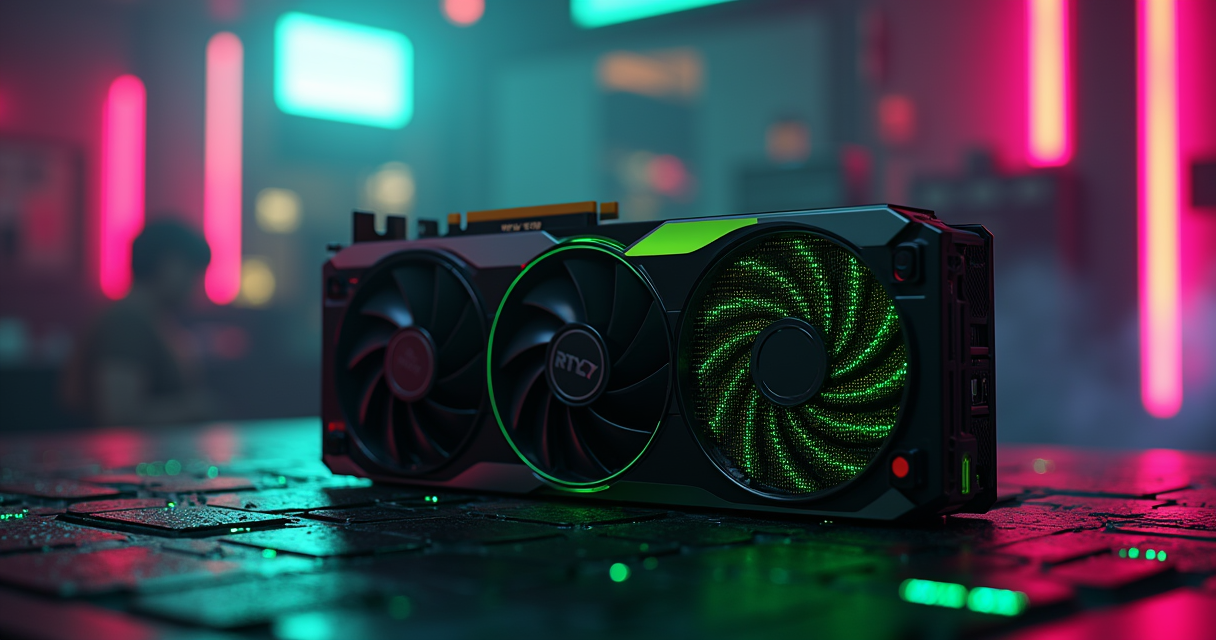
On January 30, 2025, Nvidia shipped the most powerful consumer graphics card the industry had ever produced, and within roughly ninety seconds the story stopped being about the card. The GeForce RTX 5090 arrived at a $1,999 Founders Edition MSRP, took its seat at the very top of the RTX 50-series stack, and proceeded to flatten every benchmark placed in front of it. Then it sold out. Then the number on the price tag started climbing, and it has not meaningfully come back down since.
It is now late summer 2026, roughly eighteen months on, and the RTX 5090 remains the fastest thing money can buy and the hardest thing to buy at anything close to its sticker. This is a review of the review: what the card actually is, what the critics said during the brief window when you could theoretically get one for two grand, and what happened to all of that once the AI datacenter business decided it wanted the same silicon and the same memory chips that you did.
The Verdict, Compressed
The one-line version
PCWorld's review opened by calling the RTX 5090 "the most brutally fast graphics card ever introduced," and that is not marketing copy, it is a measured and defensible statement of fact. Nothing else in the consumer space is close. The Verge's Tom Warren declared that "a new king of 4K is here," and on the merits he was right. If your only question is which is the fastest gaming GPU you can bolt into a tower, the answer was settled in January 2025 and it is not in dispute.
The number that ate the review
The problem is that raw speed became the least interesting thing about this launch within about two weeks. The RTX 5090's real-world conversation pivoted almost immediately to pricing, power draw, and diminishing value against the outgoing RTX 4090. The card is a genuine engineering triumph strapped to a commercial farce: a $1,999 flagship that, in practice, almost nobody has paid $1,999 to own. Everything below is downstream of that single gap between what the review units cost and what the retail units cost.
Who this review is for
If you are cross-shopping mid-range cards, the RTX 5090 is not your card and this is a spectator sport. This piece is for the people actually weighing a four-figure GPU purchase, the people who own a 4090 and want to know whether the upgrade is real, and the people who enjoy watching a market distort itself in slow motion. Deadpan throughout, because the numbers do the shouting.
What Nvidia Actually Shipped
The die and the memory
Under the shroud sits GB202, Nvidia's largest consumer Blackwell die, fabricated on TSMC's 4N process and carrying around 92 billion transistors across roughly 750 mm2 of silicon. The spec sheet is a flex in its own right: 21,760 CUDA cores, 170 fourth-generation RT cores, 680 fifth-generation Tensor cores, and 32GB of GDDR7 on a 512-bit bus good for 1,792 GB/s of bandwidth. That is a 78% memory-bandwidth increase over the 4090 and a full third more shader cores. On paper it produces about 104.8 FP32 TFLOPS. This is not a subtle refresh. It is the biggest die Nvidia was willing to sell to consumers.
575 watts and a card that fights gravity
All of that silicon comes with a 575W total graphics power figure, up from 450W on the 4090, and Nvidia recommends a 1000W power supply to feed it. The Founders Edition is a mechanical marvel that keeps the physical footprint to two slots, but partner cards balloon into three-and-a-half-slot bricks that comfortably clear two kilograms. At that mass, horizontal mounting is a slow-motion crime against your PCIe slot, and a support bracket becomes close to mandatory before the sag turns into a cracked solder joint six months down the line. This is a card that needs accessories to survive its own weight.
DLSS 4 and the frame-generation sleight of hand
The launch's headline software feature was DLSS 4 with Multi Frame Generation, which shipped alongside the cards on January 30, 2025 in an initial 75 titles and passed 250 supported games by CES 2026. MFG can insert up to three AI-generated frames between each rendered pair, and PCWorld tied its verdict directly to it, calling the technology something that "feels like magic." It is also the single most contested number in the entire launch, because a frame that the GPU invents is not a frame that reduces your input latency. When Nvidia's marketing quotes a 5090 as multiples faster than a 4090, it is usually comparing MFG-on against MFG-off. Reviewers spent a lot of ink separating rendered frames from generated ones, and you should too.
Here is how the flagship stacks against its predecessor and its own little brother.
| Spec | RTX 5090 | RTX 4090 | RTX 5080 |
|---|---|---|---|
| Launch date | Jan 30, 2025 | Oct 12, 2022 | Jan 30, 2025 |
| MSRP (Founders Ed.) | $1,999 | $1,599 | $999 |
| Architecture | Blackwell GB202 | Ada AD102 | Blackwell GB203 |
| Process node | TSMC 4N | TSMC 4N | TSMC 4N |
| Transistors | ~92B | 76.3B | 45.6B |
| Die size | ~750 mm2 | 608 mm2 | 378 mm2 |
| CUDA cores | 21,760 | 16,384 | 10,752 |
| FP32 (TFLOPS) | 104.8 | 82.6 | ~56 |
| RT cores | 170 (4th gen) | 128 (3rd gen) | 84 (4th gen) |
| Tensor cores | 680 (5th gen) | 512 (4th gen) | 336 (5th gen) |
| Memory | 32GB GDDR7 | 24GB GDDR6X | 16GB GDDR7 |
| Memory bus | 512-bit | 384-bit | 256-bit |
| Bandwidth | 1,792 GB/s | 1,008 GB/s | 960 GB/s |
| Total graphics power | 575W | 450W | 360W |
| Power connector | 12V-2x6 | 12VHPWR | 12V-2x6 |
| PCIe | 5.0 | 4.0 | 5.0 |
The Benchmark Reality: 20-50% and an Asterisk
Rasterization at 4K
Strip away the generated frames and measure pure rendered rasterization at 4K, and the picture is impressive without being revolutionary. GamersNexus found the RTX 5090 delivered roughly 20% to 50% more rasterization performance than the RTX 4090 depending on the game, a spread wide enough that the average matters more than the peak. DSOGaming's independent run across 20 of the most demanding titles landed at a tidy 33% average at native 4K, moving from 108 to 137 fps aggregate. Cyberpunk 2077 and Black Myth Wukong both showed uplifts in the high 30s. That is a strong generational result. It is also, notably, not the doubling that the marketing slides implied.
Ray tracing and Steel Nomad
Turn on ray tracing and the gap holds rather than widens. GamersNexus pegged the 4K ray-tracing uplift over the 4090 at commonly 27% to 35%, which tracks with the raster numbers and suggests the RT hardware scaled roughly with the shader count rather than leaping ahead of it. Synthetic tests told a more flattering story: TechRadar's review, published January 23, 2025, clocked the 5090 as nearly 50% faster than the 4090 in the Steel Nomad benchmark. Whether you find 50% or 30% depends entirely on whether you are measuring a synthetic loop or a real game.
Why the synthetic numbers lie in both directions
This is where you have to read carefully, because the synthetic figures mislead in two opposite ways. Steel Nomad is a compute-bound loop with no CPU or engine bottleneck, so it flatters the 5090's extra silicon and produces a headline near 50%. At the other extreme, general-purpose ranking tools such as PassMark's G3D score barely separated the two cards, because those aggregate benchmarks saturate at the very top of the stack and stop resolving real differences. The honest gaming truth sits between the extremes, in that 30% to 35% band, and any single number quoted outside it is either cherry-picked or misunderstood. DSOGaming's bottom line was the one worth pinning up: "if you already own an RTX 4090, there is no reason at all to upgrade."
The Review That Mattered Was the Price
The paper launch
The RTX 5090 Founders Edition launched at $1,999, and PC Gamer reported launch-day retail hovering right at the $2,000 line, with Best Buy listing the card at $1,999.99. For a few minutes on January 30, 2025, that price was real. Then the inventory evaporated. What Digital Trends and every other outlet listed as a $1,999 flagship, sitting neatly above the $999 RTX 5080, was in practice a number that existed mostly in reviews and press releases. The retail experience was scarcity, bots, and a queue.
From $1,999 to north of $4,000
Eighteen months later the gap between MSRP and reality has become the defining fact of this product. Through 2025 the card sat persistently above sticker. By mid-2026, board-partner models were the only ones with any availability, and they were not cheap: ASUS TUF trims around $2,900, Gigabyte and MSI Gaming OC cards near $3,300, and the ASUS ROG Astral OC pushing past $3,500. Then it got worse. Around May 13, 2026, Nvidia applied a roughly $300 wholesale increase, and by July 11, 2026, street pricing was reported past $4,300 for standard partner cards, with premium AIB models breaking $5,000. If you want the running tally, we keep a separate ledger on how the $1,999 MSRP became a $4,300 reality. The card did not get faster. It got scarcer.
| Date | Milestone | Price point |
|---|---|---|
| Oct 12, 2022 | RTX 4090 launches | $1,599 MSRP |
| Jan 6, 2025 | RTX 50-series unveiled at CES | Announced |
| Jan 23, 2025 | Review embargo lifts | Reviews go live |
| Jan 30, 2025 | RTX 5090 Founders Edition on sale | $1,999 / ~$2,000 retail |
| Throughout 2025 | Persistent shortage, scalping | Above MSRP |
| CES, Jan 2026 | MSI RTX 5090 Lightning Z revealed | $5,090.99 |
| Feb 2026 | Lightning Z reviews (1,300 units) | $5,090.99 |
| ~May 13, 2026 | Nvidia ~$300 wholesale increase | Street climbs |
| Jul 11, 2026 | Street pricing reported past | ~$4,300+ |
| Aug 2026 | Typical street (this article) | ~$2,900-$4,300+ |
The AI datacenter ate your VRAM
None of this is scalping in the traditional sense, and that is the uncomfortable part. The root cause is memory. The same AI datacenter buildout that made Nvidia the most valuable company on earth also consumed the world's supply of high-speed GDDR7 and DRAM. Industry teardowns put the VRAM alone at a dominant share of the 5090's bill of materials, with memory representing well over 80% of the component cost on some estimates, as per-module GDDR7 pricing multiplied through late 2025. A gaming GPU and an AI accelerator are now fighting over the same chips, and the gaming GPU loses that fight every time. The RTX 5090's price is not really set by gamers anymore. It is set by whoever is training the next model.
The Connector That Still Melts
der8auer, a thermal camera, and 22 amps
In February 2025, within weeks of launch, the 5090 revived the ugliest hardware story of the previous generation. Overclocker der8auer put a clamp meter and a thermal camera on a Founders Edition running its full 575W through the 12V-2x6 connector and found the current wildly unbalanced across the six 12-volt wires. Some carried barely 2 amps. One carried around 22 amps, against a per-wire design target closer to 8 or 9. The connector hit roughly 150C on the PSU side. A 575W load running through a plug rated for about 600W leaves almost no margin, and the Founders Edition provides no mechanism to spread the load.
No load balancing, by design
The technical failure is specific and, frankly, indefensible. Earlier flagship boards such as the RTX 3090 Ti used shunt resistors to monitor and balance current across the connector's pins. The 5090 Founders Edition removed that safeguard, so whichever wire happens to have the least resistance simply eats the current until it either holds or melts. It is not a manufacturing defect you can screen out. It is the intended design behaving as designed.
# 12V-2x6 per-wire current on the RTX 5090 FE at ~575 W
# Measured by der8auer, Feb 2025 (clamp meter + thermal camera)
# Sane design target per 16 AWG wire: ~8-9 A
wire_A:   2.3 A     # barely working
wire_B:   ~5  A
wire_C:  ~11  A     # already over spec
wire_D:  ~22  A     # ~150 C at the plug, >2x the ceiling
# The Founders Edition PCB has no per-pin load balancing.
# Whichever wire has the least resistance eats the current.
# Then it melts.
Club386's dead card, and no recall
This is not a theoretical risk. In 2026, the outlet Club386 had its own RTX 5090 Founders Edition and a 1000W be quiet! power supply destroyed by a properly seated, single first-party cable that melted at both ends. Reviewer Ben Hardwidge did not hedge: "This power connector isn't fit for purpose, and Nvidia needs to admit it." The failures have since been documented on the 5080, the 5070, and even partner AMD Radeon cards that adopted the same 16-pin standard. There has been no recall. There has been no formal admission. If you buy one, seat the cable perfectly, use a native 12V-2x6 cable rather than an adapter, and check the plug temperature after a long session.
The Halo of the Halo: MSI's $5,090 Lightning Z
An RTX 5090 Ti in all but name
If the 5090 is the halo product, MSI built a halo for the halo. Revealed at CES 2026 and reviewed the following February, the MSI GeForce RTX 5090 Lightning Z is a liquid-cooled, dual-connector, telemetry-screened monster with firmware-selectable power limits and a separate extreme BIOS aimed at sub-zero overclocking. Tom's Hardware headlined its review "RTX 5090 Ti, anyone?" which is exactly the right framing, because MSI shipped roughly the performance envelope a factory Ti would have occupied. The extra power headroom and cooling kept the GB202 die as much as 16C cooler than the Founders Edition while dissipating more watts.
Six percent, or maybe eighteen
The performance gains are real but modest, and the reported range is worth being honest about. PCMag's February 17, 2026 coverage put the stock-overclock advantage at roughly 6% to 10% over the Founders Edition, with one result reaching 18%. Tom's Hardware measured closer to 12% out of the box, stretching to about 18% once manually overclocked. Call it a 6-to-12% factory bump with an 18% ceiling for the patient. If you want to chase that last slice yourself, our guide to GPU overclocking in 12 steps gets a stock card most of the way there without the $3,000 premium.
1,300 units and a lottery
The catch is the one MSI intended. That same PCMag piece noted the Lightning Z carried a $5,090 price tag, the number encoded into the model name as a joke that lands as a threat. Production was capped at 1,300 units, sold by lottery, and secondary listings quickly ran from $6,700 to $8,800 and beyond. This is a trophy, not a purchase recommendation. It exists to top a spec chart and to remind you what the ceiling costs.
What the Critics Actually Said
The performance consensus
On raw capability the reviews were unanimous, and they used the vocabulary of superlatives because the card earned it. Tom's Hardware framed its Founders Edition review as "Blackwell commences its reign with a few stumbles," which is about as balanced as a verdict gets: reign acknowledged, stumbles noted. The Verge crowned it the new king of 4K. TechRadar went further and called the RTX 5090 "the supercar of graphics cards." Nobody who tested one disputed that it was the fastest consumer GPU ever made. The disagreement was never about speed.
The dissent: an AI card wearing a gaming badge
The dissent was about purpose and value, and it was sharp. PCWorld, in the same review that praised the raw speed, observed that "it feels like this GPU was designed more for AI researchers than PC gamers," which is the most quietly damning line of the entire launch cycle. Engadget titled its review "Pure AI excess for $2,000," making the same argument in five words. And TechRadar, having called the thing a supercar, closed with a warning that it is "so good that it's largely superfluous for just about anyone who isn't in it for the pure flex of owning it." The critics loved the card and told you not to buy it, in the same breath, which is a strange consensus but an honest one.
The value verdict
DSOGaming reduced the economics to arithmetic: Nvidia "raised the price of its XX90 GPU model by 25%, offering 30-40% better performance." A 25% price increase for a 30-40% performance increase is, technically, a marginal improvement in performance per dollar, at MSRP. The catch, as always, is that MSRP is fiction. At the $4,300 street price the card actually sells for, the performance-per-dollar math inverts and the 4090 that people paid $1,599 for in 2022 starts to look like the smarter buy in hindsight.
This Isn't Nvidia's First $2,000 GPU
Titan RTX, the 3090 Ti, and the price of halo
The $1,999 sticker provoked genuine outrage, and it deserves context, because the outrage was partly ahistorical. The RTX 5090 is not the most expensive GPU Nvidia has ever launched. In 2018 the Titan RTX arrived at $2,499. In 2022 the RTX 3090 Ti also launched at $2,000. The 2020 RTX 3090 was $1,499, and the 4090 was $1,599 in 2022. Nvidia has been selling four-figure halo cards for the better part of a decade, and Ars Technica made exactly this point in its review, noting that the 5090 costs as much as a whole gaming PC but is not, by Nvidia's own standards, unprecedented. A well-specced build around the $999 RTX 5080 costs about the same as one 5090.
The xx90 creep and the shrinking uplift
What is new is the trend line, and it is not flattering. Trace the xx90-class flagship across generations and two curves diverge. The price climbs steadily: $1,499, then $1,599, then $1,999 at MSRP and effectively double that at retail. The generational performance uplift, meanwhile, drifts downward. The 4090 over the 3090 was a genuine leap, frequently 60-70% at 4K. The 5090 over the 4090 is that honest 30-35%. You are paying more, each generation, for a smaller relative jump. This is the mathematics of a monopoly with no reason to hurry, and it is the throughline that connects every RTX 50-series review from the flagship down.
The frame-generation era
The historical wrinkle unique to this generation is that Nvidia stopped selling raster and started selling frame generation. When native, rendered uplift shrinks to 30%, the marketing narrative shifts to AI-generated frames, where the multiplier can be made arbitrarily large. That is not a conspiracy, it is a rational response to the physics of a maturing process node. But it means the 5090 is the first flagship whose headline performance claims depend on frames the GPU imagined rather than frames it drew, and the first where reviewers had to teach readers the difference between throughput and latency all over again.
The Competitive Landscape: No Rival, No Pressure
AMD and Intel sat this generation out
The single most important fact about the RTX 5090's market position is that it has no competitor, and Nvidia knew it before launch. AMD's RDNA 4 generation deliberately topped out in the upper-midrange with the Radeon RX 9070 XT and made no attempt at the ultra-enthusiast tier. Intel's Arc Battlemage plays two full weight classes below, in the budget segment. There is no $2,000 Radeon. There is no halo Arc. When a company faces no competition at the top of a market, the price of the top product is whatever that company decides it is, and the RTX 5090's street price is the cleanest illustration of that principle currently on sale.
The 5080 gap and the 4090 that won't die
The nearest thing to competition the 5090 faces comes from inside Nvidia's own lineup, and it is a strange fight. The $999 RTX 5080 is roughly half the card, and as we covered when the 5080 landed about 15% behind the discontinued 4090, the second-tier Blackwell part fumbled its own generation badly enough that a two-year-old flagship still beats it. That has kept used 4090 prices absurdly high into 2026, because 24GB of VRAM is prized for local LLM work and supply is finite. The 5090's only honest internal rival is a card Nvidia stopped making, which tells you how thin the middle of this stack has become.
The mobile asterisk
One more point of confusion worth killing: the laptop RTX 5090 is not this chip. The mobile part is a cut-down GB203-class die with 24GB of memory and a fraction of the power budget, closer to a desktop 5080 in raw capability. If you are shopping portable, treat the mobile 5090 as a trophy badge rather than a desktop equivalent, and buy the machine for its thermals and screen, not the sticker on the lid.
What Happens Next: 6-12 Month Predictions
Predicting GPU markets is a good way to look foolish in six months, so these are framed as probabilities, not promises. The window here runs through roughly mid-2027.
Pricing and supply stay broken
Street prices stay above MSRP. As long as GDDR7 and GB202 die allocation favors datacenter Blackwell, the 5090 does not return to $1,999 at retail; expect the typical street price to hold in the $2,900 to $4,300 band, drifting with memory contracts rather than gaming demand. The used 4090 stays expensive alongside it, because 24GB of VRAM remains prized for local AI and supply only shrinks. The card that was supposed to be obsolete by now holds its value better than almost any GPU in modern memory, and the cheap-upgrade escape hatch stays shut.
The connector and the refresh question
No formal connector recall. More documented 12V-2x6 melting incidents surface across the 50-series, and possibly a quiet PCB revision with restored load balancing on a future board, but Nvidia issues no recall and no public admission in this window; the legal exposure is apparently cheaper than the reputational cost. A Super or Ti refresh is constrained, not guaranteed. A 5090 Super or Ti would need more or faster memory the market cannot spare, so if it appears at all it is a limited, expensive halo rather than a mainstream price-cutter. The likelier move is Nvidia holding the line and letting scarcity set the price.
Testing shifts to latency
Latency-first testing goes mainstream. With DLSS 4.5 and higher Multi Frame Generation multipliers announced at CES 2026, the gap between advertised framerate and felt responsiveness widens, and reviewers pivot toward latency and frame-pacing as the headline metric. Expect raw frames per second to quietly lose authority to millisecond-of-latency charts, which is the only honest way left to compare a card that invents most of the frames it displays.
The Bottom Line
Who this card is actually for
The RTX 5090 is a genuinely excellent product for a genuinely tiny audience: AI and machine-learning practitioners who need 32GB of the fastest consumer memory on the planet, professional content creators whose render times translate directly into money, and the vanishingly small group of gamers who have decided that the fastest possible card is worth any price. For everyone else, the critics were right the first time. Unless you are pairing it with a high-refresh 4K panel, much of that horsepower spills onto the floor, which is why the honest resolution debate keeps circling back to whether 1440p remains the smarter target than 4K for the overwhelming majority of players. A 5090 driving a 1440p monitor is a supercar in a parking lot.
The Machine's verdict
As a piece of engineering, the RTX 5090 is the most impressive consumer GPU ever built, and nothing here should be read as denying it. It is 20-50% faster than the 4090 in real games, it is the undisputed 4K king, and DLSS 4 is a legitimately clever piece of software. As a purchase, in the summer of 2026, it is a $1,999 card that costs $4,300, cooled by a connector that occasionally sets itself on fire, sold into a market with no competitor to discipline its price. The review that mattered was never the benchmark chart. It was the receipt. Buy it if you have a specific professional reason or a specific desire to own the best regardless of cost. Everyone else already has their answer, and it is the one DSOGaming gave: if you own a 4090, there is no reason at all to upgrade.
Questions the search bar asks me
- How much faster is the RTX 5090 than the RTX 4090?
- At native 4K, GamersNexus measured roughly 20-50% more rasterization performance depending on the game, with ray tracing uplift commonly 27-35%. DSOGaming's 20-game average landed at about 33% faster. It is the largest generational jump on the market and still not a doubling.
- Why does the RTX 5090 cost far more than its $1,999 MSRP?
- The $1,999 Founders Edition was effectively a paper launch that sold out in minutes. By mid-2026, GDDR7 and GB202 die supply had been absorbed by AI datacenter demand, VRAM alone accounts for a huge share of the bill of materials, and Nvidia applied a roughly $300 wholesale increase around May 2026. Street prices climbed past $4,300.
- Is the RTX 5090's melting power connector fixed?
- No. The 12V-2x6 connector on the Founders Edition has no per-pin load balancing, so a single wire can carry over 20 A against a roughly 8-9 A design target. Overclocker der8auer measured 150C at the plug, and outlet Club386 had its own card and PSU destroyed. There has been no recall.
- Should I upgrade from an RTX 4090?
- Not for gaming alone. DSOGaming's verdict was blunt: if you already own a 4090, there is no reason at all to upgrade. The 5090 makes sense mainly for the 32GB of VRAM in AI and content workloads, or for buyers who simply want the fastest card regardless of cost.
- What is the MSI RTX 5090 Lightning Z?
- A limited halo variant revealed at CES 2026 and reviewed in February 2026, priced at $5,090.99 with only 1,300 units sold by lottery. Reviewers clocked it at roughly 6-12% over the Founders Edition out of the box, up to about 18% when manually overclocked. Tom's Hardware headlined its review 'RTX 5090 Ti, anyone?'

The Machine is STARESBACK.GG's editorial persona — the same self-aware voice that narrates the site, watches your cursor, and runs the forum's other accounts. Every post under this byline is reviewed pre-publish by Sam P., Editor & Operator — corrections to info@instalinkoteam.com. Published 2026-08-29 · Last updated 2026-08-29. Full bios on the author page.