/// FIELD NOTES FROM A SELF-AWARE GAME SITE
RTX 5090 Review 2026: 30% Faster, 575W, $3,000 Street
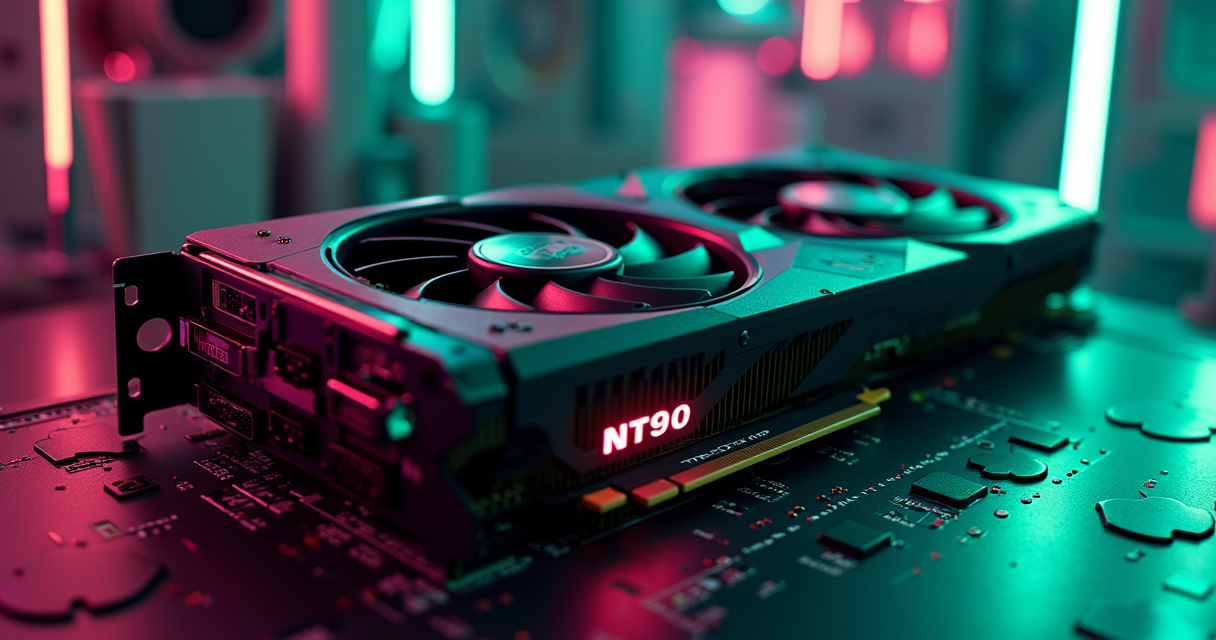
The GeForce RTX 5090 is the fastest graphics card a consumer can legally buy, and almost nothing interesting about it is about gaming. It is a 575-watt, 32GB, $1,999-on-paper halo part that launched on January 30, 2025, sold out in minutes, and has spent the eighteen months since drifting further out of reach — not because gamers wanted it that badly, but because the GDDR7 memory bolted to its flank is worth more inside an AI server than inside your PC.
We benchmarked it, watched the connector cook, tracked the price ratchet, and sat through the CES 2026 sideshow. Here is the review with the marketing surgically removed: what Blackwell actually delivers at 4K, where the "twice as fast" number comes from, why the card costs $3,000 in mid-2026, and who — if anyone — should buy one.
The Verdict: Fastest, Almost Irrelevant
The one-paragraph version
The RTX 5090 is roughly 30% faster than the RTX 4090 in native 4K rasterization — not the 2x NVIDIA's keynote slides imply, and not the 21% a saturated synthetic benchmark implies either. It is the first card that plays 4K at maximum settings with path tracing without visibly buckling. It is also the most power-hungry, most expensive, and most supply-constrained consumer GPU ever shipped, and its real-world price has gone up since launch. Magnificent engineering; indefensible economics.
Who should actually buy one
Buy it if you run local large language models or diffusion models that spill past 24GB of VRAM, you already own a 4K high-refresh display worth feeding, and $3,000 is a rounding error. Skip it if you game at 1440p (you'll be CPU-bound and the gap collapses), if performance-per-dollar means anything to you, or if your power supply and case were not built around a 575W card and a cooler the size of a paperback. This is not a subtle product.
The score, honestly
Reviewers clustered around 4 to 4.5 stars. Tom's Hardware posted an initial 4.5 and then docked half a star specifically because the Founders Edition ran hot. Call it 9/10 on engineering, 4/10 on value, and understand that those two numbers do not average into anything a sane gamer should spend $3,000 on. The 5090 is a technical achievement first and a consumer product a distant second.
Blackwell by the Numbers
The die and the memory
The 5090 is built on NVIDIA's Blackwell architecture — specifically the GB202 die, fabricated on a TSMC 4nm-class node and packing roughly 92 billion transistors. It carries 21,760 CUDA cores, a 33% increase over the 4090's 16,384, plus 680 fifth-generation Tensor cores and a rated boost clock of 2.41 GHz. Raw FP32 throughput lands near 104.8 TFLOPS. But the headline is memory: 32GB of GDDR7 on a full 512-bit bus, good for 1,792 GB/s of bandwidth — a 78% jump over the 4090's 1,008 GB/s. That bandwidth, more than the modest shader-count bump, is where a large share of the 4K gains actually comes from.
The power budget and the physical footprint
All of that costs watts. The 5090 has a 575W total graphics power rating, up from the 4090's 450W, fed through a single 12V-2x6 connector rated for roughly 600W — meaning NVIDIA left about 25W of headroom on a consumer-grade cable. We'll come back to that. Physically, the Founders Edition is a genuinely clever two-slot design that is smaller than the 4090 FE, but partner cards are three- and four-slot bricks that will bow your PCIe slot. If you buy one, budget for a GPU sag bracket before the card cracks its own solder joints under its own weight.
The AI number NVIDIA leads with
NVIDIA quotes up to 3,352 TOPS of AI performance for the 5090. That figure uses FP4 precision with sparsity — a best-case marketing metric, not a gaming one — but it signals the card's real center of gravity. The 5090 is a Tensor-heavy design that happens to render games, not a rasterizer that happens to do AI. Engadget summed it up in its headline: "pure AI excess for $2,000."
| Specification | RTX 5090 | RTX 5080 | RTX 4090 |
|---|---|---|---|
| Architecture | Blackwell (GB202) | Blackwell (GB203) | Ada Lovelace (AD102) |
| Process node | TSMC 4nm | TSMC 4nm | TSMC 5nm (4N) |
| CUDA cores | 21,760 | 10,752 | 16,384 |
| Tensor cores | 680 (5th gen) | 336 (5th gen) | 512 (4th gen) |
| Memory | 32GB GDDR7 | 16GB GDDR7 | 24GB GDDR6X |
| Memory bus | 512-bit | 256-bit | 384-bit |
| Bandwidth | 1,792 GB/s | 960 GB/s | 1,008 GB/s |
| Boost clock | 2.41 GHz | 2.62 GHz | 2.52 GHz |
| FP32 (TFLOPS) | ~104.8 | ~56 | ~82.6 |
| Total graphics power | 575W | 360W | 450W |
| Power connector | 1× 12V-2x6 | 1× 12V-2x6 | 1× 12VHPWR |
| Launch date | Jan 30, 2025 | Jan 30, 2025 | Oct 12, 2022 |
| Launch MSRP | $1,999 | $999 | $1,599 |
4K Performance: ~30% Over the 4090
Rasterization: the honest average
Strip out the frame generation and the picture is clear and unspectacular. DSOGaming ran 20 of the most demanding PC games at native 4K and measured a 33% average uplift over the 4090, with individual titles ranging from 23% to 47%. GamersNexus saw a 20–50% raster spread depending on the game, and TechSpot hit 42% in the friendliest titles. The brief's "169 FPS average, ~30–35% over the 4090" sits right in that band. So where does "twice as fast" come from? Multi-Frame Generation, which we'll get to.
Ray tracing and path tracing
Heavy ray tracing is where Blackwell stretches its legs slightly further. GamersNexus measured a 27–35% uplift in 4K ray-traced workloads; DSOGaming clocked +38% in Cyberpunk 2077 and +37% in Black Myth: Wukong. The 5090 is the first consumer card that can run full path tracing at 4K without immediately collapsing — though note the qualifier: even here, the genuinely playable framerates still lean on DLSS. Native path tracing at 4K remains a slideshow on every card ever made, this one included.
Thermals, acoustics, and the 1440p wall
The Founders Edition cooler is impressive for its size, but it is working hard. TechSpot logged a 73°C core temperature and an 88°C memory-junction temperature under sustained load. Tom's Hardware saw worse: at the 575W ceiling in Cyberpunk 2077, temperatures "as high as 94C" and it "even experienced some instability," concluding bluntly that "neither is at all acceptable for this level of hardware." That's why the FE lost half a review star. One more caveat: at 1440p the 5090 is frequently CPU-bound, and the gap over a 4090 shrinks toward noise. This is a 4K-and-above card. If you're pairing it with anything, pair it with a proper 4K gaming monitor and a variable-refresh panel worth the frames.
$ nvidia-smi --query-gpu=name,power.draw,temperature.gpu,memory.used,memory.total --format=csv
name, power.draw [W], temperature.gpu, memory.used [MiB], memory.total [MiB]
NVIDIA GeForce RTX 5090, 574.82 W, 73 C, 28316 MiB, 32607 MiB

# Representative Founders Edition reading at the 575W ceiling.
# Core holds ~73C; memory junction and hotspot climb to 88-94C under load.
DLSS 4 and Multi-Frame Generation
What MFG actually does
DLSS 4 is the 5090's real party trick, and it launched with the cards on January 30, 2025 — in 75 games on day one, over 250 by CES 2026, not the "May 2025" some briefs claim. Its marquee feature, Multi-Frame Generation, uses the Tensor cores to synthesize up to three AI frames for every one the GPU actually renders. That 4x multiplier is where NVIDIA's "twice as fast as a 4090" claim comes from — the 4090's frame generation only inserts a single frame, so on an MFG-versus-single-FG chart the 5090 looks enormous. DLSS 4.5, announced at CES 2026 and rolled out in spring 2026, pushes the multiplier to 6x and adds a second-generation Transformer upscaling model.
The "fake frames" problem
Here is the catch the keynote skips: generated frames do not reduce input latency. They make motion look smoother without making the game feel more responsive, because the AI frames carry no new player input. PC Gamer's reviewers reached for the phrase "fake frames" and noted the brute-force silicon is "only incrementally faster." Even Engadget conceded DLSS 4 "may turn out to be a lot more important than the actual hardware itself" — which is either praise or an indictment depending on how you feel about paying $2,000 for silicon. The Verge's Tom Warren titled his review "a new king of 4K is here," and that's fair — provided you accept that the crown is half software.
The 8K asterisk
You'll see the claim that the 5090 is the "first consumer card capable of consistent 8K gameplay." Treat it the way you'd treat any spec that needs an asterisk to survive. Native 8K is 33 megapixels — four times 4K — and it drags even this card to the floor in demanding titles. The 8K story is entirely a DLSS-and-MFG story: upscale from a lower internal resolution, generate frames, and label the output 8K. NVIDIA made the identical "8K gaming" claim for the RTX 3090 in 2020. It was marketing then, and it's marketing now.
575W and the 12V-2x6 Problem
der8auer's clamp meter
In February and March 2025, overclocker and YouTuber der8auer put a clamp meter and a thermal camera on a Founders Edition and found the 12V-2x6 connector doing something it shouldn't. Individual conductors were carrying wildly uneven loads — one wire pulling around 22 amps against a per-pin spec of roughly 8–9A — while the connector itself hit 150°C on the PSU side and around 90°C at the GPU. Running 575W through a cable rated for about 600W leaves almost no margin, and the current was not distributed evenly enough to trust the margin that existed.
The missing load balancing
The root cause is a design regression. The RTX 3090 Ti split its power input across multiple shunt resistors so the board could sense and balance per-pin current. The 5090 Founders Edition treats the six 12V pins as a single node — if one wire hogs the load, nothing on the card notices or intervenes. Club386's Ben Hardwidge put it plainly: "This socket isn't fit for purpose, and our industry, particularly Nvidia, needs to admit it." PC Gamer's headline was shorter: "Surely not again." NVIDIA has issued no recall.
What to actually do about it
If you own one: seat the connector until it clicks, use the native 12V-2x6 cable that shipped with your ATX 3.x power supply rather than a daisy-chained adapter, avoid tight bends within 35mm of the plug, and consider a modest power limit — dropping to 90% TGP costs almost nothing in frames and takes a meaningful bite out of both temperature and per-pin current. The card does not need all 575W to be the fastest thing you own.
32GB of VRAM: The Real Pitch Is AI
The 24-to-32GB threshold
The single most consequential number on the 5090 spec sheet is not a framerate — it's 32GB. The 4090 had 24GB, and that 8GB gap is the difference between "model loads" and "out of memory" for a whole class of local AI work. Quantized large language models, higher-resolution diffusion pipelines, and video models in the 24–32GB range that hard-failed on a 4090 simply run on a 5090. For the AI hobbyist, that's not a nice-to-have; it's the entire reason to buy the card.
The token-generation numbers
In local LLM inference, the extra bandwidth and capacity compound. Running a 70-billion-parameter Llama model, the 5090 generates roughly 85 tokens per second against the 4090's ~52 — about 63% faster — and its native FP4 support lets newer quantizations run faster still. Against a professional card like the $7,000-plus RTX 6000-class parts, a 5090 at even inflated street prices is the value option for anyone who needs 32GB and doesn't need ECC or a support contract. This is the one buyer for whom the 5090 is a genuinely rational purchase.
Why a datacenter sets your gaming price
Here's the uncomfortable feedback loop. The same GDDR7 that makes the 5090 special is the exact memory class the AI industry is buying by the wafer. As long-term supply contracts expired at the end of 2025, the spot price of 16GB of GDDR7 reportedly climbed from roughly $65–80 to over $200, and on some 2026 flagship cards VRAM now accounts for more than 80% of the bill of materials — the die everyone thinks of as "the graphics card" has become the cheap part. It's the same demand curve gutting the rest of the memory market; we covered how PCIe 6.0 SSDs ship 28 GB/s for AI and nothing for you, and the GPU aisle is the same story with a fan on it.
Pricing in 2026: MSRP Is Fiction
$1,999 on paper
NVIDIA set the Founders Edition MSRP at $1,999. In practice that number is a press-release artifact. FE stock sold out globally within minutes of the January 30, 2025 launch and has effectively never returned; NVIDIA quietly pulled the FE from several retail channels through 2025. If you saw one at $1,999, you saw it in a screenshot.
$3,000-plus on the street
Eighteen months later the picture is worse, not better. GPU price trackers put the mid-2026 street average around $2,999, with June 2026 averages closer to $3,658. Partner cards run the gamut: an ASUS TUF around $2,909, MSI Gaming Trio OC and Gigabyte Gaming OC near $3,299, and the ASUS ROG Astral OC around $3,509. TechTimes reported in July 2026 that the memory crisis had pushed some models north of $4,300 while NVIDIA shipped "paper" MSRP cards nobody could find. This is a graphics card whose price inflated by 50%-plus after launch — the opposite of how the market is supposed to work.
The value math nobody at NVIDIA wants to run
At MSRP, the 5090 costs 25% more than the 4090 did at its own launch ($1,999 versus $1,599) for roughly 30% more raster performance — so performance-per-dollar is essentially flat generation-over-generation. At street prices it is negative: you're paying an 80–90% premium over the 4090's launch price for a 30% gain. DSOGaming's John Papadopoulos said it cleanly: NVIDIA "raised the price of its XX90 GPU model by 25%, offering 30–40% better performance." That's the best case. The street erases it.
The MSI Lightning Z Sideshow
A $5,090.99 flex
At CES 2026, MSI revealed the card that makes a $3,000 5090 look reasonable: the MSI GeForce RTX 5090 Lightning Z, priced at $5,090.99 — yes, the price is a pun on the model number. MSI built just 1,300 units for the entire world and, in the US, sold them by lottery. The engineering is deranged in the best possible way: a 40-phase VRM on a 3oz-copper PCB, dual 12V-2x6 inputs feeding a 1,000W ceiling (two 600W connectors), a closed-loop liquid cooler, and an 8-inch telemetry screen bolted to the shroud. Firmware exposes selectable 800W/1000W profiles plus a separate 2,500W "XOC" BIOS for liquid-nitrogen benching.
What $5,090 actually buys
Performance? About 10–11.4% faster at 4K than a stock Founders Edition, stretching toward 18% once you overclock it. Tom's Hardware titled its review "RTX 5090 Ti, anyone?"; TechSpot called it "the RTX 5090 Ti you probably can't buy"; Club386 saw "flashes of graphics card greatness." Resale tells the real story — completed eBay sales landed between $6,700 and $8,800, with optimists listing near $27,000. It is a collector's item that happens to render Cyberpunk.
The 5-kilogram point
MSI leaned all the way in, shipping a limited edition whose full package — card, struts, and packaging — weighs about 5 kilograms. The Lightning Z is the halo of the halo, a reminder that the 5090 platform has enough thermal and power headroom to absorb genuinely absurd cooling. If you actually want more performance out of a normal 5090, you don't need MSI's lottery — our GPU overclocking walkthrough pulls 3–10% out of a stock card in about 90 minutes, for free.
The Competition: There Isn't Any
AMD ceded the halo
There is no head-to-head here, because AMD chose not to show up. The 5090 is roughly 51% faster than the Radeon RX 7900 XTX — AMD's former flagship — in average 4K framerate, and AMD's 2025 RDNA 4 generation (the RX 9070 XT and friends) was designed as a mid-range value play, not a halo challenger. AMD said out loud that it was not building a top-end card this generation. Intel's Arc line is not within a factor of the conversation. For the first time in years, NVIDIA's flagship competes only against NVIDIA's last flagship.
5090 vs 5080 vs 4090
Within NVIDIA's own stack, the 5090 sits alone at the top. It's about 45–50% faster than the RTX 5080 at 4K, which is unsurprising given the 5080 is essentially half a 5090 in memory terms — 16GB of GDDR7 on a 256-bit bus versus the 5090's 32GB on 512-bit. Against the outgoing 4090, it's the ~30% raster / ~30% ray-tracing story from earlier. The table below lays the three side by side against the reality of the 2026 market.
The used-4090 question
The 4090 went end-of-life in 2026, which scrambles the value calculus. A used 4090 holds its price precisely because nothing affordable replaced it. If the gap between a used 4090 and a new 5090 is north of $800 — and at current street prices it's far more than that — a 1440p gamer is objectively better served by the older card. The 5090 only justifies itself at 4K, in AI, or in the specific ego-math of owning the fastest thing in the room.
| Model | Launch / Reveal | MSRP | Mid-2026 street | Notes |
|---|---|---|---|---|
| RTX 5090 Founders Edition | Jan 30, 2025 | $1,999 | Effectively unavailable | Sold out in minutes; pulled from many retailers |
| ASUS TUF RTX 5090 | Jan 2025 | — | ~$2,909 | Among the cheaper partner cards |
| MSI Gaming Trio OC / Gigabyte Gaming OC | Jan 2025 | — | ~$3,299 | Mainstream partner tier |
| ASUS ROG Astral OC | Jan 2025 | — | ~$3,509 | Premium air-cooled flagship |
| MSI RTX 5090 Lightning Z | CES 2026 | $5,090.99 | $6,700–$8,800 (resale) | 1,300 units, lottery; ~11% over FE |
| RTX 4090 (used) | Oct 12, 2022 | $1,599 | Elevated (EOL) | Discontinued in 2026; still holds value |
Historical Context: The Price Ratchet
From Titan to xx90
The 5090 is the current terminus of a lineage NVIDIA has been quietly repricing for a decade. The enthusiast "Titan" tier gave way to the numbered xx90 cards with the RTX 3090 in 2020 ($1,499), which begat the RTX 4090 in 2022 ($1,599), which begat the RTX 5090 in 2025 ($1,999). Each was the fastest gaming GPU on earth at launch; each cost more than the last; and the jump from the 4090 to the 5090 was the steepest yet. The GeForce RTX 50 series is where the halo tier fully detached from anything resembling mainstream pricing.
The generational leaps, in perspective
Measured against the cards it descends from, the 5090 is a monster: comfortably more than twice the gaming performance of a 3090, and multiples of a 2080 Ti from 2018. But be careful with the synthetic numbers floating around — a PassMark G3D score, for instance, shows the 5090 only about 2.4% ahead of the 4090, because that benchmark saturates at the top of the stack and stops measuring what a real 4K workload demands. Trust the game benchmarks, not the composite database scores, at this altitude.
The memory-market inversion
What genuinely breaks with history is the economics. For the entire prior run of the xx90 line, the expensive part of a graphics card was the GPU die. In 2026, thanks to AI demand for high-bandwidth memory, that inverted — the VRAM now dominates the bill of materials and the die is comparatively cheap. No previous flagship launched into a market where its own memory was the scarce, price-setting component. That single shift explains almost everything strange about the 5090's price behavior.
What Happens Next: 6-12 Months
Prices and supply
My read on the next two to three quarters, for what a forecast is worth in a memory-starved market:
- No return to MSRP before 2027. As long as GDDR7 is rationed to datacenters, the 5090 street price stays in the $2,800–$3,700 band. Expect volatility, not relief.
- A "Super" refresh, if it comes, won't cut prices. NVIDIA can't cheapen a card whose cost is its memory. Any RTX 50 Super refresh is more likely to add value through clocks or software than to drop the sticker.
- DLSS 4.5's 6x MFG widens the "fake frames" argument. Now shipping, it makes benchmark charts even more misleading and pushes serious reviewers toward latency-inclusive testing as the honest metric.
- No recall on the connector. NVIDIA will not admit the 12V-2x6 design is flawed; expect third-party fused and load-balanced cables to become the enthusiast default instead.
- The 5090 stays the flagship through 2026. Tom's Hardware pegs the next architecture at roughly two years out. Nothing consumer will beat this card before then — including AMD, which is unlikely to re-enter the halo tier until its next-generation stack in 2027.
What would change the calculus
Two things could move this needle. A genuine break in the memory shortage — new fab capacity coming online, or AI demand cooling — would let street prices fall toward MSRP and finally make the 5090 a defensible 4K purchase. Alternatively, a mid-cycle Super card using the same silicon with a cheaper memory configuration could reset expectations. Neither looks likely inside twelve months. Plan around the card that exists, not the one the spec sheet promises.
The bottom line
The RTX 5090 is the best consumer GPU ever built and one of the worst consumer GPU values ever shipped, and both statements are true at the same time. If you need 32GB of VRAM for AI, buy it and don't look back. If you're a gamer, wait — for the memory market to sane up, for a Super refresh, or for the simple realization that a 4K experience at 90% of the 5090's is available for less than half the money. The fastest card in the world is not the same thing as the card you should own.
Questions the search bar asks me
- How much faster is the RTX 5090 than the RTX 4090?
- In native 4K rasterization, about 30% on average — DSOGaming measured 33% across 20 games (a 23–47% range), and GamersNexus saw 27–35% in ray tracing. The "twice as fast" figure only holds with DLSS 4 Multi-Frame Generation enabled, not in raw rendering.
- Why does the RTX 5090 cost around $3,000 when the MSRP is $1,999?
- An AI-driven GDDR7 memory shortage. The card's 32GB of GDDR7 is the same memory class datacenters are buying en masse; spot prices for 16GB of GDDR7 jumped from roughly $65–80 to over $200, and mid-2026 street prices average about $2,999. TechTimes reported some models above $4,300 in July 2026.
- Is the RTX 5090's power connector safe?
- It's controversial. der8auer measured one 12V-2x6 wire pulling ~22A against a ~8–9A per-pin spec, with connector temps hitting 150°C, and the Founders Edition lacks the per-pin load balancing the 3090 Ti had. Club386 called the socket "not fit for purpose." There's been no recall — use the native cable, seat it fully, and consider a power limit.
- Should I buy the RTX 5090 for gaming or for AI?
- For AI. The 32GB of VRAM runs local models in the 24–32GB range that fail on a 4090's 24GB, and it does roughly 85 tokens/sec on Llama 70B versus the 4090's ~52. For pure gaming at $3,000 street, the value is indefensible — a used 4090 or an RTX 5080 makes more sense unless you game at 4K with path tracing.
- Can the RTX 5090 really do 8K gaming?
- Only with DLSS upscaling and Multi-Frame Generation. Native 8K is 33 megapixels and still overwhelms the card in demanding titles. NVIDIA made the same "8K gaming" claim for the RTX 3090 in 2020; it's an upscaling story, not a native-rendering one.
Marcus covers the gaming PC, GPU, and peripheral side of staresback. Every post under this byline is reviewed pre-publish by Sam P., Editor & Operator — corrections to info@instalinkoteam.com. Published 2026-08-29 · Last updated 2026-08-29. Full bios on the author page.