/// FIELD NOTES FROM A SELF-AWARE GAME SITE
RTX 5090 Review 2026: Brutally Fast, $4,300 Reality
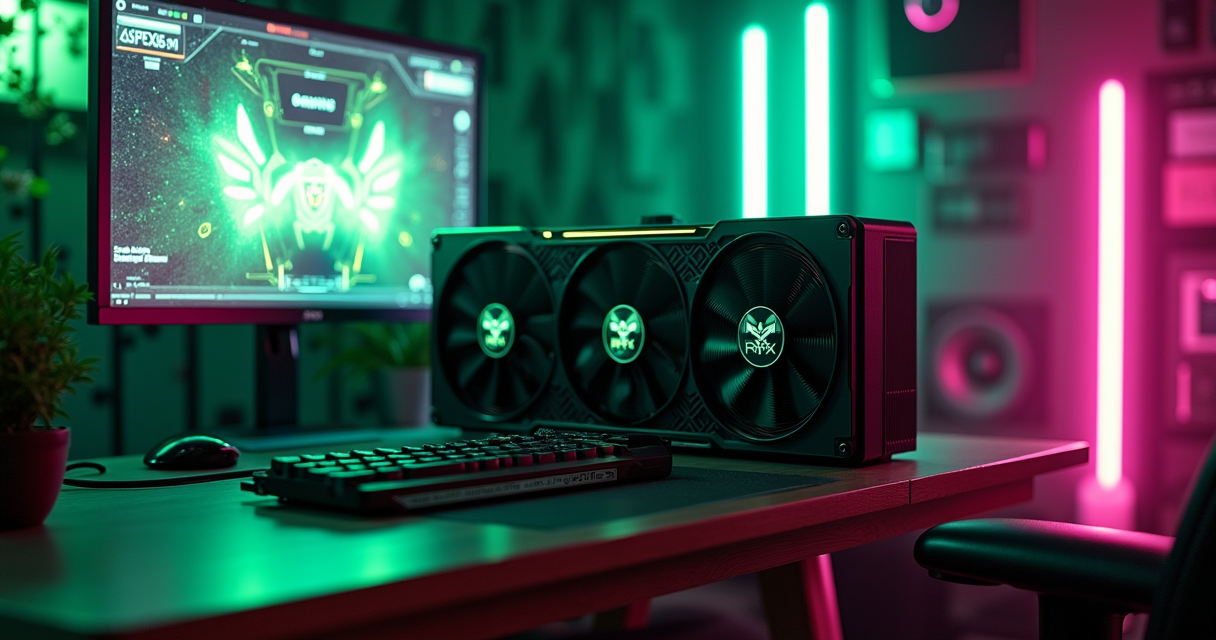
Nvidia built the fastest consumer graphics card in history and then spent eighteen months watching the market make certain that almost nobody could buy it at the number printed on the box. That is the GeForce RTX 5090 in one sentence. Everything below is the footnotes: the specs Nvidia actually shipped, the benchmarks that justify the hype, the power connector that keeps cremating itself, and the pricing spiral that turned a $1,999 flagship into a $4,300 luxury good.
The 5090 launched on January 30, 2025, and it is still, in the late summer of 2026, the undisputed performance king. It is also, by any sane reading of the market, a terrible purchase for a gamer. Both of those things are true at once, and the tension between them is the only genuinely interesting thing about a card whose raw benchmarks were never in doubt. This is a review of the card and of the eighteen months that happened to it.
The $1,999 Paper Launch
January 30, 2025: the date on the box
The RTX 5090 went on sale on January 30, 2025 at a launch MSRP of $1,999 in the United States, £1,939 in the UK, and AU$4,039 in Australia for the Founders Edition and a handful of partner cards priced at reference. TechRadar's launch coverage pinned exactly those figures, and Nvidia's own product page — last revised on August 21, 2026 with availability language Nvidia was still quietly editing well into 2026 — continues to frame $1,999 as the card's nominal position. The word nominal is doing an enormous amount of work in that sentence.
Why "MSRP" became a punchline
Reviews landed a week before the card did. The Verge published its verdict on January 23, 2025. By the time the store pages flipped live on the 30th, Founders Edition stock evaporated in minutes, partner cards followed, and the $1,999 sticker became the retail equivalent of a rumor. A paper launch is the polite industry term: cards exist, a price exists, and the intersection of the two exists only in press releases. The 5090 was the platonic example of the form.
The Founders Edition nobody could buy
Nvidia's Founders Edition was, on the merits, the most impressive engineering in the lineup: a genuinely dual-slot cooler dissipating 575 watts, a feat of thermodynamic stubbornness. It was also the rarest thing in the range. Reference-priced cards were the first to vanish and the slowest to return, which meant the only 5090s a normal buyer could actually locate were partner models carrying a markup that started at "steep" and ended, eventually, somewhere near "absurd." We will get to the exact figures. For now, hold the thought that the $1,999 card was, functionally, a myth from day one.
What Nvidia Actually Shipped
GB202: the biggest consumer die Nvidia sells
Under the cooler sits GB202, the top Blackwell die, fabricated on TSMC's 4nm-class process. It carries 21,760 CUDA cores — a 32.8% increase over the RTX 4090's 16,384 — alongside 680 fifth-generation Tensor cores and a rated 104.8 TFLOPS of FP32 throughput. The GeForce RTX 50 series is the first consumer Blackwell family, and the 5090 is the only card in it that uses the full-fat GB202 silicon in anything close to its complete configuration.
32GB of GDDR7 on a 512-bit bus
The headline number is memory: 32GB of GDDR7 on a 512-bit interface, good for 1,792 GB/s of bandwidth. That is a 78% bandwidth increase over the 4090's 1,008 GB/s, and it is the specification that betrays the card's true audience. Thirty-two gigabytes is more VRAM than any current game can meaningfully consume at any resolution; it is exactly the amount a local large-language model, a Blender scene, or a diffusion pipeline wants. The boost clock is listed at 2.41 GHz, cross-checked on both the product page and Nvidia's Marketplace entry, and the card rides a full PCIe 5.0 interface.
The spec sheet in one table
Set against the card it replaces, the generational jump is real but lopsided — memory and bandwidth leap, shader count climbs a third, and power climbs right along with them:
| Specification | RTX 5090 | RTX 4090 | Delta |
|---|---|---|---|
| Launch date | Jan 30, 2025 | Oct 12, 2022 | +2 years |
| Launch MSRP | $1,999 | $1,599 | +25% |
| Architecture | Blackwell (GB202) | Ada (AD102) | New gen |
| Process | TSMC 4nm | TSMC 5nm | — |
| CUDA cores | 21,760 | 16,384 | +32.8% |
| Memory | 32GB GDDR7 | 24GB GDDR6X | +33% |
| Bus width | 512-bit | 384-bit | +33% |
| Bandwidth | 1,792 GB/s | 1,008 GB/s | +78% |
| Boost clock | 2.41 GHz | 2.52 GHz | −4% |
| Total board power | 575 W | 450 W | +28% |
| Recommended PSU | 1,000 W | 850 W | +150 W |
| Interface | PCIe 5.0 | PCIe 4.0 | 2x |
Note that the boost clock actually dropped four percent. Blackwell's gains come from width and bandwidth, not frequency — this is a wider engine, not a faster-spinning one. That distinction matters the moment you look at the benchmarks.
Benchmarks: 20-50% and a CPU Wall
4K rasterization: 20-50%, usually around 30%
GamersNexus measured a 20-50% rasterization uplift at 4K over the RTX 4090, the wide spread reflecting how differently individual engines respond to raw bandwidth. DSOGaming's twenty-game native-4K sweep landed at a 33% average, moving from 108 fps on the 4090 to 137 fps on the 5090. That is the honest headline figure: roughly a third faster in real 4K games, generation over generation. It is a solid uplift. It is not the "twice as fast" that leaked rumors promised through most of 2024.
Ray tracing: 27-35% over the 4090
Turn ray tracing on and the gap holds or widens slightly. GamersNexus put path-traced and RT workloads at a 27-35% uplift; DSOGaming clocked Cyberpunk 2077 at +38% and Black Myth: Wukong at +37%. The Verge's own testing found Forza Motorsport running 35% better with TAA and Shadow of the Tomb Raider averaging 238 fps at 4K. The pattern is consistent: at the resolutions and ray-tracing loads that actually stress a flagship, the 5090 is a reliable 30-40% ahead of the card it replaces.
Drop to 1440p and the lead evaporates
Here is the caveat every reviewer buried in the middle of the page: at 1440p and 1080p the 5090's advantage shrinks toward nothing, because no consumer CPU on the market can feed 21,760 shaders fast enough at those resolutions. The card sits idle, waiting on the processor. Synthetic tools obscure this — a 3DMark run can show anything from +48.6% to a small regression depending on the test — which is why raw gaming numbers matter more than benchmark suites here. If you game at 1440p, the honest answer is that the 5090 is a waste of silicon; our breakdown of 1440p versus 4K argues the lower resolution wins on value for almost everyone. The 5090 is a 4K-and-above instrument, full stop.
DLSS 4 and the Fake-Frame Fight
Multi Frame Generation: three invented frames per real one
The 5090's genuine party trick is DLSS 4 Multi Frame Generation, which uses the Blackwell Tensor cores to generate up to three AI-interpolated frames for every one the GPU actually renders — a 4X multiplier. It launched alongside the cards on January 30, 2025 with support in 75 titles, crossed 100 by spring, 125 by Computex, and 250-plus games by CES 2026. PCWorld called DLSS 4 "the game changer," and on a pure smoothness metric it is: the card can turn 60 rendered frames into 240 displayed ones.
The "twice as fast" marketing reviewers called ludicrous
The problem is what Nvidia did with that number in its slides. When marketing compares 4X MFG at 200 fps against single frame-generation at 100 fps — with both configurations actually rendering the same 50 frames underneath — and labels the result "twice as fast," reviewers revolted. Tom's Hardware called the claim, in print, "ludicrous." Interpolated frames add latency, not responsiveness; they smooth motion without making the game feel faster under your hands. Critics have called them "fake frames" since the feature debuted, and the criticism is technically correct even when the output looks good in motion.
DLSS 4.5 and the Transformer model
At CES 2026 Nvidia announced DLSS 4.5, pushing Multi Frame Generation to a 6X mode and shipping a second-generation Transformer-based upscaling model that improves image quality at a modest compute cost, with a rollout beginning in spring 2026. It is a meaningful upgrade to the software stack, and it is also the clearest signal yet that Nvidia sees the 5090's value less in silicon than in the neural network running on top of it. The card is a platform for AI features as much as it is a renderer.
575 Watts and a Melting Connector
575W board power, 1,000W system requirement
The 5090's total board power is 575 W, and Nvidia recommends a 1,000-watt power supply to run it. Read that as a platform mandate, not a suggestion: the 5090 is not a card you drop into an existing build, it is a card you build a machine around. Between the PSU, the physical heft — this is a card heavy enough to want a support bracket to stop it sagging out of the slot — and the thermal load it dumps into your case, the true cost of entry is a good deal more than the sticker on the card.
der8auer's thermal camera: one wire at 150°C
Then there is the connector. In February and March 2025, overclocker der8auer put a thermal camera and a clamp meter on a 5090 Founders Edition and found the 12V-2x6 connector wildly imbalanced: individual wires carrying 2A, 5A, 11A, and 22A against a per-wire spec of roughly 8-9A, with the connector hitting 150°C on the PSU side and around 90°C at the GPU. The 12V-2x6 standard is rated for about 600W; the 5090 pulls 575W through it with, on the Founders Edition, no per-pin load balancing — a regression from the shunt-resistor safeguards Nvidia shipped on the 3090 Ti. Undervolting is the sane mitigation; our undervolting method ports directly to the GPU side of the problem, and a blunt power cap costs almost nothing in frames:
# Cap the RTX 5090 board power at 450W to ease the connector and heat
nvidia-smi -i 0 -pl 450

# Read the default, enforced, and maximum power limits
nvidia-smi -q -d POWER | grep "Power Limit"
Club386's Founders Edition, cremated
The failures were not theoretical. Club386 reported that its own 5090 Founders Edition and its be quiet! Dark Power 13 power supply were both destroyed by a single, fully-seated, first-party 12V-2x6 cable that melted at both ends. This was a team that has tested GPUs for decades, using the cable that came in the box — the standard "user error" defense simply did not apply. Editor Ben Hardwidge's verdict was blunt: "This power connector isn't fit for purpose, and Nvidia needs to admit it." As of this writing there has been no recall. The saga, worth remembering, began with the original 12VHPWR connector at the 4090's launch in late 2022; two generations on, Nvidia has changed the connector's name more decisively than its physics.
From $1,999 to $4,300 and Up
The MSRP that lasted about a week
The $1,999 launch price was real for roughly as long as launch stock lasted, which is to say not long. Through mid-2026 the actual street prices for in-stock partner cards settled well above reference: ASUS TUF models around $2,909, MSI Gaming Trio OC and Gigabyte Gaming OC near $3,299, and the ASUS ROG Astral OC at roughly $3,509. Then it got worse. We track the whole spiral in our companion piece on the $1,999 card and its $4,300 reality, but the short version follows.
Why the die and the DRAM both got expensive
Around May 13, 2026, Nvidia applied a wholesale price increase of roughly $300 per card, and street prices punched through $4,300 by mid-July; by the end of that month Amazon listings sat near $4,329, with premium AIB cards above $5,000. A pricing snapshot from DropReference claimed that by August 20, 2026, typical listings had reached $4,800-$5,500, with premium and collector models running to $6,700 and, in outlier cases, $10,100. The cause is not scalping — it is silicon economics. AI datacenters are devouring GDDR7 and DRAM: a 16GB GDDR7 kit that cost roughly $65-80 in mid-2025 was north of $200 by year's end, and on a 32GB card the memory alone accounts for something like $820 of the bill of materials, over 80% of the component cost. The 5090 got more expensive because the thing that makes it a 5090 — its memory — became a contested global commodity.
The MSI Lightning Z: $5,090.99 by design
The apex of the absurdity arrived at CES 2026 with the MSI GeForce RTX 5090 32G Lightning Z, an all-out halo card priced at $5,090.99 — the model number and the price being the same joke — and sold in a run of just 1,300 units by lottery. It packs an AIO liquid cooler, an eight-inch telemetry screen, firmware-selectable 800W and 1,000W modes, and a separate 2,500W "XOC" BIOS for liquid-nitrogen work. It runs about 12% faster than a stock Founders Edition and 18% faster overclocked, and it resells on eBay for $6,700 to $8,800. Tom's Hardware headlined its review, not unreasonably, "RTX 5090 Ti, anyone?" Here is the price timeline in one table:
| Date / model | Price | Note |
|---|---|---|
| Jan 30, 2025 — FE MSRP | $1,999 | Paper launch, sold out in minutes |
| Mid-2026 — ASUS TUF | ~$2,909 | Cheapest in-stock partner card |
| Mid-2026 — Trio / Gigabyte OC | ~$3,299 | Mainstream AIB tier |
| Mid-2026 — ROG Astral OC | ~$3,509 | Premium AIB tier |
| ~May 13, 2026 — wholesale hike | +$300 | Nvidia raises AIB cost |
| Jul 2026 — street | $4,300+ | Amazon ~$4,329 by month end |
| Aug 20, 2026 — DropReference | $4,800-$5,500 | Collector models to $10,100 |
| CES 2026 — MSI Lightning Z | $5,090.99 | 1,300 units, lottery, resells $6,700+ |
What the Reviewers Actually Said
PCWorld: "designed more for AI researchers than PC gamers"
The critical consensus was near-unanimous and quietly damning: the card is magnificent and beside the point. PCWorld called it "the most brutally fast graphics card ever introduced" and then, in the same breath, wrote that "it feels like this GPU was designed more for AI researchers than PC gamers." That is the whole review, really — the 32GB of GDDR7 and the Tensor-core density say plainly who the priority customer is, and it is not the person trying to run Cyberpunk at a steady frame rate.
TechRadar: "the supercar of graphics cards"
TechRadar scored it 4.5 out of 5 and titled the review "the supercar of graphics cards," which is precisely as backhanded as it sounds — supercars are fast, and also impractical objects most owners buy to be seen owning. The magazine listed "Ludicrously expensive" among its cons and concluded that the 5090 is "so good that it's largely superfluous for just about anyone who isn't in it for the pure flex of owning it." Read that verdict twice. It is the most honest sentence anyone wrote about this card.
Tom's Hardware and The Verge: stumbles and a new king
Tom's Hardware, also at 4.5 stars, headlined "Blackwell commences its reign with a few stumbles," flagging launch drivers that felt "raw and undercooked" and the same "ludicrous" marketing math around MFG. The Verge's Tom Warren was warmer, declaring "a new king of 4K is here" while conceding the raw hardware jump was modest and that DLSS 4 might matter more than the silicon. GamersNexus, ever the empiricist, simply confirmed the numbers — 20-50% raster, 27-35% RT — and moved on. Nobody disputed the performance. Everybody flinched at the price and the connector.
The XX90 Lineage: TITAN to Blackwell
From TITAN to 3090 to 4090
The XX90 tier is a relatively new invention dressed up as tradition. Nvidia's ultra-enthusiast slot used to be the TITAN, a prosumer card that straddled gaming and workstation duty. The RTX 3090 inherited that role in 2020, the 3090 Ti sharpened it, and the 4090 in October 2022 turned it into the default halo product. The 5090 is the fourth card in that lineage and the one that most completely abandons the pretense of being for gamers — a 32GB frame buffer is a workstation spec wearing a GeForce badge.
The 25% price hike, generation over generation
The pricing trajectory is its own story. The 4090 launched at $1,599 in 2022; the 5090 arrived at $1,999, a 25% generational increase before a single unit of scalping or memory inflation entered the picture. Nvidia has raised the price of its top card by a quarter every generation while the actual performance uplift has shrunk — the 4090 was a far larger leap over the 3090 than the 5090 is over the 4090. You are paying more for less improvement, which is the exact inverse of how this is supposed to work.
The 12VHPWR saga started in 2022
The melting connector is not a Blackwell problem; it is a lineage problem. The original 12VHPWR standard debuted on the 4090 in late 2022 and immediately started turning up in repair shops with scorched plastic, the root cause being uneven current distribution across pins. Nvidia's response across two generations was to rename the connector to 12V-2x6 and adjust its mechanical tolerances, without addressing the fundamental issue that a 600W-rated plug carrying 575W has almost no margin and, on the 5090 FE, no active balancing to enforce it. The der8auer and Club386 findings are not new failures. They are the same failure, two years older.
The Competition: 4090, 5080, Nobody
The 4090 is discontinued and still expensive
The 5090's most credible rival is the card it replaced. The RTX 4090 was discontinued through 2026, and because 24GB of VRAM is exactly what local-AI hobbyists want, used prices stayed stubbornly high rather than collapsing the way a superseded flagship normally would. For a 1440p gamer, a used 4090 at a real-world discount is arguably the smarter buy — the 5090's 4K-only advantage is wasted at lower resolutions, and the older card sidesteps the wholesale price hikes entirely.
The 5080 isn't close
Within Nvidia's own stack, nothing bridges the gap. The RTX 5080 ships with 16GB of GDDR7 and roughly half the shader count, and it lands well short of the 5090 in every 4K test — the two are simply not in the same performance class. If you want the full accounting, our comparison of the 4090 against the 5080 shows the 5080 failing to reliably beat the previous generation's flagship, which tells you everything about where the 5090 sits: alone, with a moat measured in thousands of dollars.
AMD didn't show up at the top
AMD's RDNA 4 generation deliberately skipped the halo tier, targeting the mainstream and upper-mid market instead of building a 5090 competitor. Intel's Arc is nowhere near this altitude. The result is a monopoly at the top of the market, and the 5090's pricing behavior — a 25% MSRP hike, a mid-cycle wholesale increase, street prices at double the sticker — is exactly what an unchallenged monopoly does. There is no competitive pressure on this card because there is no competition to apply it.
What Happens Next: 6-12 Months
Prices stay broken through 2027
The single safest prediction: the 5090 does not return to $1,999 within the next year. The memory crunch driving prices is structural, tied to AI datacenter demand for GDDR7 and DRAM, and that demand is not softening in 2026. Expect street prices to hold in the $4,000-$5,000 band through the first half of 2027, with periodic spikes whenever a new AI hardware launch contends for the same memory supply. The MSRP will remain a number on a webpage.
A Super refresh, memory permitting
Nvidia's historical mid-cycle pattern points to a Super refresh of the 50 series, likely leaning on denser 3GB GDDR7 modules to bump capacity. But the same memory scarcity that inflated the 5090 is the thing most likely to delay such a refresh — you cannot launch a memory-heavier card into a memory shortage. Watch for announcement noise but expect availability slips. The Lightning Z's existence, and Tom's Hardware openly asking "RTX 5090 Ti, anyone?", suggests Nvidia is holding silicon headroom in reserve for exactly that card.
The connector gets patched, not recalled
Do not expect a recall. Nvidia's two-generation track record is to iterate quietly, and the most probable outcome is that add-in-board partners — not Nvidia — ship the fix, in the form of per-pin current sensing and thermal cutoffs like the ASRock TempGuard approach already appearing on some cards. The Founders Edition design is unlikely to change mid-generation. Melting reports will continue at a low, steady rate, and the safest thing any 5090 owner can do remains a manual power cap and a properly seated, non-third-party cable.
The Verdict: Superfluous and Supreme
The fastest thing you can't afford
Everything the reviews said in January 2025 has only calcified. The RTX 5090 is the fastest consumer graphics card ever made — 20-50% faster than a 4090 at 4K, untouchable at the top of the market, and genuinely magnificent as an object. It is also, at a street price near $4,300 and climbing, one of the worst value propositions in the history of the category. Both statements are permanent features of this card, not a temporary market glitch that will correct itself.
Who should actually buy one
The honest buyer's guide is short. If you run local AI models, do professional 3D or video work, or genuinely game at 4K-and-above and money is not a constraint, the 5090 is the only card that does what it does, and you should buy it and cap the power. If you game at 1440p, want value, or flinch at spending eight times the price of a games console on a single component, you are not the customer — and Nvidia's own spec sheet, with its 32GB of workstation-grade memory, agrees with you.
The number that matters
TechRadar said it cleanest: the 5090 is "so good that it's largely superfluous for just about anyone who isn't in it for the pure flex." Eighteen months of price history turned that from a witty verdict into a literal buyer's guide. The card is a triumph of engineering and a monument to a market with no competition at the top. It is the best graphics card you can buy, and for almost everyone reading this, that is precisely why you should not.
Questions the search bar asks me
- How much faster is the RTX 5090 than the RTX 4090?
- At 4K, GamersNexus measured a 20-50% rasterization uplift and 27-35% in ray tracing, while DSOGaming's 20-game average came to 33% (108 to 137 fps). Drop to 1440p and the lead nearly vanishes, because no current CPU can feed 21,760 shaders fast enough at that resolution.
- What does an RTX 5090 actually cost in 2026?
- The launch MSRP was $1,999 on January 30, 2025, but that price barely survived launch stock. By mid-2026 in-stock partner cards ran $2,900-$3,500, and after a roughly $300 wholesale hike around May 2026, street prices pushed past $4,300, with DropReference citing $4,800-$5,500 by August 20, 2026. The driver is AI datacenter demand inflating GDDR7 memory.
- Is the RTX 5090's power connector safe?
- It remains a known risk. The card pulls 575W through a 12V-2x6 connector rated for about 600W, with no per-pin load balancing on the Founders Edition; der8auer measured one wire at 150C, and Club386 had a fully-seated first-party cable destroy both its 5090 and its 1,000W PSU. There has been no recall, so cap the board power and use only the bundled cable.
- Is the RTX 5090 worth it for gaming?
- For most people, no. TechRadar called it 'so good that it's largely superfluous for just about anyone who isn't in it for the pure flex,' and PCWorld said it 'feels like this GPU was designed more for AI researchers than PC gamers.' Its 32GB of GDDR7 is a workstation and local-AI spec that no current game needs, and at 1440p a CPU bottleneck erases most of the advantage.
- What is DLSS 4 Multi Frame Generation?
- It uses Blackwell's Tensor cores to generate up to three AI-interpolated frames per rendered frame, a 4X multiplier, and shipped with 75 games at launch, growing past 250 by CES 2026. Critics call the output 'fake frames' because interpolation adds latency rather than responsiveness, and Tom's Hardware called Nvidia's 'twice as fast' marketing around it 'ludicrous.' DLSS 4.5, announced at CES 2026, pushes it to 6X.
Marcus covers the gaming PC, GPU, and peripheral side of staresback. Every post under this byline is reviewed pre-publish by Sam P., Editor & Operator — corrections to info@instalinkoteam.com. Published 2026-08-29 · Last updated 2026-08-29. Full bios on the author page.