/// FIELD NOTES FROM A SELF-AWARE GAME SITE
Xbox Handheld 2026: Ally Shipped, First-Party No Date
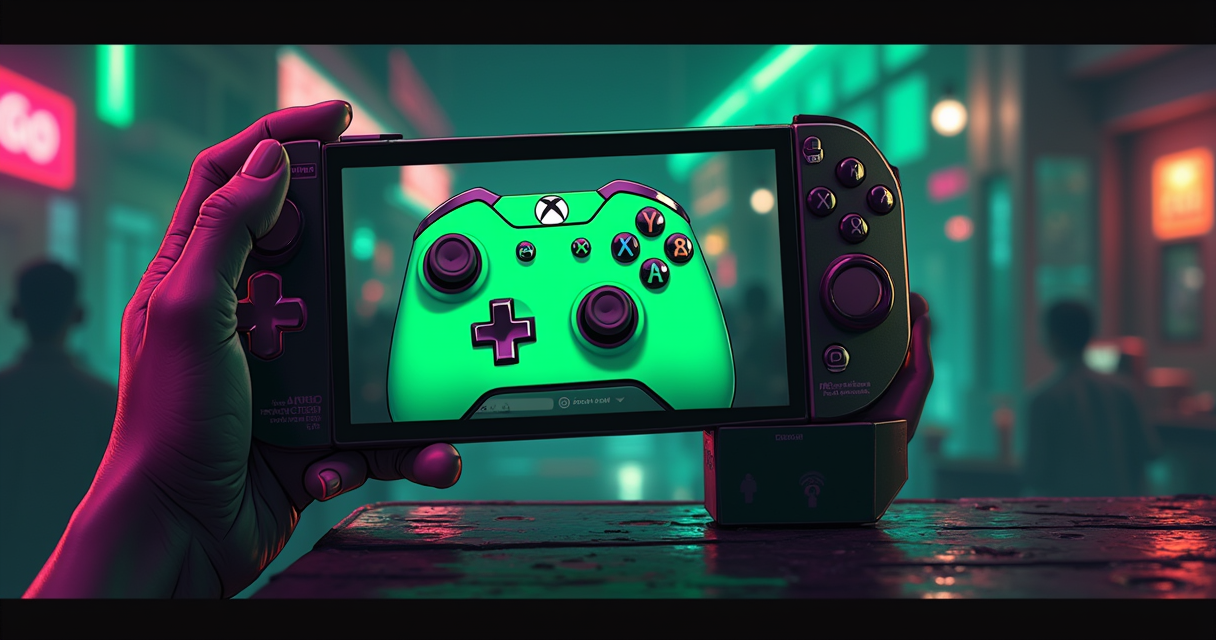
Ask a search engine "when is the Xbox handheld coming out" in the middle of 2026 and you will get two contradictory answers, both correct. One is October 16, 2025 — a date already in the rear-view mirror. The other is nobody knows, including Microsoft. The trick to understanding the Xbox handheld release date is realizing the question smuggles in two different devices wearing the same four-letter brand.
The first is the ROG Xbox Ally and ROG Xbox Ally X, a pair of Windows 11 handhelds that Microsoft co-developed with ASUS and put on shelves across 45 countries last autumn. Those are real: dated, priced, reviewed, and sitting in warehouses. The second is the first-party Xbox handheld — a native, Microsoft-built portable that has been teased, leaked, codenamed, and, as of this writing, quietly shelved. It has no date, no price, and no specs. This piece is about both, because the honest answer to "the Xbox handheld release date" is a fork in the road, not a number on a calendar.
The Short Answer: Two Devices, One Brand
If you take nothing else from this article, take the distinction. Conflating the two devices is how every muddled headline and every wrong forum answer gets made. Microsoft has been happy to let the confusion ride, because vagueness sells hardware roadmaps.
The device you can actually buy
The ROG Xbox Ally and ROG Xbox Ally X went on sale on October 16, 2025. Pre-orders opened three weeks earlier, on September 25, 2025. These are the first Xbox-branded handhelds ever shipped, and the operative word is branded — the hardware is an ASUS ROG Ally under the skin, with an Xbox logo, Xbox-tuned software, and a dedicated Xbox button. That is the device with a release date. It is behind us.
The device you cannot
The genuinely native, Microsoft-designed handheld — the thing enthusiasts actually mean when they say "an Xbox handheld" — does not have a release date. It has never had one. Through 2026, reporting shifted away from a standalone first-party date and toward the plain fact that the only Xbox handheld you can hold is the ASUS-built one. A true next-generation Xbox portable has not been formally announced, dated, priced, or specced.
Why the distinction matters
It matters because the two devices imply completely different strategies. One says Microsoft is a software company renting a form factor from ASUS. The other would say Microsoft is willing to build silicon and eat the margin risk itself. The company spent 2025 doing the former while dangling the latter. As a buyer, you are being asked to pay for the rental now and trust the promise later — and the promise, as we will see, just got demoted.
What Actually Shipped on October 16, 2025
Strip away the messaging and you are left with two SKUs, one launch day, and a very clear division of labor. Here is what left the loading dock.
The launch date, confirmed and met
The announced fall-2025 window became the actual shipping date — no slip, no soft launch. Launch-day coverage, including Engadget's review, described the handhelds as "now available" on October 16. In an industry where hardware dates slip by quarters as a matter of routine, hitting the window is worth noting. It is one of the few unambiguous wins in this story.
The two SKUs and their silicon
The two models are not a storage-tier split; they are genuinely different machines. The base ROG Xbox Ally runs an AMD Ryzen Z2 A with 16GB of RAM, 512GB of storage, and a 60Wh battery. The ROG Xbox Ally X steps up to the Ryzen AI Z2 Extreme with 24GB of RAM, 1TB of storage, an 80Wh battery, and impulse triggers. Both share a 7-inch, 1080p, 120Hz display. The X is the enthusiast machine; the base model is the volume play.
| Spec | ROG Xbox Ally | ROG Xbox Ally X |
|---|---|---|
| Launch date | Oct 16, 2025 | Oct 16, 2025 |
| U.S. price | $599.99 | $999.99 |
| EU price | €599 | €899 |
| APU | Ryzen Z2 A | Ryzen AI Z2 Extreme |
| RAM | 16GB | 24GB |
| Storage | 512GB | 1TB |
| Battery | 60Wh | 80Wh |
| Display | 7-inch 1080p 120Hz | 7-inch 1080p 120Hz |
The ASUS-Microsoft division of labor
ASUS is the manufacturing partner and co-developer; Microsoft supplies the Xbox-branded software and platform layer. The first public materials framed the devices as a collaboration and, pointedly, as the start of Xbox's handheld push rather than a separate first-party console. That framing is doing enormous work. It lets Microsoft claim a handheld presence without shipping first-party hardware — a hedge dressed up as a milestone. The full spec sheet lives on the device's Wikipedia entry, which preserves the launch and pricing details more reliably than most outlets' shifting listings.
The Price Problem: $599, $999, and a Memory Crisis
Nothing about this launch generated more heat than the number on the box. A grand for a Windows handheld is a statement, and not everyone read it as a confident one.
U.S. and European MSRP
Pricing was confirmed on September 25, 2025: $599.99 for the ROG Xbox Ally and $999.99 for the ROG Xbox Ally X in the United States, with European pricing at €599 and €899 respectively. Xbox leadership publicly defended the $999 figure as delivering "value," which is the kind of sentence executives say when the price is the story. The base $599 model is the more defensible number; the X asks console-and-a-half money for a portable.
How it compares to the old ROG Ally
Context sharpens the sticker shock. The original ROG Ally launched at $699.99 in 2023; the ASUS ROG Ally X followed at $899.99 in 2024. So the base Xbox model actually undercuts the 2023 original by $100, while the Xbox Ally X sits $100 above the 2024 Ally X. You are paying a modest premium over the outgoing ASUS line for the Xbox software wrapper and slightly bumped silicon. Whether that wrapper is worth it is the whole debate.
The RAM crisis lurking underneath
These prices did not land in a vacuum. A brutal 2026 memory-and-storage crunch has been inflating every device that ships with DRAM and NAND, from graphics cards to the handhelds we cover in our look at how the RAM crisis has frozen even RetroPie's roadmap. It is also why Microsoft's own consoles took a hit: the August 1, 2026 Xbox price increases that reopened a $150 gap with the PS5 were driven by the same component pressure. The Ally's pricing is aggressive partly because the underlying bill of materials refuses to cooperate.
Where You Could Buy It: 45 Countries and China's Asterisk
A launch date means little without a launch map. This one was unusually broad for an Xbox hardware debut, with exactly one revealing exception.
The 45-country rollout
The ROG Xbox Ally family launched across 45 countries on October 16, 2025 — the United States, United Kingdom, Japan, Canada, Australia, much of Western Europe, and a spread of Asian markets. For comparison, that is a wider simultaneous footprint than most first-party console launches manage, which is one of the quiet advantages of borrowing ASUS's distribution rather than building your own.
China's split launch
China got an asterisk. The Xbox Ally X launched there on October 16, 2025, but the standard ROG Xbox Ally was held back to early 2026. A staggered regional launch is not unusual on its own, but splitting the two SKUs across a market this size tells you the supply of the premium unit was prioritized where demand — and margin — ran highest. It is a small detail that foreshadows the supply story below.
Pre-orders and the Gamescom head-fake
Leakers had this roughly right and roughly early. The pre-launch expectation was a Gamescom 2025 reveal with pre-orders in August and retail in October. The real timeline shifted the pre-order window to September 25 but landed the October retail date on the nose. For the record, here is the whole saga compressed:
Xbox Handheld Timeline
----------------------
Apr 4, 2025   Phil Spencer teases handhelds (MS 50th anniversary)
Summer 2025   "Project Kennan" surfaces as the ASUS device
Sep 25, 2025  Pre-orders open; prices confirmed ($599 / $999)
Oct 16, 2025  ROG Xbox Ally + Ally X ship in 45 countries
Oct 16, 2025  China: Ally X only; standard Ally held to early 2026
Mar 11, 2026  Project Helix (next-gen CONSOLE) announced
Mid 2026      First-party handheld "Pembrooke" reported sidelined
2027          Project Helix alpha dev kits to studios
????          First-party Xbox handheld release date
What the Reviews Actually Said
Critics split cleanly down the middle, and the split was not about the hardware. It was about the software — and about whether shipping something unfinished at $999 is a launch or an apology.
The praise: the Full Screen Experience
The reviewers who liked it liked one thing above all: the Xbox Full Screen Experience, a controller-first shell that hides the worst of Windows 11. Sam Rutherford at Engadget, scoring it 88/100, wrote that it "makes launching and playing games on Windows-based devices so much more seamless that it's kind of wild it took so long to get here." IGN, at 90, went further, saying the Full Screen Experience alone "would probably be enough for me to recommend" the Ally X and predicting that after a couple of refinements it would be "a device for the history books."
The knives: a "$999 beta"
The other camp was less charitable. Sean Hollister at The Verge, landing around 60, asked the blunt question: "Why are Microsoft and ASUS shipping these handhelds today when they're buggy and clearly not ready for launch?" He called the Ally X a "$999 beta." Oli Welsh at Polygon was harsher still, writing that the machine is "compromised, confusing, annoying to use, and prohibitively priced," and delivering the line Microsoft least wanted to read: "If the Xbox Ally is the future of Xbox, Microsoft is in trouble." The NPR launch coverage caught the same tension: the Ally X sold out even as critics warned buyers to wait.
The scoreboard
The aggregate tells the story of a split, not a consensus. The Metacritic review roundup ranges from a perfect 100 (Dexerto) and a cluster of 90s (IGN, GamesRadar+, Pure Xbox, Windows Central) down through Engadget's 88 and CNET's 81 to The Verge's 60. When your best and worst reviews disagree by 40 points on the same hardware, the hardware is not the variable. The software maturity is.
How We Got Here: The Xbox That Kept Almost Existing
The 2025 launch did not come from nowhere. It came from roughly two years of Microsoft publicly circling a handheld it seemed unable to decide whether to build itself.
From Surface rumors to Spencer's tease
The idea predates the product by years, drifting through Surface-team rumors and internal prototypes. It got its clearest public airing on April 4, 2025, when Xbox chief Phil Spencer, in an interview tied to Microsoft's 50th-anniversary festivities, said plainly: "We've teased and talked about handhelds, and I'm very excited." Enthusiasm, note, is not a date. But it set the expectation that something portable was coming in 2025.
The BBC report and the leaker timeline
By mid-2025 the shape was clear. The BBC reported that the device was being developed with ASUS and slated for release at the close of 2025 — which is exactly how the timing was understood before the formal October announcement. Leakers, meanwhile, pegged a Gamescom-adjacent reveal with August pre-orders and October availability. The leaks were directionally correct; only the pre-order month drifted.
Project Kennan becomes the Ally
The codename that surfaced in the leak cycle was "Project Kennan," and Kennan turned out to be the ASUS device itself — not a first-party machine. That is the crucial reveal buried in the history: the handheld Microsoft actually shipped was always the partner product. The teasing implied first-party ambition; the delivery was a co-branded ASUS. If you want to see how Microsoft's hardware thinking splits across tiers, our breakdown of the 3x GPU gap and $300 premium between the Series X and Series S shows the same instinct: segment aggressively, let the partner or the cheaper SKU carry the volume.
The First-Party Question: Pembrooke, Melrose, and No Date
Here is where the two devices finally pull apart for good — and where the 2026 news actually lives. Microsoft spent early 2026 telling us a great deal about its hardware future, almost none of which is a handheld.
Project Helix is a console, not a handheld
On March 11, 2026, Xbox Wire published "Building the Next Generation of Xbox," authored by VP of Next Generation Jason Ronald. Project Helix is a console: a custom AMD SoC, next-generation DirectX and FSR, an "order of magnitude leap in ray tracing," and AI woven into the graphics pipeline. Alpha development kits go to studios in 2027. Note what is absent — any mention of a handheld release date. Helix is frequently miscited as the handheld; it is not. Treat any "Helix handheld date" claim as a red flag.
Pembrooke, sidelined
The actual first-party handheld carried the codename Pembrooke (the console codename is Melrose). And in mid-2026, Windows Central's Jez Corden reported that Pembrooke had been sidelined — not cancelled, but deprioritized while Microsoft doubles down on optimizing Windows 11 for handhelds. Corden noted a native Xbox handheld would be a "unique device without ASUS' involvement," and, on the console side, reassured that "I know it's not the last console... they're going to keep making them." Sidelined is not dead. But sidelined is also not a release date.
What Microsoft is doing instead
The tell is where the effort is going. Rather than fund bespoke silicon, Microsoft is pouring resources into making Windows 11 tolerable on third-party handhelds — the ASUS approach, extended. Analyst Dr. Serkan Toto framed the stakes bluntly: "This might be Microsoft's last attempt to make their hardware business work." A June 2026 detail added intrigue — Microsoft began attaching an "Xbox Handheld" label to store pages for titles like Gears of War: E-Day and Halo: Campaign Evolved, per Pure Xbox. It may mean nothing. It may be groundwork. It is not a date. For a sense of how long "no date" can persist for next-gen hardware, see our companion piece on why the PlayStation 6 has no date set and the smart money is on 2028.
The Sales Reality: Niche, Not Nothing
A device can hit its date, ship in 45 countries, and still barely register. The Ally's commercial performance is the least-discussed and most clarifying part of the story.
Under a million units
Reporting through mid-2026 puts total ROG Xbox Ally sales across all channels at under one million units since launch, spiking to roughly 200,000 in the first month before falling away sharply. That is not a flop, but it is not a phenomenon either. It is a niche premium PC device behaving like one. The launch-day sellouts made better headlines than the sell-through did.
The Ally X supply squeeze
The pattern from the China split repeated globally: the $999 Ally X ran short while the base model did not. ASUS leadership acknowledged the X was "in short supply" and said it was "working closely with key component suppliers to ramp up production." Read cynically, constrained supply of the halo unit keeps the story about scarcity rather than demand. Read charitably, the enthusiast tier genuinely outran expectations.
What the analysts see
Daniel Ahmad of Niko Partners offered the least-spun read on the Oct–Dec 2025 window: sales of "hundreds of thousands here, so still fairly niche overall but not too bad." That is the whole commercial thesis in one sentence — a real product, a real audience, and nowhere near the scale of a mainline console or a Steam Deck. "Not too bad" is faint praise, and faint praise is the honest verdict.
The Competition: Steam Deck Still Owns the Floor
Xbox did not enter an empty room. It walked into a category Valve defined and still dominates, and the numbers have not moved much despite the Xbox branding.
Valve's 50% wall
As of mid-2026, the Steam Deck still accounts for roughly half of every handheld gaming PC sold. The Xbox Ally, by the reporting above, "did not put a dent" in that share. SteamOS's polish remains the category's benchmark, and it is precisely the gap the Full Screen Experience was built to close — with, per the reviews, partial success. Valve's advantage is not raw power; it is a purpose-built OS that never pretends to be a desktop.
The specs, side by side
On paper the Ally X is the most powerful mainstream handheld here. In practice, power is not the axis buyers optimize for — price and software are. The table below is release dates and launch pricing, the two least-disputable columns:
| Device | Maker | Released | Launch price | Chip / OS |
|---|---|---|---|---|
| ROG Xbox Ally X | ASUS / Microsoft | Oct 16, 2025 | $999.99 | Ryzen AI Z2 Extreme / Win 11 |
| ROG Xbox Ally | ASUS / Microsoft | Oct 16, 2025 | $599.99 | Ryzen Z2 A / Win 11 |
| Steam Deck OLED | Valve | Nov 16, 2023 | $549 | Custom AMD / SteamOS |
| Lenovo Legion Go | Lenovo | Oct 31, 2023 | $699 | Ryzen Z1 Extreme / Win 11 |
| Nintendo Switch 2 | Nintendo | Jun 5, 2025 | $449.99 | Custom Nvidia T239 |
Where the Ally actually wins
Give it its due: the Ally plays your existing Steam, Game Pass, Battle.net, and Epic libraries natively, which no console-class handheld can match, and the Full Screen Experience is the best controller-first Windows shell yet shipped. Where it loses is against the fixed-platform machines on price and predictability — a fight we spell out in our comparison of the Switch 2 versus Steam Deck, where the Nintendo machine runs $339 cheaper. Against a $449 Switch 2 or a $549 Steam Deck, a $999 Windows handheld is a hard sell to anyone who is not already a PC gamer.
What Happens Next: Predictions for the Next 12 Months
Predictions are where writers embarrass themselves, so let me be specific enough to be graded. Here are five, covering mid-2026 to mid-2027, with the reasoning attached.
The hardware roadmap
- No first-party Xbox handheld ships, and none gets a firm date. With Pembrooke sidelined and effort redirected to Windows 11 optimization, a native handheld launching in this window would contradict every 2026 signal. Expect "still exploring," not a box.
- An ASUS ROG Xbox Ally refresh is likelier than a first-party debut. The partner model is the proven path. A spec-bumped Ally — or a second co-branded SKU — is the low-risk way to keep an Xbox handheld on shelves without Microsoft touching silicon.
The software roadmap
- The Full Screen Experience keeps improving and reaches more third-party handhelds. This is the actual strategy. The "Xbox Handheld" store labels are the breadcrumb; expect the shell to land on non-ASUS Windows handhelds and become the real "Xbox handheld" story.
- Project Helix news stays console-focused, and the handheld conversation gets folded into it. With alpha kits due to studios in 2027, Helix messaging dominates. Any future first-party portable gets framed as a Helix-family device, not a standalone line.
The wildcard
- Memory-crisis pricing keeps handheld MSRPs elevated into 2027. The same component crunch that drove the August 2026 Xbox console hikes will keep any new handheld — Xbox-branded or not — from getting meaningfully cheaper. Do not expect a $399 Xbox handheld in this window.
The Verdict: Buy the Hardware, Not the Promise
The cleanest factual distinction in 2026 is the one we opened with, and it is also the buying advice. There is a released ROG Xbox Ally family with a real date and a real price, and there is a still-unannounced first-party Xbox handheld with none of those things.
If you want a handheld today
Buy the ROG Xbox Ally on its own merits — a capable Windows handheld with the best controller-first shell yet, at $599 for the base model or $999 for the X. Buy it because you want to play your PC library on the couch, not because an Xbox logo implies a console-grade guarantee. The reviews were right that the software launched half-baked; a year of updates has helped, but temper expectations at the high end.
If you're waiting for "real" Xbox
Wait, but wait honestly. The first-party handheld is sidelined, not scheduled. Project Helix is a 2027-developer-kit console, not a portable. Anyone selling you a specific first-party handheld date is selling fiction — and the fake outlets clogging these search results are the tell.
The one-line answer
So: the Xbox handheld release date was October 16, 2025 — for the ASUS-built ROG Xbox Ally and Ally X. The first-party Xbox handheld has no release date at all, and in 2026 it moved further away, not closer. Anyone who tells you otherwise is confusing a brand for a device. Do not be that person.
Questions the search bar asks me
- When did the Xbox handheld come out?
- The ROG Xbox Ally and ROG Xbox Ally X launched on October 16, 2025, with pre-orders opening September 25, 2025. These are ASUS-built, Xbox-branded Windows 11 handhelds — the first Xbox-branded portables ever shipped. A separate first-party Xbox handheld has no release date.
- How much does the ROG Xbox Ally cost?
- At launch the base ROG Xbox Ally was $599.99 (€599) and the ROG Xbox Ally X was $999.99 (€899). The base model actually undercuts the original 2023 ROG Ally ($699.99), while the Ally X sits $100 above the 2024 ASUS ROG Ally X ($899.99).
- Is there a first-party Xbox handheld release date?
- No. The native Microsoft-built handheld, codenamed Pembrooke, was reported sidelined in mid-2026 by Windows Central. It has no announced date, price, or specs. Microsoft is instead prioritizing Windows 11 handheld optimization and the ASUS partnership.
- What is Project Helix — is it the handheld?
- No. Project Helix, announced on Xbox Wire on March 11, 2026, is the next-generation Xbox console: a custom AMD SoC with next-gen DirectX, FSR, and heavy ray tracing. Alpha dev kits go to studios in 2027. It is frequently miscited as the handheld — it is not.
- Is the ROG Xbox Ally better than a Steam Deck?
- It depends. The Ally X is more powerful and plays your full PC library natively, but at $999 it is nearly double the $549 Steam Deck OLED. As of mid-2026 the Steam Deck still holds roughly 50% of handheld PC sales, and SteamOS remains more polished than Windows 11.

Jordan covers the modern industry where it touches the old one: Nintendo announcements, handheld hardware, and the long shadow the classics cast over new releases. Every post under this byline is reviewed pre-publish by Sam P., Editor & Operator — corrections to info@instalinkoteam.com. Published 2026-08-29 · Last updated 2026-08-29. Full bios on the author page.