/// FIELD NOTES FROM A SELF-AWARE GAME SITE
Xbox Series X vs Series S 2026: 3x GPU for $300 More
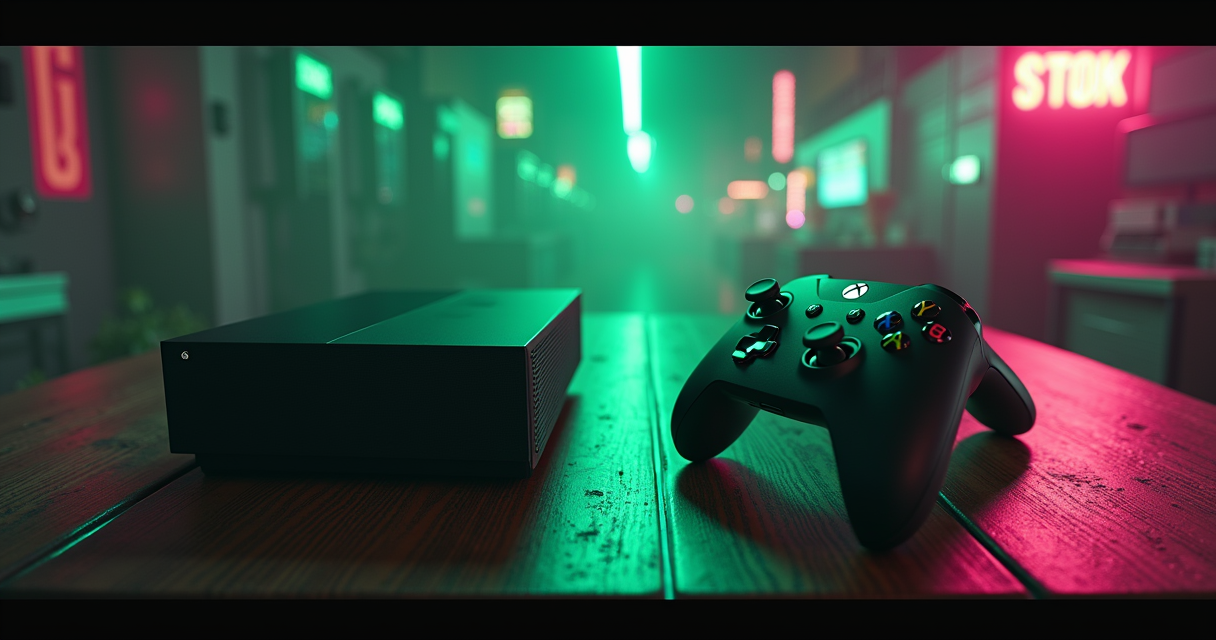
There is a version of this comparison that could have been written in 2020, and it would have been mercifully short. Xbox Series X: the big black monolith, twelve teraflops, plays discs, aims at 4K. Xbox Series S: the little white box, cheaper by two hundred dollars, no disc drive, aimed at 1440p. Pick your budget, pick your box, go home. The end.
That article is now obsolete, and not because the hardware changed. It did not. These are the same two consoles Microsoft shipped on November 10, 2020, down to the die. What changed is the price tag, and it changed twice. On June 25, 2026, Microsoft announced its second console price increase inside a single twelve-month window, and as of August 1, 2026 the numbers read like this: the disc-based Series X costs $799.99, the all-digital Series X costs $749.99, the 1TB Series S costs $599.99, and the entry-level 512GB Series S, the machine that was explicitly designed as the affordable on-ramp into the Xbox ecosystem, now costs $499.99. The 2TB Galaxy Black Special Edition was quietly taken out back and discontinued.
So the real 2026 question is no longer cheap box versus powerful box. It is this: is three times the GPU worth three hundred dollars, now that the cheap box costs five hundred? That is a materially harder question than it was six years ago, and the honest answer depends on facts most buyers never inspect: split memory banks, a contractual parity clause, and what engine programmers say about the little console when they think the marketing department is not listening. We are going to inspect all of it, at length, with numbers you can trace. Let us begin where a comparison should begin, with the answer.
The Verdict, Up Front
The Machine does not bury the lede. If you want the reasoning, the tables, the developer quotes and the retro angle, they are all below, in order. But if you came here to be told which console to buy in August 2026, here is the ruling, and then we will spend six thousand words justifying it.
The short version
Buy the disc-based Xbox Series X at $799.99 if you can absorb the cost. It is the only Xbox that is genuinely future-proof against the demanding cross-generation titles arriving through late 2026, it plays physical media across four hardware generations, and, as we will demonstrate with actual arithmetic, it is nearly twice as efficient per teraflop as its little sibling. The $300 premium over the 512GB Series S is not trivial money, but it buys the two things the Series S structurally cannot manufacture more of: raw GPU throughput and, more importantly, memory.
Buy the 512GB Series S at $499.99 only if three statements are all true for you: you play primarily through Game Pass, you output to a 1080p or 1440p display and do not care about native 4K, and you are comfortable managing storage on a machine that surfaces roughly 364GB of usable space. If any one of those is false, the Series S is a false economy at its 2026 price.
Where the little box still earns its keep
This is not a hit piece on the Series S. At launch, $299.99 for a genuinely current-generation CPU, hardware ray tracing, DirectStorage, and Quick Resume was one of the best-value propositions in console history. The problem is not the machine; it is the tag now stapled to it. A console that was a steal at $299.99 becomes a debate at $499.99, because $499.99 is what a disc-drive-equipped Series X cost at launch. The Series S did not get worse. It got expensive.
The single number that settles it
If you force The Machine to reduce this to one figure, it is 8. That is the approximate number of gigabytes of RAM the Series S makes available to a running game, versus roughly 13 on the Series X, as measured by Digital Foundry in its 2026 console analyses. Teraflops make headlines; memory makes or breaks ports. Every developer complaint quoted later in this article circles back to that number, and no price cut or firmware update can change it. Hold onto the 8. It is the whole argument.
2026 Pricing: The $300 Gap
Pricing is the only variable that has actually moved on these consoles since 2020, so it deserves the first proper section. And it has moved a great deal. What follows is the current, live picture as of this writing, not a launch-era relic.
What changed on August 1, 2026
Per the official Xbox Wire price update published June 25, 2026, Microsoft raised every surviving SKU effective August 1: +$100 on 512GB models and +$150 on 1TB models, and it discontinued the 2TB tier entirely. The Windows Central price tracker confirmed the same figures once the hike went live. Here is the U.S. lineup, before and after, so you can see exactly where your money goes.
| Model (U.S.) | Pre-Aug 1 | Current (Aug 1, 2026) | Change |
|---|---|---|---|
| Series S 512GB | $399.99 | $499.99 | +$100 |
| Series S 1TB (Carbon Black) | $449.99 | $599.99 | +$150 |
| Series X Digital 1TB (Robot White) | $599.99 | $749.99 | +$150 |
| Series X Disc 1TB | $649.99 | $799.99 | +$150 |
| Series X 2TB Galaxy Black | Top SKU | Discontinued | Removed |
Do the subtraction that matters. The disc Series X now sits $300 above the 512GB Series S, where before it sat $250 above it. The all-digital Series X is $250 above the little box, up from $200. Both gaps widened, because the more expensive machines took the larger absolute increase. The premium for power is now steeper than it has ever been in this generation, which is precisely why this comparison is worth writing in 2026 and was not in 2024.
The rest of the world got it worse
The hike was global, and in currency terms several regions absorbed a harder blow than the U.S. did. Pure Xbox compiled the regional breakdown; the Series S figures below are the post-August-1 numbers.
| Region | Series S 512GB | Series S 1TB |
|---|---|---|
| United States | $499.99 | $599.99 |
| United Kingdom | £429.99 | £519.99 |
| Eurozone | €499.99 | €599.99 |
| Canada | C$649.99 | C$749.99 |
| Australia | A$699.00 | A$849.00 |
The European trajectory is the one that should give pause to anyone who still thinks of the Series S as a budget console. Per a price-history reconstruction, the 512GB Series S launched in the Eurozone at €299.99, rose to €349.99 in May 2025, and now sits at €499.99 as of August 2026. That is a two-thirds increase on the same six-year-old silicon. In the UK, £429.99 for the entry model puts the “value” Xbox nowhere near what British buyers would traditionally call budget territory. This is the context TechRadar flagged when it noted this was the second Xbox price increase inside a year, landing just before a certain enormous game arrives. On which note: if you are timing a purchase around software, our breakdown of the GTA VI release date of November 19, 2026 is worth a read, because Microsoft did not raise prices weeks before that launch by accident.
Microsoft's excuse, in its own words
Console makers rarely explain price hikes so plainly, so the wording is worth preserving. In its June statement, Microsoft attributed the increase to component economics: “Console storage and memory prices have increased by more than 2.5x and we expect another doubling by the fall of 2027,” adding that “the entire consumer electronics industry is struggling with the current components crisis, but the effects are particularly hard on consoles.” The subtext, familiar to anyone who has read a console teardown, is that these machines are typically sold at or below cost and subsidized by software and subscriptions. When memory prices spike, a console loaded with fast GDDR6 is exactly the wrong product to be selling at a loss. That memory economics is the villain of the price story is a small, grim irony, because memory is also the villain of the performance story, as we are about to see. There is a parallel here to Nintendo's own 2026 move; if you missed it, we covered the Switch 2 climbing to $499 from September 1, and the reasoning rhymes.
The Spec Sheet, Line by Line
Now the hardware itself. The temptation with a spec sheet is to skim it and fixate on the teraflop number. Resist that. The interesting story on this sheet is not the single biggest difference; it is the enormous number of rows where the two machines are identical, punctuated by a handful of rows where they diverge hard.
The full comparison table
Every figure below is drawn from Microsoft's published specifications and corroborated by the hardware history maintained on Wikipedia's Series X and Series S page. Nineteen rows, because a ten-row table would let the marketing framing off the hook.
| Specification | Xbox Series X | Xbox Series S |
|---|---|---|
| Release date | Nov 10, 2020 | Nov 10, 2020 |
| CPU | 8-core Zen 2 @ 3.8 GHz (3.66 GHz w/ SMT) | 8-core Zen 2 @ 3.6 GHz (3.4 GHz w/ SMT) |
| GPU compute | 12.155 TFLOPS | 4.006 TFLOPS |
| GPU configuration | 52 CUs @ 1.825 GHz, RDNA 2 | 20 CUs @ 1.565 GHz, RDNA 2 |
| System memory | 16 GB GDDR6 | 10 GB GDDR6 |
| Memory bandwidth | 10GB @ 560 GB/s + 6GB @ 336 GB/s | 8GB @ 224 GB/s + 2GB @ 56 GB/s |
| RAM available to games | ~13 GB | ~8 GB |
| Internal SSD | 1TB NVMe (~802 GB usable) | 512 GB NVMe (~364 GB usable); 1TB variant |
| I/O throughput | 2.4 GB/s raw, 4.8 GB/s compressed | 2.4 GB/s raw, 4.8 GB/s compressed |
| Storage expansion | Proprietary expansion card + USB 3.2 | Proprietary expansion card + USB 3.2 |
| Optical drive | 4K UHD Blu-ray (disc model) | None (all-digital) |
| Target resolution | 4K (2160p) | 1440p, upscaled toward 4K |
| Frame-rate ceiling | Up to 120 fps | Up to 120 fps |
| Ray tracing | Hardware DXR (RDNA 2) | Hardware DXR (RDNA 2) |
| VRS / VRR / Auto HDR / Quick Resume | Yes | Yes |
| Backward compatibility | OG Xbox, 360, One | OG Xbox, 360, One |
| Die size / process | 360.45 mm² / 7nm | 197.05 mm² / 7nm |
| Launch MSRP (2020) | $499.99 (disc) | $299.99 |
| 2026 MSRP (Aug 1) | $799.99 disc / $749.99 digital | $499.99 (512GB) / $599.99 (1TB) |
What is identical (and it is a lot)
Count the rows where the two columns say the same thing. The CPU is effectively the same part, an eight-core Zen 2 cluster separated only by a rounding error in clock speed; the 200 MHz gap between 3.8 and 3.6 GHz is noise you will never feel. The storage subsystem is byte-for-byte identical: the same custom NVMe controller, the same 2.4 GB/s raw and 4.8 GB/s compressed throughput through the Xbox Velocity Architecture, the same DirectStorage pipeline. Ray tracing is present on both, because both GPUs are real RDNA 2 parts with hardware DXR, not some cut-down fixed-function fake. Variable Rate Shading, Variable Refresh Rate, Auto HDR, Quick Resume, the 120 fps ceiling, the identical controller, HDMI 2.1, Dolby Vision and Atmos, Smart Delivery, and the full four-generation backward-compatibility stack are all shared. If you never opened a settings menu or looked at a resolution counter, the two consoles would feel like the same machine, because in most respects they are.
What is genuinely different
The divergence lives in exactly three places, and they are the three places that cost silicon: the GPU, the memory, and the disc drive. The Series X has 2.6 times the compute units, roughly three times the teraflops, 60% more RAM on a wider bus with more than double the bandwidth on its fast pool, and an optical drive the Series S lacks entirely. Everything else is trim. This is the crucial mental model: the Series S is not a slower, older, cheaper generation of console. It is the same generation of console with the GPU and memory scaled down and the Blu-ray drive deleted. That framing matters enormously when we get to real-world performance, because it explains why the two machines run the same code, the same features, and the same libraries, and yet produce wildly different pixels. One later Series X revision, the all-digital Robot White model from October 2024, quietly moved to a 6nm SoC, but performance is unchanged; it is a manufacturing optimization, not a spec bump. For a sense of how console GPU deltas compare to what the PC world calls a generational leap, our look at the RTX 5080 versus the 4080 is instructive: a 15% gap is considered a full new GPU generation there, which makes the 3x gulf between these two Xboxes look enormous.
The GPU Gap and the 10GB Problem
Two numbers dominate every Series X versus Series S argument on the internet: the teraflop figure and the RAM figure. The internet spends most of its energy on the wrong one of the two. Let us fix that.
Three times the teraflops
The GPU delta is real and large. The Series X's 12.155 TFLOPS against the Series S's 4.006 TFLOPS is a 3.03x ratio, driven by 52 compute units versus 20 and a higher clock. In practice this is why Microsoft targets the two machines at different resolutions: 4K on the X, 1440p on the S. The rough rule of thumb the hardware was designed around is that the Series S renders at roughly 1440p where the Series X renders at 2160p, which is close to a proportional relationship since 2160p carries about 2.25 times the pixels of 1440p. When a game is only GPU-bound, the Series S behaves exactly as advertised: same settings, same effects, same frame rate, fewer pixels, then upscaled. In that clean scenario, the little box is a perfectly rational 1440p machine and the teraflop gap is a non-story.
The memory split nobody mentions in the ads
Here is what the marketing never put on a billboard. The Series S does not simply have 10GB of RAM to the Series X's 16GB. It has 10GB arranged as two pools of different speeds: an 8GB pool running at 224 GB/s and a 2GB pool running at just 56 GB/s. The operating system reserves a chunk, and the practical result, as Digital Foundry has repeatedly measured, is roughly 8GB actually available to a game. The Series X's 16GB is also split, into a 10GB fast pool at 560 GB/s and a 6GB pool at 336 GB/s, but both of its pools are faster than either of the Series S pools, and it leaves about 13GB for games. So the honest memory comparison is not 16 versus 10. It is roughly 13GB of fast memory versus 8GB, part of which crawls at 56 GB/s. That is the number that ruins ports, and it is nowhere in a store display.
Why RAM, not TFLOPS, is the real ceiling
Teraflops determine how fast you can draw a frame. Memory determines whether the assets for that frame fit in the box at all. You can always draw fewer pixels to save GPU time, and the Series S does exactly that, dropping resolution to claw back headroom. But you cannot render a texture, a level, or a physics simulation that does not fit in RAM; there is no resolution slider for “the data does not fit.” When a modern engine is built around a memory budget that assumes 12 to 13GB, squeezing it into 8GB is not a matter of turning down a setting. It is a matter of rebuilding the streaming system, cutting texture pools, and sometimes deciding the port is not worth it. That is why the developer complaints in the next section are, to a one, about memory and not about compute. The teraflop gap is a resolution problem. The memory gap is an existential one.
What the Developers Actually Say
You do not have to take The Machine's word that the 10GB pool is the crux. The people who actually ship cross-platform engines have been saying so, on the record, for years. Every quote below was verified against its original reporting; none is invented, and the sourcing is linked.
id Software: “a major issue”
The most quotable indictment comes from the studio behind DOOM and the id Tech engine. As GamingBolt documented, Billy Khan, lead engine programmer at id Software, called the Series S RAM “a major issue,” pointing specifically at “the much lower amount of memory and the split memory banks with drastically slower speeds.” Khan was blunt about the usual workaround, warning that “aggressively lowering the render resolutions will marginally help but will not completely counteract the deficiencies.” His colleague Alex Gneiting, a principal engine programmer at the same studio, agreed the deficiency “won't be easy to compensate” and would “drag down the base specs” developers must design around for multiplatform titles. When the people who wrote the renderer tell you resolution cuts alone will not save it, that is not fan speculation; that is the engineering.
Infinity Ward and Game Science
id Software is not a lone voice. David Mickner, a designer at Call of Duty studio Infinity Ward, warned as far back as September 2020 that the Series S “will serve as a bottleneck” for next-generation development, noting the standard caveat that early cross-gen periods are always constrained by the weakest target. The most consequential example arrived in 2024 with Black Myth Wukong, which simply did not launch on Xbox. As Forbes reported, Game Science director Feng Ji laid the delay at the Series S's feet, saying that “10GB of shared memory, without years of optimization experience, is really hard to make work.” Sit with the shape of that statement. A game that already needed frame generation to hit acceptable performance on the far more powerful Series X and PS5 was blocked from Xbox entirely, and the reason given was the memory budget of the small console. The parity clause turned the weakest box into a gatekeeper for the strongest.
The parity clause and the studios fighting it
That gatekeeping is not an accident of physics; it is policy. Microsoft's certification rules require that any game released on Series X also ship a functioning Series S version, and developers have been lobbying against it. VGC reported a Bossa Studios artist describing a year of meetings in which studios were “desperately trying to get Series S launch requirements dropped,” and GSC Game World said it initially believed bringing Stalker 2 to the Series S was “impossible.” Microsoft has not budged. Xbox chief Phil Spencer said he thinks about relaxing the requirement “in almost exactly the opposite way,” arguing that in an era of handheld PCs and the Switch 2, a game engineered to run within the Series S envelope is more portable, not less viable. There is a certain deadpan logic to it: the very constraint developers hate is the discipline that keeps games shippable on weaker, cheaper hardware everywhere. Whether you find that persuasive or infuriating depends largely on whether you are the one writing the streaming code.
Performance in Real 2026 Games
Theory is cheap. Here are three 2026 titles that show, with measured figures from independent testing, exactly what the memory gap does when it meets shipping software. Two of them make the Series S look better than its spec sheet suggests, and one makes it look far worse. That spread is the point.
Final Fantasy VII Remake: the Series S wins a fight
Start with the good news for the little box, because it is genuinely good. When Square Enix brought Final Fantasy VII Remake to Xbox, Digital Foundry's analysis via Windows Central found the Series S delivering “the full asset range and quality of the PS5 and Xbox Series X versions, despite the steep deficit in available memory.” The same breakdown pegged the game's memory footprint against roughly 8GB available on the Series S, about 13GB on the Series X, 12.5GB on PS5, and 9GB on the Switch 2, and noted that the Series S deployed full-quality assets where the higher-RAM Switch 2 fell back on a mix of PS4 and PS5 textures. The Series S ran a 1080p, 60fps performance mode and a 1440p, 30fps graphics mode. The lesson: a competent, well-optimized port that respects the memory budget can extract genuinely current-generation image quality from the Series S. The 8GB ceiling is a hard limit, but it is not a death sentence when the developers do the work.
Crimson Desert: the Series S loses one badly
Now the other side of the ledger. Pearl Abyss's Crimson Desert is a showcase engine, and on the Series X it is a genuine looker; Digital Foundry's console tests called the game staggering, with a native-4K ray-traced mode on the top hardware. The Series S version is a different story. As Pure Xbox relayed from Digital Foundry's April 2026 review, the Series S build offers only two modes, a 1080p 30fps quality mode and a roughly 720p 40fps performance mode, with ray tracing removed entirely and textures, shadows, and model quality dropped to the equivalent of a PC's low preset. Digital Foundry's verdict was that the Series S version “can't be readily recommended.” This is the memory gap in its ugly form: not a proportional step down in resolution, but a wholesale gutting of the visual feature set to fit the box. Same game, same generation, and yet one console renders native-4K ray tracing while the other renders sub-1080p with the lights turned off.
Black Myth Wukong: the game that just said no
The third data point is the absence of a data point, which is its own kind of benchmark. Black Myth Wukong did not launch on Xbox at all, and, as covered above, the director attributed that to the Series S memory budget rather than to any exclusivity arrangement. This is the parity clause's failure mode made concrete. Because Microsoft requires a Series S version, and because the studio could not, in its own estimation, make 10GB work without years of optimization experience it did not have, the far more capable Series X was denied the game too. The most powerful console in the family lost a title because the least powerful one could not run it. No frame-rate graph captures that; it is a structural cost that lives entirely in the memory column. Between FF7 Remake, Crimson Desert, and Wukong you have the complete range of outcomes: a triumphant port, a compromised one, and a cancelled one, all determined by the same 8GB number.
Backward Compatibility: The Retro Case
This is a retro-gaming publication, so we are contractually and temperamentally obligated to evaluate these machines as heritage devices, not just as vehicles for whatever ships this quarter. On that axis the two consoles are closer than the spec sheet implies, with one very sharp exception that swings the whole argument.
Four generations in one box
Both the Series X and the Series S run Microsoft's full backward-compatibility program: thousands of titles spanning the original Xbox, the Xbox 360, and the Xbox One, many of them enhanced on current hardware through Auto HDR and FPS Boost, and all of them accelerated by the shared SSD so that a 2005-era 360 game loads faster than it ever did on real 2005 hardware. Because the CPU, storage subsystem, and compatibility layer are identical between the two consoles, the back-catalog experience is functionally the same on both for anything you own digitally. If your retro library is a list of purchases attached to your Microsoft account, the Series S plays it exactly as well as the Series X, upscaled and quick-resumed, for two hundred to three hundred dollars less. That is a real and underrated argument for the small box.
Why the disc drive matters for retro
The exception, and it is a big one, is physical media. Only the disc-equipped Series X can read a disc, and that includes not just current 4K Blu-rays but the enormous back catalog of original Xbox, Xbox 360, and Xbox One discs that are backward-compatible. If you have a shelf of 360 games, or you buy used physical titles to dodge digital-storefront pricing and delisting, the all-digital Series X and both Series S models are simply blind to that collection. The Series S cannot ever play a disc; there is no accessory that adds one. For a collector, this single row of the spec table outweighs every teraflop. Physical preservation is the entire retro ethos, and only one configuration in this lineup honors it. The 2026 price hike sharpens the point further, since the disc drive now lives exclusively on the $799.99 flagship, the most expensive way Microsoft has ever sold entry into its own back catalog.
The emulation escape hatch
There is a well-known workaround that treats both consoles as equals again: Xbox Retail Mode's developer sideloading has long made the Series X and Series S two of the most convenient living-room emulation boxes available, with RetroArch and standalone cores running comfortably on either machine's Zen 2 cores for everything up through the sixth console generation. Here the memory and GPU gap barely register, because emulating a PS1 or an N64 asks almost nothing of a 2020 GPU. If your retro ambitions run through emulation rather than official backward compatibility, the Series S is the smarter buy on pure cost-per-frame, and our guide to setting up 200-plus RetroArch cores applies identically to both. The console you emulate on should be the cheap one; save the money for the games.
Which Console Fits Which Player
Generic advice is useless. Here are concrete buyer profiles, each mapped to a specific SKU at its specific 2026 price, so you can find yourself in the list and stop reading.
Buy the Series X if...
You are the 4K living-room owner or the disc collector. If your television is a modern 4K set and your instinct is to buy physical media, the $799.99 disc Series X is the only machine in the family that serves you. Native 4K output, 4K UHD Blu-ray playback, and disc-based access to the entire backward-compatible catalog are all exclusive to this configuration. Nothing cheaper does the job; the compromise here is only your wallet.
You are buying the machine that will run GTA VI best. When the biggest cross-platform release in a decade arrives, the console with 13GB of game memory and three times the GPU is the one that will hold its resolution and effects together. If you intend to keep one Xbox through the entire late-generation software wave, the memory headroom is the future-proofing, and it only exists on the X.
You chase 120fps in demanding titles. Both consoles cap at 120fps, and the Series S genuinely hits it in lighter competitive games like Fortnite and Call of Duty multiplayer. But in heavier titles the GPU and memory headroom on the Series X is what keeps a 120fps mode from collapsing to a slideshow. High-refresh players who play more than just esports should pay the premium.
Buy the Series S if...
You are furnishing a second room, a dorm, or a kid's setup. A $499.99 all-digital box that plays the identical Game Pass library at 1080p or 1440p, tucked into a bedroom or a bag, is a legitimately good product. The Series S is small, quiet, light, and trivial to relocate, and for a secondary console the resolution ceiling simply does not matter.
You are Game Pass-first and storefront-native. If you have not bought a physical game since the PS3 era and you live inside Game Pass, the disc drive is dead weight you would be paying $300 to carry. The Series S deletes the thing you were never going to use and pockets the difference. Just buy the 1TB model at $599.99 if your library is large, because the 512GB model's roughly 364GB of usable space fills alarmingly fast with modern install sizes.
You are building an emulation and back-catalog box. As covered above, official backward compatibility and community emulation both run beautifully on the Series S, and neither cares about the GPU gap. For a dedicated retro machine, the cheaper console is the correct engineering choice, full stop.
Buy neither (yet) if...
You already own a capable gaming PC or are weighing one. At $799.99 for the flagship, the Series X now brushes against entry-level gaming-PC money, and the value calculus has shifted in ways worth taking seriously before you commit. We ran the full comparison in our PC-versus-console breakdown, and the short version is that the 2026 price hikes made the traditional “consoles are the cheap option” assumption a lot shakier than it used to be. If you are patient, waiting for a hardware bundle or a holiday discount is entirely rational, because these are the highest console prices Microsoft has ever charged.
Pros and Cons, Boxed Up
For the skimmers, here is each console reduced to its virtues and its sins. No hedging.
Xbox Series X
| Pros | Cons |
|---|---|
| 3x the GPU (12.155 TFLOPS) and native 4K target | $799.99 disc / $749.99 digital: highest Xbox price ever |
| ~13GB game memory: runs demanding ports intact | Large footprint; the biggest box in the family |
| 4K UHD Blu-ray drive (disc model) for physical media | Disc drive exclusive to the $799.99 SKU |
| Future-proof for late-generation cross-gen titles | Draws more power and generates more heat |
| Nearly 2x more efficient per teraflop than the Series S | 2TB tier discontinued; 1TB is now the ceiling |
Xbox Series S
| Pros | Cons |
|---|---|
| $499.99 (512GB): cheapest entry into the ecosystem | Only ~8GB game memory, part of it at 56 GB/s |
| Identical CPU, SSD, ray tracing, and features to the X | Some ports gutted (Crimson Desert ~720p, no RT) |
| Tiny, quiet, portable; ideal second console | No disc drive, ever: locked out of physical media |
| Same full backward-compatibility catalog (digital) | 512GB model surfaces only ~364GB usable |
| Excellent emulation and Game Pass 1080p/1440p box | Price up two-thirds in the EU since 2020 launch |
The tie-breakers
If the two lists leave you balanced, three questions break the tie. Do you own physical Xbox discs or intend to buy them? If yes, Series X disc, and the conversation is over. Do you output to a 4K display you actually care about? If yes, lean X. Is $300 a sum that would meaningfully change your month? If yes, the Series S at $499.99 plays every game the X does, just softer, and there is no shame in that. Everything else is preference.
Migrating Between the Two
Plenty of readers already own one of these and are considering the other, usually stepping up from a Series S to a Series X as their library and their television outgrow the little box. The good news is that Microsoft's ecosystem makes this nearly painless, because both machines share an account model and an architecture.
What carries over automatically
Your digital life is tied to your Microsoft account, not to the hardware. Every game license, every Game Pass entitlement, every achievement, and every cloud save follows you the instant you sign in on the new console. There is no re-purchasing, no license transfer ritual, and no per-device activation limit to fight. Because both consoles run the identical Xbox Velocity Architecture and the same title binaries under Smart Delivery, a game installed on a Series S is the same game on a Series X; the platform simply streams the X-optimized asset set on first launch. You are not migrating a machine so much as changing which box your account happens to be pointed at.
Moving your data: two paths
You do not have to re-download hundreds of gigabytes over your internet connection unless you want to. There are two supported routes, and the console walks you through either.
PATH A - Network transfer (console to console, same LAN)
  Settings > System > Backup & transfer > Network transfer
  - Old console broadcasts; new console pulls games + saves
  - Licenses re-bind to your account automatically
  - Usable space: Series S 512GB ~364 GB  ->  Series X 1TB ~802 GB

PATH B - External USB SSD (USB 3.2, fully offline)
  - Copy installed games to a USB drive on the old console
  - Plug the drive into the new console; move to internal NVMe
  - Series S-installed games re-stream X-optimized assets on
    first launch (no re-purchase, same license)
The step-by-step, if you prefer prose:
- Sign in on the new console with the same Microsoft account.
- Confirm cloud saves have synced on the old console (they sync automatically when online).
- Choose Network transfer for convenience over a home network, or a USB 3.2 drive for an offline bulk copy.
- Let licenses re-bind; set the new console as your home Xbox so offline play and library sharing keep working.
- Move any expansion card straight across; it is recognized instantly on either machine.
What you gain and lose in each direction
Stepping up from a Series S to a disc Series X, you gain native 4K, roughly 5GB more usable game memory, the full-quality version of every compromised port, and, on the disc model, the ability to finally play those physical discs. You gain usable storage too, from about 364GB to about 802GB. You lose nothing but shelf space and $300. Going the other way, from a Series X down to a Series S, is rarer but valid for turning an old console into a second-room machine; just understand you are giving up 4K, the disc drive, and the memory headroom, and that some future titles will run visibly rougher. In both directions the library and saves are identical, which is the whole advantage of staying inside one ecosystem.
The Machine's Final Ruling
We opened with the verdict, so we will close with the arithmetic that backs it, because a recommendation without math is just a vibe, and The Machine does not deal in vibes.
The recommendation, with the math
Run the value calculation on the two headline SKUs at their August 2026 prices, and something counterintuitive falls out.
PRICE EFFICIENCY (U.S. MSRP, Aug 1 2026)

  Cost per teraflop
  Series X disc   $799.99 / 12.155 TFLOPS = $65.81 per TFLOP
  Series S 512GB  $499.99 /  4.006 TFLOPS = $124.81 per TFLOP

  Cost per GB of RAM
  Series X        $799.99 / 16 GB = $50.00 per GB
  Series S 512GB  $499.99 / 10 GB = $50.00 per GB

  Result: identical $/GB of memory, and the Series X is
  nearly 2x more efficient per teraflop of GPU.
Read that again. The two consoles cost exactly the same per gigabyte of RAM, and the Series X delivers its GPU compute at roughly half the price-per-teraflop of the Series S. By the only two metrics that actually diverge on the spec sheet, the “budget” console is not the value pick; it is simply the cheaper total outlay. You are not paying less for better efficiency. You are paying less for less, at the same or worse unit economics. That is the single most damning fact in this entire comparison, and it is why the 2026 price structure quietly inverts the old logic.
The asterisk
Efficiency is not affordability, and a smaller absolute number on the price tag is a real thing that matters to real budgets. Here is the decision tree, honestly drawn:
IF you want 4K, physical discs, or the box that runs GTA VI best
   -> Series X disc ($799.99)
ELIF you play mostly Game Pass at 1080p/1440p and want it cheap
   -> Series S 512GB ($499.99)   [mind the ~364 GB usable ceiling]
ELIF you want the small box but a real library
   -> Series S 1TB ($599.99)     [only $150 under the digital X]
ELSE
   -> wait for a bundle, or reread the PC-vs-console math
Note the trap on the third branch. The 1TB Series S at $599.99 sits just $150 below the all-digital Series X at $749.99, for a third of the GPU and 5GB less game memory. At that spacing the 1TB Series S is the single worst-value SKU in the lineup; if you were going to spend $599.99, the extra $150 for a Series X is close to a rounding error against the capability you gain. Buy the 512GB Series S to save money or buy the Series X to get power, but the 1TB Series S is a middle that serves almost no one well.
The bottom line
The Xbox Series X is the better console, it was always the better console, and in 2026 it is also, per unit of the two things that separate these machines, the better value, which is not a sentence anyone expected to write about the more expensive box. The Series S remains a fine machine strangled by a price tag that no longer matches its 2020 mission; at $299.99 it was a marvel, and at $499.99 it is a compromise you should enter with open eyes. Buy the disc Series X if you can, buy the 512GB Series S if you must, and skip the 1TB Series S entirely. And whichever you choose, know that the eight-gigabyte number we handed you at the very top is the reason the whole comparison exists. Everything else is packaging.
Questions the search bar asks me
- Is the Xbox Series S still worth it in 2026?
- At $499.99 for the 512GB model it is a much harder sell than at its $299.99 launch price. The $300 jump to a disc-based Series X buys three times the GPU and 6GB more RAM, so the Series S now only makes sense for Game Pass-first players content with 1080p and 1440p who want the smallest, cheapest box in the family.
- What is the price difference between Series X and Series S now?
- After the August 1, 2026 hike, the disc Series X is $799.99 and the 512GB Series S is $499.99, a $300 gap. The all-digital Series X is $749.99, which narrows the gap to $250. Before the hike the disc gap was $250 and the digital gap was $200, so the premium for power grew.
- Why is the Series S RAM considered a problem?
- The Series S has 10GB of GDDR6 split into an 8GB pool at 224 GB/s and a 2GB pool at 56 GB/s, leaving roughly 8GB for games versus about 13GB on the Series X. id Software's lead engine programmer Billy Khan called it a major issue, and Black Myth Wukong skipped Xbox at launch partly because 10GB is, in the director's words, really hard to make work.
- Can the Series S play the same games as the Series X?
- Yes. Microsoft's parity clause requires every Series X game to also ship a Series S version, so the libraries are identical. The Series S versions simply run at lower resolution and settings; Digital Foundry measured Crimson Desert dropping to around 720p with ray tracing stripped out entirely on the smaller console.
- Did Microsoft discontinue the 2TB Xbox?
- Yes. The June 25, 2026 price update sunset the 2TB Galaxy Black Special Edition, leaving 1TB as the maximum storage tier for both the Series X and the Series S as of August 1, 2026. The surviving lineup is the 512GB and 1TB Series S plus the digital and disc 1TB Series X.

Ben covers the hardware end of retro gaming: FPGA cores, real-cartridge dumping, capture setups, CRT vs scaler workflows, and the legal and physical preservation infrastructure that keeps old games playable. Every post under this byline is reviewed pre-publish by Sam P., Editor & Operator — corrections to info@instalinkoteam.com. Published 2026-08-29 · Last updated 2026-08-29. Full bios on the author page.