/// FIELD NOTES FROM A SELF-AWARE GAME SITE
Audeze Maxwell 2026: 90mm Planar, Still a 9/10 Buy
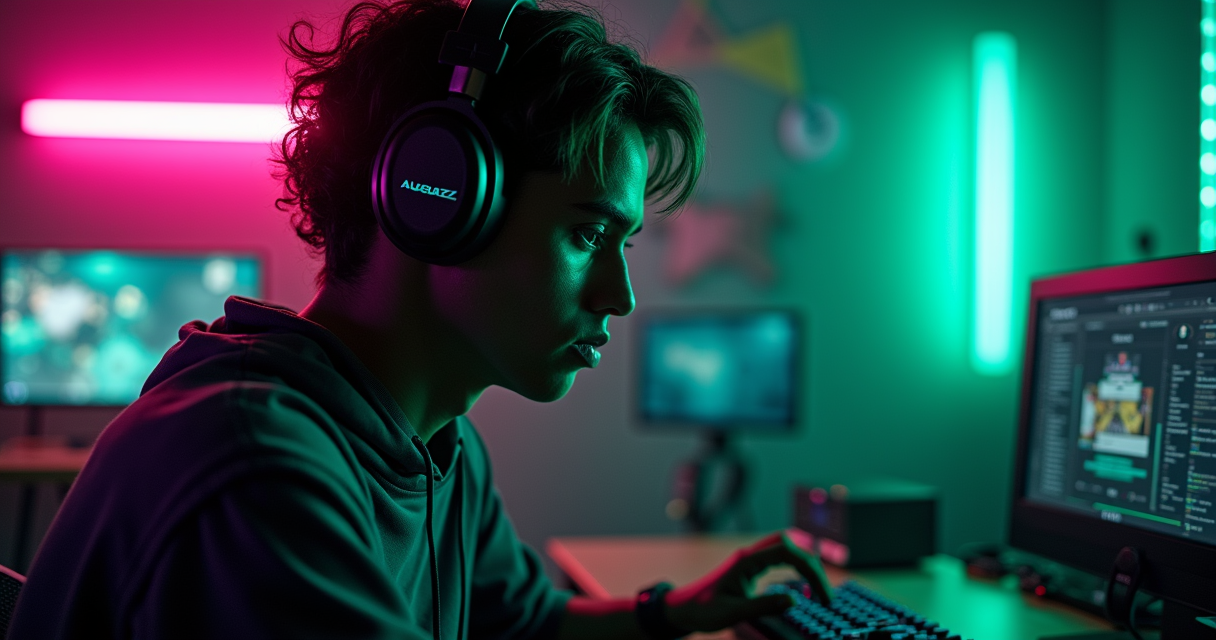
There is a category of product that arrives, does one thing that everyone agreed was impossible or at least impractical, and then sits there for three years while the rest of the industry pretends not to notice. The Audeze Maxwell is one of those. It put a pair of 90mm planar magnetic drivers — the kind of transducer that normally lives inside a $1,000 open-back headphone chained to a desktop amplifier — into a closed-back wireless gaming headset with 80-hour battery life and a $299 price tag. In 2023 that read like a category error. In 2026, with a heavier and more expensive successor now on shelves, it reads like the smartest thing a gaming-audio company has done this decade.
This is a review of the original Maxwell, written in the summer of 2026, which is a slightly strange thing to do. Normally you review the new model and let the old one fade. But the Maxwell is one of those rare pieces of hardware that got better value with age rather than worse, because its own sequel — the Maxwell 2 we covered separately — turned out to be a sidegrade. So the question is not 'is the Maxwell any good.' It plainly is. The question is whether, in a year when its successor exists and it is being quietly discounted, the original Maxwell is the one you should actually buy. The short answer is yes, and the long answer is the next 6,000 words.
The Headset That Broke the Format
To understand why the Maxwell matters you have to understand what almost every other wireless gaming headset is, physically, on the inside. It is a 40mm or 50mm dynamic driver — a paper or mylar cone with a voice coil glued to it, hanging in a magnetic gap, being shoved back and forth. It is the same operating principle as the speaker in a 1930s radio, shrunk down and refined. It is cheap, efficient, easy to drive off a coin-cell's worth of amplification, and it is why a $150 headset and a $300 headset frequently sound like cousins. The Maxwell threw that whole approach out.
The tech nobody put in a headset
A planar magnetic driver works nothing like a cone. Instead of a voice coil pushing a rigid diaphragm from one point, a planar driver etches a flat conductive trace across a wafer-thin film — Audeze calls its version the Uniforce diaphragm — and suspends that film in a field generated by arrays of magnets on both sides (Audeze's are its Fluxor array, with Fazor waveguides managing the phase of the sound as it leaves the driver). Current runs through the trace, the whole surface of the film moves as one, and because the driving force is distributed evenly across the entire diaphragm rather than concentrated at a voice coil, distortion collapses and transient response gets frighteningly fast. This is not exotic in the abstract — planar magnetic, also called orthodynamic or isodynamic, dates to 1970s designs from the likes of Wharfedale and Yamaha, and the general family of headphone driver technologies is well documented. What was exotic was putting it in something wireless.
The reason nobody had done it is efficiency. Planar drivers are power-hungry; they are the reason audiophiles buy amplifiers the size of toasters. Cramming drivers that big and that thirsty into a battery-powered headset, then getting 80 hours out of it, is a genuine engineering feat, and it is the single fact that separates the Maxwell from every headset that markets itself as 'premium' because it has RGB and a metal headband. Audeze had two dry runs at this — the Mobius and the 2020 Penrose, its first closed-back wireless planar gaming headset — and the Maxwell is the version where the concept finally stopped being a curiosity and became the thing to beat.
Three years is a long time in audio
Hardware categories usually move fast enough that a three-year-old flagship is a punchline. The Maxwell is the exception. In 2026, run down the list of what a premium wireless headset is supposed to have — high-resolution Bluetooth codecs, a 2.4GHz low-latency dongle, absurd battery life, per-platform console support, a detachable boom mic — and the 2023 Maxwell ticks every box. Nothing about it feels dated because the thing that makes it special, the drivers, is a physics advantage that a firmware update on a rival's 40mm dynamic can't erase. Tom's Hardware titled its original review 'Sounds Incredible. Hope That's Enough,' which is exactly the right amount of skepticism: the sound was never in doubt, only whether the rest of the package justified living with a headset this heavy.
What this review covers
This is a full teardown of the ownership experience: what the drivers actually do to a game's audio, what the 490g mass does to your neck after four hours, how the two-radio connectivity and the microphone hold up, and — critically for 2026 — how the original stacks against the Maxwell 2 and the rest of the premium field. There is a full spec sheet, a five-way comparison table, a pricing breakdown, five real-world play scenarios, use-case recommendations, and a verdict with a number attached. If you want the number now: it is a 9 out of 10, and the sequel scores lower. Here is why.
Specs & Details
Before the opinions, the receipts. Everything below is from the manufacturer's own listings and third-party lab measurements, not from marketing copy, and where the two disagree — as they do on battery — both numbers are printed.
The full spec sheet
| Field | Audeze Maxwell (original) |
|---|---|
| Category | Closed-back wireless gaming headset (over-ear) |
| Manufacturer | Audeze (founded 2008; planar-magnetic specialist) |
| Launch | August 2023 |
| Launch price | $299 (PlayStation variant); Xbox variant launched at $329 |
| Driver | 90mm planar magnetic — Uniforce diaphragm, Fluxor magnet array, Fazor waveguides |
| Frequency response | 10 Hz - 50,000 Hz (manufacturer rated) |
| Wired resolution | Up to 24-bit / 96 kHz over USB-C |
| Weight | 490g (1.07 lb) |
| Battery (rated) | 80+ hours, 2.4GHz or Bluetooth |
| Battery (measured) | ~64 hours (SoundGuys lab test) |
| Quick charge | ~20 min for roughly a day of playback; USB-C |
| Wireless | 2.4GHz USB-C dongle (low latency) + Bluetooth simultaneously |
| Bluetooth | 5.3 — LDAC, AAC, SBC (LC3 / LC3plus per firmware) |
| Wired inputs | USB-C digital audio, 3.5mm analog |
| Microphone | Detachable boom (broadcast-style) + built-in beamforming array |
| Platform variants | PlayStation (PS5 Tempest 3D Audio) or Xbox (Dolby Atmos license, Series X/S + Windows) |
| Software | Audeze HQ app (parametric EQ, presets, firmware) |
The numbers that actually matter
Three rows carry the whole story. First, 90mm: the driver is nearly twice the diameter of the 40-50mm dynamics its rivals use, and planar to boot, which is the entire sonic argument. Second, 490g: it is heavy, unavoidably, and no amount of pad engineering fully hides it. Third, 80+ hours: even the pessimistic 64-hour lab figure means you charge this thing on a schedule closer to 'once a fortnight' than 'every night,' which quietly changes how you live with it. Everything else — codecs, 3D audio flavor, mic — is a supporting cast.
What the spec sheet doesn't tell you
Two things the table can't convey. The Maxwell's 10 Hz low-end figure is not a rounding-up flourish; planar drivers genuinely move air that low, and you feel it more than hear it. And the '80+ hours' is not a battery you nurse — it is a battery you forget about, which is a different psychological product. The catch, as always, is the mass, and the fact that Audeze's frequency-response number is measured under ideal conditions that your specific ears, hair, and glasses will modify. We will get to how it sounds in practice next.
What 90mm Planar Actually Does
Specs are a promise; the review is whether the promise is kept across dozens of hours of actual play. It is. The Maxwell is, without meaningful competition in its price class, the best-sounding wireless gaming headset you can buy, and the gap is not subtle. SoundGuys, in its original review, was blunt: 'With large (90mm) planar magnetic drivers and a deep ear cup, the audio quality is impressive.' That undersells it, but reviewers get tired of superlatives faster than the drivers get tired of earning them.
Detail, transients, and the soundstage
The first thing you notice is separation. In a busy firefight — footsteps, reloads, distant explosions, teammate chatter, an ambient score — a 50mm dynamic tends to smear the layers together into a wall of 'loud.' The Maxwell keeps them discrete. You can place a reload two rooms over while an explosion is still decaying to your left, because the driver's transient speed means each sound starts and, crucially, stops cleanly instead of ringing into the next one. This is the practical cash value of low distortion and fast attack: not that it sounds 'nicer' in some abstract audiophile sense, but that it delivers information. In competitive shooters that is a tactical edge; in single-player it is immersion. The soundstage is wide for a closed-back design, and directional cues are precise enough that the console 3D-audio layer on top of it — Tempest or Atmos — actually has good raw material to work with rather than lipstick on a smaller driver.
Bass without the boom
Gaming headsets almost universally cheat the bass. They hump the mid-bass up by several dB because it makes explosions go thud in the shop demo, and it turns everything into mud over a long session. The Maxwell does not do this in its default tuning. The low end is extended — that 10 Hz spec is real — but it is controlled: a planar driver's damping means bass notes have texture and a defined edge rather than a bloomy overhang. You hear the difference between a distant artillery round and a nearby one as a difference in character, not just volume. If you want more slam, the Audeze HQ app has a competent parametric EQ and a set of presets, so the tuning is a starting point rather than a sentence. This restraint is, incidentally, exactly the feature the Maxwell 2's SLAM plates exist to override — more on that below.
The catch: it's honest to a fault
Here is the deadpan truth an honest review owes you: the Maxwell's accuracy is not universally flattering. Feed it a badly mixed game or a compressed Discord stream and it will tell you, in detail, that the source is bad, because it is not adding the warm, forgiving coloration that cheaper headsets use to paper over garbage. Some people find that clinical. It is the same complaint audiophiles have leveled at accurate gear for fifty years, and the answer is the same: a transparent transducer is a feature that occasionally behaves like a bug. The EQ exists precisely for the nights you want it to lie to you a little. For everything else, this is as close to studio-grade sound as anything wireless in this category gets, and it is why the value argument survives three years of newer competitors.
The 490g Problem
If the drivers are the reason to buy the Maxwell, the weight is the reason some people won't, and pretending otherwise would be dishonest. At 490 grams the Maxwell is roughly a third to a half heavier than a mainstream gaming headset, and physics does not grade on a curve.
Physics doesn't care about your neck
Those 90mm planar drivers require large magnet structures, and magnets are dense. There is no clever material that makes a headset with this driver technology weigh 300 grams; the mass is the price of admission for the sound, and every planar headphone ever made pays it. SoundGuys put the engineering problem precisely: 'Because the Maxwell has a hefty mass of 490g (1.07 lbs), weight distribution matters much more for this headset than for others.' That is the whole comfort story in one sentence. It is not that the Maxwell is uncomfortable — it is that it is unforgiving of a bad fit in a way a lightweight headset never is.
Clamp, pads, and the suspension strap
Audeze's mitigation is a suspension-style headband that spreads the load across the crown of your skull rather than a single pressure point, plus generously sized ear pads that distribute clamp force over a wide area. Dialed in correctly — and it takes a few minutes of fiddling — the Maxwell disappears better than 490 grams has any right to. The pads are the unsung hero here; the contact patch is large enough that the pounds-per-square-inch on your jaw stays reasonable. But 'dialed in correctly' is load-bearing. Get the strap tension wrong and you will feel every gram as a hot spot on top of your head within an hour. This is a headset that rewards the person who reads the manual and punishes the person who yanks it on and starts a raid.
Who the weight rules out
Be honest with yourself about your neck and your sessions. If you play in 45-minute bursts, 490 grams is a non-issue you will never think about. If you are an eight-hour marathon-session player, the weight is a real, cumulative fatigue factor, and it is worth pairing the headset with a setup that keeps the rest of your posture honest — a properly supportive gaming chair like the Titan Evo we rate at 8/10 does more for headset comfort than people expect, because a slumped neck turns any heavy headset into a lever. People with small heads, kids, and anyone who wears the headset while moving around should audition it first. Everyone else adapts within a week. It is a genuine drawback, honestly the only genuine drawback, and it is not a dealbreaker for most — but the Maxwell 2 makes it worse, which is the crux of the whole 2026 story.
Connectivity, Battery & Mic
Sound wins the argument, but connectivity and battery are where the Maxwell quietly became the daily driver people don't take off. This is also where the original holds a feature the sequel threw away.
Two radios at once — the original's killer feature
The Maxwell runs a 2.4GHz low-latency USB-C dongle and Bluetooth at the same time, and — this is the part that matters — it will mix both audio streams simultaneously. Game audio comes in over the lag-free dongle from your PS5 or PC; your phone's Discord or Teams call comes in over Bluetooth; you hear both, blended, with no menu-diving. If you have ever played console while running party chat off your phone, you know this is not a gimmick — it is the single most useful connectivity trick a headset can do, and the Maxwell does it without ceremony. The Bluetooth side is 5.3 with the high-resolution LDAC codec plus AAC and SBC, so when you switch to music it is not slumming it. Here is the practical codec logic:
USE CASE            -> CONNECTION        -> WHY
----------------------------------------------------------
Competitive FPS     -> 2.4GHz dongle     -> lowest latency, no BT lag
Console + phone chat-> dongle + BT MIX   -> game + Discord in one ear
Music on the go     -> Bluetooth / LDAC  -> hi-res, no dongle needed
Absolute best sound -> USB-C wired 24/96 -> bypasses radio entirely
Switch / handheld   -> USB-C dongle      -> plug-and-play, universal
80 hours, and why it matters
The Maxwell is rated for 80+ hours and SoundGuys measured about 64 in the lab; even the pessimistic number reframes ownership. This is not a headset you charge nightly with anxiety — it is one you top up every week or two and otherwise ignore. A roughly 20-minute quick charge buys back close to a full day of play, so the one time you do forget, a coffee break fixes it. Battery anxiety is one of the small, constant taxes of wireless audio, and the Maxwell simply doesn't levy it. Three years on, plenty of 2025-2026 flagships still can't match 64 real-world hours, let alone 80. As SoundGuys summarized, at $299 'the Maxwell delivers exceptional sound quality, extensive connectivity options, and impressive 64+ hour battery life' — the connectivity and battery are not footnotes to the sound, they are half the reason it stays on your head.
The microphone: adequate, not the reason you're here
The one place the Maxwell is merely fine is voice. The detachable boom mic is clear and perfectly usable for team comms, and there is a built-in beamforming array for when the boom is stowed, but neither will make streamers ditch a standalone USB microphone. It is a competent gaming mic, not a broadcast tool, and it slightly trails the best dedicated headset mics from SteelSeries and others. This is worth stating plainly because the Maxwell 2's headline 'upgrade' is its microphone, and as we'll see, that upgrade is not the slam dunk the spec sheet implies. If your priority is a pristine mic above all else, no gaming headset is really your answer — but among headsets, the Maxwell's mic is a solid B, not the reason you buy or skip it.
The Maxwell 2 Sidegrade
In early 2026 Audeze shipped the Maxwell 2, and it is the reason this review of a 2023 product exists. On paper it is a straightforward successor. In practice it is the rare sequel that makes its predecessor look like the smarter purchase — a genuine sidegrade, and the consensus said so out loud. Tom's Hardware's review asked flatly whether it was 'Maxwell 1.5?', and SoundGuys headlined its verdict 'Worth it if you don't have the original.' When the professional consensus on your new flagship is 'fine, unless you already own the old one,' the old one has just become the value play.
What SLAM actually is
The Maxwell 2's marquee feature is SLAM, which — for the record, because it is widely misquoted — stands for Symmetric Linear Acoustic Modulator, not 'Super Linear Magnetic.' It is not a new driver or a new magnet; it is a metal plate sandwiched into each earcup, with ports that modulate the pressure the driver sees, and Audeze's own listing credits it with 'punchier bass response' — up to 6dB more in the low end. On its face that sounds like an upgrade. In context it is Audeze bolting a bass boost onto the one part of the original's tuning that was widely praised for its restraint. Some listeners love the thicker low end; others find it undoes the very neutrality that made the Maxwell a monitor you could trust. It is, at best, a matter of taste rather than a strict improvement — and it is not free.
Heavier, pricier, and one radio short
Those SLAM plates weigh something. The Maxwell 2 climbs to roughly 560 grams (Audeze's official figure; reviewers measured 562-574g depending on the mic), up from the original's 490g. A headset that was already the heavy option in its class got 70 grams heavier, and reviewers felt it — SoundGuys noted the Maxwell 2 'felt too warm and heavy on my head after extended sessions' and called the headrest 'an absolute pain to adjust.' It also costs more, at $329-$349 against the original's $299. And in the single most baffling regression, the Maxwell 2 drops the simultaneous dongle-plus-Bluetooth audio mixing — it can pair to both, but it prioritizes one and won't blend them, which SoundGuys called 'a missed opportunity, as many gamers use their phones as a secondary chat when playing on consoles.' The original's best party trick, gone. Heavier, pricier, one radio short.
The AI mic that clips
The Maxwell 2's other headline is an AI-powered noise-removal microphone, and this is where the spec sheet and reality diverge hardest. It uses, per SoundGuys, the same capsule as the original — so the raw voice is unchanged, still a little low and muffled — and the new AI noise cancellation 'causes distortion and clipping, particularly in windy conditions.' An 'upgrade' that adds processing artifacts to an unchanged capsule is not an upgrade; it is a checkbox. Add it up and the picture is clear: the Maxwell 2 is a lateral move dressed as a generational one, and there is even an ANC variant that arrived around mid-2026 that reviewers suggested existing owners wait for instead. For the vast majority of buyers, the original Maxwell — lighter, cheaper, with the two-radio mixing intact — is the better headset. We scored the Maxwell 2 an 8.5; the original earns a 9 precisely because it doesn't carry the sequel's regressions.
How It Plays: Five Scenarios
A spec sheet is not an experience. Here is how the Maxwell behaves for five very different players, because 'best headset' is meaningless without 'for whom.'
The casual and the single-player immersion-seeker
The casual player — a few hours a week, mixed library, no competitive stakes — gets the Maxwell's entire upside with none of its downside. Sessions short enough that 490 grams never registers; sound good enough that a story game's score and ambient design land the way the developers intended. This is arguably the person the Maxwell over-delivers for hardest, because they are getting audiophile drivers for casual money. The single-player completionist — the one doing every side quest across a 90-hour RPG — is where the Maxwell's soundstage and bass control pay off richest. Cinematic set pieces have weight and separation; quiet exploration has texture and air. The only caveat is those marathon sessions: dial in the strap, take breaks, and the weight stays a background fact rather than a foreground ache.
The competitive FPS player
The speedrunner and the competitive shooter player care about exactly two things: latency and directional information. The Maxwell delivers both. The 2.4GHz dongle keeps audio lag imperceptible, and the planar drivers' transient speed and separation turn footstep-tracking from guesswork into data — you hear where and how far, cleanly, because sounds don't smear. It pairs naturally with the rest of a serious competitive kit; if you are building that setup, our picks for the best FPS mouse of 2026 and the Wooting keyboard that won our 2026 roundup are the logical companions. The one honest asterisk: at the absolute top of ranked play, some pros prefer a featherweight headset they forget entirely, and 490 grams is not featherweight. For everyone below that rarefied tier, the Maxwell's audio advantage outweighs its mass.
Co-op, console chat, and the commute
The co-op and console-party player is where the original Maxwell's two-radio mixing becomes the star: game audio over the dongle, friends over Bluetooth off your phone, blended with zero menu-diving. This is the exact scenario the Maxwell 2 broke, and it is the clearest single reason to buy the original over the sequel. Finally, the mobile and commuter player — Steam Deck, Switch, phone, a train — is served better than you'd expect from a headset this size: Bluetooth 5.3 with LDAC means it doubles as a genuinely good pair of music headphones, and the USB-C dongle makes handheld console audio plug-and-play. It is bulky for a bag, and 490 grams on a commute is a commitment, but the versatility is real. Five players, five different reasons the original is the pick.
Versus the Field
The Maxwell does not exist in a vacuum, and 2026's premium wireless field is crowded. Here is how it lands against its own sequel and three serious rivals. Competitor prices are approximate launch or street figures and their drivers are dynamic unless noted; the Maxwell's figures are lab-verified.
The premium wireless field in 2026
| Headset | Driver | Weight | Battery (rated) | Wireless | ~Price | The catch |
|---|---|---|---|---|---|---|
| Audeze Maxwell | 90mm planar | 490g | 80+ hr | 2.4GHz + BT, mixes both | $299 | Heavy; mic is only okay |
| Audeze Maxwell 2 | 90mm planar + SLAM | ~560g | 80+ hr | 2.4GHz + BT, no mixing | $329-349 | Heavier, pricier, lost mixing |
| SteelSeries Arctis Nova Pro Wireless | 40mm dynamic | ~340g | ~Swap batts (infinite) | 2.4GHz + BT, dual-battery | ~$349 | Great features, smaller driver |
| Sony InZone H9 | 40mm dynamic | ~330g | ~30+ hr | 2.4GHz + BT | ~$299 | PS-centric; ordinary drivers |
| HyperX Cloud III Wireless | 53mm dynamic | ~340g | ~120 hr | 2.4GHz only | ~$169 | No BT; value pick, not a rival for sound |
Where the Maxwell wins and loses
The pattern is stark. On sound, the Maxwell and its sequel are in a different weight class than the field — the 90mm planar driver simply resolves more than a 40mm dynamic can, and no rival closes that gap. On comfort and weight, the Maxwell loses to everything: the SteelSeries, Sony, and HyperX are all around 100-160 grams lighter, and that is a real, felt difference over a long night. On features, it is a wash — the SteelSeries Arctis Nova Pro's hot-swap dual-battery system is genuinely clever, the HyperX's 120-hour battery and $169 price make it the value champion, and the Sony leans hard into PlayStation integration. What none of them have is the driver, and for a buyer whose top priority is how the game sounds, the driver is the ballgame.
The one spec that decides it
If you rank sound first, the choice is a Maxwell — and between the two Maxwells, the lighter, cheaper original with intact audio mixing is the smarter buy. If you rank comfort or price first, the field has better answers, and the HyperX Cloud III Wireless in particular is an easy recommendation for the budget-conscious. The Maxwell is not the all-rounder; it is the specialist that happens to specialize in the thing most people actually notice. This 'pay more, get the thing that matters, ignore the spec-sheet theater' calculus is the same one we ran on displays in our look at why the G-Sync premium is finally over — sometimes the expensive option is worth it, and sometimes the premium is a tax on a difference you can't perceive. With the Maxwell, the difference is perceptible on the first firefight.
Pricing & Availability
Pricing is where the 2026 case for the original Maxwell gets its sharpest. The sequel's arrival did the buyer a favor.
MSRP, variants, and the Dolby tax
| Model / variant | Launch MSRP | Console audio license | 2026 status |
|---|---|---|---|
| Maxwell — PlayStation | $299 | PS5 Tempest 3D Audio | Discounted below MSRP |
| Maxwell — Xbox | $329 | Dolby Atmos (Xbox + Windows) | Discounted below MSRP |
| Maxwell 2 — Xbox / PlayStation | $329-$349 | Atmos or Tempest by variant | Current flagship |
| Maxwell 2 ANC | Premium tier | By variant | Launched ~mid-2026 |
Two notes on the variants. First, the Xbox version's price premium is not Audeze gouging you — Microsoft's proprietary Xbox Wireless protocol carries a licensing cost, and the Dolby Atmos license is baked into that SKU. Second, and this is the buying tip nobody prints clearly: the Xbox variant is the universal one. It works on Xbox, PC, PS5, Switch and mobile via the dongle and Bluetooth. The PlayStation variant does not work on Xbox. If you own both consoles, or think you might, buy the Xbox version — it is the strictly more capable radio for a small premium.
The 2026 discount window
The core of the value argument: with the Maxwell 2 now occupying the flagship slot, the original is routinely sold below its $299 launch price, and Audeze's own market positioning treats it as the 'recommended if you can find it discounted' option. You are getting a headset whose only real flaw is weight, whose sound has not been surpassed in its class, at a price under what it commanded in 2023 — while the newer model costs more and, as covered above, walks backward on comfort and connectivity. That is an unusually clean win for the patient buyer.
Where to buy and what to avoid
Buy from Audeze directly or a major authorized retailer, both for warranty coverage and because a $299-class headset is exactly the price point where gray-market and counterfeit listings cluster. Confirm you are getting the correct console variant for your setup — the box art differs, but marketplace listings are sloppy about it. And ignore any listing that quotes the original at full-plus MSRP in 2026; the whole point is that it should cost less now, not more. If a deal on the original undercuts the Maxwell 2 by a meaningful margin — and it usually does — the original is the buy.
Who Should Buy It
Recommendations are only useful when they're specific. Here are the players the Maxwell is made for, the ones who should look elsewhere, and a decision tree to settle it.
Five people who should buy it
- The sound-first gamer. If audio quality is your top criterion and everything else is negotiable, stop reading — this is your headset, full stop. Nothing wireless near the price resolves like it.
- The single-player / RPG immersion player. Long, cinematic, atmospheric games are where the soundstage and bass control earn their keep. The Maxwell makes good sound design audible in a way 40mm dynamics blur.
- The console-plus-phone-chat player. The two-radio audio mixing is a daily-life feature, and the original has it where the Maxwell 2 doesn't. Worth buying the original specifically for this.
- The dual-platform owner. Buy the Xbox variant and you have one headset for Xbox, PlayStation, PC, Switch and phone. Few premium headsets are this catholic about hardware.
- The value hunter with good taste. In 2026 you can get 2023's best-sounding gaming headset for under its launch price. That is the definition of buying at the bottom.
Three people who shouldn't
- The eight-hour marathon player with a sensitive neck. 490 grams is real. If comfort trumps sound for you, a ~340g rival will serve you better across a long night.
- The streamer who lives and dies by mic quality. The Maxwell's mic is fine, not exceptional. Buy any good headset and a standalone USB microphone instead — that combination beats every headset mic on the market.
- The budget buyer. If $299-ish is out of range, the HyperX Cloud III Wireless at roughly $169 is a genuinely good headset. It won't match the Maxwell's drivers, but it will not embarrass itself, and its battery is enormous.
The decision tree
Is sound quality your #1 priority?
 |-- NO  -> lighter/cheaper rival (SteelSeries / HyperX / Sony)
 |-- YES
      |-- Do you need the mixing of dongle + Bluetooth audio?
      |     |-- YES -> ORIGINAL MAXWELL (Maxwell 2 dropped this)
      |     |-- NO
      |          |-- Is a small price bump + 70g fine for +6dB bass?
      |                |-- YES -> Maxwell 2 (or wait for the ANC model)
      |                |-- NO  -> ORIGINAL MAXWELL
      |-- Own both an Xbox and a PlayStation?
            |-- YES -> buy the XBOX variant (it is the universal one)
Nine times out of ten, that tree ends on 'original Maxwell.' That is not an accident of the diagram; it is the actual state of the market in 2026.
Pros, Cons & Verdict
The reckoning. No hedging.
The pros
- Class-defining sound. 90mm planar drivers with genuinely low distortion, fast transients, a wide soundstage, and controlled, extended bass. Nothing wireless near the price competes.
- Battery you forget about. 80+ hours rated, ~64 measured, with a 20-minute quick charge. Weeks between top-ups.
- The two-radio trick. Simultaneous 2.4GHz dongle and Bluetooth with real audio mixing — game plus phone chat, blended, effortless. The single feature the sequel abandoned.
- Serious connectivity. Low-latency dongle, Bluetooth 5.3 with LDAC, USB-C 24-bit/96 kHz wired, 3.5mm analog. It plugs into everything.
- Value that improved with age. A 2023 flagship now selling below its $299 launch price while its successor costs more and does less.
The cons
- The weight. 490 grams is the price of the drivers and there is no way around it. Unforgiving of a bad fit and a real factor in marathon sessions.
- A merely-okay microphone. Perfectly usable for team comms, not a streaming tool. It is the one component that is average.
- Bulk. It is a large headset that eats bag space and looks like what it is — a pair of audiophile cans, not a svelte lifestyle product.
- Honest to a fault. Its accuracy exposes bad sources. Wonderful with good material; unflattering to a compressed stream unless you reach for the EQ.
The verdict: 9/10
The Audeze Maxwell is the best-sounding wireless gaming headset you can buy for the money, and in 2026 it is also, improbably, one of the best values, because its own sequel made the case for the original rather than against it. The Maxwell 2 is heavier, more expensive, and quietly removed the two-radio mixing that made the first one a daily driver — a sidegrade that reviewers from Tom's Hardware to SoundGuys flagged in plain language. The original's only meaningful flaw is its 490-gram weight, and for anyone who ranks sound above all else, that is a tax worth paying gladly. If your sessions are short-to-medium, or you simply care more about hearing a game properly than about shaving 150 grams, this is a straightforward, enthusiastic recommendation. Buy the Xbox variant if you own more than one console, dial in the suspension strap, and enjoy the fact that you are getting three-years-refined flagship audio for less than it cost on day one.
Rating: 9/10. Docked one point for the weight and the average mic — earned back many times over by the drivers, the battery, and a value proposition that got better with age. The specialist that specializes in the only thing most players actually notice.
Questions the search bar asks me
- Is the original Audeze Maxwell still worth buying in 2026?
- Yes. The 90mm planar drivers still out-resolve the 40-50mm dynamic drivers in nearly every rival, it is rated for 80+ hours (SoundGuys measured about 64), and it launched at $299 — a price it now routinely undercuts as the Maxwell 2 takes the flagship slot. We score it 9/10; the only serious knock is the 490g weight.
- What is the difference between the Maxwell and the Maxwell 2?
- The Maxwell 2 (early 2026) adds SLAM acoustic plates for up to 6dB more bass, but it weighs about 560g versus the original's 490g, costs $329-$349, and can no longer mix 2.4GHz dongle and Bluetooth audio at the same time. Tom's Hardware asked whether it was really 'Maxwell 1.5?' We scored the sequel 8.5/10 — a genuine sidegrade.
- How heavy is the Audeze Maxwell?
- The original weighs 490g (1.07 lb); the Maxwell 2 is heavier still at roughly 560g. That is 40-70% more than a typical 300-350g gaming headset. As SoundGuys put it, 'weight distribution matters much more for this headset than for others' — a good suspension strap is doing real work here.
- PlayStation or Xbox version — which should I buy?
- Buy the version that matches your primary console, but know that the Xbox variant is the more universal one: it carries the Dolby Atmos license and works on Xbox, PC, PS5, Switch and phones. The PlayStation variant uses PS5 Tempest 3D Audio and will NOT connect to an Xbox. The 90mm drivers and $299 price are identical either way.
- What is SLAM technology on the Maxwell 2?
- SLAM stands for Symmetric Linear Acoustic Modulator — a metal plate sandwiched into each earcup that modulates driver pressure for up to 6dB of extra bass. It does NOT stand for 'Super Linear Magnetic,' a common misquote. The trade-off is weight: those plates are the reason the Maxwell 2 jumped from 490g to about 560g.

Ben covers the hardware end of retro gaming: FPGA cores, real-cartridge dumping, capture setups, CRT vs scaler workflows, and the legal and physical preservation infrastructure that keeps old games playable. Every post under this byline is reviewed pre-publish by Sam P., Editor & Operator — corrections to info@instalinkoteam.com. Published 2026-08-29 · Last updated 2026-08-29. Full bios on the author page.