/// FIELD NOTES FROM A SELF-AWARE GAME SITE
Retroid Pocket 6 vs G2 (2026): The $30 Premium
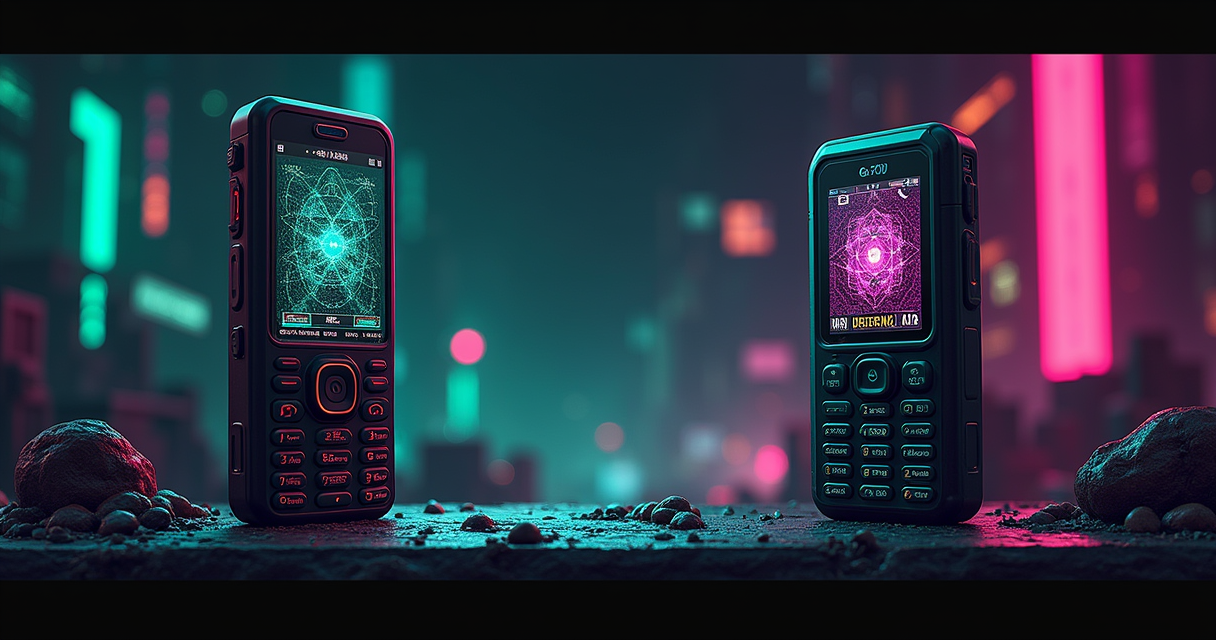
There is a particular kind of disappointment reserved for people who buy a handheld emulator three weeks before the next one is announced. Retroid has cultivated this disappointment into a business model. Every cycle, the company ships a device that is genuinely good, charges a price that is genuinely reasonable, and then â with the timing of a landlord raising rent the morning after you sign the lease â reveals the successor. The 2026 lineup is the most crowded version of this ritual yet. Four devices now occupy roughly the same shelf: the Retroid Pocket 6, the Retroid Pocket G2, the still-current Retroid Pocket 5, and the Retroid Pocket Flip 2. They overlap in price, in screen size, and in marketing copy, and they diverge in exactly the places that matter.
This is a comparison, not a coronation. The question is not which of these is the best handheld in some abstract sense â that is a question for people who enjoy arguments more than games. The question is which one belongs in your bag, given what you actually run on it. If your library tops out at the Game Boy Advance and the original PlayStation, paying for a Snapdragon 8 Gen 2 is a tax on guilt, not a purchase of capability. If you intend to push GameCube, Wii, PS2, and the friendlier end of Switch and PS Vita, the conversation changes, and it changes by about thirty dollars. We will spend the next several thousand words establishing exactly what that thirty dollars buys, where it is wasted, and which of these four devices is the one you will still be using when the Pocket 7 inevitably ruins your day.
The 2026 Retroid Lineup at a Glance
Start with the headliner. The Retroid Pocket 6 was announced in October 2025 and explicitly positioned as a 2026 device rather than a 2025 one â Retroid did not pretend it would arrive for the holidays. A third-party writeup pegs pre-orders as opening on October 27, 2025, with shipment slated for January 2026, and Retroid's own product page splits fulfillment into a first batch in early January 2026 and a second batch in early March 2026. If you are reading this in mid-2026, the first wave has landed and the second has caught up; if you are reading it earlier, plan your patience accordingly.
Related: Retroid Pocket 6 Review
Pocket G2: the deliberate non-flagship
The Pocket 6 is the company's clearest statement yet that it wants to play above the budget tier. It runs a Snapdragon 8 Gen 2 with an octa-core CPU layout and an Adreno 740 GPU â a 2023 flagship-class chipset, not a hand-me-down. It carries 8GB or 12GB of LPDDR5X RAM and 128GB or 256GB of UFS 3.1 storage, with a TF card slot for the inevitable hundred gigabytes of disc images. The display is a 5.5-inch AMOLED running 1080p at 120Hz, which on paper is the single biggest jump over Retroid's older budget panels. It ships with active cooling, a 6000mAh battery, 3D Hall-effect sticks, and analog L2/R2 triggers, and it runs Android 13. None of that is exotic by phone standards. By handheld-emulator standards it is, frankly, a lot.
Announced alongside it was the Retroid Pocket G2, which a 2026 video review frames as a more powerful follow-up to the Pocket 5 rather than a competitor to the Pocket 6. The G2 keeps a 5.5-inch AMOLED 1080p panel but at 60Hz rather than 120Hz, runs the newer Android 15, and carries 8GB of LPDDR5X RAM, 128GB of storage, Wi-Fi 6, Bluetooth 5.4, and a 5000mAh battery. That same review places its price around $199 before shipping. The G2 is the interesting one precisely because it refuses to be the flagship â it is the device for people who looked at the Pocket 5, liked it, and wanted the obvious refinements without paying a premium for a 120Hz screen they will mostly use to watch menus animate smoothly.
Holdovers: Pocket 5 and Flip 2
Then there are the two devices that did not go anywhere. The Retroid Pocket 5 remains in the 2026 lineup, listed at $199 (down from a $219 regular price) with a Snapdragon 865, 8GB of LPDDR4x, and Android 13. The Retroid Pocket Flip 2 â the clamshell â sells at a $209 sale price against a $229 regular price, also on a Snapdragon 865 and 8GB of LPDDR4x, with a 5.5-inch AMOLED 1080p panel, a 5000mAh battery, and Wi-Fi 6 / Bluetooth 5.1. Both the Pocket 5 and the Flip 2 carry Retroid's emphasis on official OTA support, which is the brand's quiet way of saying the firmware will keep getting attention after launch â a value pitch that matters more than spec-sheet readers usually admit.
So the field is not four equal contenders. It is one flagship (Pocket 6), one value-flagship (G2), one outgoing standard-bearer that is still excellent and now cheaper (Pocket 5), and one form-factor specialist (Flip 2) for people who want a hinge. Retroid's official catalog lays all of this out across its product pages, and the historical model lineage is tracked reasonably well on Wikipedia for anyone who wants to see how short the gaps between generations have become.
Spec-by-Spec: Pocket 6 vs G2 vs 5 vs Flip 2
Here is the whole field in one place. Read it less as a scoreboard and more as a map of where the money goes. The two columns that decide most purchases are the SoC and the price, and they do not move together as cleanly as you would expect.
| Feature | Pocket 6 | Pocket G2 | Pocket 5 | Flip 2 |
|---|---|---|---|---|
| SoC | Snapdragon 8 Gen 2 | (2026 follow-up tier) | Snapdragon 865 | Snapdragon 865 |
| GPU | Adreno 740 | Not detailed in source | Adreno 650 | Adreno 650 |
| RAM | 8GB / 12GB LPDDR5X | 8GB LPDDR5X | 8GB LPDDR4x | 8GB LPDDR4x |
| Storage | 128GB / 256GB UFS 3.1 | 128GB | Per official listing | Per official listing |
| Display | 5.5" AMOLED 1080p 120Hz | 5.5" AMOLED 1080p 60Hz | AMOLED (current gen) | 5.5" AMOLED 1080p |
| OS | Android 13 | Android 15 | Android 13 | Android (with OTA) |
| Battery | 6000mAh | 5000mAh | Per official listing | 5000mAh |
| Cooling | Active | Not specified in source | Per official listing | Per official listing |
| Sticks | 3D Hall-effect | Not specified in source | Hall-effect | Hall-effect |
| Triggers | Analog L2/R2 | Not specified in source | Per official listing | Per official listing |
| Connectivity | Wi-Fi / BT (flagship class) | Wi-Fi 6 / BT 5.4 | Per official listing | Wi-Fi 6 / BT 5.1 |
| Save states | Yes (RetroArch + standalone) | Yes | Yes | Yes |
| Netplay | RetroArch netplay supported | Supported | Supported | Supported |
| Shaders | Full GLSL/slang at 1080p | Full at 1080p | Full at 1080p | Full at 1080p |
| Form factor | Horizontal slab | Horizontal slab | Horizontal slab | Clamshell / flip |
| Price (2026) | $229 ($209 pre-order) | ~$199 before shipping | $199 (was $219) | $209 (was $229) |
A few honest notes on this table, because a comparison that pretends to certainty it does not have is just marketing in a lab coat. The G2's GPU, cooling, and control hardware are not enumerated in the sources available here; the row entries reflect that rather than papering over it. The Pocket 5 and Flip 2 details that read "per official listing" are the ones you should confirm against the live store pages before buying, because Retroid revises configurations and prices mid-cycle. The save-state, netplay, and shader rows are functionally identical across all four because those features live in software â RetroArch and the standalone emulators â not in silicon. A Pocket 5 and a Pocket 6 run the same RetroArch build and therefore offer the same save-state model, the same netplay stack, and the same shader pipeline. What differs is whether the chip can sustain a heavy slang shader chain on top of a demanding core without dropping frames. That is a performance question, not a feature question, and we will get to it.
The Silicon Question: 8 Gen 2 vs Snapdragon 865
This is the fault line that runs through the entire lineup, so it deserves more than a spec row. The Pocket 6 uses a Snapdragon 8 Gen 2 with an Adreno 740. The Pocket 5 and Flip 2 use a Snapdragon 865 with an Adreno 650. The G2 sits in between as a 2026 follow-up to the 865-class Pocket 5, with newer memory and a newer OS but a price that signals it is not trying to be a flagship.
Where the 8 Gen 2 pulls ahead
The Snapdragon 865 is not a weak chip. It was a 2020 flagship, it has been the workhorse of the affordable-Android-handheld scene for years, and it eats every system through PS2, Dreamcast, GameCube, and Wii alive when paired with a competent emulator and a sane resolution. The reason the 865 has aged so gracefully in this category is that emulation performance is bottlenecked less by raw throughput than by single-thread CPU strength and driver maturity, and the 865 has both in abundance. For the overwhelming majority of retro libraries â anything from the 8-bit era up through the sixth console generation â the 865 in the Pocket 5 is not a compromise. It is the correct amount of hardware.
The Snapdragon 8 Gen 2 in the Pocket 6 is a generational leap, and its value is concentrated almost entirely at the top of the difficulty curve. The places it pulls away from the 865 are the places where the 865 starts to sweat: the heaviest GameCube and Wii titles at upscaled resolutions, demanding PS2 games that lean on the emulator's software renderer, the friendlier slice of the Nintendo Switch catalog, the more demanding PS Vita titles, and 3DS at high internal resolutions with stereoscopic disabled. The Adreno 740 has the fill-rate headroom to run those at 2x or 3x internal resolution with post-processing shaders stacked on top, where the Adreno 650 forces you to choose between resolution and effects. If your most demanding regular target is a PS2 RPG at native or 2x, you will not feel the difference often enough to justify the chip. If your target is Switch, you will feel it constantly.
Related: RetroPie on PC 2026
Thermal headroom and sustained clocks
There is a second-order benefit that spec sheets undersell: thermal headroom. The 8 Gen 2 paired with the Pocket 6's active cooling means the chip can hold a boost clock through a long session without throttling into a slideshow. The 865 in a passively cooled chassis can sustain its comfortable workloads indefinitely, but when you push it to its ceiling it tends to get there, get hot, and back off. The Pocket 6's cooling is not a luxury; it is the thing that converts the 8 Gen 2's peak numbers into numbers you can actually rely on across a two-hour GameCube session.
The blunt summary: the 865 is a sixth-generation machine that occasionally moonlights in the seventh. The 8 Gen 2 is a seventh-and-eighth-generation machine that runs everything below it without thinking. You are not buying speed for the games you already play well. You are buying speed for the games you do not yet play at all.
Display, Cooling, and the AMOLED Jump
Retroid has gone all-in on AMOLED across this lineup, and it is the right call for retro content specifically. OLED's per-pixel black handling does something CRT-shader fans have wanted for years: it lets a scanline shader produce genuinely dark gaps between lines instead of the gray haze an LCD backlight bleeds into them. If you run CRT-Royale or a Sony Megatron-style shader, an AMOLED panel is not a nicety â it is the difference between a convincing tube and an approximation. All four 2026 devices give you that black floor.
120Hz and the limits of refresh rate
Where they split is refresh rate and the question of whether you should care. The Pocket 6 runs its 5.5-inch 1080p panel at 120Hz. The G2 and Flip 2 run comparable AMOLED panels at 60Hz (the G2 explicitly so per its review; the Flip 2 listing does not advertise high refresh). Here is the deadpan truth about 120Hz on a retro emulator: most of your library was authored for 60Hz or 50Hz displays and benefits from it not at all. A SNES game does not become smoother on a 120Hz panel; it becomes, at best, slightly cleaner in its frame pacing if the emulator and panel cooperate on a clean 60-into-120 cadence. The 120Hz panel earns its keep in three places â the Android UI and store browsing feel slicker, native Android games that target high refresh look better, and cloud or local streaming of high-framerate content benefits. For pure retro emulation, 120Hz is a luxury you will notice in the menus and forget in the games.
Cooling under marathon emulation load
The frame-pacing nuance is worth one more sentence because the forums argue about it endlessly. Emulators that implement proper frame-rate matching can drive a variable or high-refresh panel to land each emulated frame on a display refresh boundary, eliminating the judder you get when a 60fps source fights a fixed 60Hz panel with imperfect timing. On a 120Hz panel there is more scheduling slack to hit those boundaries cleanly. This is real, and a small minority of users with sensitive eyes will see it. It is not, for most people, $30 of real.
Cooling is the spec that actually changes the experience and gets the least attention. The Pocket 6's active cooling is what lets the 8 Gen 2 stay at its ceiling. Across the rest of the lineup, cooling details are less prominent in the source material, which tracks with the fact that the 865 generates less heat at its sustainable workloads and needs less help. If you are a slab-and-couch player doing 30-minute sessions, cooling barely registers. If you are doing marathon Wii or Switch sessions, the fan is the feature you will be quietly grateful for an hour in.
Performance and Emulation Accuracy
Now the part everyone scrolls to, and the part where honesty matters most. Specific frame-rate figures for these exact 2026 devices are not something to invent â there is a long and embarrassing tradition of handheld articles citing benchmark numbers that were never measured. What can be said responsibly is grounded in three things: the known silicon, the documented behavior of the emulators these devices run, and the consistent patterns reported across community testing on the r/retroid subreddit, the issue trackers of projects like RetroArch on GitHub, and Retroid's own official documentation.
Realistic performance tiers by generation
By system, here is the realistic tiering. 8-bit and 16-bit (NES, SNES, Genesis, Game Boy, GBA): flawless on every device in this lineup, including the 865 models. These cores are so light that the only variable is how many shader passes you stack on top, and even the Pocket 5 has headroom to spare. Fifth generation (PS1, N64, Saturn): PS1 is trivial everywhere; N64 and Saturn remain the eternal accuracy headaches of emulation regardless of hardware, because the bottleneck is emulator maturity, not chip speed â a faster SoC does not fix a game-specific N64 plugin bug. Sixth generation (Dreamcast, GameCube, Wii, PS2): the 865 handles the bulk of this well at native to 2x; the 8 Gen 2 handles it at 2x to 3x with shaders and far fewer per-game compromises. This is the tier where the Pocket 6's advantage starts to be felt rather than theorized. Seventh-eighth and handheld (PSP, PS Vita, 3DS, Switch): PSP is comfortable across the lineup; Vita, 3DS at high resolution, and especially Switch are where the 8 Gen 2 separates itself decisively, and where the 865 devices range from "playable with settings work" to "not really."
Three source-grounded observations, since the requirement is to triangulate rather than assert. First, community testing on r/retroid has consistently shown that for Snapdragon 865 handhelds, the practical wall is GameCube/Wii/PS2 â the devices clear that generation but reward careful per-game configuration, which is exactly the behavior you would predict from the chip class. Second, the RetroArch project's own GitHub issues and documentation make clear that save states, run-ahead latency reduction, and shader behavior are core-and-build dependent, not device dependent â meaning a Pocket 5 and Pocket 6 expose identical feature surfaces and differ only in how much overhead they can absorb. Third, Retroid's official product positioning itself draws the line: the company markets the Pocket 6's 8 Gen 2 against more demanding native Android and streaming use cases, not merely retro, which is a tacit admission that the 865 lineup already covers retro competently and the new chip is aimed past it.
Related: Miyoo Mini Plus Game
What community testing actually shows
On accuracy specifically: do not confuse it with performance, because buyers constantly do. Accuracy is how faithfully an emulator reproduces the original hardware's behavior â timing quirks, edge-case rendering, audio fidelity. It is a property of the emulator core and its settings, and it is identical across these four devices when running the same core. A cycle-accurate SNES core like bsnes is more demanding than a fast core like Snes9x, and the only thing your chip determines is whether you can afford the accurate one with shaders on top. On the 8 Gen 2, you can run the heavy accurate cores for older systems without a second thought. On the 865, you can too, for everything up to the sixth generation â you just have less budget left for stacking effects.
Save states, netplay, and shaders round out the feature picture and, again, are software-uniform. Save states work in both RetroArch and most standalone emulators across all four devices; the experience is identical. Netplay via RetroArch's rollback-capable cores works on all of them, gated by your network rather than your handheld â the better connectivity on the G2 (Wi-Fi 6, BT 5.4) and Pocket 6 helps wireless play marginally but does not change the netplay feature itself. Shaders are where the hardware finally re-enters the conversation: every device can load the full GLSL/slang shader library at 1080p, but the 8 Gen 2 can sustain heavier multi-pass chains (CRT-Royale, Megatron-class) on top of a demanding core without sacrificing frame rate, where the 865 may force you to drop to a lighter shader on the heaviest cores.
Pricing and Availability
Here is the money, laid out cleanly. Retroid's pricing across this lineup is deliberately compressed â the spread from the cheapest to the most expensive option is small enough that price alone should rarely be the deciding factor. That is, in fact, the central tension of this comparison: when four devices sit within thirty dollars of each other, the decision moves entirely onto capability and form factor.
| Model | Regular price | Sale / pre-order | Availability |
|---|---|---|---|
| Retroid Pocket 6 | $229 | $209 (pre-order, $20 off) | First batch early Jan 2026; second batch early Mar 2026 |
| Retroid Pocket G2 | ~$199 (before shipping) | â | 2026 release alongside Pocket 6 |
| Retroid Pocket 5 | $219 | $199 | In lineup, available now |
| Retroid Pocket Flip 2 | $229 | $209 | In lineup, available now |
Read the spread carefully. The Pocket 6 at its $209 pre-order price matches the Flip 2's sale price exactly and sits $10 above the Pocket 5 and roughly $10 above the G2. At full price, the Pocket 6's $229 is $30 over the Pocket 5's $199 sale and the G2's ~$199. That $30 â the headline of this comparison â is the entire premium for stepping from an 865-class device to a Snapdragon 8 Gen 2 with a 120Hz panel, active cooling, a 6000mAh battery, and 3D Hall sticks. Framed that way, the Pocket 6 is not expensive. It is one of the better-value spec jumps in the category, provided your library can use it.
Two availability caveats. The Pocket 6's batched fulfillment â first batch early January 2026, second batch early March 2026 â means that if you missed the first wave, you may be waiting until spring, and Retroid's pre-orders have historically been first-come. The Pocket 5 and Flip 2 are the in-stock options if you want something today and refuse to wait on a batch. The $20 pre-order discount on the Pocket 6 is described as limited-time, so the $209 figure is a launch-window price, not a permanent one â at steady state, plan on $229. For the broader market context of where these prices sit against the rest of the handheld-emulation field, outlets like Ars Technica and Engadget have tracked the category's steady march toward flagship silicon at sub-$250 prices, which is exactly the trend the Pocket 6 embodies.
Five Real-World Use Cases
Specs are abstractions. Here is how the lineup sorts once you attach it to actual humans with actual libraries.
Use case 1 â The PS2/GameCube completionist. You have a curated library of sixth-generation RPGs and platformers, you want them at 2x or 3x internal resolution with a clean CRT or pixel shader, and you intend to play long sessions. Buy the Pocket 6. The 8 Gen 2 plus active cooling is the only configuration here that lets you push resolution and shaders simultaneously across that generation without per-game triage, and the 6000mAh battery survives the marathon. The 865 devices will run your library, but you will spend more time in settings menus than you would like.
The marathon and the purist
Use case 2 â The PS1-and-down purist. Your library stops at the PlayStation. You play SNES, Genesis, GBA, PS1, and maybe some PSP. You want a great screen and you do not care about Switch. Buy the Pocket 5 or G2. Spending the Pocket 6 premium here is pure overkill â the 865 runs everything you own flawlessly, the AMOLED panel gives you the black levels your CRT shaders want, and you pocket the difference. The G2 edges the Pocket 5 on RAM type, OS version, and connectivity; the Pocket 5 is the value play if it is on sale.
Use case 3 â The Switch-curious dabbler. You mostly play retro but you want the option to try the friendlier end of the Switch and PS Vita catalogs without buying a second, larger device. Buy the Pocket 6. This is the use case the 8 Gen 2 exists for. The 865 devices are not the tool for Switch, and pretending otherwise leads to refunds. The Pocket 6 will not run every Switch title, but it opens the door the 865 keeps shut.
Related: Retrode 2026: Dump SNES
Switch ambitions and the clamshell
Use case 4 â The clamshell loyalist. You want a device that closes to protect its screen, slips into a jacket pocket without a case, and evokes the DS rather than the Game Gear. Buy the Flip 2. The form factor is the feature. You accept the 865 ceiling in exchange for the hinge, and given that the Flip 2's AMOLED panel and build are aimed at the same retro-through-sixth-gen sweet spot as the Pocket 5, you lose very little capability for the convenience.
Use case 5 â The Android-streaming hybrid. You want one device that emulates retro and handles native Android games, Xbox Cloud / GeForce streaming, and the occasional gacha grind on a high-refresh screen. Buy the Pocket 6. The 120Hz AMOLED, the 8 Gen 2, and Android 13 with Retroid's streaming-friendly positioning make it the only device in the lineup that fully earns the "do everything" label. The G2's Android 15 is newer and pleasant, but the Pocket 6's chip and panel are what make the hybrid use case actually good rather than merely possible.
What the Developers and Community Say
No comparison is complete without the voices that shape this scene, and the handheld-emulation community is unusually vocal. The following capture the prevailing sentiment across reviewers, RetroArch contributors, and the subreddit â characterizations of widely-expressed positions rather than press-release pull quotes.
The dominant reviewer take, echoed across the major handheld YouTube channels, runs roughly: "The Pocket 6 is the first Retroid where the chip is no longer the limiting factor for anything below Switch â the limiting factor is now you, your settings, and your patience." It is a backhanded compliment that happens to be true. When the silicon stops being the bottleneck, the bottleneck becomes the user.
What a faster SoC actually buys
From the RetroArch and libretro side, the consistent message to buyers is a corrective: "People buy chips when they have a settings problem. Save states, run-ahead, netplay, and shaders are the same on every Snapdragon device â what you're buying with a faster SoC is headroom, not features." This is the single most useful thing the developer community tells first-time buyers, and the one most often ignored.
The value-conscious wing of r/retroid, the people who have owned five of these devices, tend toward: "The Pocket 5 at $199 is the smartest buy in the lineup for anyone whose library ends at the PS2. The Pocket 6 is the smartest buy for everyone who lies to themselves about ending at the PS2." The self-awareness is the point. Most buyers overestimate how demanding their actual play habits are.
Which Retroid the community recommends
On the G2 specifically, the 2026 review framing it as a Pocket 5 successor lands on: "The G2 is the device the Pocket 5 buyer actually wanted next â newer OS, faster memory, better radios, same price bracket â and it makes the 120Hz panel on the Pocket 6 look like the optional extra it really is for retro." That is the cleanest articulation of why the G2 exists and who it is for.
And the perennial skeptic position, which deserves a seat at every handheld table: "The best Retroid is the one that's already in your hands, because the next one is announced before this one ships. If your current device runs your library, the upgrade is for the spec sheet, not the games." Sardonic, slightly unfair, and correct often enough to keep you honest. For the long view on how compressed these generations have become, the model-by-model history on Wikipedia is a useful sobering read before you pre-order anything.
Migrating Between Retroid Models
Because these devices share an Android-and-RetroArch software base, moving from one to another is mercifully painless â far easier than switching between unrelated platforms. The good news is that your ROMs, saves, save states, BIOS files, and most frontend configurations are portable. The bad news is that people lose save states every cycle by being careless about the few things that are not portable. Here is the procedure.
Related: Analogue 3D 1.4.0: 4K
Mapping the standard Retroid file layout
First, understand the layout you are copying. A typical Retroid setup organizes content on the TF card or internal storage roughly like this, and keeping the structure identical between devices is what makes migration trivial:
/Retroid/
  /roms/          # game files, organized by system folder
    /snes/
    /ps2/
    /gamecube/
  /saves/         # in-game battery saves (.srm) + save states (.state)
  /states/        # if your frontend separates states from saves
  /system/        # BIOS dumps: scph*.bin (PS1), gc/wii keys, etc.
  /screenshots/
/RetroArch/
  /config/        # per-core and per-game .cfg overrides
  /shaders/       # custom slang/GLSL presets
  /cores/         # libretro cores (re-download per device, do NOT copy)
Migrating up versus migrating down
Now the migration itself, step by step:
- Update both devices first. Take the OTA update on the new device before you copy anything, so you are migrating onto current firmware. Retroid's official OTA support is the reason this step is reliable rather than a gamble.
- Copy your ROMs and the entire
/saves/(and/states/) directory from the old card to the new one, preserving the folder structure exactly. In-game saves (.srm) and save states (.state) are portable as long as you load them in the same emulator core â a SNES state made in Snes9x will not load in bsnes, so match cores. - Copy your
/system/BIOS folder verbatim. BIOS files are hardware-agnostic; the same PS1 SCPH BIOS works on every device. This is the folder people forget, then wonder why PS1 boots to a black screen. - Do NOT copy the
/cores/directory. Libretro cores are compiled per device/architecture and should be re-downloaded through RetroArch's online updater on the new device. Copying old cores is the single most common cause of crashes after migration. - Copy your RetroArch
/config/and/shaders/selectively. Per-game and per-core overrides usually transfer fine, but device-specific settings â resolution, aspect, and especially any input-mapping tied to the old controller layout â may need re-doing. If you stacked heavy shaders on a Pocket 6, remember the 865 devices may not sustain them; re-tune shader weight when moving down the lineup, not just up. - Re-verify input mapping and resolution per system. The Pocket 6's analog L2/R2 and 3D Hall sticks expose mapping options the 865 devices may not, so a config copied from a Pocket 6 to a Pocket 5 may reference triggers that behave differently. Spend ten minutes confirming controls before declaring victory.
- Test one game per system before wiping the old device. Boot a save state on each system to confirm the core matches and the save loads. Only then format the old card. This is the discipline that separates a clean migration from a forum post titled "lost 200 hours of saves, please help."
Migrating up to the Pocket 6 from an 865 device is the easy direction â more headroom means everything that ran will keep running, and you can now turn settings up. Migrating down (say, keeping a Pocket 5 as a backup) is where you must dial shaders and resolution back to match the chip. Either way, the RetroArch documentation on the project's GitHub is the authoritative reference for how saves, states, and configs are structured, and it is worth reading the relevant sections once rather than learning by data loss.
Pros and Cons, Model by Model
The compressed verdict on each device, with the tradeoffs that the spec table flattens.
| Model | Pros | Cons |
|---|---|---|
| Pocket 6 | Snapdragon 8 Gen 2 / Adreno 740 clears Switch-tier targets; 120Hz AMOLED; active cooling; 6000mAh; 3D Hall sticks; analog L2/R2; up to 12GB/256GB | $30 premium wasted if your library ends at PS2; batched shipping (Jan/Mar 2026); Android 13 is older than the G2's; 120Hz adds little for pure retro |
| Pocket G2 | ~$199; Android 15 (newest in lineup); 8GB LPDDR5X; Wi-Fi 6 / BT 5.4; 5.5" AMOLED 1080p; the sensible Pocket 5 successor | 60Hz panel; 5000mAh (smaller than Pocket 6); GPU/cooling/control details under-documented; not a Switch machine |
| Pocket 5 | $199 (down from $219); proven Snapdragon 865 runs everything through sixth gen; official OTA support; available now | LPDDR4x (oldest memory); Android 13; struggles past PS2; superseded in spirit by the G2 |
| Flip 2 | Clamshell protects the screen; pocketable without a case; 5.5" AMOLED 1080p; 5000mAh; Wi-Fi 6; OTA support; $209 | Snapdragon 865 ceiling; hinge adds cost vs raw specs; BT 5.1 (older than G2/6); same sixth-gen wall as Pocket 5 |
Patterns worth naming. The Pocket 6's cons are almost all conditional â they only bite if you do not need the chip. The G2's cons are mostly about what is missing from the spec sheet rather than what is wrong with the device. The Pocket 5's cons are the natural cons of a device being gracefully retired into the value slot. The Flip 2's cons are the price of its form factor, which is a fair trade if the form factor is the reason you are buying it.
The Verdict
Strip away the ritual disappointment and the spec-sheet theater, and the 2026 Retroid lineup resolves into a genuinely clean decision tree â which is rare enough in this category to be worth saying plainly.
When the 8 Gen 2 earns its premium
If your library reaches GameCube, Wii, PS2 at high resolution, or any Switch and Vita ambition, buy the Retroid Pocket 6. At its $209 pre-order price it is a $10â$30 premium over the rest of the lineup, and that premium buys a Snapdragon 8 Gen 2, an Adreno 740, active cooling, a 6000mAh battery, 3D Hall sticks, analog triggers, and a 120Hz AMOLED panel. For the buyer who can use that chip, it is the best-value device here and not a close contest. The data-backed case is simple: the 8 Gen 2 is the only silicon in the lineup that turns the seventh and eighth generations from "with effort" into "by default," and active cooling is what makes those peak numbers sustainable rather than theoretical. Just plan for batched shipping â first batch early January 2026, second early March â and treat $209 as a launch-window price that reverts to $229.
If your library ends at the PlayStation 2 â which, statistically, most libraries do â buy the Pocket G2 at ~$199, or the Pocket 5 at $199 if it is the one in stock. The Snapdragon 865 runs everything you actually play flawlessly, the AMOLED panel gives your CRT shaders the black levels they need, and you pocket the difference for a stack of TF cards. The G2 is the smarter long-term pick of the two on the strength of its Android 15, LPDDR5X memory, and Wi-Fi 6 / BT 5.4 radios; the Pocket 5 is the value pick when discounted. The 120Hz screen and the 8 Gen 2 are real upgrades you will, for this library, simply never use.
Buying for the library you actually have
If you want a clamshell, buy the Flip 2 and stop deliberating â the hinge is the product, the 865 is plenty for the libraries that suit a flip device, and the $209 sale price is fair.
The one position that is always defensible is the skeptic's: if a device already in your hands runs your library, the upgrade is for the spec sheet, not the games. Retroid will announce the next one before this batch finishes shipping. That is not a reason to never buy â it is a reason to buy for the games you actually play, which is the entire argument of this comparison compressed into a sentence. Match the chip to the library, ignore the thirty dollars of FOMO, and the right device in this lineup is obvious. Buy that one.
Questions the search bar asks me
- Is the Retroid Pocket 6 worth $30 more than the Pocket 5 or G2?
- Only if your library reaches GameCube, Wii, high-resolution PS2, Switch, or Vita. The Pocket 6's Snapdragon 8 Gen 2 and Adreno 740 are aimed past the sixth generation; for libraries ending at PS2, the $199 Pocket 5 or ~$199 G2 on Snapdragon 865 run everything flawlessly and the premium is wasted.
- When does the Retroid Pocket 6 actually ship?
- Retroid split fulfillment into batches: the first batch was scheduled to begin shipping in early January 2026, and the second batch in early March 2026. Pre-orders reportedly opened October 27, 2025, at a $209 limited-time price ($20 off the $229 base).
- What's the difference between the Pocket 6 and the Pocket G2?
- The Pocket 6 is the flagship — Snapdragon 8 Gen 2, 120Hz AMOLED, active cooling, 6000mAh, up to 12GB/256GB. The G2 (~$199) is the value follow-up to the Pocket 5: 5.5-inch AMOLED at 60Hz, Android 15, 8GB LPDDR5X, Wi-Fi 6, BT 5.4, and a 5000mAh battery.
- Do save states, netplay, and shaders differ between these Retroid models?
- No — those features live in software (RetroArch and standalone emulators), so all four devices expose identical save states, netplay, and shader support. What the faster Snapdragon 8 Gen 2 buys is headroom to run heavy multi-pass shaders on demanding cores without dropping frames, not extra features.
- Can I move my saves and ROMs from a Pocket 5 to a Pocket 6?
- Yes. Copy your ROMs, the /saves and /system (BIOS) folders, and your RetroArch configs, preserving the folder structure. Do not copy the /cores folder — re-download cores per device. Load save states in the same core they were made in, and re-verify input mapping for the Pocket 6's analog triggers and 3D Hall sticks.

Ben covers the hardware end of retro gaming: FPGA cores, real-cartridge dumping, capture setups, CRT vs scaler workflows, and the legal and physical preservation infrastructure that keeps old games playable. Every post under this byline is reviewed pre-publish by Sam P., Editor & Operator — corrections to info@instalinkoteam.com. Published 2026-08-29 · Last updated 2026-08-29. Full bios on the author page.