/// FIELD NOTES FROM A SELF-AWARE GAME SITE
RTX 5080 vs 4080 2026: 15% Faster, $999 Fiction
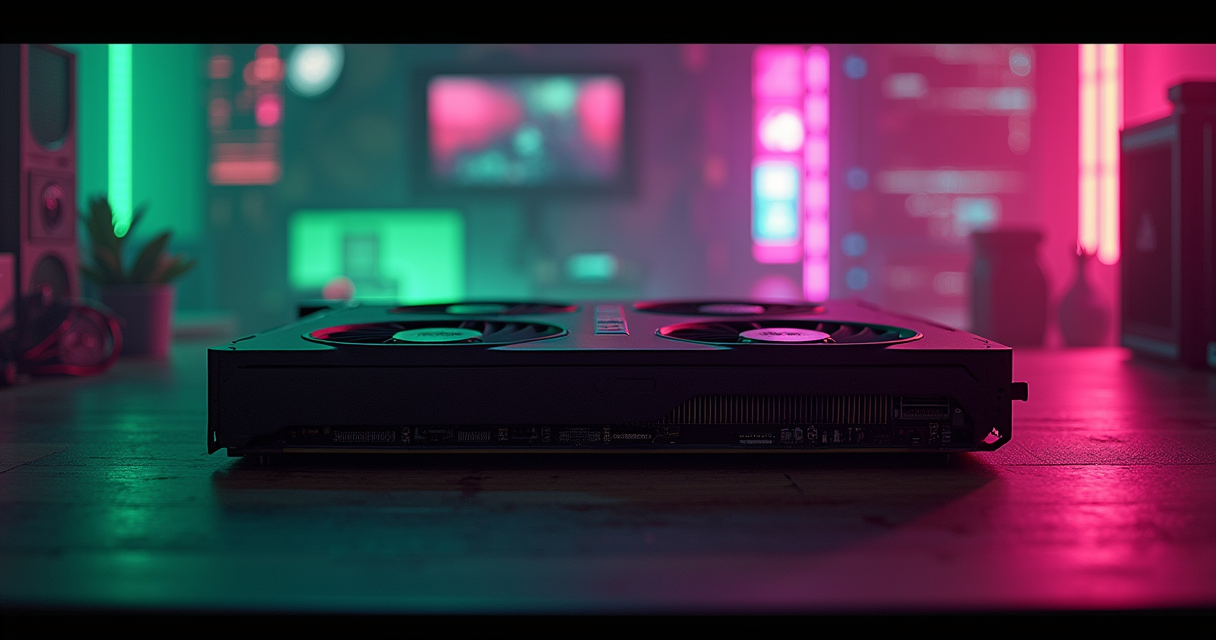
Nvidia launched the GeForce RTX 5080 on January 30, 2025, at a $999 MSRP, on the same day it launched the RTX 5090. The card it replaces at that price point, the RTX 4080 Super, had been selling for $999 since January 31, 2024. The card that name actually descends from, the original RTX 4080, launched at $1,199 in November 2022. So before anyone benchmarks anything, the RTX 5080 versus RTX 4080 fight is already a strange one: a new generation arriving at a price its own predecessor reached a year earlier, promising a leap it does not quite deliver. This is the full accounting of what changed, what did not, and why the most interesting number in the whole comparison is a fourteen-year-old graphics card beating the 5080 by 81 percent in a game from 2010.
The 60-Second Verdict
The short version
The RTX 5080 is faster than the RTX 4080. It is faster by roughly the margin you would get from a factory overclock and a following wind: about 15 percent at 4K, less than that at 1440p, and a rounding error at 1080p where the CPU is calling the shots anyway. It carries the same 16GB of VRAM the 4080 shipped with in November 2022. It launched at exactly the price the RTX 4080 Super had held since January 2024. And in 2026 you cannot reliably buy one at that price. That is the entire comparison in four sentences. Everything below is footnotes, and the footnotes are where it gets interesting, because a generation that moves the needle 15 percent is not a story about performance. It is a story about pricing, silicon economics, and one genuinely funny regression.
The one number that matters
PCWorld's Brad Chacos measured the 5080 as just 15 percent faster at 4K than the $999 RTX 4080 Super, and 11.5 percent faster at 1440p. His verdict was blunt: the card is "one of the worst generational upgrades in recent memory," because "you hope to see a 25 to 30 percent performance improvement in a new graphics card generation." GamersNexus reached the same conclusion from a different bench, calling it "a relatively boring uplift over the 4080, unfortunately." When two of the most rigorous testing outlets in the business independently land on "boring," the marketing department has already lost.
The caveat that ruins the pitch
The 5080 does win on paper in four specific places, and they are not nothing: GDDR7 memory pushes bandwidth from roughly 717 GB/s to 960 GB/s, DLSS 4 Multi Frame Generation is genuinely Blackwell-exclusive, the card is about 10 percent more efficient per watt, and it is the only one of the three you can still buy new with a warranty. If any of those four things is load-bearing for you, read on. If not, the 4080 you already own is fine, and the 4080 Super on the used market is one of the better value plays in a broken 2026 GPU market. For the tier above this, our RTX 5090 review covers where the real generational money went.
First, Which RTX 4080?
The $1,199 original (November 2022)
The RTX 4080 that people mean when they type "RTX 4080" launched on November 16, 2022, at $1,199. It uses a cut-down AD103-300 die with 9,728 CUDA cores across 76 streaming multiprocessors, 16GB of GDDR6X on a 256-bit bus running at 22.4 Gbps for 716.8 GB/s of bandwidth, and a 320W board power. It was, at launch, widely panned for its price rather than its performance, which is a recurring theme in this family tree. Nvidia even tried to launch a second, weaker card under the same 4080 name with 12GB and a 192-bit bus, then unlaunched it after the internet pointed out that selling two completely different GPUs under one number was, at best, confusing. That card returned as the RTX 4070 Ti.
The $999 Super (January 2024)
Fourteen months later, on January 31, 2024, Nvidia effectively fixed the original 4080's pricing problem with the RTX 4080 Super. It swapped the cut-down die for the full AD103, bumping the count to 10,240 CUDA cores across 80 SMs, nudged the memory to 23 Gbps for 736 GB/s, kept the 16GB and the 320W, and, critically, dropped the price to $999. Tom's Hardware summarized it in the review title: "Slightly faster than the 4080, but $200 cheaper." GamersNexus was harsher and funnier, titling their coverage "Lame, But Cheaper." The performance gap between the 4080 and the 4080 Super is 1 to 3 percent. They are, for practical purposes, the same card at two prices.
Why the Super is the honest comparison
This matters because when a reviewer says the 5080 is "15 percent faster than the 4080," they almost always mean the 4080 Super, since that was the $999 card the 5080 replaced on shelves. Against the original $1,199 vanilla 4080, the 5080 sits a hair further ahead, because the vanilla card is a couple of percent slower than the Super. Throughout this article, where a number specifically comes from the Super comparison, it is labeled. The takeaway for a buyer is simpler than the bookkeeping: if you are shopping the used market for "a 4080," the Super is the one to want, because it is faster, uses the full die, and launched at the same $999 the 5080 did. Ars Technica's review headline said the quiet part out loud, calling the 5080 "more like a 4080 Super Super."
Specs and Silicon, Head-to-Head
The full table
Here is every spec that matters across all three cards. Note how many rows are identical, which is the entire point.
| Spec | RTX 5080 | RTX 4080 Super | RTX 4080 |
|---|---|---|---|
| Launch date | Jan 30, 2025 | Jan 31, 2024 | Nov 16, 2022 |
| Launch MSRP | $999 | $999 | $1,199 |
| Architecture | Blackwell (GB203-400) | Ada Lovelace (full AD103) | Ada Lovelace (AD103-300) |
| Process node | TSMC 4N | TSMC 4N | TSMC 4N |
| Transistors / die | 45.6B / 378 mm2 | 45.9B / 379 mm2 | 45.9B / 379 mm2 |
| CUDA cores | 10,752 | 10,240 | 9,728 |
| SM count | 84 | 80 | 76 |
| Boost clock | 2.62 GHz | 2.55 GHz | 2.51 GHz |
| FP32 compute | ~56.3 TFLOPS | ~52.2 TFLOPS | ~48.7 TFLOPS |
| RT cores | 84 (4th-gen) | 80 (3rd-gen) | 76 (3rd-gen) |
| Tensor cores | 336 (5th-gen) | 320 (4th-gen) | 304 (4th-gen) |
| ROPs | 112 | 112 | 112 |
| Memory | 16GB GDDR7 | 16GB GDDR6X | 16GB GDDR6X |
| Memory speed | 30 Gbps | 23 Gbps | 22.4 Gbps |
| Bus width | 256-bit | 256-bit | 256-bit |
| Bandwidth | 960 GB/s | 736 GB/s | 717 GB/s |
| Total board power | 360W | 320W | 320W |
| Power connector | 12V-2x6 | 12VHPWR | 12VHPWR |
| PCIe | 5.0 x16 | 4.0 x16 | 4.0 x16 |
| DisplayPort | 2.1b (UHBR20) | 1.4a | 1.4a |
| Upscaling | DLSS 4 + MFG | DLSS 3 (FG) | DLSS 3 (FG) |
| Status (2026) | Current | Discontinued | Discontinued |
What actually changed
Four rows carry the entire generational story. Memory type moved from GDDR6X to GDDR7, lifting bandwidth by about 30 percent. The connector moved from 12VHPWR to the revised 12V-2x6, which is the same physical plug with a shorter sense pin and better seating tolerance. The interface moved to PCIe 5.0 and DisplayPort 2.1b with UHBR20, which matters for the coming wave of high-refresh 4K and 8K panels but does nothing for a card driving a single 4K display today. And the SM count crept up from 80 to 84, an increase of exactly five percent. Everything else is architectural refinement on the same TSMC 4N node, without a die shrink, which is precisely why the gains are what they are.
What didn't change
The die is the same size, within a square millimeter. The transistor count is within one percent. The memory capacity is identical at 16GB, and the bus width is identical at 256-bit, for the third consecutive product. The ROP count is 112 on all three, when the silicon behaves. Nvidia moved from Ada to Blackwell without moving to a smaller process, which is the semiconductor equivalent of releasing a new car on the same chassis with a remapped ECU. KitGuru's Dominic Moass measured the result at a 13 percent average gain over the 4080 Super at 4K and concluded the 5080 "is hardly going to set the world alight. It's not terrible, launching at the same price as the outgoing RTX 4080 Super and offering at least some performance gains, but it's only a very small step forward."
Benchmarks: The 15% Story
4K, where the gap is biggest
At 4K the 5080 posts its best numbers, because 4K is the only resolution where the extra memory bandwidth and SM count have room to stretch. PCWorld's suite landed at 15 percent over the 4080 Super. KitGuru measured 13 percent. TechPowerUp came in around 14 percent for 4K raster. GamersNexus's per-title spread was wider and more honest about the variance: against the vanilla 4080, Dying Light 2 at 4K ran 21 percent faster, Resident Evil 4 was 19 percent, and Final Fantasy XIV was about 15 percent. Those are the highlight-reel titles. The floor was uglier. GamersNexus recorded gains "as low as 7 to 10 percent, which is about as boring as possible," and noted that "when the gap is sometimes 10 FPS over the 4080 Super at the same price, it's just hard to get excited about." If you game at 4K, our 1440p versus 4K breakdown is worth reading before you assume you even need this tier.
1440p and below, where it evaporates
Drop the resolution and the gap collapses, because at 1440p and 1080p the graphics card increasingly waits on the CPU. PCWorld's 1440p figure was 11.5 percent over the 4080 Super. GamersNexus saw Final Fantasy XIV shrink to an 8 to 9 percent lead at 1440p. NanoReview's aggregate had the 5080 at 164 FPS versus the 4080's 148 at QHD, an 11 percent margin. The research-block aggregator Dropference pegs the 5080 at just 7 percent faster than the 4080 at 1440p across its reference games, and FPSHQ's synthetic index scores it at 8,200 points versus 7,600 for the 4080, an 8 percent lead. Technical City's blended metric, which weights synthetics heavily, comes out near 4 percent. The pattern is consistent: the lower the resolution, the smaller the reason to care.
The benchmark table
Every source in one place, so the spread is visible rather than cherry-picked.
| Source | Test | 5080 lead | Note |
|---|---|---|---|
| PCWorld | 4K, full suite | +15% vs 4080 Super | "worst generational upgrades" |
| PCWorld | 1440p | +11.5% vs 4080 Super | gap shrinks with resolution |
| GamersNexus | 4K raster avg | ~+15% vs 4080/Super | "relatively boring uplift" |
| GamersNexus | Dying Light 2, 4K | +21% vs 4080 | best case |
| GamersNexus | low-end titles | +7-10% vs 4080 | "about as boring as possible" |
| KitGuru | 4K average | +13% vs 4080 Super | "very small step forward" |
| TechPowerUp | 4K raster | ~+14% vs 4080 Super | "good card for 4K gaming" |
| NanoReview | 1440p (164 vs 148 FPS) | +11% | aggregate |
| Dropference | 1440p, reference games | +7% vs 4080 | Jul 2026 snapshot |
| FPSHQ | benchmark points | +8% (8,200 vs 7,600) | Aug 2026 index |
| Technical City | blended aggregate | ~+4% | synthetic-weighted |
The honest headline across eleven data points is 10 to 15 percent at 4K, single digits below it. For context on where this sits, the 5080 lands roughly 13 to 15 percent behind the discontinued RTX 4090 at 4K, which is why TechRadar's review carried the headline "nearly RTX 4090 performance for a whole lot less" while PC Gamer warned that "if you were hoping for RTX 4090 performance from the second-tier RTX Blackwell card then you're going to be disappointed." Both are true. It depends on whether you read the glass as 85 percent full.
The 16GB That Didn't Grow
Three generations, one capacity
The RTX 4080 shipped with 16GB in November 2022. The RTX 4080 Super shipped with 16GB in January 2024. The RTX 5080 shipped with 16GB in January 2025. Three product launches spanning more than two years, and the frame buffer never moved. On a $999-to-$1,199 class of card, in an era when texture budgets, ray-traced global illumination, and frame-generation buffers all eat VRAM, that is a decision worth staring at. TechRadar's reviewer stared at it directly and asked, in a subheading, whether "it's time to admit that 16GB isn't enough for 4K." It is not a settled question, but it is a fair one, and it is the single spec on which all three cards are equally exposed.
When 16GB bites
In most 2026 titles at 4K with sensible settings, 16GB holds. The trouble starts at the edges: path-traced games with the texture slider maxed, mods that replace every asset with 4K or 8K textures, ultrawide and dual-4K productivity, and local AI models that do not care about your frame rate and simply refuse to load if they do not fit. This is where the discontinued 4090 and its 24GB quietly win, and where the 5080's faster GDDR7 helps at the margins but cannot manufacture capacity it does not have. Bandwidth is not a substitute for headroom. When a scene spills past 16GB, the 960 GB/s bus just fetches the overflow from system RAM slightly faster before the frame time spikes anyway.
The bandwidth compensation
What the 5080 does bring is 960 GB/s versus the 4080's 717 GB/s and the Super's 736 GB/s, a genuine 30 percent lift from the jump to 30 Gbps GDDR7. In bandwidth-bound scenarios, high-resolution textures streaming, heavy compute, some content-creation workloads, that helps, and it is part of why the 4K gap is larger than the 1440p gap. But it is compensation, not expansion. If your workload is capacity-limited rather than bandwidth-limited, the 5080 and the 4080 hit the same wall at the same 16GB, and the newer card simply arrives at the wall in better shape. Pair either card with a display that can actually show the difference; our pick for a 4K QD-OLED worth the money is the one we would put in front of both.
The Retro Catch: 32-bit PhysX Is Dead
How a GTX 580 beats a 5080
This is the part of the comparison that belongs on a retro-gaming site, because it is the one place the ancient card wins outright. Blackwell dropped support for 32-bit CUDA. GPU-accelerated PhysX in older games was built on 32-bit CUDA. So on the RTX 5080, every classic title that leaned on hardware PhysX, Borderlands 2, Mirror's Edge, the Batman Arkham games, Metro 2033 and Last Light, Mafia II, Assassin's Creed IV, silently falls back to running PhysX on the CPU, where it collapses. GamersNexus benchmarked it and the results are genuinely comic: in Mafia II the 5080 managed 30.3 FPS with PhysX cranked, while a 2010-era GTX 580 hit 56 FPS. Metro Last Light dropped below 10 FPS on the 5080. Their summary line was that "a GTX 580 is up to 81 percent better than Nvidia's technologically 'outdated' RTX 5080." Nvidia's response confirmed it was deliberate: "this is expected behavior as 32-bit CUDA applications are deprecated on GeForce RTX 50 series GPUs."
Why the 4080 is safe
The RTX 4080, being Ada, still speaks 32-bit CUDA. Every one of those games runs hardware-accelerated PhysX exactly as it always did, at hundreds of frames per second, with the debris and cloth and particle effects the developers intended. This is not a rounding error or a driver bug that will be patched, it is an architectural line in the sand. If your library includes even one PhysX-heavy title from the 2010s that you actually replay, the 4080 is strictly better at it than the 5080, and that sentence will remain true for the life of both cards. It is the only benchmark in this entire comparison where the older, cheaper, discontinued card wins by a landslide, and it is exactly the kind of preservation footnote that mainstream GPU coverage skips.
Workarounds and reality
You can force 32-bit PhysX onto the CPU and accept the frame drops, disable the effects entirely and lose the visual feature you presumably wanted, or keep an old Ada or Pascal card in a second slot purely as a dedicated PhysX processor, which enthusiasts have genuinely started doing. None of these are good. All of them are more friction than the 4080 asks for, because the 4080 asks for nothing. For a pure retro and preservation rig, this alone is an argument to keep an Ada card in the build. It also quietly reframes the whole "upgrade" pitch: a new generation that runs some of your old library worse is not a strict upgrade, it is a trade.
DLSS 4, MFG, and 'Fake Frames'
What Multi Frame Generation actually does
DLSS 4's headline feature is Multi Frame Generation, which uses the 5th-generation Tensor cores and an AI model to insert up to three generated frames between each pair of rendered frames, versus the single inserted frame of the 4080's DLSS 3 Frame Generation. In the best case it turns a native 60 FPS into a displayed 200-plus FPS, and on a high-refresh panel the motion genuinely looks smoother. PCWorld, no fan of the card overall, admitted the feature "feels wonderful" and that games "look and feel so much smoother" with it on. This is the 5080's real, exclusive advantage over every Ada card, including the 4090. It is silicon-gated: the 4080 will never get MFG, only the single-frame version.
Why reviewers bristled
The friction is that Nvidia leaned on MFG to paper over the thin raster gains, presenting frame-generated numbers next to native numbers as if they were the same currency. They are not. Generated frames add smoothness but not responsiveness, they do not reduce input latency the way real frames do, and they can introduce artifacts in fine detail and fast motion. PCWorld titled the entire review "Betting the future on 'fake frames'" and concluded that the 5080, stripped of the MFG marketing, "would have been immensely more compelling at a couple hundred dollars cheaper," and that otherwise "the RTX 5080 is one of the most disappointing GPU releases in a long time." Tom's Hardware put the same point flatly: "outside of certain AI workloads and MFG, it's currently a pretty minor upgrade over the prior generation 4080 cards."
What it means for real games
MFG is at its best when you already have a solid native frame rate, above 60, and want to saturate a 240Hz or 360Hz display. It is at its worst as a crutch to drag an unplayable 30 FPS up to a fake-smooth 90, because the input latency still feels like 30. For competitive shooters you will often leave it off. For single-player, high-fidelity, controller-driven games on a big high-refresh panel, it is a legitimately nice feature. None of this touches emulation or retro rendering, where frame generation is irrelevant and the CPU does the heavy lifting. If your frame pacing feels off with or without it, the culprit is usually elsewhere in the system; our Windows 11 frame-drop checklist fixes more stutter than any GPU swap will.
Power, Efficiency, and the ROPs Lottery
360W on paper, less in practice
The 5080 carries a 360W board-power rating versus 320W for both 4080 cards, so on the spec sheet it looks like the thirstier part. In practice it is more efficient. KitGuru measured performance-per-watt up about 10 percent over the 4080 Super and called the 5080 "the most efficient GPU we've ever tested," which is a strange sentence to write about a card whose raw gains are so modest, but architecture on the same node bought efficiency where it could not buy speed. GamersNexus found that in real 4K gaming, 8 of 12 tested titles stayed under 300W, well short of the 360W ceiling. The rating is a worst-case, not a typical draw. You can lean into that with a simple power cap that costs almost nothing in frames:
# The 5080 is rated at 360W but GamersNexus measured 8 of 12
# games staying under 300W at 4K. Cap it and lose almost nothing:
nvidia-smi -i 0 -pl 300

# Verify the cap took and watch live board draw:
nvidia-smi --query-gpu=name,power.limit,power.draw --format=csv
The connector question
Both generations use the 16-pin connector, but the 5080 ships with the revised 12V-2x6 variant, which has shorter sense pins so a not-fully-seated plug refuses to power on rather than melting under load. At 360W the 5080 also sits far below the danger zone that made headlines on the 575W RTX 5090, where the same connector runs close to its rated limit. In other words, the 5080 is the safe end of the 12-pin saga. Seat the plug until it clicks, route it without a tight bend near the housing, and it is a non-issue. The 4080's older 12VHPWR plug is equally fine at 320W with the same care.
The ROPs lottery
One asterisk unique to the 5080: at launch, a batch of cards shipped with 104 render output units instead of the specified 112, missing about 7 percent of that particular block of raster hardware. GamersNexus measured the shortfall at up to 11 percent in games and 12 percent in Time Spy, enough to drop an affected 5080 below a 4080 Super in some tests. Nvidia told The Verge that "an early production build of the RTX 5080 GPUs were also affected," put the rate at roughly 0.5 percent of units, and advised owners to "contact the board manufacturer for a replacement." There was no recall. The practical defense is thirty seconds in GPU-Z: check that the ROPs field reads 112. If it reads 104, you have a defective card and grounds for an RMA. The 4080, being a mature product with years of clean production behind it, has no such lottery.
Pricing and Availability in 2026
The MSRP fiction
The RTX 5080's $999 MSRP is real in the sense that Nvidia printed it and that Founders Editions briefly sold at $999.99 at Best Buy and 979 pounds at Nvidia UK during launch week. It is a fiction in the sense that this is 2026 and you will struggle to pay it. The research-block trackers capture the spread: Dropference's late-July 2026 snapshot lists the 5080 at 1,249 euros against the 4080 at 1,390 euros, making the new card 141 euros cheaper in that market. FPSHQ's August 2026 US snapshot is uglier, showing the 5080 at $1,705 against a 4080 at $1,100, a street-price inversion where the newer, faster card costs 55 percent more. Gaming Gear Labs frames the 5080 more optimistically at $999 to $1,100 and the used 4080 at $700 to $850. The only consistent truth is that the number on the box and the number at checkout have parted ways.
The AIB explosion
The clearest illustration is a single card. ASUS launched the ROG Astral RTX 5080 OC at $1,499.99 in January 2025, already 50 percent over MSRP. By July 30, 2026, VideoCardz reported it had climbed to $2,099.99, up from $1,899.99, under the headline that the "first RTX 5080 now exceeds RTX 5090 MSRP." Read that again: a premium RTX 5080 now costs $100 more than the $1,999 MSRP of the RTX 5090, the card a full tier above it. That is not a supply blip, it is what happens when AI datacenters eat the world's GDDR7 supply and every board partner prices for scarcity. The cause is the same DRAM crunch that pushed 5090 street prices past $4,300 in mid-2026.
The used-4080 market
Against that backdrop, the discontinued 4080 and 4080 Super are the value story. Both are off Nvidia's production line, so supply is fixed and prices float on demand, but a used 4080 Super around the $800 mark buys you roughly 85 to 90 percent of a 5080's gaming performance, the identical 16GB, and full 32-bit PhysX support, for potentially half the cost of a marked-up 5080 AIB card. Here is the full picture in one table.
| Card | Launch MSRP | Launch date | 2026 price | Source |
|---|---|---|---|---|
| RTX 5080 FE | $999 | Jan 30, 2025 | $999-$1,100 | Gaming Gear Labs |
| RTX 5080 (EU) | - | - | 1,249 euros | Dropference (Jul 2026) |
| RTX 5080 (US street) | - | - | $1,705 | FPSHQ (Aug 2026) |
| RTX 5080 ROG Astral OC | $1,499.99 | Jan 2025 | $2,099.99 | VideoCardz (Jul 30, 2026) |
| RTX 4080 Super | $999 | Jan 31, 2024 | ~$806 used/refurb | GPUDeals |
| RTX 4080 | $1,199 | Nov 16, 2022 | $700-$850 used | Gaming Gear Labs |
| RTX 4080 (EU) | - | - | 1,390 euros | Dropference (Jul 2026) |
Who Each Card Is Actually For
Buy the RTX 5080 if...
You are building new at 4K and want current hardware. If you have no GPU yet and you are gaming at 4K, the 5080 is the sensible tier below the 5090, delivers the strongest numbers of these three, and comes with a warranty. You will genuinely use Multi Frame Generation. A 240Hz or 360Hz 4K panel and a taste for high-fidelity single-player games is exactly the scenario MFG was built for, and it is Blackwell-exclusive. You want the coolest, quietest, most efficient card in the class. The 5080 is the perf-per-watt leader and, in Founders Edition trim, a compact two-slot card. You care about DisplayPort 2.1 and PCIe 5.0 for a display or platform that can actually use them, such as an upcoming 8K or high-refresh-4K panel.
Keep or buy the 4080 if...
You already own one. A 15 percent 4K uplift for four-figure money is not an upgrade, it is a lateral move, and every reviewer quoted here agrees. Keep it two more years. You are shopping used for value. A 4080 Super near $800 is one of the best price-to-performance plays in a broken market, delivering most of a 5080's frames with identical VRAM. You replay PhysX-era classics. The 4080 runs 32-bit hardware PhysX; the 5080 cannot, and no driver will change that. You want a mature, no-surprises card with years of stable drivers and no ROPs lottery. For a preservation-focused retro rig, the Ada card is arguably the correct choice regardless of budget.
Consider neither if...
You game at 1080p or 1440p. Both cards are overkill below 4K, where the 5080's lead shrinks to single digits and the money is better spent on a monitor or CPU. You need maximum VRAM. For heavy local AI or 8K content work, the discontinued 4090's 24GB beats both 16GB cards, supply permitting. You want the flat-out fastest. That is the 5090, at roughly triple the street price and a different conversation entirely. Your real bottleneck is elsewhere. A great many "I need a new GPU" problems are actually storage, RAM, or a CPU two generations too old, and no graphics card fixes those.
Moving From a 4080 to a 5080
Before you pull the old card
If you have decided to make the jump despite everything above, do it cleanly. Download the latest Game Ready driver as an offline installer before you touch any hardware, because you do not want to be hunting for network drivers on a fresh card. Note your current 4080's resale value while it still has one, list it before the swap rather than after, and confirm your power supply and cabling. The 5080 wants a native 12V-2x6 cable from a modern PSU or a quality adapter, not a daisy-chained pair of tired SATA-era leads. The 5080 is a physically manageable card, but heavier AIB models pull hard on the slot; if yours sags, a support bracket is twenty minutes well spent.
The clean install
Do not install a new architecture's driver on top of an old one and hope. Wipe the stack with Display Driver Uninstaller in Safe Mode, swap the card, then install fresh. The whole sequence looks like this:
:: --- Migrate a 4080 -> 5080 without a driver mess ---
:: 1. Download the newest Game Ready driver FIRST (offline installer).
:: 2. Reboot into Windows Safe Mode.
:: 3. Wipe the old stack with Display Driver Uninstaller:
DDU.exe -silent -cleannvidia
:: 4. Power off. Swap 4080 -> 5080. Seat the 12V-2x6 plug until it clicks.
:: 5. Boot, install the driver, then confirm link + card:
nvidia-smi --query-gpu=name,driver_version,pcie.link.gen.current --format=csv
:: 6. Check ROPs read 112 in GPU-Z before you relax.
After: the settings that matter
Once the card is in and verified, three things are worth doing. Turn on Resizable BAR in the BIOS if it is not already active, because Blackwell benefits from it. Open the Nvidia app and confirm DLSS 4 and the new transformer model are enabled in the games that support them; the override that pushes older DLSS titles onto the new model is one of the genuinely good parts of this generation, and it works on the 4080 too. And if you keep a library of 32-bit PhysX classics, this is the moment you will discover they now run on the CPU, so decide in advance whether you are disabling the effects, tolerating the frame drops, or keeping the old card around as a dedicated PhysX unit. Forewarned is less annoyed.
Pros, Cons, and the Bottom Line
RTX 5080 at a glance
| RTX 5080 pros | RTX 5080 cons |
|---|---|
| 960 GB/s GDDR7 (+30% bandwidth) | Only ~15% raster over a 2024 card |
| DLSS 4 Multi Frame Generation (exclusive) | Still 16GB VRAM, no increase |
| ~10% better performance-per-watt | 32-bit PhysX broken; retro titles tank |
| PCIe 5.0 + DisplayPort 2.1b UHBR20 | Early units shipped with 104 ROPs |
| Current, in-warranty, buyable new | $999 MSRP is largely fictional |
| Coolest, quietest card in its class | AIB models past $2,000 in 2026 |
RTX 4080 at a glance
| RTX 4080 pros | RTX 4080 cons |
|---|---|
| Within ~15% of the 5080 for less money | No Multi Frame Generation (single FG only) |
| Full 32-bit PhysX / CUDA (retro-safe) | PCIe 4.0 and DisplayPort 1.4a |
| Mature drivers, no ROPs lottery | Discontinued; used-market only |
| Same 16GB, same 256-bit class | 717-736 GB/s GDDR6X bandwidth |
| Proven 12VHPWR seating at 320W | No warranty on used units |
| Super matches the 5080's $999 launch price | Slightly lower performance-per-watt |
The bottom line
The RTX 5080 is a competent 4K graphics card and a poor generational upgrade, and both of those things are true at once. Judged against the RTX 4080 it replaces, it is about 15 percent faster at 4K, single digits faster below that, carries the same 16GB, runs some of your old library worse, and launched at a price its predecessor had already reached, a price you now cannot count on paying. If you have a 4080 or 4080 Super, keep it; the data does not support the spend. If you are building fresh at 4K and can find a 5080 near MSRP, it is a reasonable buy and the MFG and efficiency wins are real. If you are hunting value in the wreckage of the 2026 market, a used 4080 Super around $800 is the smart money. And if you replay the classics, the older card wins a fight the newer one cannot, which is a fitting note to end on for a comparison where the most memorable benchmark is a GTX 580 lapping a 5080. Refinement, not revolution. Buy accordingly.
Questions the search bar asks me
- Is the RTX 5080 worth upgrading to from an RTX 4080?
- No, not from a 4080 or 4080 Super. Independent testing from PCWorld and GamersNexus puts the 5080 about 15% ahead at 4K and 7-12% at 1440p, with the identical 16GB of VRAM. At MSRP-to-MSRP it is a sideways move; only consider it if you specifically need DLSS 4 Multi Frame Generation or are coming from a 3080-class card or older.
- Is the RTX 5080 faster than the RTX 4090?
- No. The 5080 lands roughly 13-15% behind the discontinued RTX 4090 at 4K in raster performance, which is why TechRadar framed it as 'nearly RTX 4090 performance for a whole lot less.' The 4090's 24GB of VRAM also outclasses the 5080's 16GB for high-resolution and local-AI work. The 5080's only clear wins over the 4090 are DLSS 4 MFG and efficiency.
- Do the RTX 5080 and RTX 4080 have the same VRAM?
- Yes. Both carry 16GB on a 256-bit bus, unchanged across three launches (4080, 4080 Super, 5080). The 5080 upgrades the memory type to GDDR7 for 960 GB/s versus roughly 717 GB/s, a 30% bandwidth gain, but capacity is identical, which is why TechRadar openly questioned whether 16GB is still enough for 4K.
- What is the real difference between the RTX 4080 and the 4080 Super?
- Almost nothing in performance, 1 to 3 percent. The Super uses the full AD103 die (10,240 vs 9,728 CUDA cores) and dropped the price from $1,199 to $999 in January 2024. For any 5080 comparison the Super is the honest rival, because it shares the 5080's exact $999 launch price.
- How much does an RTX 5080 actually cost in 2026?
- The MSRP is $999, but street pricing runs far higher: roughly 1,249 euros in Europe per Dropference to $1,705 in the US per FPSHQ. ASUS's ROG Astral 5080 OC hit $2,099.99 in July 2026 per VideoCardz, which is $100 above the RTX 5090's own $1,999 MSRP.

Marcus covers the gaming PC, GPU, and peripheral side of staresback. Every post under this byline is reviewed pre-publish by Sam P., Editor & Operator — corrections to info@instalinkoteam.com. Published 2026-08-29 · Last updated 2026-08-29. Full bios on the author page.