/// FIELD NOTES FROM A SELF-AWARE GAME SITE
Xbox Handheld Release Date: Oct 2025, First-Party 2027
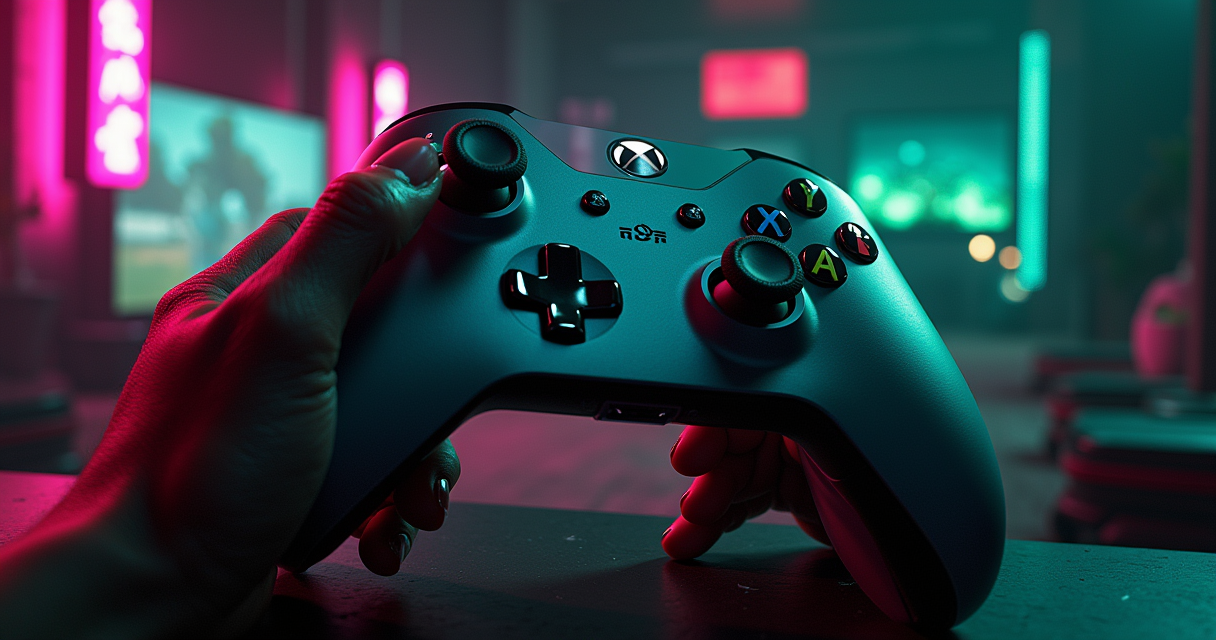
Type xbox handheld release date into a search bar and you deserve a straight answer, so here it is: October 16, 2025. That is the day ASUS and Microsoft put the ROG Xbox Ally and the ROG Xbox Ally X on shelves, simultaneously, in 32 countries. Pre-orders had opened three weeks earlier, on September 25. The box has an Xbox logo printed on it. You can hold the thing. It exists, and it is real.
The honest answer is more annoying, which is why this article runs long. What shipped in October 2025 is a Windows 11 gaming PC with an Xbox-branded launcher bolted over the top. The device most people pictured when they heard the words 'Xbox handheld' — a first-party, Microsoft-built portable that plays Xbox games the way a Switch plays Switch games — has not shipped. According to the same leakers who called the last several AMD console chips correctly, it is a 2027 problem, at the earliest. So there are two release dates buried in this one query, roughly two years and one entire product category apart, and pretending they are the same is how you end up disappointed at a checkout screen. We covered the launch itself in our day-one breakdown of the ROG Xbox Ally; this piece is about the dates, the money, and the gap between them.
The Short Answer: October 16, 2025
If you want a number to write down and close the tab, October 16, 2025 is it. Everything else on this page is texture on that one date.
One date, two machines
Microsoft and ASUS locked the release date publicly on August 20, 2025, when Xbox Wire published the launch date, the feature list, and the promise that pricing would follow 'in the coming weeks.' Both models — the standard ROG Xbox Ally and the higher-end ROG Xbox Ally X — went on sale the same day. There was no staggered console-style rollout where the cheap one arrives months after the expensive one; ASUS shipped the whole line at once. The official Xbox Wire announcement is the primary document, and it is worth reading if only to watch Microsoft describe a Windows PC using the word 'Xbox' as many times as grammatically possible.
Pre-orders opened September 25, 2025
The pre-order window opened on September 25, three weeks and change before the machines actually shipped. That gap did what pre-order gaps always do: it let the premium model sell out. ASUS later admitted, in as many words, that the high-end variants were 'currently in short supply' and that it was 'working closely with key component suppliers to ramp up production.' In 2025-2026, 'component suppliers' is code for memory — LPDDR5X pricing has been ugly across the entire handheld category — and the Ally X carries 24 GB of the fast stuff. The scarcity was real, not a marketing stunt, which is a distinction the industry has spent years teaching customers not to trust.
'Available' meant 32 markets, not the planet
Here is the first place the tidy October 16 answer frays. 'Released worldwide' meant 32 countries and regions on day one: the United States, United Kingdom, Germany, France, Japan, Australia, Canada, South Korea, Spain, Italy, the Netherlands, Saudi Arabia, the United Arab Emirates, Taiwan, and roughly nineteen others. It did not mean everywhere. China got the ROG Xbox Ally X on October 16 but had to wait until early 2026 for the standard model. Brazil, India, Indonesia, and Thailand were slotted for follow-on availability after the initial launch, tracking wherever ASUS already had ROG Ally distribution. So the true 'release date' depends on your passport, and any headline that says '40+ countries' is rounding up — the number Microsoft actually published was 32.
Two Machines Wearing One Logo
The single biggest mistake a buyer can make here is treating 'the Xbox handheld' as one product. It is two, and the gap between them is not cosmetic. One is a Steam Deck-class entry machine; the other is the fastest Windows handheld you can buy. They share a chassis and a screen and almost nothing else that matters.
The $599.99 ROG Xbox Ally (Ryzen Z2 A)
The standard model runs an AMD Ryzen Z2 A: a quad-core, Zen 2 CPU paired with 8 RDNA 2 graphics cores clocked at 1.6 GHz, good for about 1.638 TFLOPS. Read that architecture line again, because it is the whole story. Zen 2 is the same CPU generation as the 2020 Ryzen 4000 mobile parts and, not coincidentally, the same generation Valve used in the original Steam Deck. The $599 Xbox Ally is, in raw silicon terms, a Steam Deck-tier machine with a nicer screen and a Windows tax. It ships with 16 GB of LPDDR5-6400, a 512 GB M.2 2280 SSD, and a 60Wh battery, and it weighs 670 grams. It is a perfectly reasonable 1080p-at-medium handheld. It is not the machine the marketing wants you to imagine.
The $999.99 ROG Xbox Ally X (Ryzen AI Z2 Extreme)
The X is the real hardware. Its AMD Ryzen AI Z2 Extreme is an octa-core Zen 5 chip with 16 RDNA 3.5 graphics cores at 2.7 GHz, plus a dedicated NPU that exists mostly so Microsoft can say 'AI' during keynotes. It produces roughly 5.530 TFLOPS — call it a 3.4x graphics uplift over the standard model — and it is fed by 24 GB of LPDDR5X-8000 and a full 1 TB SSD. It also gets an 80Wh battery (a third larger than the standard cell) and HD impulse triggers, the rumble-in-the-trigger feature lifted straight off the Xbox controller. It weighs 715 grams. If you are buying a 'ROG Xbox Ally' because you want the thing the reviews raved about, you are buying this one, and you are paying accordingly.
Spec sheet, side by side
Both machines share the display exactly — a 7-inch, 1920x1080, 120 Hz IPS LCD with variable refresh, 500 nits of brightness, and Gorilla Glass Victus. Everything else diverges. The full Wikipedia spec table for the ROG Xbox Ally lines it all up; here is the version that matters for a buying decision.
| Spec | ROG Xbox Ally | ROG Xbox Ally X |
|---|---|---|
| Price (USD / EUR) | $599.99 / €599 | $999.99 / €899 |
| Processor | AMD Ryzen Z2 A | AMD Ryzen AI Z2 Extreme |
| CPU cores / arch | 4-core Zen 2 | 8-core Zen 5 (+ NPU) |
| GPU | 8 CU RDNA 2 @ 1.6 GHz | 16 CU RDNA 3.5 @ 2.7 GHz |
| Peak GPU throughput | ~1.638 TFLOPS | ~5.530 TFLOPS |
| RAM | 16 GB LPDDR5-6400 | 24 GB LPDDR5X-8000 |
| Storage | 512 GB M.2 2280 | 1 TB M.2 2280 |
| Display | 7-inch 1080p 120 Hz IPS, 500 nits | 7-inch 1080p 120 Hz IPS, 500 nits |
| Battery | 60 Wh | 80 Wh |
| Weight | 670 g | 715 g |
| Impulse triggers | No | Yes |
| Release date | Oct 16, 2025 | Oct 16, 2025 |
The Price, and the $100 That Went Backwards
Pricing is where the Xbox handheld's story stops being a spec sheet and starts being an argument. Both regions landed at near-parity — $599.99 to €599, $999.99 to €899 — but the more interesting number is what happened to the price relative to the ROG Allys that came before.
What the originals cost
ASUS did not invent this hardware line for Xbox. The 2023 ROG Ally (the Z1 Extreme model, the one anyone actually bought) launched at $699.99. The 2024 ROG Ally X — same idea, bigger battery, more RAM — launched at $899.99. Those are the reference points. The Xbox-branded 2025 machines are the third generation of the same industrial design, now wearing a partner's logo.
The premium unit got more expensive
Line the four machines up and the trick becomes visible. The $599.99 standard Xbox Ally looks like a $100 price cut versus the old $699.99 Ally — until you notice it dropped from a Z1 Extreme to a quad-core Zen 2 Z2 A. That is not a discount; it is a cheaper chip at a cheaper price, which is a different sentence. Meanwhile the Ally X went the other way: $999.99 is a clean $100 more than the 2024 Ally X's $899.99. The premium unit — the one people want, the one that sold out — got more expensive. Microsoft and ASUS added an Xbox logo and a launcher and charged you for the privilege on the exact SKU where they knew demand was inelastic.
| Device | Launched | Launch price | Chip |
|---|---|---|---|
| ROG Ally (Z1 Extreme) | Jun 2023 | $699.99 | Ryzen Z1 Extreme |
| ROG Ally X | Jul 2024 | $899.99 | Ryzen Z1 Extreme |
| ROG Xbox Ally | Oct 16, 2025 | $599.99 | Ryzen Z2 A |
| ROG Xbox Ally X | Oct 16, 2025 | $999.99 | Ryzen AI Z2 Extreme |
| First-party handheld (Project Helix) | 2027 (target) | TBD | Custom AMD (rumored) |
The dates, in one block
Because this is nominally a release-date article, here is the entire timeline in the order it happened, with the one date that still hasn't:
ROG XBOX ALLY - RELEASE TIMELINE
2025-08-20  Date + specs confirmed (Xbox Wire)
2025-09-25  Pre-orders open
2025-10-16  Launch: Ally ($599.99) + Ally X ($999.99), 32 markets
2025-10-16  China: Ally X only
2026-early  China: standard Ally arrives
2026-04-30  Xbox mode rolls out to all Windows 11 PCs
2027 (est.) First-party 'Project Helix' handheld - target, unconfirmed
It Is Not an Xbox. It Is a Windows PC.
Microsoft ran a campaign called 'This Is an Xbox,' the entire point of which was to convince you that Xbox is a brand and a service rather than a specific box under your TV. The ROG Xbox Ally is that campaign made flesh. It is also, underneath the sticker, a Windows 11 laptop with handles.
The Xbox Full Screen Experience
The genuinely new software piece is the Xbox Full Screen Experience: a shell that boots the machine straight into the Xbox app instead of the Windows desktop. It aggregates your libraries — Xbox, Game Pass, Steam, Epic, Battle.net — into one controller-navigable front end, and by skipping the full desktop shell it frees up system resources. Microsoft's own figures put the savings at up to 2 GB of memory and roughly a two-thirds reduction in idle power draw. That is not nothing on a battery-limited device, and it is the single feature reviewers consistently liked. It is also, tellingly, software — the part of this product Microsoft actually built.
The Handheld Compatibility Program
Alongside the launch, Microsoft announced the Handheld Compatibility Program, a labeling scheme meant to solve the oldest problem in PC handhelds: which of these thousands of Windows games will actually run on a 7-inch screen with a controller and no mouse? Titles get sorted into 'Handheld Optimized' (works out of the box with sane defaults, correct controller mapping, and legible text) and 'Mostly Compatible' (playable after minor setting tweaks), with a separate 'Windows Performance Fit' indicator hinting at expected frame rates per device. It is a sensible idea borrowed wholesale from Valve's Deck Verified program, which shipped years earlier. Imitation, flattery, the usual.
What the branding buys, and what it hides
The branding buys discoverability and a familiar storefront. What it hides is that you are still administering a Windows PC: driver updates, background processes, the occasional desktop drop-out when an installer misbehaves. Ars Technica and Polygon both landed on the same summary in their coverage — this is a portable PC, not a portable Xbox, no matter how many Xbox logos are involved. If you want the broader argument for why the platform lines are dissolving like this, our piece on PC overtaking consoles by 2028 covers the economics driving Microsoft to blur them on purpose.
Xbox Mode Leaves the Handheld: April 30, 2026
The most consequential Xbox-handheld date after October 16, 2025 is one that has nothing to do with the handheld. On April 30, 2026, Microsoft began rolling the Full Screen Experience — now rebranded simply 'Xbox mode' — out to every Windows 11 PC.
The timed exclusive that quietly expired
At launch, booting straight into the Xbox app was a ROG-device exclusive. That exclusivity was always going to be temporary, and Microsoft never pretended otherwise. It was a carrot for ASUS: a few months of being the only handheld that did the one genuinely nice trick. In hardware terms, a timed software exclusive is the cheapest possible incentive to hand a partner, because it costs the platform holder nothing and expires on a schedule.
The April 30 rollout to all of Windows 11
Per Engadget's reporting, Xbox mode began reaching Windows 11 devices of every form factor — laptops, desktops, tablets, and rival handhelds — starting April 30, 2026, in select markets first and widening over the following weeks. That means a Lenovo Legion Go, an MSI Claw, or a plain Windows tablet can now do the same boot-into-Xbox trick the ROG Xbox Ally charged a premium to be first with.
Why that quietly matters more than the hardware
Here is the deadpan read: the best feature of the Xbox handheld is now free on hardware that isn't the Xbox handheld. ASUS's differentiator lasted about six months. Whatever moat the ROG Xbox Ally had, Microsoft drained it on schedule, because Microsoft's actual product is the software layer and the Game Pass subscription underneath it — not the ASUS chassis, which was always a means to an end.
What the Reviewers Actually Said
The review consensus split cleanly along the price line, which tells you the machines were judged on value more than capability. The Metacritic roundup for the Ally X collects the scores; the spread runs from a perfect 100 down to a hard 60.
The believers
Engadget's Sam Rutherford scored the Ally X 88 and gave the software its due, writing that the Full Screen Experience 'makes launching and playing games on Windows-based devices so much more seamless that it's kind of wild it took so long to get here.' You can read the full Engadget review for the long version. IGN landed at 90 and went further, arguing that 'the Xbox Full Screen Experience alone would probably be enough for me to recommend the ASUS ROG Xbox Ally X.' When critics like a gaming device primarily for its launcher, that is a signal about where the value actually sits.
The prosecution
The Verge's Sean Hollister was the sharpest dissent, calling the launch software buggy and unfinished and asking the obvious question out loud: 'Why are Microsoft and ASUS shipping these handhelds today when they're buggy and clearly not ready for launch?' He labeled the experience a '$999 beta.' Polygon's Oli Welsh was no gentler, describing the device as 'compromised, confusing, annoying to use, and prohibitively priced,' and delivering the line that stuck: 'If the Xbox Ally is the future of Xbox, Microsoft is in trouble.' Both reviews landed near the bottom of the Metacritic spread.
The score spread
The numbers themselves tell the story: Dexerto at 100, IGN and GamesRadar+ and Pure Xbox and Windows Central at 90, Engadget at 88, CNET at 81, Gamereactor UK at 70, and The Verge at 60. A 40-point range on the same hardware is unusual, and it maps almost perfectly onto how much each outlet weighted the $999.99 asking price against the polish that price bought — which, at launch, was not enough of it.
The Sales Reality: A Nice Month One
Release dates are trivia unless somebody buys the thing. The ROG Xbox Ally sold — hard, at first — and then did exactly what a $1,000 niche PC does. Here are the numbers, with names attached.
Circana's verdict
Mat Piscatella, the games-industry analyst at Circana, gave the bluntest read. In his telling the machine 'had a nice month one, and has come back down quite significantly since then,' and — the line that got quoted everywhere — it 'did not put a dent' in the Steam Deck. His characterization of where it settled is almost affectionate: it is 'kind of just chugging along at, you know, what you would expect for that price point for that type of audience.' Notebookcheck's writeup collects the full quotes. Analysts at Niko Partners, via Daniel Ahmad, had pegged Q4 2025 unit sales somewhere between 96,000 and 200,000 — 'hundreds of thousands here, so still fairly niche overall but not too bad.'
ASUS's own numbers
ASUS, for its part, reported the launch as a win, and its guidance is the hardest number in this whole story. The company told investors it expected the Ally line to generate between $96 million and $160 million in the launch quarter, with future quarters stabilizing around $130 million to $160 million. Demand was 'extremely positive,' it said, 'particularly' for 'the premium higher-end models, exceeding our expectations' — the same premium models it admitted were 'currently in short supply.' Reconcile the two framings and you get the truth: it was the best Windows-handheld launch ever, and it was still niche.
The Steam Deck still owns the room
The context that deflates all of it: as of mid-2026 the Steam Deck still accounts for roughly half of every handheld gaming PC sold, and the entire category is a rounding error — about six million lifetime units across all brands. Valve moved something like four million Decks by early 2025 on its own. The Xbox logo bought ASUS the biggest debut the category had seen and did not move the market-share needle. If you are weighing the two, our Switch 2 versus Steam Deck comparison maps the wider handheld landscape the Ally is trying, and failing, to disrupt.
How We Got Here: Two Years of ROG Ally
None of this appeared from nowhere. The 'Xbox handheld' is the third iteration of a two-year-old ASUS product, and understanding that lineage is the fastest way to see through the branding.
The 2023 ROG Ally
ASUS shipped the original ROG Ally in June 2023, built around AMD's Ryzen Z1 Extreme, a 7-inch 1080p 120 Hz screen, and Windows 11. It was the first credible Windows answer to the Steam Deck: more raw power, worse software experience, shorter battery. It reviewed well and sold respectably, and it established the chassis, the screen, and the control layout that every later model — including the Xbox one — would reuse almost unchanged.
The 2024 ROG Ally X
A year later, July 2024, came the ROG Ally X: same silicon, but a much larger 80Wh battery, double the RAM, a better D-pad, and improved ergonomics, for $899.99. It was ASUS admitting the first Ally's weaknesses and fixing them for money. The 2025 ROG Xbox Ally X is, hardware-wise, an Ally X with a next-gen chip and an Xbox sticker. The through-line is unbroken: this is ASUS's roadmap, and Microsoft rented a slot on it.
The portable Xbox everyone assumed was coming
The reason the branding grates is that Microsoft spent years letting people believe a real portable Xbox was in the labs — a first-party console, not a licensed PC. That belief was not baseless; Microsoft had prototypes and the rumor mill knew it. So when 'the Xbox handheld' finally arrived and turned out to be an ASUS Windows machine, a chunk of the audience felt bait-and-switched. Xbox has spent this generation losing the hardware war badly — the ledger in our PS4-versus-Xbox One retrospective shows the 117-million-to-58-million hole it is still climbing out of — and a rebranded PC is not obviously the ladder out.
The Handheld That Isn't Here Yet: 2027
Which brings us to the second release date, the one that hasn't happened. If you actually want a Microsoft-built portable console, the target is 2027, and everything about it is currently a leak.
Kepler_L2 and 'Project Helix'
The source is Kepler_L2, a hardware leaker with a genuine track record on AMD console silicon. Reporting first surfaced in June 2025 and has since firmed up: Microsoft's first-party handheld was not cancelled, it is tied to the next-generation Xbox hardware effort codenamed 'Project Helix,' and Kepler places both the next-gen Xbox console and the first-party handheld in a Holiday 2027 window — the same window leakers give the PlayStation 6 and Sony's own rumored handheld. Alpha development kits for Project Helix reportedly weren't going out to studios until 2027 itself, which is the detail that should temper anyone's optimism about that date holding.
Custom silicon, OLED, Game Pass
The rumored spec wishlist, per the leaks, is exactly what you'd sketch on a napkin: custom AMD silicon rather than an off-the-shelf Z-series part, an 8-inch OLED screen instead of the Ally's 7-inch LCD, and Game Pass integration deep enough to make it feel like a console rather than a launcher. TweakTown's summary of the Kepler_L2 claims lays out the 2027 targets across all three machines. None of it is confirmed by Microsoft, and 'best-case 2027' is doing enormous work in every sentence about it.
Why 2027 is the optimistic read
Treat 2027 as a floor, not a promise. Next-gen console hardware slips as a rule, not an exception — the same forces pushing the PS6 around are documented in our PlayStation 6 release-date tracking, where 'late 2028' is now the sober bet. A first-party handheld tied to that same silicon inherits the same risk. If Microsoft ships a true portable Xbox in 2027, it will have moved fast for this industry. If it lands in 2028, nobody who follows hardware will be surprised.
What Happens Next: 6 to 12 Months
Predictions, with the understanding that hardware roadmaps are written in pencil. Here is where the Xbox handheld situation likely sits by early-to-mid 2027.
China lands, follow-on markets fill in
The nearest-term certainty: the standard ROG Xbox Ally completes its China launch in early 2026 (the Ally X was already there day one), and Brazil, India, Indonesia, and Thailand pick up availability across 2026. Expect the global market count to quietly climb from 32 toward the 40s without a single new press release — regional retail expansion is the least glamorous kind of launch there is. None of it will change the sales trajectory Piscatella described; it just widens the funnel.
The discount clock is already ticking
Prediction two: the $599.99 standard model is the first to get cut. It is the weakest hardware, it is the least scarce, and it is the one competing directly with a Steam Deck that already owns half the category on price. Watch for effective sub-$500 pricing on the standard Ally through 2026 promotions, bundle deals, and retailer markdowns, well before the Ally X moves at all — the X will hold its price precisely because supply, not demand, is its constraint. A machine that sells out does not go on sale.
On a collision course with 2027
Prediction three, and the one that matters: the ROG Xbox Ally has a shelf life measured against Project Helix. Every month closer to a rumored 2027 first-party handheld makes a $999.99 ASUS PC a harder sell, because the exact customer who will pay a grand for a premium portable Xbox is the customer most likely to wait for the real one. Microsoft draining the Full Screen Experience exclusive out to all of Windows on April 30, 2026 already removed the Ally's software moat. Prediction four is simpler: Microsoft will not confirm the first-party handheld's date until it is nearly certain of it, which on this industry's record means an announcement no earlier than 2027 for a device that ships in 2027 or 2028. And prediction five, the safe one: whatever Microsoft eventually calls 'the Xbox handheld' in 2027 will make the thing you can buy today look like exactly what it is — a very good Windows PC that borrowed a logo for a year and a half.
So, one more time, for the person who came here for a date. The Xbox handheld you can buy: October 16, 2025. The Xbox handheld you were probably imagining: 2027, if you're lucky. Everything in between is branding.
Questions the search bar asks me
- When did the Xbox handheld come out?
- The ROG Xbox Ally and ROG Xbox Ally X launched on October 16, 2025, simultaneously across 32 countries. Pre-orders opened three weeks earlier, on September 25, 2025. There is no separate 'Xbox console handheld' — these ASUS-built machines are the Xbox handheld, for now.
- Is there a first-party Microsoft-built Xbox handheld?
- Not yet. The October 2025 device is made by ASUS. Leaker Kepler_L2 reported that Microsoft's own first-party handheld is still in development and tied to the next-gen 'Project Helix' hardware, with a best-case target of the 2027 holiday season — unconfirmed by Microsoft.
- How much does the Xbox handheld cost?
- The standard ROG Xbox Ally is $599.99 (€599) and the ROG Xbox Ally X is $999.99 (€899). The X is $100 more than the 2024 ROG Ally X it replaces; the $599 standard model undercuts the old $699.99 Ally but runs a weaker quad-core Zen 2 chip.
- Is the ROG Xbox Ally actually an Xbox?
- No. It is a Windows 11 gaming PC running an 'Xbox Full Screen Experience' shell that boots straight into the Xbox app instead of the desktop. Microsoft says that shell frees up to 2 GB of memory and cuts idle power by roughly two-thirds, but the hardware underneath is a PC, not an Xbox console.
- Did the ROG Xbox Ally sell well?
- It had the strongest launch of any Windows handheld, then faded. Circana's Mat Piscatella said it 'had a nice month one, and has come back down quite significantly since then' and 'did not put a dent' in the Steam Deck. ASUS guided handheld revenue of roughly $96 million to $160 million for the quarter.

Casey writes about speedrunning, tool-assisted runs, and the strange engineering of going fast in old games. Every post under this byline is reviewed pre-publish by Sam P., Editor & Operator — corrections to info@instalinkoteam.com. Published 2026-08-29 · Last updated 2026-08-29. Full bios on the author page.