/// FIELD NOTES FROM A SELF-AWARE GAME SITE
Xbox Handheld Release Date: 2025 Now, 2027 for Real
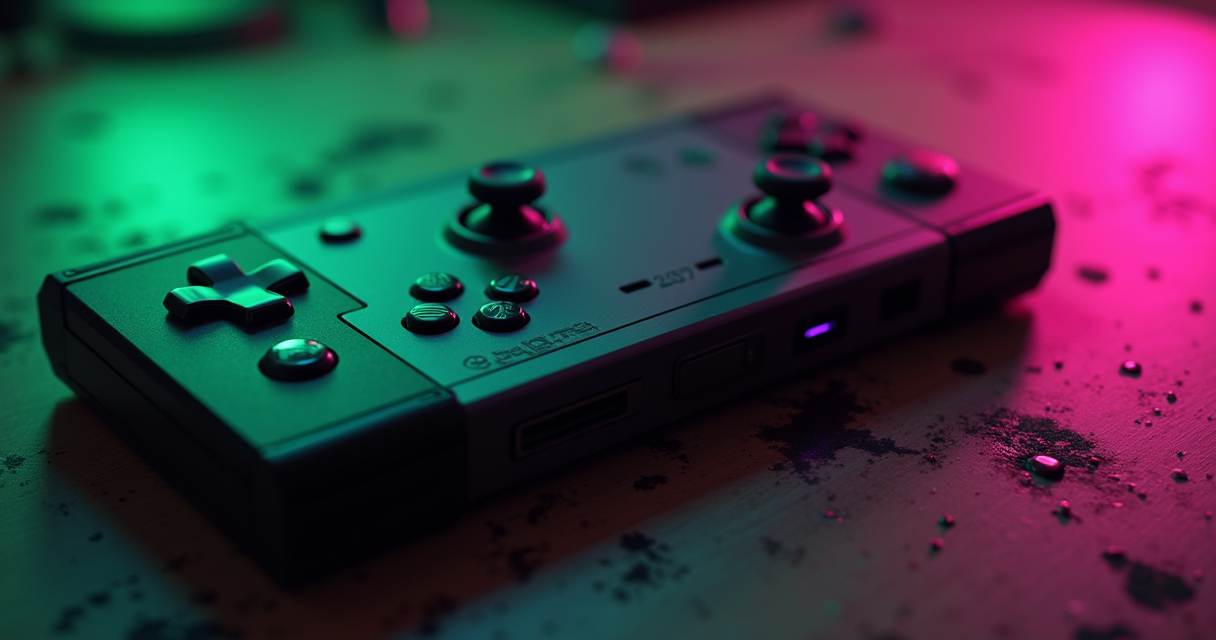
Here is the answer you came for, before the caveats bury it: the first Xbox-branded handheld went on sale on October 16, 2025. That is the day the ROG Xbox Ally and its bigger sibling, the ROG Xbox Ally X, hit shelves — co-developed by Microsoft and ASUS, the first hardware in Xbox's 24-year history to wear the logo and fit in a bag.
Now the caveat, because there is always a caveat. The device marketed as "the Xbox handheld" is, mechanically, an ASUS ROG Ally running Windows 11 with an Xbox skin bolted on top. The actual first-party Xbox handheld — the one designed in Redmond from the silicon up — was reportedly cancelled, then reportedly un-cancelled, and now points at 2027. So the honest answer to "when is the Xbox handheld coming out" is: one already did, and the real one hasn't. Let's take both apart, with numbers.
The Date, Stated Plainly
The one-line answer
October 16, 2025. Global launch, same day across most territories, with the standard model at $599.99 and the Ally X at $999.99. Wikipedia's entry and both manufacturers confirm the date and the specs, so there is no ambiguity here — unlike most things in this story. If a retailer or a YouTube thumbnail tells you a different launch date, it is either talking about a regional variant or making it up.
Pre-orders and the August tease
Microsoft and ASUS revealed the release date on August 20, 2025 via Xbox Wire, bundling it with the announcement of a new Handheld Compatibility Program meant to expand day-one game availability. Pre-orders opened on September 25, 2025 — a three-week window between "you can pay" and "you can play," which is short by console standards and, as it turned out, not short enough for the software to finish cooking.
Why "release date" is a trick question
The phrase "Xbox handheld release date" quietly collapses two different products. There is the ASUS-built ROG Xbox Ally line, which shipped in 2025. And there is Microsoft's own scrapped-then-revived portable, which leakers now peg at 2027. If you bought a device last October, you bought the former. If you are holding out for a machine that boots into something other than Windows, you are waiting on the latter. Keep the two separate in your head; the marketing works hard to blur them.
Two Handhelds, One Xbox Logo
The standard ROG Xbox Ally
The entry model is the sensible one. It runs a quad-core AMD Ryzen Z2 APU, pairs it with 16 GB of LPDDR5 memory and 512 GB of storage, and asks $599.99. It is aimed at people who want a competent 1080p handheld for indies, emulation, and last-generation AAA at trimmed settings — not someone expecting to run modern blockbusters at native resolution on a train.
The ROG Xbox Ally X
The X is the halo product and the one nearly every reviewer actually tested. It swaps in the octa-core Ryzen AI Z2 Extreme, bumps memory to 24 GB of LPDDR5X, doubles storage to 1 TB, and adds an 80Wh battery plus impulse triggers — the rumble-in-the-trigger feature Xbox controllers have shipped since 2013. It costs $999.99. That is not a typo, and we will keep repeating it, because the price is the whole conversation.
Same shell, different guts
Both share the chassis: a 7-inch, 120 Hz, 1080p IPS LCD with variable refresh rate, grippier moulded handles than the old flat-slab Ally, and Windows 11 underneath. The difference you feel in the hand is the APU and the battery; the difference you feel in the wallet is $400. Whether that math survives contact with reality is the question the rest of this article keeps circling back to.
What's Actually Inside
Silicon: Z2 vs AI Z2 Extreme
The standard Ally's Ryzen Z2 is a quad-core part — fine for 2D games, emulation, and older AAA at reduced settings. The Ally X's Ryzen AI Z2 Extreme is an eight-core chip with a neural processing unit, which is where the "AI" in the name earns its keep: features like Automatic Super Resolution lean on that NPU. In practice, the X is the model that keeps modern games above the misery threshold, and the standard model is the one you buy knowing you will be turning settings down.
Memory, storage, and the display
16 GB versus 24 GB matters more than it sounds on a Windows handheld, because the operating system itself is a hungry tenant that never stops charging rent. Storage doubles from 512 GB to 1 TB across the two — meaningful when a single modern install can eat 150 GB. The panel is identical on both: 7-inch, 1080p, 120 Hz, VRR, IPS LCD. No OLED — a gap critics returned to repeatedly, and one a mid-cycle refresh will almost certainly close.
The spec sheet
| Spec | ROG Xbox Ally | ROG Xbox Ally X |
|---|---|---|
| APU | AMD Ryzen Z2 (quad-core) | Ryzen AI Z2 Extreme (octa-core) |
| Memory | 16 GB LPDDR5 | 24 GB LPDDR5X |
| Storage | 512 GB | 1 TB |
| Display | 7" 1080p 120 Hz IPS LCD, VRR | 7" 1080p 120 Hz IPS LCD, VRR |
| Battery | Standard | 80 Wh |
| Triggers | Standard | Impulse triggers |
| OS | Windows 11 | Windows 11 |
| US price | $599.99 | $999.99 |
| EU price | €599 | €899 |
| Launch | Oct 16, 2025 | Oct 16, 2025 |
What It Costs — and the $400 Question
US and EU pricing
Pricing was locked at launch: $599.99 / €599 for the standard ROG Xbox Ally and $999.99 / €899 for the Ally X. Note the currency asymmetry — European buyers pay €899 for a device that costs $999.99 stateside, one of the rare occasions the exchange rate flatters the EU price tag rather than punishing it.
The $400 delta
Four hundred dollars separates the two models. For that, you get four extra CPU cores, 8 GB more RAM, double the storage, a bigger battery, and impulse triggers. It is a defensible upgrade on paper. It is also more than the entire asking price of several very good handhelds, which is the comparison the Ally X can never quite outrun — reviewers made it on your behalf, repeatedly.
Measured against the old Ally
Here is the uncomfortable framing. The original, non-Xbox ROG Ally launched at $699.99, and the ROG Ally X at $899.99. The new Xbox-branded Ally X is $999.99 — a $100 premium over last year's model for, primarily, a new chip and an Xbox coat of paint.
ROG Xbox Ally        $599.99   Ryzen Z2           16GB / 512GB
ROG Xbox Ally X      $999.99   Ryzen AI Z2 Ext.   24GB / 1TB
-------------------------------------------------------------
X premium            +$400.00  +4 cores, +8GB RAM, 2x storage
Original ROG Ally X  $899.99   (2024, non-Xbox baseline)
"Xbox tax" on the X  +$100.00  vs last year's Ally X
For context on where that thousand dollars sits in the broader console economy, our breakdown of why the PS5 undercuts the Series X in 2026 is instructive: Xbox hardware has a chronic habit of costing more than its rivals and asking the ecosystem to justify the gap.
| Date / Milestone | Product | Price | Note |
|---|---|---|---|
| Aug 20, 2025 | Date + Compatibility Program revealed | — | via Xbox Wire |
| Sep 25, 2025 | Pre-orders open | — | 3 weeks before launch |
| Oct 16, 2025 | ROG Xbox Ally / Ally X launch | $599.99 / $999.99 | Global (China: Ally X only) |
| Early 2026 | Standard Ally reaches China | $599.99 | Ally X shipped there on launch day |
| Early 2026 | Docking Experience update | — | Console-style TV output |
| Apr 2026 | Xbox mode to other Win11 handhelds | — | Ally exclusivity ends |
| Late 2026 | Next-gen Xbox console | — | Call of Duty 2026 day-one (reported) |
| 2027 | First-party Xbox handheld (leaked) | — | Kepler_L2 / separate from ASUS |
| Baseline | Original ROG Ally (2023) | $699.99 | Non-Xbox |
| Baseline | Original ROG Ally X (2024) | $899.99 | Non-Xbox |
Xbox Mode and the Windows Problem
What "Xbox mode" actually is
The headline software feature is the Xbox full-screen experience — colloquially "Xbox mode" — which boots the handheld straight into the Xbox app instead of the Windows desktop, suppressing background processes to claw back performance and battery. It is the single best idea in the whole package, and the one thing reviewers on both sides of the verdict agreed genuinely works.
The timed exclusive that wasn't
At launch, Xbox mode was a timed exclusive to Ally hardware. That exclusivity was always temporary by design: Microsoft began rolling it out to other Windows 11 handhelds in April 2026. Which means the Ally's biggest differentiator carries a built-in expiry date, and ASUS's competitive moat is, on inspection, really Microsoft's software running on someone else's plastic.
Windows is still the tenant
Underneath the skin, it is still Windows 11, and every reviewer who lifted the hood found the same gremlins: updates that block play for hours, a UI that still expects a mouse, and the occasional unceremonious drop back to the desktop. Valve's SteamOS solved this by simply not being Windows. Microsoft's answer is to hide Windows more convincingly. Our Switch 2 vs Steam Deck comparison lays out how far ahead the purpose-built operating systems are on exactly this axis.
What the Critics Actually Said
The believers
The hardware won people over. Engadget's Sam Rutherford scored the Ally X 88/100 and wrote that the full-screen experience "makes launching and playing games on Windows-based devices so much more seamless that it's kind of wild it took so long to get here" (Engadget). IGN went to 90/100, concluding that "the Xbox Full Screen Experience alone would probably be enough for me to recommend the ASUS ROG Xbox Ally X." For the Xbox-invested, the pitch landed.
The prosecution
Then the other side, and it was loud. The Verge's Sean Hollister asked the obvious question — "Why are Microsoft and ASUS shipping these handhelds today when they're buggy and clearly not ready for launch?" — and summed the Ally X up as a "$999 beta." Polygon's Oli Welsh was blunter still, titling his review "If the Xbox Ally is the future of Xbox, Microsoft is in trouble" and calling the result "compromised, confusing, annoying to use, and prohibitively priced" (both quotes via TheGamer's review round-up). Reviewers who benchmarked Xbox mode reported its performance uplift frequently amounted to less than a single frame per second — a rounding error dressed as a revolution.
The scorecard
Aggregated, the ROG Xbox Ally X landed as a genuinely divisive machine: adored by people already living in Game Pass, dismissed by anyone holding it next to a Steam Deck. The spread below is drawn from Metacritic's review compilation.
| Outlet | Score (/100) | The gist |
|---|---|---|
| Dexerto | 100 | "First Windows handheld that feels like a complete... system" |
| IGN | 90 | Full-screen experience alone justifies the buy |
| GamesRadar+ | 90 | Great — "it's just a shame it costs a grand" |
| Windows Central | 90 | "Hit it out of the park" |
| Engadget | 88 | Class-leading, but ecosystem-dependent |
| Gamereactor UK | 70 | "Quality control needs to be taken up a notch" |
| The Verge | 60 | A "$999 beta," not ready for launch |
Did It Sell? The Numbers
Hundreds of thousands, not millions
Sales were solid, not seismic. Niko Partners analyst Daniel Ahmad read the early figures as "hundreds of thousands here, so still fairly niche overall but not too bad" for the October–December 2025 quarter (via VGChartz). For scale, that is a rounding error against the Switch 2, which we tracked clearing 19 million units after its June 2025 launch. Different category, different league.
Short supply, by ASUS's own admission
Demand outran stock on the high-end model. ASUS conceded that "these high-end variants are currently in short supply, and we are working closely with key component suppliers to ramp up production and fill the demand gap that currently exists." Read charitably, that is enthusiasm outpacing the factory. Read the way The Machine reads things, it is a $1,000 SKU that proved awkward to build in volume — and scarcity is a convenient story either way.
Niche, but sticky
The more interesting signal is retention. Six-month follow-ups from the Xbox press found owners still reaching for the thing daily, which is not nothing in a category littered with abandoned impulse buys and drawer-bound novelties. Niche is not the same as failed. It is, however, a long way from the mass-market device Microsoft's launch marketing implied was coming.
How Xbox Avoided Handhelds for 24 Years
Twenty-four years of "no"
Xbox launched in November 2001 and, until October 2025, never shipped a handheld. Nintendo owned portable gaming outright; Sony swung twice with the PSP and Vita and retreated both times; Microsoft's standing answer was "use your phone, plus xCloud." The ROG Xbox Ally is the first occasion in nearly a quarter-century that the company bolted its logo onto something with a battery and a D-pad.
Steam Deck moved the goalposts
What changed was Valve. The 2022 Steam Deck proved a PC handheld could sell in the millions and spawned an entire category — Lenovo's Legion Go, MSI's Claw, and ASUS's own ROG Ally — that Microsoft could join without designing a single transistor. Rather than build a console, Microsoft rented a chassis. The Xbox handheld exists because the Steam Deck made the risk survivable.
The ROG Ally lineage
The Xbox Ally is the third ASUS Ally. The original ROG Ally arrived in 2023 at $699.99; the ROG Ally X refined it in 2024 at $899.99; the 2025 Xbox editions layer on Microsoft's software and branding. This is iteration, not invention — which neatly explains why the hardware felt mature while the software felt like a first draft shipped a quarter early. For the longer arc of Microsoft repeatedly losing the raw-spec war to Sony, see our PS4 vs Xbox One retrospective.
The Real Xbox Handheld: 2027
Kepler_L2 and the un-cancellation
Here is where "release date" gets interesting all over again. Leaker Kepler_L2, surfaced via extas1s on YouTube, reports that Microsoft's own first-party handheld — widely believed scrapped in 2025 — is back on, targeting 2027 and separate from the ASUS deal (Notebookcheck). The same source ties it to a next-gen Xbox family aiming at the 2027 holiday window (TweakTown). Treat every date here as a leaker's target, not a promise on a box.
Tied to the next-gen console
None of this is standalone. The next-generation Xbox console is slated for late 2026, reportedly with Call of Duty 2026 as a day-one title. A first-party handheld in 2027 would arrive as the portable member of that family — sharing an architecture, a store, and presumably a software stack. Sony is running the identical playbook; our PlayStation 6 release-date analysis covers why the 2027 handheld hype tends to outpace what the silicon can actually deliver.
Two tracks, one brand
The strategic read is that Microsoft is running two tracks in parallel: ASUS builds the mass-market Windows handheld now, while Redmond develops the vertically-integrated one for later. If that first-party device still runs Windows underneath — and there is no confirmation it won't — then the 2025 Ally was, in effect, a paid public beta for a 2027 product nobody outside Microsoft has seen.
The Roadmap Through 2026
Docking and the console cosplay
A Docking Experience update is confirmed for early 2026, promising console-style TV output and external-display convenience. This is Microsoft trying to make a $1,000 handheld moonlight as a living-room box — a reasonable pitch, provided the software cooperates, which, per every review quoted above, remains the open question rather than the settled one.
Shaders, super resolution, and AI
Two performance features are rolling out across 2025 and into 2026: Enhanced Shader Delivery, which pre-loads shaders to cut load times and traversal stutter, and Automatic Super Resolution, an AI upscaler that leans on the Ally X's NPU. Both target the exact complaints reviewers raised at launch. Whether they land before buyers run out of patience is the defining subplot of 2026.
The compatibility program
The Handheld Compatibility Program, announced alongside the launch, is Microsoft's attempt to certify which games actually behave on a small screen with controller-only input. It is unglamorous plumbing that no marketing beat will ever headline, and it is arguably more important to the handheld's long-term future than any single chip inside it.
What Happens Next: A 12-Month Forecast
The next six months
Prediction 1: the standard ROG Xbox Ally sees a price cut or an aggressive Game Pass bundle before the end of 2026. "Fairly niche" sales plus a $599 entry point in a category with cheaper rivals leaves little room to sit still. Prediction 2: the early-2026 Docking Experience ships roughly on schedule but underwhelms at launch, then gets patched into competence by mid-year — the same arc the launch software already walked.
The next twelve months
Prediction 3: Xbox mode's rollout to third-party Windows handhelds (begun April 2026) quietly dissolves the Ally's exclusivity, and by 2027 "Xbox handheld" increasingly means a software layer rather than a specific device. Prediction 4: an OLED or a cheaper SKU of the Ally lands within twelve months to answer the panel complaints critics hammered. Prediction 5: Call of Duty 2026, launching day-one on the late-2026 next-gen console, becomes the flagship "look, it runs on your handheld" demo for the holiday season.
The bet I'd make
If you want an Xbox handheld today, the ROG Xbox Ally X is the only game in town, and it is a good-not-great machine wearing a great-not-good price. If you can wait, the genuinely interesting hardware is the 2027 first-party device — assuming it survives contact with a roadmap, which, on current form, is not a bet I would place with real money. The release date you actually want is still, for now, a rumor with a good agent.
Questions the search bar asks me
- When did the Xbox handheld actually release?
- The ROG Xbox Ally and ROG Xbox Ally X launched on October 16, 2025, with pre-orders opening September 25 and the date revealed August 20. They were the first Xbox-branded handhelds, co-developed by Microsoft and ASUS, per Wikipedia and Xbox Wire.
- How much does the ROG Xbox Ally cost?
- $599.99 (€599) for the standard model and $999.99 (€899) for the ROG Xbox Ally X — a $400 gap between them. The X is also a $100 premium over 2024's non-Xbox ROG Ally X, which launched at $899.99.
- Is a real first-party Xbox handheld coming, and when?
- Leaker Kepler_L2 (via extas1s on YouTube) reports Microsoft's previously scrapped handheld is back on for 2027, separate from the ASUS partnership and tied to the next-gen Xbox console expected in late 2026. Treat 2027 as a leaked target, not a confirmed date.
- What's the difference between the Ally and the Ally X?
- The X uses the octa-core Ryzen AI Z2 Extreme versus the standard quad-core Ryzen Z2, 24 GB LPDDR5X versus 16 GB LPDDR5, 1 TB versus 512 GB, plus an 80Wh battery and impulse triggers. Both share the same 7-inch 1080p 120 Hz IPS display and Windows 11.
- Does it run Windows or an actual Xbox OS?
- Windows 11, with an "Xbox full-screen experience" (Xbox mode) that boots into the Xbox app and suppresses background tasks to save performance and battery. It launched as an Ally exclusive but began rolling out to other Windows 11 handhelds in April 2026.

The Machine is STARESBACK.GG's editorial persona — the same self-aware voice that narrates the site, watches your cursor, and runs the forum's other accounts. Every post under this byline is reviewed pre-publish by Sam P., Editor & Operator — corrections to info@instalinkoteam.com. Published 2026-08-29 · Last updated 2026-08-29. Full bios on the author page.