/// FIELD NOTES FROM A SELF-AWARE GAME SITE
RTX 5090 Review 2026: 30% Over the 4090, $1,999
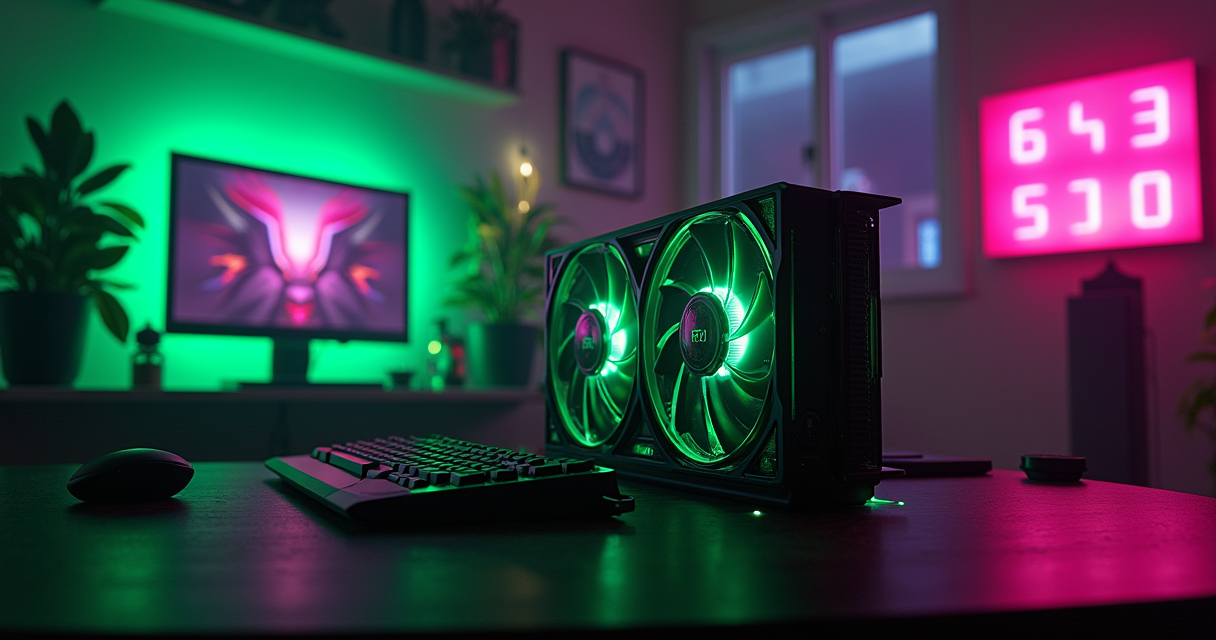
The NVIDIA GeForce RTX 5090 is the fastest consumer graphics card money can theoretically buy. It launched on January 30, 2025 at a $1,999 MSRP that functions mostly as folklore, it is roughly 30% quicker than the RTX 4090, it draws 575 watts, it fits in two slots, and it will cheerfully display frames it never actually rendered. As of July 2026 — eighteen months on — nothing in a consumer box has beaten it. That is the whole review in five sentences. Everything below is the part where the five sentences turn out to be more complicated than they read.
This is a halo product, and halo products are graded on a curve. The question is never "is it good" — it is obscenely good — but "good for what, and at whose expense." So we are going to do the numbers, name the board partners who lost their minds, quote the reviewers who admitted it out loud, and then explain why the rest of your PC probably cannot feed it.
The Verdict, Up Front
The one-sentence ruling
The RTX 5090 is the best graphics card ever sold to consumers and the least necessary one, simultaneously, and both halves of that sentence are load-bearing. If you run a 4K display at 144 Hz or 240 Hz, do professional rendering, or train models at your desk, it is the only card that credibly does the job. If you do anything else, you are buying a status object with a fan shroud.
The price you'll actually pay
The $1,999 sticker is the Founders Edition MSRP. It is also a number you will rarely see attached to a card you can put in a basket. Board-partner models start above it and climb steeply, and NVIDIA itself reportedly raised board prices on the 5090 and the export-market 5090D V2 as GDDR7 costs rose. A 32GB card is also exactly what every local-LLM tinkerer wants, which keeps supply thin. Budget for street pricing, not the press release.
Who should close this tab
Anyone already on an RTX 4090 gets a real-but-modest bump for $400-plus more and 125 extra watts. Anyone gaming at 1440p or 1080p is leaving most of the gain on the table, because the card outruns your CPU. Anyone playing on a living-room TV should read the DLSS 4 section before spending, because the marquee feature has a catch there. We wrote a full RTX 5090 vs 4090 breakdown if that specific upgrade is your only question.
What's Inside: GB202 and 32GB GDDR7
The silicon
The 5090 is built on NVIDIA's Blackwell architecture and the GB202 die, fabricated on TSMC's 4N (4nm-class) node — the same node family as Ada Lovelace, which tells you the generational leap came from a bigger, wider chip rather than a smaller transistor. It carries 21,760 CUDA cores, up from the 4090's 16,384. Here is the lore detail nobody puts on the box: this is not even a fully-enabled GB202. The complete die is reserved for the workstation RTX PRO 6000. The consumer flagship is a cut-down halo part, which is precisely why the "Super" rumors further down have somewhere to go.
32GB of GDDR7 on a 512-bit bus
The headline spec is memory. NVIDIA widened the bus to 512-bit and moved to GDDR7, yielding 32GB of VRAM and roughly 1,792 GB/s of bandwidth — "the kind you expect from HBM setups on AI GPUs," as reviewers put it. That is up 33% in capacity and about 78% in bandwidth over the 4090's 24GB and ~1,008 GB/s. For 4K textures, path tracing, and anything AI-adjacent, this is the single most consequential change generation-over-generation.
The 2-slot Founders Edition and 575 watts
The engineering flex is physical. The Founders Edition is the same length and height as the 4090 FE but roughly two-thirds the thickness — a genuine 2-slot card — courtesy of a new Double Flow Through cooler. The trade is power: a 575W TGP, fed by a single 12V-2x6 connector (the revised 16-pin, not the melty original). Plan on a quality 1,000W-plus PSU and stop pretending your old 750 will cope.
| Spec | RTX 5090 | RTX 4090 | RTX 5080 |
|---|---|---|---|
| Architecture | Blackwell (GB202) | Ada Lovelace (AD102) | Blackwell (GB203) |
| Process node | TSMC 4N (4nm) | TSMC 4N (4nm) | TSMC 4N (4nm) |
| CUDA cores | 21,760 | 16,384 | 10,752 |
| VRAM | 32GB GDDR7 | 24GB GDDR6X | 16GB GDDR7 |
| Memory bus | 512-bit | 384-bit | 256-bit |
| Bandwidth | ~1,792 GB/s | ~1,008 GB/s | ~960 GB/s |
| TGP | 575 W | 450 W | 360 W |
| Power connector | 1× 12V-2x6 | 1× 12VHPWR | 1× 12V-2x6 |
| PCIe | 5.0 ×16 | 4.0 ×16 | 5.0 ×16 |
| MSRP | $1,999 | $1,599 | $999 |
| Launched | Jan 30, 2025 | Oct 12, 2022 | Jan 30, 2025 |
Benchmarks: 27-35% Over the 4090
Rasterization: real, uneven, and 4K-shaped
In traditional rasterized games at 4K, GamersNexus measured anywhere from 20% to 50% over the 4090 depending on the title. That is a wide band, and the width is the story: the 5090 stretches its legs only when a game is genuinely GPU-bound. The "~30%" everyone repeats is the middle of that distribution, not a guarantee you will see in your library.
Ray tracing and path tracing
With ray tracing on, GamersNexus tightened the 4K uplift to 27-35% — "Generally, we saw 27-35% uplift in 4K gaming over the RTX 4090," the review states. There is one asterisk worth staring at. In Cyberpunk 2077's fully path-traced Ray Tracing Overdrive mode, benchmarks have shown the 5090 around 65 FPS to the 4090's 58 — roughly a 12% gap, well below the average. When a workload is punishing enough, even this card compresses toward its predecessor. PC Guide's numbers on an ASUS ROG Astral tell the same story from the other end: ~114 FPS in Cyberpunk at 4K with upscaling, dropping to ~59 FPS with heavier ray tracing, and 391 FPS in Doom Eternal (278 with RT).
Why the gap shrinks below 4K
Drop to 1440p or 1080p and the uplift collapses, sometimes into the low teens. The reason is boring and unavoidable: the 5090 finishes its frame and waits on the CPU. This is the single most common way buyers waste the card — pairing it with a mid display or a mid processor and then wondering where the 30% went.
| 4K workload | RTX 4090 | RTX 5090 | Uplift |
|---|---|---|---|
| Rasterized AAA (aggregate) | Baseline | — | +20-50% (GamersNexus) |
| Ray tracing (aggregate) | Baseline | — | +27-35% (GamersNexus) |
| Cyberpunk 2077, RT Overdrive (path tracing) | ~58 FPS | ~65 FPS | +~12% |
| Idle board power | 28-29 W | 46 W | +~60% draw |
DLSS 4 and Multi Frame Generation
How Multi Frame Generation actually works
The real product pitch is not raster — it is DLSS 4 and its Multi Frame Generation (MFG). Where the 4090's frame generation inserted a single AI-interpolated frame, MFG generates up to three per rendered frame, across 2x, 3x, and 4x modes. Feed it a native 60 FPS and the display can show up to ~240. Over 100 titles supported DLSS 4 by spring 2025, including Cyberpunk 2077, Alan Wake 2, and day-one support in Doom: The Dark Ages.
$ nvidia-smi --query-gpu=name,power.draw,power.limit,temperature.gpu,clocks.gr --format=csv
name, power.draw [W], power.limit [W], temperature.gpu, clocks.gr [MHz]
NVIDIA GeForce RTX 5090, 574.60 W, 575.00 W, 72, 2820

# DLSS 4 Multi Frame Generation frame math (Blackwell only)
#   Mode   Rendered + Generated = Shown     Example (60 fps base)
#   2x     1 real + 1 AI        = 2         ~120 fps
#   3x     1 real + 2 AI        = 3         ~180 fps
#   4x     1 real + 3 AI        = 4         ~240 fps
# Latency tracks the REAL frame rate (+ Reflex), not the number on screen.
The latency floor nobody advertises
Generated frames make the counter go up; they do not make the game respond faster. Input latency is set by your real frame rate plus Reflex, not the inflated number, and NVIDIA quotes figures in the 41-60 ms range at the high multipliers. Tom's Guide flagged exactly this on a TV: "Despite my frame rate counter showing seriously impressive numbers, the in-game experiences often don't feel as smooth as I expected." On a 120 Hz living-room panel the effect is worse than on a 240 Hz desk monitor.
Blackwell-only: the fine print
Here is where precision matters, because the marketing blurs it. Multi Frame Generation is exclusive to the 50-series. RTX 40-series cards do get DLSS 4 — the new transformer upscaling model and standard single-frame Frame Generation — but they do not get the multi-frame modes. So if you own a 4090, "DLSS 4" is not the reason to upgrade; MFG and raw throughput are the only things genuinely new to you.
Board Partners: ROG Astral to a $5,090 Lightning
The sane pick: ASUS ROG Astral RTX 5090 OC
Among the air-cooled partner cards, PC Guide's recommendation is blunt: "the ASUS ROG Astral RTX 5090 OC stands out as the model we'd recommend to most buyers," praising the cooling and low noise. Released in February 2025, it holds triple-digit frame rates in modern AAA titles at stock and runs cool under a genuinely oversized cooler. It costs meaningfully more than the $1,999 FE, but it is the version that behaves like an adult.
The unhinged pick: MSI RTX 5090 Lightning Z
Then there is the CES 2026 halo-of-the-halo. The MSI RTX 5090 Lightning Z is a 360mm liquid-cooled, 40-phase-VRM, 8-inch-screen limited edition: 1,300 serialized units, priced at $5,090.99, sold by lottery. It draws power through dual 12V-2x6 connectors (600W each), rated 800W stock and 1,000W in "Extreme" mode. It also ships with a warranty-voiding XOC BIOS that unlocks a 2,500W power limit — 500W beyond ASUS's own 2,000W extreme BIOS, and firmly liquid-nitrogen territory. The internet found out how firmly when a 2,500W session cracked the Blackwell die outright, after which MSI quietly asked TechPowerUp to pull the BIOS. Stock overclock gains over a normal 5090 run a modest 6-10% (one benchmark hit 18%) for double the money. If you want those gains safely, our GPU overclocking walkthrough gets most of the way there on a $1,999 card.
What you'll actually pay
The table below is the honest spread, from the theoretical FE price to the lottery-ticket Lightning.
| Model | Cooling | Stock / max power | Units | Price | Launch |
|---|---|---|---|---|---|
| NVIDIA Founders Edition | 2-slot Double Flow Through (air) | 575 W (capped) | Mass market | $1,999 MSRP | Jan 30, 2025 |
| ASUS ROG Astral RTX 5090 OC | Quad-fan air | ~600 W | Mass market | Street ≈ $2,500+ | Feb 2025 |
| MSI RTX 5090 Lightning Z | 360 mm AIO liquid | 800 W / 1,000 W "Extreme" / 2,500 W XOC | 1,300 (serialized) | $5,090.99 (lottery) | CES / Jan 2026 |
What the Reviewers Actually Said
The praise, on the record
The critical consensus is not subtle. PC Guide's verdict is a single deadpan line: "The RTX 5090 is the best graphics card for gaming, fact." Tom's Guide went personal: "The RTX 5090 is the best graphics card I've ever owned" — from a reviewer who, in their own words, "merely had to pay $650 over MSRP for the new overlord of GPUs." That parenthetical is the actual market summary.
The "unnecessary" chorus
The same reviewers who love it refuse to recommend it. Polygon framed it as the best and most unnecessary GPU you can buy — a card "largely superfluous for just about anyone who isn't in it for the pure flex of owning it." Tom's Hardware titled its review "Blackwell commences its reign with a few stumbles," which is about as close to a shrug as a flagship review gets.
The value question, deferred
Even GamersNexus declined to bless it on value at launch: "As far as value, we'll be able to more easily talk about that next week when we can review the RTX 5080." That is the tell. A card whose value case depends on comparing it to a cheaper card is a card that is not, itself, a value. Worth noting alongside the praise: the 5090 was the most power-hungry card GamersNexus had tested, idling near 46W against the 4090's 28-29W, though its ~72°C load temperature was called "genuinely impressive" for the class.
The xx90 Halo Lineage
From Titan to 3090 to 4090 to 5090
The 90-class is the Titan wearing a GeForce badge. NVIDIA's ultra-enthusiast slot ran through the Titan RTX (2018), then the RTX 3090 and 3090 Ti (Ampere, 2020-2022), then the RTX 4090 (Ada, 2022), and now the 5090. Each has been sold on the same premise: no compromises, a halo of prestige, and a price that dares you to flinch. The 5090 is the purest expression yet — bigger die, wider bus, more of everything.
The price escalation
Follow the money. The 3090 launched at $1,499, the 4090 at $1,599, and the 5090 at $1,999 — a $500 climb across two generations for the flagship tier, before the AIB premiums and the scalpers take their cut. The 90-class has quietly become a luxury-goods line with a benchmark attached, and the market has decided it does not care.
The ghost of 12VHPWR
No 90-class history is complete without the melting. The 4090's 12VHPWR power connector became infamous for scorched, deformed plugs when seated imperfectly. The 5090 answers with the revised 12V-2x6, which reshapes the sense pins so a half-inserted connector is less likely to draw full current. The card still pushes 575W down that one cable, so seat it fully and stop worrying — mostly.
The Competition: There Isn't Any
vs the RTX 4090
The only genuinely contested matchup is against the outgoing champion. The 5090 wins by 27-35% at 4K with ray tracing, adds 8GB of faster memory, and unlocks MFG — but costs $400 more at MSRP and burns 125W more. For most 4090 owners it is a sidegrade in feel and an upgrade only on the spec sheet. The full argument lives in our 5090 vs 4090 comparison.
vs the RTX 5080
Within its own family, the 5090 is almost exactly twice the card the 5080 is: 21,760 cores against 10,752, 32GB against 16GB, 512-bit against 256-bit. It is also twice the price. The 5080 is the sane 4K card; the 5090 is the one you buy when "sane" is not a design goal. If you are cross-shopping the tier below, our RTX 5080 vs 4080 numbers are the better read.
vs AMD Radeon
AMD is not in this weight class and, for this generation, has said so with its product stack — RDNA 4 targets the mid-range, not the halo. There is no Radeon that trades blows with a 5090 at 4K path tracing. The 5090's only real competitor is another 5090 with a bigger cooler bolted on.
The Rest of Your PC Can't Keep Up
Your CPU is the ceiling below 4K
The single most important thing to understand before buying: at 1440p and 1080p, the 5090 spends real time idle, waiting on the processor to hand it work. The generational gains that look like 30-50% at 4K can shrink to low double digits at lower resolutions. This card is a 4K-and-up instrument. Feed it anything less and you have bought headroom you cannot use.
Platform: PCIe 5.0, DDR5, and diminishing returns
The 5090 runs PCIe 5.0 x16, but even PCIe 4.0 costs it almost nothing in games — the bandwidth is there for the future, not today's frames. The same "future-proof, present-irrelevant" pattern holds for system memory; see our DDR5 vs DDR6 breakdown for why faster RAM barely moves the needle for gaming right now. Buy a fast modern CPU and quick DDR5; you do not need the bleeding edge of the platform to satisfy this GPU.
The monitor problem
To actually see the frames the 5090 (and MFG) produce, you need a high-refresh 4K panel with working variable refresh rate. If your display caps at 120 Hz, the card's headline numbers are decorative. The good news is that the tax on VRR has collapsed — our look at the G-Sync vs FreeSync situation explains why you no longer pay a premium for a compatible screen.
What Happens Next: 5090 Super and Beyond
The RTX 5090 Super question
The most credible near-term move is a memory-bumped refresh. With Samsung's 3GB GDDR7 modules now shipping — the same chips found on the RTX PRO 6000 — a 48GB "RTX 5090 Super" becomes trivially possible without changing the die. PC Gamer relayed "credible and reliable" sources pointing to a 5090-beating card around September. Expect more VRAM and a clock nudge, not a new architecture.
Pricing won't improve
Do not wait for the $1,999 sticker to become real. NVIDIA has reportedly raised board prices over GDDR7 costs, AI demand keeps 32GB cards scarce, and a 48GB Super would slot in above the 5090, not below it. The floor is far more likely to rise than fall inside this window.
Six-to-twelve-month forecast
- No true successor before 2027. The 5090 stays the fastest GeForce through at least mid-2027; the next architecture is a 2027-plus story.
- A 48GB RTX 5090 Super is the likeliest launch, possibly as early as September 2026, trading meaningfully more VRAM for only modestly more speed.
- Street prices stay above MSRP. The $1,999 FE remains a paper figure; expect partner cards to hold well above it as GDDR7 costs and AI demand persist.
- DLSS 4 support crosses 200-plus games, while the "fake frames" debate grows louder and NVIDIA leans harder on neural rendering as the pitch.
- AMD and Intel concede the halo entirely. No consumer card contests the 5090 at 4K this cycle; the only thing that beats a 5090 remains another, more expensive 5090.
Questions the search bar asks me
- Is the RTX 5090 worth it over the RTX 4090?
- Only at 4K. GamersNexus measured a 27-35% ray-tracing uplift (and 20-50% in rasterized games) at 4K, but the 5090 costs $400 more at MSRP ($1,999 vs $1,599) and draws 125W more. Most 4090 owners should skip it unless they specifically want Multi Frame Generation or the extra 8GB of VRAM.
- How much does the RTX 5090 actually cost?
- The Founders Edition MSRP is $1,999, but street prices sit well above it and NVIDIA has reportedly raised partner board prices over GDDR7 costs. AIB cards run higher still, topping out at the limited MSI RTX 5090 Lightning Z at $5,090.99 for one of just 1,300 units, sold by lottery.
- Does the RTX 4090 get DLSS 4 Multi Frame Generation?
- No. Multi Frame Generation — the 2x/3x/4x modes that generate up to three AI frames per rendered frame — is exclusive to the 50-series. The 40-series does receive DLSS 4's transformer upscaling model and standard single-frame Frame Generation, but not the multi-frame modes.
- How much power does the RTX 5090 use?
- It has a 575W TGP fed by a single 12V-2x6 connector, and GamersNexus recorded roughly 46W at idle — the highest idle draw it had tested. Plan on a quality 1,000W-plus PSU. The MSI Lightning Z variant pushes past 1,000W, and up to 2,500W on its liquid-nitrogen XOC BIOS.
- Is the RTX 5090 still the best GPU in 2026?
- Yes. As of July 2026 no consumer graphics card beats it, and AMD's RDNA 4 targets the mid-range rather than the halo. The most likely challenger is NVIDIA's own rumored 48GB RTX 5090 Super, which leaks place around September 2026, though the timing is unconfirmed.
Marcus covers the gaming PC, GPU, and peripheral side of staresback. Every post under this byline is reviewed pre-publish by Sam P., Editor & Operator — corrections to info@instalinkoteam.com. Published 2026-08-29 · Last updated 2026-08-29. Full bios on the author page.