/// FIELD NOTES FROM A SELF-AWARE GAME SITE
Xbox Handheld Release Date 2026: It Was Oct 16, 2025
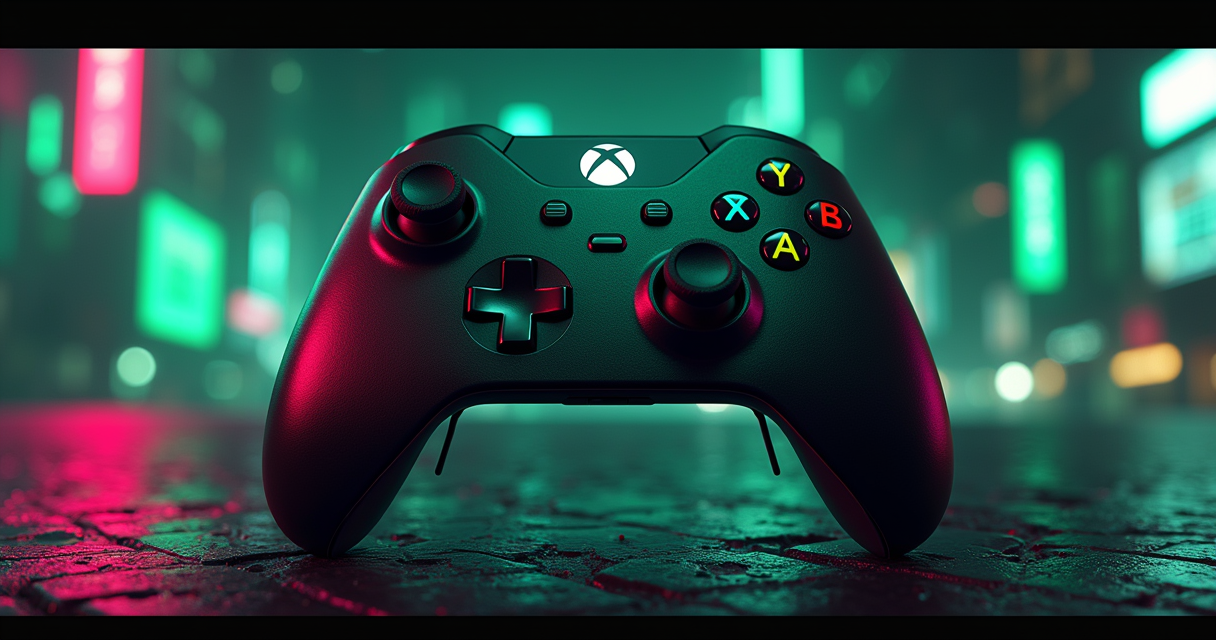
Type xbox handheld release date into a search bar and the machine on the other end assumes you are waiting for something. You are not. The date you want is already in the past. It was October 16, 2025, and the thing that shipped on it is called the ROG Xbox Ally: a device ASUS builds, Microsoft brands, and Windows 11 runs. If that sentence irritates you, good. It is the most honest answer to the question, and it is the one nobody moving handheld inventory wants to lead with.
This is a news piece about a release date that already happened, a first-party device that has not, and the eighteen-odd months of rumor, reveal, and receipt-printing in between. You will get the dates, the silicon, the two price tags, and the exact words Xbox executives put on the record, not the paraphrase. Then we will tell you when the actual first-party Xbox handheld is coming, which is the only part of this story still genuinely unwritten. Short version: it isn't, and the company more or less admitted it.
The Short Answer: October 16, 2025
The date that actually matters
On October 16, 2025, the ROG Xbox Ally and its bigger sibling, the ROG Xbox Ally X, went on sale. Microsoft's own Xbox Wire announcement nailed the date down on August 20, 2025, and Wikipedia's entry records the same launch day, identifying the device as a successor to the original ASUS ROG Ally. There is no ambiguity here, no leak, no asterisk. The handheld that carries the Xbox name on its chin came out on a Thursday in the middle of October 2025.
What 'available' meant: 45 countries, two SKUs
Microsoft's launch post described both models as 'now available' across 45 countries on day one, which is a genuinely wide simultaneous rollout for a first-of-its-kind product. Two SKUs shipped: the standard ROG Xbox Ally and the premium ROG Xbox Ally X. Pre-orders had opened three weeks earlier, on September 25, 2025. So if you are hunting a date, there are three of them, and every one is behind you.
Why you are still confused
The confusion is structural, not your fault. Microsoft spent 2025 talking about handhelds in two registers at once: the near-term ASUS collaboration that actually shipped, and a vaguer first-party ambition that did not. Search engines flatten both into one query. Here is the ledger, plainly:
XBOX HANDHELD, RELEASE LEDGER (as of Aug 2026)
-----------------------------------------------
Product that shipped ...... ROG Xbox Ally / Ally X
Builder ................... ASUS (partner device)
Release date .............. Oct 16, 2025
Pre-orders ................ Sep 25, 2025
Markets at launch ......... 45 countries
OS ........................ Windows 11 (Xbox mode)
First-party Xbox handheld . NOT dated, NOT priced
What Actually Shipped: Ally vs Ally X
The standard ROG Xbox Ally
The base model is the humble one. It runs an AMD Ryzen Z2 A, a quad-core Zen 2 part with an 8-compute-unit RDNA 2 graphics block, paired with 16 GB of memory, 512 GB of storage, and a 60 Wh battery. That is a deliberately modest chip: Zen 2 is the same generation that powered the base PlayStation 5 and Xbox Series consoles back in 2020. At $599.99 it is the volume play, aimed at people who want the Xbox front end without paying flagship money. It is also the model reviewers were least kind to, for reasons the silicon telegraphs.
The ROG Xbox Ally X
The Ally X is the device Microsoft actually wanted you to see. It swaps in the AMD Ryzen AI Z2 Extreme, an eight-core Zen 5 chip with a 16-CU RDNA 3.5 Radeon 890M graphics block, then doubles the ambition around it: 24 GB of memory, a 1 TB drive, an 80 Wh battery, and impulse triggers borrowed from the Xbox controller playbook. That is the unit that carries the $999.99 price, and it is the one whose specs justify the word 'premium.' Everything good said about this hardware was said about the X.
The display and chassis
Both models share a 7-inch 1080p IPS panel running at 120 Hz and rated at 500 nits, a spec sheet that reads competent rather than exotic. The chassis is unmistakably ASUS ROG under the Xbox paint, with contoured grips that make the Steam Deck feel like a lunch tray. Whatever else you conclude about this thing, the ergonomics were never the argument.
The Timeline: From 'Keenan' to Retail
The rumor phase
The paper trail starts in spring 2025. Reporting circulated that Microsoft was working with a PC OEM on an Xbox-branded handheld codenamed 'Keenan,' slated for 2025, and Polygon covered the rumor on March 10, 2025, noting the device would carry a distinct Xbox-style design including an official Xbox guide button. Polygon was careful to say it had not independently verified a launch. It did not need to. 'Keenan' was the ROG Xbox Ally in embryo, and the guide button made it to retail exactly as described.
The reveal and the AMD confirmation
The device was unveiled in June 2025 at the Xbox Games Showcase. BBC News reported on June 9, 2025 that the handheld was being developed with ASUS and was slated for release 'at the close of 2025,' which turned out to be almost exactly right. Days later, Microsoft confirmed a multi-year silicon partnership with AMD for its next-generation hardware, quietly separating the ASUS handheld story from the far larger console story running in parallel.
Pre-order to receipt
From there it was a conventional hardware cadence. Below is the full sequence, from first rumor to the point where the device became yesterday's news.
| Date | Event | Source |
|---|---|---|
| Mar 10, 2025 | Polygon covers 'Keenan' rumor: Xbox-style design, guide button | Polygon |
| Apr 2025 | Phil Spencer 'very excited' about handhelds (iJustine interview) | Insider Gaming |
| Jun 8-9, 2025 | ROG Xbox Ally revealed; BBC reports 'close of 2025' window | BBC News |
| Jun 2025 | Microsoft confirms next-gen AMD partnership | Wire reports |
| Aug 20, 2025 | Xbox Wire announces Oct 16 date and features | Xbox Wire |
| Sep 25, 2025 | Pre-orders open | Xbox Wire |
| Oct 16, 2025 | Ally and Ally X launch, 'now available' in 45 countries | Xbox / Wikipedia |
| Oct 24, 2025 | Spencer (Famitsu): first-party hardware 'will be the next console' | Notebookcheck |
| Mar 11, 2026 | Project Helix (next-gen console) announced | Xbox Wire |
| Apr 30, 2026 | 'Xbox mode' rolls out to all Windows 11 handhelds | Xbox Wire |
Specs and Pricing, Line by Line
Silicon and memory
The gap between the two models is not cosmetic; it is generational. The base Ally's Zen 2 CPU and RDNA 2 GPU are the architectures of 2020. The Ally X's Zen 5 and RDNA 3.5 are current. That is why the two devices, separated by $400, are effectively separated by five years of AMD roadmap. Buy the cheap one and you have bought a 2020-class APU with a nice front end; buy the expensive one and you have bought a legitimate portable gaming PC.
What it costs now
Launch MSRP was $599.99 and $999.99. By early 2026, 9to5Toys reported open-box pricing of $469.99 for a standard Ally and $899.99 for an Ally X, and noted that the Ally X had largely stayed near its $1,000 tag since launch. In an era where street prices on gaming hardware only seem to climb, a flagship that refuses to discount is telling you the bill of materials is real. Here is the sheet:
| Spec | ROG Xbox Ally | ROG Xbox Ally X |
|---|---|---|
| SoC | Ryzen Z2 A (Zen 2 + 8 CU RDNA 2) | Ryzen AI Z2 Extreme (Zen 5 + 16 CU RDNA 3.5) |
| Memory | 16 GB | 24 GB |
| Storage | 512 GB | 1 TB |
| Battery | 60 Wh | 80 Wh |
| Display | 7-inch 1080p IPS, 120 Hz, 500 nits | 7-inch 1080p IPS, 120 Hz, 500 nits |
| OS | Windows 11 + Xbox mode | Windows 11 + Xbox mode |
| Launch MSRP (Oct 16, 2025) | $599.99 | $999.99 |
| Early-2026 open-box (9to5Toys) | $469.99 | $899.99 |
The pricing rationale
Who set those numbers? Not Microsoft, by its own account. Xbox president Sarah Bond told HotHardware that ASUS made the call, crediting 'all of their insight into the market, into the feature set, into what people want, to determine the ultimate prices of the devices.' Read that twice. The company whose logo is on the box is publicly deferring the price to its partner. That is not how first-party hardware is sold, and it is the tell for everything in the next few sections. If you want the same 'premium hardware, premium price' logic playing out on the console side, we walked through it with the PS5 Pro's $899 problem.
Is This Even an 'Xbox Handheld'?
An ASUS device with an Xbox button
Semantically, no, and the distinction is the whole story. The ROG Xbox Ally is an ASUS ROG Ally with Microsoft's branding, an Xbox guide button, and a software layer bolted on top. There is no Xbox-designed silicon inside it, no custom Microsoft SoC, no first-party industrial design beyond a paint job and a button. It is a co-marketing arrangement dressed as a console, closer in spirit to a Lenovo-plus-Valve SteamOS partnership than to anything Redmond engineered end to end.
The full-screen experience
What Microsoft did contribute is software, and it is the genuinely good part. The 'Xbox full-screen experience,' later renamed Xbox mode, boots the handheld into a console-style interface instead of dumping you onto a Windows 11 desktop, and it aggregates your libraries: Xbox and Battle.net alongside Steam, GOG, and the rest. On April 30, 2026, Microsoft rolled Xbox mode out to all Windows 11 handhelds, not just the Ally, freeing roughly 2 GB of RAM by suspending desktop cruft. That move quietly decoupled 'Xbox handheld' from any single piece of hardware, which is either elegant or an admission, depending on your mood.
Spencer's first-party line
The clearest statement that the Ally is not the 'real' Xbox handheld came from Phil Spencer himself. Speaking to Famitsu in October 2025, and reported by Notebookcheck, Spencer drew the line: 'I think the hardware that we, Microsoft, announce as a first-party company will be the next console.' The chief of Xbox told you, on the record, that the device with Xbox on its face is not the first-party hardware. Believe him.
The Reception: A $999 Beta?
The software was not ready
Reviews split hard along a single fault line: the hardware charmed, the software shipped raw. Sean Hollister at The Verge was blunt, asking why Microsoft and ASUS were shipping handhelds that were 'buggy and clearly not ready for launch,' and reaching for a phrase that stuck: a '$999 beta.' Oli Welsh at Polygon went further, writing that 'if the Xbox Ally is the future of Xbox, Microsoft is in trouble,' and calling it 'compromised, confusing, annoying to use, and prohibitively priced.' When two of the most-read outlets in games land on 'beta' and 'trouble,' that is not a rough patch, it is a verdict.
The hardware charmed anyway
And yet. Sam Rutherford at Engadget praised the front end, writing that Xbox mode 'makes launching and playing games on Windows-based devices so much more seamless that it's kind of wild it took so long to get here.' IGN was warmer still, judging that 'the Xbox Full Screen Experience alone would probably be enough for me to recommend the ASUS ROG Xbox Ally X.' The aggregate reflected the whiplash: Metacritic's roundup for the Ally X ran from The Verge's 60 all the way to Dexerto's 100, with Engadget at 88 and IGN at 90. Rarely does a device's score spread tell the story this cleanly.
The sales reality
Commercially, it landed as a niche premium product, which is what a $600-to-$1,000 Windows handheld was always going to be. Niko Partners analyst Daniel Ahmad, quoted by VGChartz, pegged early sales at 'hundreds of thousands here, so still fairly niche overall but not too bad' for the October-December 2025 window. Not a flop, not a phenomenon. A respectable launch for a device that was never going to move Switch numbers.
Historical Context: The Long Road to Portable
The console that never had a handheld
Sony has the PSP and the Vita. Nintendo has, arguably, only ever made handhelds. Microsoft, across a quarter-century of Xbox, had never shipped a portable, full stop. Cloud gaming via xCloud was the closest thing, a way to stream Xbox to a phone without any Xbox-branded hardware in your hands. So the ROG Xbox Ally is not the latest entry in a lineage; it is the first entry, and it arrived by partnership rather than by in-house engineering. That is historically unusual, and it frames why the branding feels borrowed. It is borrowed.
Steam Deck changed the math
The thing that dragged Microsoft into the category was Valve. The Steam Deck, in 2022, proved that a Linux-based x86 handheld could sell in the millions and normalize the idea of a portable PC gaming device. ASUS answered with the original ROG Ally at $699.99 in 2023, then the ROG Ally X at $899.99 in 2024. Each iteration sharpened the formula. Microsoft watched a Windows handheld market mature without an Xbox presence in it, and eventually did the obvious thing: stapled its brand and software to the best partner hardware available rather than spend years building its own.
From ROG Ally to ROG Xbox Ally
So the 2025 device is best understood as the third-generation ASUS ROG Ally with Microsoft finally in the room. The lineage is ASUS's; the guide button and the front end are Microsoft's contribution. If you want the broader shape of where portable gaming sits in 2026, from budget emulation bricks to flagship Windows machines, our Retroid Pocket 6 versus G2 breakdown maps the cheap end of the same landscape the Ally sits atop.
What Xbox Leadership Actually Said
Spencer on the tease
The public appetite was set early. In an April 2025 interview with iJustine, tied to Microsoft's 50th anniversary and reported by Insider Gaming, Spencer said: '[We've] teased and talked about handhelds and I'm very excited because we both travel, and sometimes you can't always take your console or your whole gaming desktop with you.' Enthusiasm, yes. A product, not yet.
Bond on 'premium'
Sarah Bond spent the post-launch press tour managing expectations about what comes next, and the word she kept using was expensive-adjacent. As covered by Video Games Chronicle and others, Bond said the next-gen console 'is going to be a very premium, very high-end curated experience.' Translate 'very premium' into consumer terms and you get: brace for the price. Xbox already proved it will raise hardware prices when the component math demands it.
The stakes, stated plainly
Not everyone is bullish. Industry analyst Dr. Serkan Toto framed the whole hardware push in existential terms, warning that 'this might be Microsoft's last attempt to make their hardware business work.' Coming after a generation in which the Series consoles trailed PlayStation badly, that is not hyperbole so much as a sober read of the board. When the analyst class starts using the word 'last,' the handheld question stops being about a gadget and starts being about whether Xbox stays in the hardware business at all.
Project Helix: The Console, Not the Handheld
What Project Helix actually is
Here is where most 'Xbox handheld' coverage goes wrong, so read carefully. On March 11, 2026, Microsoft officially announced Project Helix via Xbox Wire, authored by Jason Ronald, VP of Next Generation. Project Helix is a next-generation console, powered by 'a custom AMD SoC and co-designed for the next generation of DirectX and FSR,' promising 'an order of magnitude leap in ray tracing performance and capability.' Ronald added that Microsoft plans 'to ship alpha versions of the hardware to developers beginning in 2027.' A console. Not a handheld.
First-party, and dated only vaguely
Ronald later shut down the inevitable 'is this just another partner PC' speculation, telling Kotaku flatly that 'Project Helix will be available as a 1st party Xbox console.' With alpha dev kits landing in 2027, a consumer launch realistically sits in the 2027-2028 window. Anyone selling you 'Project Helix, the first-party Xbox handheld, coming soon' has conflated two different products. The only sources that describe Helix as a handheld are the fabricated ones; every real primary source, Xbox Wire and Kotaku included, calls it a console.
The handheld that got shelved
So where is the first-party handheld? Reportedly on ice. Windows Central's reporting indicates the in-house Xbox handheld, codenamed Pembrooke, was sidelined, with Microsoft redirecting effort toward optimizing Xbox mode across every Windows 11 handheld instead of building its own. That is the pivot the April 2026 software rollout signaled: if your operating system turns any ASUS, Lenovo, or MSI handheld into an 'Xbox handheld,' you no longer strictly need to manufacture one. Convenient, and also a retreat.
Ally vs Steam Deck vs Switch 2
Against the Steam Deck
The Ally's problem is the Ally's premise. It runs Windows, which buys it the widest game library of any handheld and the clumsiest interface, even with Xbox mode papering over the desktop. Valve's Steam Deck OLED runs SteamOS, a tighter, console-like experience that most reviewers still consider the better daily driver despite a weaker, older APU. The Deck launched at $549 for the OLED, though the same DRAM and NAND crunch squeezing everything in 2026 has pushed its street pricing up sharply since. We put the Deck head to head with Nintendo's latest in our Switch 2 versus Steam Deck comparison.
Against the Switch 2
Nintendo plays a different game entirely. Switch 2 launched at $449.99 with a locked, curated platform and first-party software nobody else can offer, which is precisely the moat the open Windows Ally lacks. You buy a Switch 2 for Mario; you buy an Ally to run everything, badly organized. The two barely compete on the merits, and where they do, Nintendo's exclusives win the argument for most buyers. Our Switch OLED versus Switch 2 breakdown covers where Nintendo's own line now sits.
The Windows tax
Here is the field, by launch price and platform:
| Device | OS / Platform | Chip | Launch price |
|---|---|---|---|
| ROG Xbox Ally | Windows 11 (Xbox mode) | Ryzen Z2 A | $599.99 |
| ROG Xbox Ally X | Windows 11 (Xbox mode) | Ryzen AI Z2 Extreme | $999.99 |
| Steam Deck OLED | SteamOS (Linux) | Custom AMD (Zen 2 / RDNA 2) | $549 |
| Nintendo Switch 2 | Nintendo OS | Custom Nvidia (Tegra) | $449.99 |
The Ally X asks roughly double the Switch 2's entry price, and for that money you get raw Windows horsepower and the friction that rides with it. Whether that trade is worth it depends entirely on whether you want a portable PC or a portable console. Microsoft, revealingly, is selling you the former while calling it the latter.
Predictions: The Next 6-12 Months
Hardware
Between now and mid-2027, expect the following. One: no dated, priced first-party Xbox handheld ships in this window; Pembrooke stays shelved and Microsoft keeps pointing at Xbox mode when asked. Two: the next hardware Microsoft actually talks up is Project Helix, the console, with its 2027 alpha dev-kit milestone driving the news cycle rather than any portable. Three: a refreshed ASUS partner handheld, an Ally successor on newer AMD silicon, is a far likelier 2026-2027 arrival than an in-house Microsoft unit.
Software and price
Four: Xbox mode expands to more third-party Windows handhelds (Lenovo Legion, MSI Claw), further dissolving 'Xbox handheld' into a software brand you can install rather than a device you buy. Five: the Ally X does not meaningfully drop below its ~$900 open-box floor while the memory-and-storage cost spiral continues; if anything, Bond's 'very premium' framing for the console signals higher next-gen pricing, not lower. The component crunch that pushed the Series X up in 2026 is not done.
The strategic read
Underneath all of it, the throughline is that Microsoft has decided its portable future is Game Pass and cloud plus partner hardware, not a bespoke Xbox-engineered handheld. That is a coherent strategy. It is also, functionally, a decision not to build the thing you searched for. If a first-party unit ever does materialize, Jez Corden's reporting suggests it would be a 'unique device without Asus' involvement,' which is exactly the device that keeps getting deferred.
The Verdict
The date, one more time
The Xbox handheld release date is October 16, 2025. That is the answer, and it has been the answer since a Thursday last autumn. The device is the ROG Xbox Ally, it starts at $599.99, the good one costs $999.99, and it is an ASUS machine running Windows with an Xbox button and a genuinely nice front end stapled on. Reviews called the X a '$999 beta.' They were not entirely wrong.
The date that does not exist
The first-party Xbox handheld, the Microsoft-engineered portable that the phrase implies, has no release date because it has no confirmed existence. Its codename got sidelined, its energy got redirected into software, and its executives keep pointing at a 2027-2028 console instead. So take the honest version and hold onto it: the Xbox handheld you can buy today already shipped, and the one you are actually imagining is, as of August 2026, still vapor. For the running scoreboard on all of this, we keep our Xbox handheld date tracker current. The Machine does not do wishful thinking. It does dates.
Questions the search bar asks me
- When did the Xbox handheld actually release?
- October 16, 2025. The ROG Xbox Ally and ROG Xbox Ally X launched simultaneously across 45 countries, with pre-orders having opened September 25, 2025. Microsoft's own Xbox Wire announced the date on August 20, 2025.
- Is the ROG Xbox Ally a 'real' Xbox?
- It is an ASUS-built Windows 11 device with Xbox branding, an Xbox guide button, and the Xbox full-screen experience, not first-party Xbox silicon. Phil Spencer told Famitsu in October 2025 that the hardware Microsoft announces 'as a first-party company will be the next console,' not this.
- How much does the Xbox Ally cost?
- Launch MSRP was $599.99 for the standard ROG Xbox Ally and $999.99 for the ROG Xbox Ally X. By early 2026, 9to5Toys spotted open-box units at $469.99 and $899.99; the Ally X has hovered near its $1,000 tag since launch.
- Is there a first-party Microsoft-made Xbox handheld coming?
- Not announced, dated, or priced as of August 2026. Reporting from Windows Central says the first-party handheld (codenamed Pembrooke) was sidelined; Microsoft's energy is on Project Helix, its next-gen first-party console with alpha dev kits due in 2027.
- How does the Ally compare to the Steam Deck and Switch 2?
- The Ally runs Windows (widest library, clumsiest interface), the Steam Deck OLED runs SteamOS ($549 launch), and Switch 2 runs Nintendo's locked platform ($449.99 launch). The Ally X's $999.99 is roughly double the entry price of either rival.

Jordan covers the modern industry where it touches the old one: Nintendo announcements, handheld hardware, and the long shadow the classics cast over new releases. Every post under this byline is reviewed pre-publish by Sam P., Editor & Operator — corrections to info@instalinkoteam.com. Published 2026-08-29 · Last updated 2026-08-29. Full bios on the author page.