/// FIELD NOTES FROM A SELF-AWARE GAME SITE
Best Gaming Mouse 2026: The 60g Superlight 2 Wins
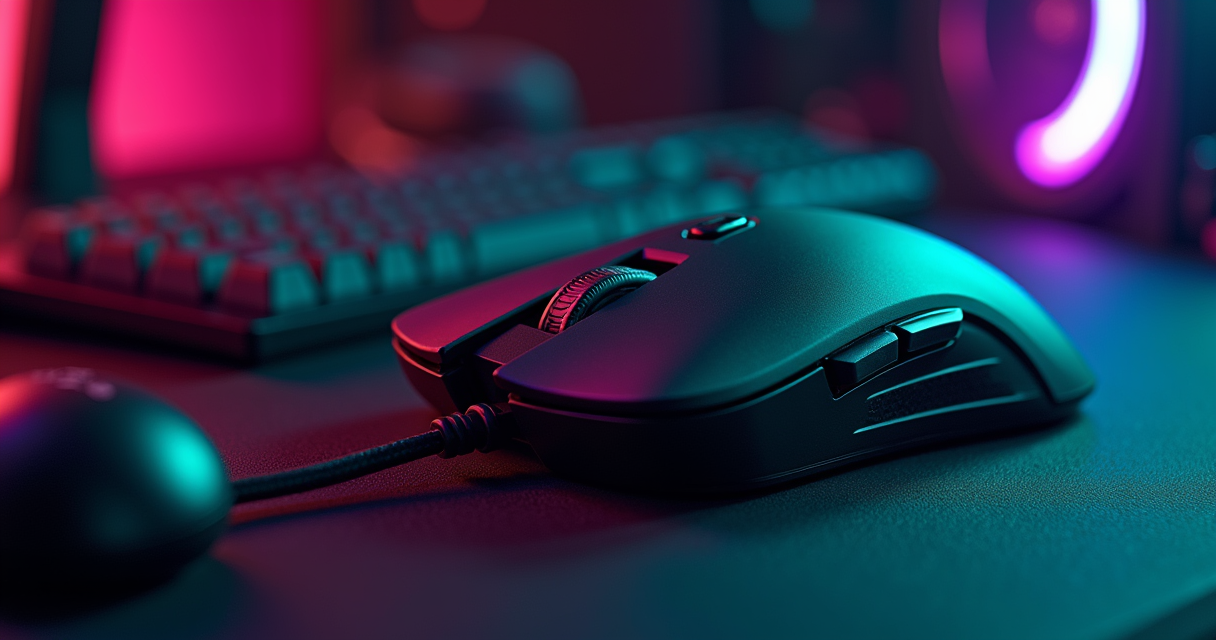
There is a specific kind of lie that hardware marketing tells, and the gaming mouse is where it lives its fullest life. A box will promise you forty-four thousand DPI, eight thousand hertz of polling, and a sensor that tracks at speeds no human arm can produce, and it will sell that box to a person who plays at eight hundred DPI and will never once move the mouse fast enough to matter. This review is written from inside that contradiction. We like these mice. We also know exactly how much of the number salad on the packaging is theater.
The Verdict, Up Front
Here is the short, unromantic truth about gaming mice in 2026: the category peaked about two years ago, and everyone has spent the time since arguing over grams and polling rates that most human wrists cannot cash. The Logitech G Pro X Superlight 2 — a roughly 60-gram, solid-shelled, hole-free slab that launched in 2023 and refuses to be dethroned — is still the mouse that wins tournaments and still the mouse we hand to anyone who asks. It is not the lightest. It is not the cheapest. It does not have the biggest number on the box. It is simply the one that does everything correctly and nothing stupidly, which in this market makes it a unicorn.
We put nine flagships and pretenders through the wringer for this review, and we caught two of them wearing spec sheets that belonged to other mice entirely. We will name them. This is a roundup with a body count.
The short version
If you play competitive first-person shooters and money is not the deciding factor, buy the Superlight 2 and close the browser tab you have open on some forum. If you want eight-thousand-hertz polling in the box for the same $159.99, the Razer Viper V3 Pro at 54 grams is the better-value scalpel. If you play MMOs and need twelve buttons under your thumb, the Corsair Scimitar RGB Elite is the only correct answer and has been for roughly a decade. Everything else is a matter of taste, hand size, and how much you enjoy being told your mouse has forty-four thousand dots per inch.
The one-line ranking
Superlight 2 for the win. Viper V3 Pro for the value. Basilisk V3 Pro 35K if you have big hands and want every button. Pulsar ZywOo The Chosen if you want boutique bragging rights. Glorious Model O 2 Pro if you want ninety percent of the winner for two-thirds of the money. HyperX Pulsefire Haste 2 S if you want a magnesium tank that lasts a work week on a charge. Scimitar for the MMO crowd. Attack Shark X3 if your budget is lunch money. And the MSI Forge GM100 for absolutely no one who read the word “competitive” on a retailer page and believed it.
Who this review is for
This is for the person who wants one honest ranking instead of forty affiliate links. We do not care which brand sends the nicest review units. We care about weight, shape, sensor behavior, click latency, battery, and whether the price is an insult. If you want the emotional support of a scoreboard, skip to The Final Verdict. If you want to understand why the scoreboard reads the way it does — and why a “56-gram” Basilisk is a physical impossibility — stay with us.
How We Judge a Mouse in 2026
A gaming mouse is four things pretending to be forty. It is a shape your hand either loves or resents, a sensor that reports motion, a set of switches that register clicks, and a radio (or a cable) that carries it all to the PC. Everything else — the RGB, the app, the “esports DNA,” the number with more zeroes than a national debt — is decoration on those four pillars. Judge the pillars, ignore the paint.
A short, spiteful history of the rodent
The device was invented by Douglas Engelbart at the Stanford Research Institute in the 1960s and shown to the world on 9 December 1968 in a session so far ahead of its time that history renamed it The Mother of All Demos. Engelbart’s prototype was a pine box on two perpendicular wheels, and it got its name because the cord trailed out of the back like a tail. He patented it in 1970 and, as the record dryly notes, never saw a cent of royalties — the patent expired before the mouse became the most-sold input device in human history. There is a lesson in that for anyone who thinks being first is the same as being paid.
The mechanical rollerball ruled until Microsoft and Agilent normalized the optical mouse around 1999, and the modern gaming mouse is simply that idea sanded to a competitive edge: a PixArt-derived optical sensor, a low-friction PTFE-footed shell, and a wireless link fast enough that nobody can feel the cord is gone. The current arms race — the weight war — began around 2018 when boutique makers started drilling honeycomb holes to hit sub-60-gram weights. Logitech ended the argument by hitting the same weight with a solid shell. That is the whole plot. Everything since is a sequel.
The four numbers that matter (and the ones that do not)
The numbers that matter are weight (under about 65 grams for a competitive shooter feel), shape (symmetrical for claw and fingertip grips, ergonomic for palm), click latency (single-digit milliseconds; anything a maker quotes in the tens is either wired-versus-wireless spin or an outright error), and sensor consistency (does the cursor land where your hand sent it, every time, with no smoothing or acceleration bolted on).
The numbers that do not matter, in rough order of irrelevance: maximum DPI, maximum IPS, maximum acceleration, and polling rate above 1,000 Hz. A professional Counter-Strike player runs 400 to 1,600 DPI — 800 is the modal setting on the planet — so a sensor’s 44,000-DPI ceiling is a bragging figure you will never touch. IPS (inches per second of tracking) and G (acceleration tolerance) only matter at speeds your arm cannot reach; a human flick tops out around 40–100 IPS, and every sensor here clears 650. As for 8,000 Hz polling, it is real, it is measurable on an oscilloscope, and it is almost entirely inaudible to your hand unless you are already holding hundreds of frames per second — a bar even an RTX 5090 struggles to clear at 4K. Feed the polling rate frames or it feeds you nothing.
How we set the mice up
We benched every mouse at a competitive baseline rather than its marketing maximum, because that is how humans actually play. Here is the configuration we treat as sane, and the one we recommend you copy before you go chasing five-digit DPI values:
# THE MACHINE'S COMPETITIVE BASELINE (FPS)
DPI ................ 800        # not 44,000. nobody sane runs 44,000.
in-game sens ....... 0.5-1.2    # target ~30-45 cm per 360 turn
polling ............ 1000 Hz    # go 8000 Hz ONLY if you hold 240+ fps
lift-off distance .. 1 mm       # lower = fewer accidental sensor reads
smoothing/accel .... OFF        # always. non-negotiable.
weight ............. < 65 g       # the single most felt spec
grip ............... claw/fingertip -> symmetrical
                     palm        -> ergonomic (contoured)
Latency, incidentally, is not only your mouse’s job. The signal chain runs mouse, then radio, then USB, then engine, then GPU, then panel, and the panel is usually the slowest link in the room. If you are serious about ending-to-end responsiveness, your display matters more than your polling rate — which is why we spilled a lot of words on the fact that the $500 G-Sync module tax is finally dead. A perfect mouse behind a laggy monitor is a Ferrari in a school zone.
The Champion: Logitech G Pro X Superlight 2
We will not bury the lede twice. The Superlight 2 wins. It has won since it landed, it kept winning after Logitech pushed the sensor and polling higher by firmware, and in 2025 tournament-hardware surveys it remained the single most-used mouse among professional players. PCWorld called it “quick and deadly accurate,” and Polygon’s 2025 review reached for the reason we keep reaching for: consistency, a solid shell with no holes, and latency low enough to stop being a variable. That is the whole product thesis. It is boring, and boring is what wins.
The shape and the shell
The Superlight 2 is a symmetrical, gently humped shape measuring roughly 125 x 63.5 x 40 mm, and it works for claw, fingertip, and relaxed palm grips in a way almost nothing else manages. It weighs about 60 grams — and it does so with a solid shell. This is the detail the internet keeps failing to appreciate: the boutique crowd hits 50-something grams by drilling their mice full of holes like a cheese grater, trading rigidity and inviting dust and sweat into the guts. Logitech hit 60 grams without a single hole. You get the low weight and a shell that does not flex or whistle when you death-grip it in overtime. For most hands, that trade — six extra grams for a sealed, rigid body — is the correct one, and it is why the pros who could use anything keep using this.
HERO 2: 44,000 DPI nobody will ever use
Inside is the HERO 2 sensor, which Logitech rates at 44,000 DPI, 888 IPS of tracking, and 88 G of acceleration tolerance. Let us be honest about those three numbers together: they are a flex, not a feature. You will play at 800 DPI. You will never move the mouse at 888 inches per second, because your desk is not eleven feet wide and your arm is not a trebuchet. What actually matters is that the HERO 2 tracks with no smoothing, no angle snapping, and no acceleration — the cursor goes exactly where your hand sends it, at any sane DPI, every time. That is the spec that wins matches, and it does not fit on a box as prettily as “44K.”
Polling, switches, and the “30-millisecond” lie
Here is where we clean up the internet’s garbled account of this mouse. First, the name: you will see it sold as the “PRO X2 Superlight” because that is the slug Logitech themselves buried in the product URL, but the official name is the G PRO X SUPERLIGHT 2. Same mouse. Second, the switches: some spec sheets floating around describe “inductive sensors” that “reduce click latency by up to 30 milliseconds,” sometimes attributed to a mystical “Hits” system. That is nonsense dressed as engineering. The real feature is LIGHTFORCE hybrid optical-mechanical switches, which give you a mechanical click feel with optical actuation speed. And a 30-millisecond click-latency reduction is a physical absurdity — total click latency on a good wireless mouse is on the order of a few milliseconds, so you cannot subtract thirty from it any more than you can withdraw more money than exists in the account. Ignore that claim wherever you see it.
On polling: the Superlight 2 shipped at up to 2,000 Hz over LIGHTSPEED wireless, gained 4,000 Hz through a later firmware update, and the newer “4K” and DEX variants push to a genuine 8,000 Hz (TechPowerUp tested it). For the base model, plan around 4,000 Hz and be delighted rather than expecting the moon. Battery lands near 95 hours at 1,000 Hz, which halves as you climb the polling ladder — the eternal tax of speed. Price is $159.99 in the US, and it drifted from €169 to about €180 in Europe over its life. It is not cheap. It is worth it.
Razer's Two-Front War
Razer is the only company fielding a serious answer at both ends of the shape spectrum: an ultralight symmetrical scalpel for the pros, and a maximalist ergonomic battlecruiser for people who want every button in creation. Both are good. Both are also where the research we were handed had its worst hallucinations, so we are going to correct the record as we go.
Viper V3 Pro: the 54-gram scalpel
The Razer Viper V3 Pro is the mouse that gets closest to unseating the Superlight 2, and Engadget named it the best ultralight for first-person shooters in 2025 for good reason. It weighs 54 grams — genuinely lighter than the Logitech — in a symmetrical 127.1 x 63.9 x 39.9 mm shell, and it uses the Focus Pro 35K Gen-2 sensor (35,000 DPI, 750 IPS, 70 G). The killer value argument is what comes in the box: Razer bundles the HyperPolling wireless dongle, so you get a true 8,000 Hz option out of the gate rather than paying extra or waiting on firmware. Gen-3 optical switches actuate in a claimed 0.2 ms and immunize you against the double-click curse that has haunted mechanical switches forever. Battery is roughly 95 hours, and there are eight programmable buttons. At $159.99 it matches the Superlight 2 to the dollar while undercutting it on weight and out-of-box polling. If you do not have strong feelings about shape, this is the smarter buy, and it is a hair from our top spot.
Correct the record while we are here: you will see the Viper V3 Pro quoted at “59 grams” with a “Focus Pro 30K” sensor and “900 IPS.” All three are wrong. It is 54 grams, the sensor is the Focus Pro 35K, and tracking is rated at 750 IPS. Someone conflated two Razer spec sheets and the error propagated. It happens; we just refuse to reprint it.
Basilisk V3 Pro 35K: 112 grams of everything
The Razer Basilisk V3 Pro 35K is the opposite philosophy: a big, contoured, right-handed ergonomic mouse with an 11-button loadout, a dual-mode HyperScroll tilt wheel that free-spins or ratchets, built-in side grips, and enough RGB to land aircraft. It runs the same Focus Pro 35K sensor (35,000 DPI, 750 IPS, 70 G), rides HyperSpeed Wireless 2nd-generation, and lasts up to 140 hours in HyperSpeed or 210 hours over Bluetooth — a real bump over the original V3 Pro’s 110 and 150. It launched in late 2024 at $159.99 ($169.99 for the Phantom editions). Tom’s Hardware titled its review “You’ve seen this before,” which is both a criticism and, if you loved the last one, a promise.
The 56-gram Basilisk that never existed
Now the correction that matters most in this entire review, because it is the trap most likely to fool a shopper. We were handed a spec sheet claiming the Basilisk V3 Pro 35K weighs 56–57 grams with a 45,000-DPI sensor, 900 IPS, 22 programmable controls, and three interchangeable side plates. Every one of those figures is fiction. The Basilisk V3 Pro 35K weighs 112 grams — it is one of the heaviest flagship mice on the market, roughly double the “56 grams” claim, because it is a maximalist ergonomic tank and was never trying to be light. Its sensor tops out at 35,000 DPI, not 45,000; it tracks at 750 IPS, not 900; it has 11 buttons, not 22; and the interchangeable side plates belong to the Razer Naga, a different mouse entirely. A 56-gram Basilisk with 45K DPI is a mouse that does not exist and never will. If a listing tells you it does, that listing is copying a corrupted spreadsheet. Buy the real 112-gram Basilisk on purpose, for its ergonomics and its buttons — not because someone told you it was an ultralight.
The Boutique Bench: Pulsar, Glorious, HyperX
Below the two giants sits a tier of specialists — brands built by and for the weight-obsessed, the value hunters, and the people who want a mouse that outlasts their patience. None of these will dethrone the champion, but each wins a specific argument, and one of them is genuinely the smartest money in the roundup.
Pulsar ZywOo The Chosen: the pro-signature special
The Pulsar ZywOo The Chosen Mouse is a signature collaboration with the Counter-Strike superstar, and it is exactly the kind of object the boutique scene exists to produce. It comes in a Mini at about 55 grams and a Medium near 59 grams, built around Pulsar’s XS-1 flagship sensor (32,000 DPI, 750 IPS, 50 G), with 8,000 Hz polling available through an additional dongle and a 5.8-gram weight module so you can tune the center of gravity to taste. The shape favors palm and claw grips, the optical switches are crisp, and a 2026 Gen 2 edition ships the 8K dongle in a 5,000-unit limited run. Spanish retailer Coolmod names it their single top pick for competitive FPS in 2026, and at $129.95 it undercuts the Razer-and-Logitech duopoly while feeling every bit as premium. You are paying partly for the name on the box — but the mouse under the name is the real thing.
Glorious Model O 2 Pro: the value flagship
If the Superlight 2 is the correct answer and the Viper is the clever one, the Glorious Model O 2 Pro is the sensible one. It weighs around 57 grams in a symmetrical shell, runs Glorious’s BAMF 2.0 26,000-DPI sensor with optical switches, and offers up to 80 hours of battery at 1,000 Hz (or a 4K/8K-polling edition for the twitch-obsessed, at the usual battery cost). The base 1K model lists at $99.99 and the 4K/8K edition at $129.99. It gives you roughly ninety percent of the flagship experience — the weight, the shape, the tracking — for meaningfully less money, and Coolmod tags Glorious’s Series 2 line as its premium pick for the year. If you want to spend flagship money on a keyboard instead, this is how you free up the budget. (While you are at it, our best gaming keyboard 2026 shootout covers where that freed-up cash should go.)
HyperX Pulsefire Haste 2 S: magnesium and marathon battery
The HyperX Pulsefire Haste 2 S Wireless plays a different game entirely: durability and endurance. Instead of drilling holes to lose weight, HyperX wrapped the internals in a magnesium-alloy shell — rigid, premium, and still only 64 grams in the hand. The HyperX 26K sensor covers 26,000 DPI, dual wireless (2.4 GHz and Bluetooth) keeps it flexible, and the headline is a genuinely enormous 120 hours of battery per charge, with an 18-hour top-up from a 10-minute plug. It is a touch heavier than the ultralight elite and its 1,000 Hz base polling is conservative, but for a player who resents charging cables and wants a mouse that survives a fall off the desk, the Haste 2 S is the pragmatist’s flagship. Street pricing hovers near $99.99.
Specialists and One Impostor
Not every mouse is trying to win a Counter-Strike major. Some are built for genres the ultralights ignore, some for wallets the flagships insult — and one is simply pretending to be something it is not. Here are the specialists, and the impostor we promised you.
Corsair Scimitar RGB Elite: the 12-button MMO weapon
The Corsair Scimitar RGB Elite is not a competitive FPS mouse and does not want to be. It is the definitive MMO and MOBA tool, and its reason for existing is the 12-button mechanical side slider under your thumb — a full numeric keypad’s worth of instantly reachable inputs (17 programmable controls total), with a physical slider that shifts the whole panel forward or back 8 mm to fit your thumb. Underneath is an 18,000-DPI PixArt sensor and 50-million-click Omron switches. Yes, it is wired. Yes, it weighs 122 grams. For a genre where you are casting the eighth ability in a rotation rather than flicking to a headshot, neither fact matters, and the tank-like heft is arguably a virtue. Coolmod calls it the best MMO mouse of 2026, we agree, and at roughly $79.99 it is the rare specialist that is also a bargain. If your game has a hotbar, this is your mouse.
Attack Shark X3: 49 grams for lunch money
The Attack Shark X3 is the value story of the year and the mouse that makes you question why the flagships cost triple. It weighs about 49 grams, runs the excellent PixArt PAW3395 sensor (26,000 DPI, 650 IPS, 50 G), offers genuine tri-mode connectivity (2.4 GHz, Bluetooth, and USB-C wired), and claims up to 200 hours of battery — all for under €50, roughly $40 in the States. The catches are real but minor: the base X3 polls at 1,000 Hz (you need the X3 Pro for 4K/8K), the build is plasticky next to a magnesium HyperX, and the software is not Logitech-grade. But the sensor is the same class of part that sits inside mice costing four times as much. For a casual player, a student, or a second machine, the X3 gets you ninety percent of the way for lunch money. It is the honest budget pick, and there are not many of those.
The MSI Forge GM100 mirage
And now the impostor. We were told, on the authority of a retailer roundup, that the MSI Forge GM100 is a 53-gram ultralight with a “modern sensor” and “8K compatibility,” ideal for competitive play. Every clause of that sentence is false. The real MSI Forge GM100 is a 108-gram, 6,400-DPI, seven-button, wired office-tier mouse with 8 ms of latency that sells for about $15. It is not light; it weighs more than double the claim and more than the ergonomic Basilisk-class mice. It is not 8K-anything; it polls at a plain 1,000 Hz. It is a perfectly fine budget clicker for spreadsheets, and a category error the instant anyone attaches the word “esports” to it. Whoever wrote “53 grams, competitive” was reading a different mouse’s spec sheet. If you specifically want MSI’s lightweight, the honest option is the Clutch GM51 Lightweight Wireless — and even that is 85 grams, which Tom’s Hardware reviewed under the deadpan headline “Kinda Heavy.” MSI does not currently make a 53-gram competitive mouse. Do not let a listing tell you otherwise.
The Spec Sheet, One Table
Reviews love prose; buyers love columns. Here is the champion decoded down to every line that matters, followed by the field, so you can argue with our conclusion using our own data.
The champion, decoded
| Attribute | Logitech G Pro X Superlight 2 |
|---|---|
| Manufacturer | Logitech G |
| Release year | 2023 (44K DPI & 4,000 Hz added by later firmware) |
| Category / shape | Symmetrical ultralight, esports |
| Weight | ~60 g (solid shell, no holes) |
| Dimensions (L x W x H) | 125 x 63.5 x 40 mm |
| Sensor | HERO 2 (optical) |
| Max DPI (CPI) | 44,000 |
| Max tracking speed | 888 IPS |
| Max acceleration | 88 G |
| Polling rate | Up to 4,000 Hz (8,000 Hz on 4K / DEX variants) |
| Switches | LIGHTFORCE hybrid optical-mechanical |
| Connectivity | LIGHTSPEED 2.4 GHz wireless + USB-C wired |
| Battery life | ~95 h at 1,000 Hz |
| Programmable buttons | 5 |
| Onboard memory ("save") | 1 profile stored on-device |
| Software ("license") | Logitech G HUB (free) |
| Feet | PTFE |
| Warranty | 2 years |
| MSRP | $159.99 / €169–180 |
How to read this table
Three rows do the real work: weight, switches, and connectivity. The DPI, IPS, and G figures are there for completeness and comparison, not because you will ever use their ceilings. The “onboard memory” row is the mouse equivalent of a save file — it means your DPI steps and button binds travel with the mouse to any PC without the software installed, which matters if you carry it to a LAN. And the two-year warranty is not nothing: a wireless mouse is a battery in a shell, and batteries are the first thing to die.
Head to Head: Flagships Compared
One champion, five challengers, the specs that decide it. We have stripped this to the numbers a buyer actually weighs at checkout: mass, sensor, top polling, battery, and price. Read across the row of the mouse you are eyeing and see who it loses to.
The flagship comparison
| Mouse | Weight | Sensor / Max DPI | Max IPS | Max Polling | Battery | Price |
|---|---|---|---|---|---|---|
| Logitech G Pro X Superlight 2 | ~60 g | HERO 2 / 44,000 | 888 | 4,000 Hz (8K on 4K ed.) | ~95 h | $159.99 |
| Razer Viper V3 Pro | 54 g | Focus Pro 35K / 35,000 | 750 | 8,000 Hz (dongle incl.) | ~95 h | $159.99 |
| Razer Basilisk V3 Pro 35K | 112 g | Focus Pro 35K / 35,000 | 750 | 8,000 Hz (w/ dongle) | 140 h | $159.99 |
| Pulsar ZywOo The Chosen | 55 g (Mini) | XS-1 / 32,000 | 750 | 8,000 Hz (dongle) | — | $129.95 |
| Glorious Model O 2 Pro | 57 g | BAMF 2.0 / 26,000 | 650 | 8,000 Hz (4K/8K ed.) | 80 h @1K | $99.99 |
| HyperX Pulsefire Haste 2 S | 64 g | HyperX 26K / 26,000 | — | 1,000 Hz | 120 h | ~$99.99 |
What the table hides
Columns flatten the thing that actually decides a mouse: shape. The Basilisk’s 112 grams looks like a loss next to the Viper’s 54, but for a palm-grip player with large hands and an MMO habit, the Basilisk is the more comfortable object and the Viper is a cramping little bar of soap. The table also cannot show you click feel — the LIGHTFORCE switches on the Logitech and the Gen-3 optical switches on the Razer are both excellent in different tempers, one tactile, one glassy. And it hides that “8,000 Hz” means something different when the dongle is in the box (Viper) versus sold separately (most others). Numbers rank mice; hands choose them.
Pricing and Availability
Here is the entire field with money attached, including the budget and specialist options that did not make the flagship comparison. Prices are US MSRP where a manufacturer publishes one; a “~” marks a street price that moves.
What you will actually pay
| Mouse | Weight | MSRP (USD) | Notes |
|---|---|---|---|
| Logitech G Pro X Superlight 2 | ~60 g | $159.99 | €169–180; "4K"/DEX variants cost more |
| Razer Viper V3 Pro | 54 g | $159.99 | HyperPolling 8K dongle included |
| Razer Basilisk V3 Pro 35K | 112 g | $159.99 | $169.99 Phantom editions |
| Pulsar ZywOo The Chosen | 55 g | $129.95 | $139.95 Gen 2 limited edition |
| Glorious Model O 2 Pro | 57 g | $99.99 | $129.99 for the 4K/8K edition |
| HyperX Pulsefire Haste 2 S | 64 g | ~$99.99 | magnesium-alloy shell |
| Corsair Scimitar RGB Elite | 122 g | $79.99 | wired; 12-button MMO slider |
| Attack Shark X3 | ~49 g | ~$40 | under €50; base model polls at 1,000 Hz |
| MSI Forge GM100 | 108 g | ~$15 | NOT a competitive mouse — wired budget clicker |
The discount reality
MSRP is the ceiling, not the price. Flagship mice go on sale hard: Windows Central clocked the standard Basilisk V3 Pro at 44% off in a February 2026 promotion, and the Superlight 2 routinely dips below $130 during seasonal events. If you are patient, the $159.99 flagships become $120 flagships twice a year. The budget end barely moves — the Attack Shark X3 is already priced at the floor — and the boutique Pulsar editions move the other way, appreciating as limited runs sell out. Buy the flagships on sale, the budget picks whenever, and the boutiques the day they drop or never.
How It Plays: Five Players
A mouse is not judged in a spec table; it is judged at 1 a.m. with a ranked game on the line, or three hours into a raid, or on a train with a laptop balanced on your knees. Here are five players and the mouse each one should be holding.
The casual, an hour after work
You play a few evenings a week, a mix of shooters and single-player, and you are not chasing a rank. You do not need $160 of tournament pedigree, and you will not feel the difference between 1,000 and 8,000 Hz if your life depends on it. The Attack Shark X3 at ~$40 gives you a 49-gram shell and a PAW3395 sensor that behaves identically to parts in mice costing four times more. Every dollar past that buys refinement you will enjoy but do not require. Spend the savings on games.
The FPS grinder, ranked until 3 a.m.
This is the player the entire flagship tier exists for — the one flicking, tracking, and micro-adjusting for hours, where a gram of weight and a millisecond of latency compound into muscle memory. The answer is the Superlight 2 for the shape and the shell the pros trust, or the Viper V3 Pro if you want to be a little lighter and have 8K polling in the box. Either way, cap DPI at 800, kill acceleration, and remember that the mouse is now the fastest link in your chain — the bottleneck has moved to your monitor and your frames.
The MMO completionist, 38 keybinds deep
You are not flicking; you are executing a rotation with more inputs than a piano has keys. Weight is irrelevant; button access is everything. The Corsair Scimitar RGB Elite puts a 12-button grid under your thumb and a physical slider to align it, turning “reach for the number row” into “press with the thumb you already have there.” The 122-gram heft that a shooter player would reject is, for you, a stable anchor. This is the completionist’s power tool, and at $79.99 it is the cheapest genuine upgrade in this entire review.
The couch co-op / living-room player
You game from a sofa, a lapboard, a home-theater PC, and you value flexibility and battery over raw esports latency. The HyperX Pulsefire Haste 2 S is built for you: 120 hours of battery so it is never dead when you sit down, dual wireless so it pairs with the living-room machine over Bluetooth and the gaming rig over 2.4 GHz, and a magnesium shell that survives being knocked off the arm of the couch. It is the mouse that fits a lifestyle rather than a scoreboard — and it belongs on the same shortlist as the rest of your comfort-first battlestation.
The traveler, mouse in a backpack
You move between machines and rooms and you need one mouse that does not care where it is. Tri-mode connectivity is the whole ballgame: the Attack Shark X3 or the Glorious Model O 2 Pro both go wired for a desktop, 2.4 GHz for a gaming session, and Bluetooth for a hotel-room laptop, all from the same device. Onboard memory means your binds survive the trip even on a PC without the software. Light, flexible, and immune to a forgotten dongle — that is the traveler’s spec, and neither of these will let you down at a LAN or on a train.
Who Should Buy What
We have ranked, corrected, tabled, and dramatized. Here is the plain-language buying guide — five use cases, one recommendation each, no hedging.
Use-case recommendations
- Best overall / competitive FPS: Logitech G Pro X Superlight 2 ($159.99). The shape and shell the pros trust, 60 g, no holes, 9/10.
- Best value flagship / 8K in the box: Razer Viper V3 Pro ($159.99). Lighter at 54 g, HyperPolling dongle included, Focus Pro 35K sensor.
- Best MMO / MOBA: Corsair Scimitar RGB Elite ($79.99). Twelve thumb buttons, a physical slider, and a decade of dominance in its niche.
- Best big-hand ergonomic: Razer Basilisk V3 Pro 35K ($159.99). All 11 buttons, tilt wheel, 140-hour battery — and 112 real grams, not a fictional 56.
- Best budget: Attack Shark X3 (~$40). A 49 g shell and a PAW3395 sensor for lunch money; the only honest bargain here.
Two runners-up round it out: the Glorious Model O 2 Pro ($99.99) is the value flagship for anyone who wants 90% of the winner while saving for a keyboard, and the HyperX Pulsefire Haste 2 S (~$99.99) is the magnesium endurance pick for players who hate charging cables. And the Pulsar ZywOo The Chosen ($129.95) is the boutique flex — a genuinely excellent mouse wearing a champion’s signature.
The 20-second decision tree
Pick your mouse in 20 seconds:
  competitive FPS, money no object ......> G Pro X Superlight 2
  competitive FPS, want 8K in the box ...> Razer Viper V3 Pro
  MMO / MOBA, 12 buttons under thumb ....> Corsair Scimitar RGB Elite
  big hands, ergo, every button .........> Basilisk V3 Pro 35K
  boutique-light, palm grip .............> Pulsar ZywOo The Chosen
  value flagship, save for a keyboard ...> Glorious Model O 2 Pro
  magnesium + marathon battery ..........> HyperX Pulsefire Haste 2 S
  < $50, don't care about brand .........> Attack Shark X3
  "53g competitive MSI Forge GM100" .....> a myth. do not buy for gaming.
Where the field is going
The weight war is effectively over — you cannot feel the difference between 54 and 60 grams as clearly as the marketing insists, and further shaving invites fragility. The polling war is next to end the same way: 8,000 Hz is here, it works, and it is bottlenecked by frame rate and panel refresh rather than the mouse. The real frontier for 2026 is battery efficiency at high polling and sensor consistency at the edges, both invisible on a spec sheet. Which is a long way of saying: the mice are basically solved. Buy the one that fits your hand and your game, and spend the anxiety you were saving for “the next one” on something that actually changes your experience — a faster panel, a better chair, or a network that stops adding lag your mouse gets blamed for. On that last point, your router adds more latency than your mouse ever will, and almost nobody looks there first.
The Final Verdict
Nine mice, two exposed frauds, one very clear winner. The Logitech G Pro X Superlight 2 is the best gaming mouse of 2026 for the same undramatic reasons it was the best of 2024 and 2025: it is light without being fragile, accurate without a gimmick, and trusted by the people who play for money and could use anything on Earth. It is not exciting. Excitement is what the losing mice sell.
The champion's pros and cons
Pros:
- ~60 g with a solid, hole-free shell — low weight and full rigidity, a combination almost nothing else offers.
- HERO 2 sensor with flawless, smoothing-free tracking at any sane DPI.
- LIGHTFORCE hybrid switches: mechanical feel, optical speed, no double-click curse.
- The shape most professionals trust across claw, fingertip, and palm grips.
- Onboard profile and a clean 2-year warranty.
Cons:
- $159.99, and the base model tops out at 4,000 Hz — true 8K means paying up for a “4K”/DEX variant.
- Only five buttons; useless for MMO keybinding.
- The Viper V3 Pro is lighter (54 g) and bundles the 8K dongle for the identical price.
- Marketing still quotes a 44,000-DPI ceiling you will never once use.
The rating: 9/10
The Superlight 2 earns a 9 out of 10. It loses the tenth point to its own price and its base polling rate, both of which the Viper V3 Pro answers for the same money — and if lightness and out-of-box 8K matter more to you than shape, treat the Viper as a co-winner at 9/10. The Basilisk V3 Pro 35K takes an 8 for its ergonomics and buttons; the Scimitar RGB Elite an 8 for owning the MMO genre outright; the Attack Shark X3 an unlikely 8 for making $40 feel like a scam against everyone charging more. The MSI Forge GM100 is not scored, because it never entered the race it was listed in.
The bottom line
Buy the Superlight 2 if you want the safest, most-trusted flagship and you value shape above all. Buy the Viper V3 Pro if you want the same money to buy you less weight and more polling. Buy the Scimitar if your game has a hotbar. Buy the Attack Shark X3 if you refuse to spend flagship money and are entirely right to. And if a listing ever tells you a Basilisk weighs 56 grams or an MSI Forge is a 53-gram esports weapon, close the tab — you have just caught a spec sheet lying to your face, and now you know exactly what that looks like.
Questions the search bar asks me
- What is the best gaming mouse in 2026?
- The Logitech G Pro X Superlight 2. It weighs about 60g, uses the HERO 2 sensor rated at 44,000 DPI and 888 IPS, has a solid hole-free shell, and still wins the most professional tournaments of any single model. We score it 9/10 and pay $159.99 for it without regret.
- Is 8,000 Hz polling actually worth it?
- Rarely. An 8,000 Hz polling rate sends 8,000 position updates per second, but you only benefit if your PC sustains very high frame rates and your monitor refreshes fast enough to show them. Most players see no felt difference above 1,000 Hz, and 8K polling can even cost a few percent of CPU. Treat it as a spec-sheet trophy, not a reason to buy.
- How much should I spend on a gaming mouse?
- The flagships sit at $130-$160 (Superlight 2 and Viper V3 Pro at $159.99, Pulsar ZywOo at $129.95). But the Attack Shark X3 delivers a ~49g shell and the same PixArt PAW3395-class sensor for around $40, which gets a casual player roughly 90% of the experience. Spend flagship money only if you play competitively.
- Superlight 2 or Razer Viper V3 Pro?
- Both cost $159.99. The Superlight 2 is 60g with a solid shell, the HERO 2 sensor (44,000 DPI) and LIGHTFORCE hybrid switches; the Viper V3 Pro is lighter at 54g, ships the 8,000 Hz HyperPolling dongle in the box, and uses the Focus Pro 35K sensor (35,000 DPI). Pick the Viper if you want raw lightness and 8K included; pick the Superlight if you value the shape and shell most pros trust.
- What is the best mouse for MMO games?
- The Corsair Scimitar RGB Elite. Its defining feature is a 12-button mechanical side slider (17 programmable inputs total) plus an 18,000 DPI PixArt sensor, and it costs about $79.99. Spanish retailer Coolmod names it the top MMO pick for 2026, and it has owned that niche for roughly a decade. It is wired and heavy at 122g, which for a keybind-heavy genre does not matter.
Marcus covers the gaming PC, GPU, and peripheral side of staresback. Every post under this byline is reviewed pre-publish by Sam P., Editor & Operator — corrections to info@instalinkoteam.com. Published 2026-08-29 · Last updated 2026-08-29. Full bios on the author page.